“I love you, Hardin. I always have, and I always will.”
— Tessa expresses her unwavering love for Hardin.

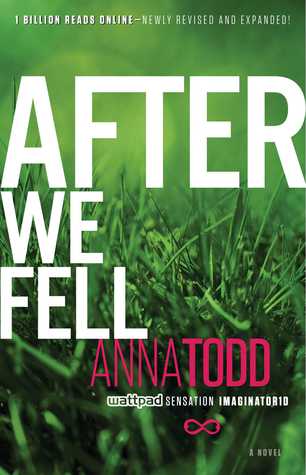
Anna Todd (2014)
Genre
Young Adult / Romance
Reading Time
150 min
Key Themes
See below
Sign in to track this book
Tessa deals with shocking family news and Hardin's destructive anger, making her decide if their passionate, yet harmful, love is worth the constant drama or if it's time to leave.
Tessa Young starts her internship at Vance Publishing in Seattle. Her boss, Christian Vance, sees her potential, which makes Hardin Scott very suspicious. Hardin, still dealing with his own problems and trust issues, becomes more jealous and controlling. He calls Tessa often, shows up at her job, and says he does not like her working with other men, especially Vance and Trevor, a kind colleague. This behavior causes much tension as Tessa tries to balance her career goals with Hardin's changing emotions and demands.
Tessa's life changes when she learns a secret: Christian Vance, her boss, is her biological father. Her mother, Carol, had kept this hidden Tessa's whole life. The news shatters Tessa's view of her family and herself, leaving her feeling betrayed and confused. She struggles to process this, thinking about what it means for her relationship with her mother and the man she thought was her father. This personal crisis makes her already difficult relationship with Hardin even harder, as he initially struggles to be supportive, often making her pain about his own past issues.
As Tessa deals with her family news, Hardin's behavior becomes more wild and destructive. His jealousy of Trevor and Vance grows, leading to public fights. He sabotages Tessa's work by sending an inappropriate email from her account to Vance, almost costing her the internship. Despite his apologies, Tessa is deeply hurt by his actions and questions if their relationship can last. His inability to control his anger and his tendency to lash out when insecure creates a deep divide, making Tessa doubt his ability to truly support and understand her.
Christian Vance offers Tessa a job at Vance Publishing's London office. She takes it, seeing it as a way to escape the constant drama with Hardin and focus on her career. The move is a new beginning for Tessa, a chance to define herself outside of her difficult relationship. Hardin, despite his initial hesitation, decides to follow her to London, not wanting to let her go. He enrolls in a university there, trying to show his commitment, but his underlying insecurities continue to simmer.
In London, Tessa quickly becomes friends with Landon and Nora, finding a sense of stability. She starts to enjoy her new life and work. However, Hardin's past relationships and ongoing jealousy still trouble their relationship. He becomes suspicious of Tessa's new friends and her interactions with male colleagues. The constant arguments, passionate reconciliations, and Hardin's apologies leave Tessa emotionally drained. She questions if their love is enough to overcome their deep problems. She wants a peaceful, stable partnership, which Hardin seems unable to consistently provide.
At a family gathering in London, a secret about Hardin's true parents comes out. Christian Vance is Tessa's biological father and also Hardin's. This shocking news sends both Tessa and Hardin into disbelief and emotional chaos. The revelation means Tessa and Hardin are step-siblings, adding a new, disturbing layer to their already complicated romantic relationship. Hardin is especially devastated, struggling to accept this new information and his strained relationship with his mother, Trish, who also kept this secret.
The news that they are step-siblings causes a deep emotional crisis for Tessa and Hardin. Hardin reacts with anger and self-destruction, feeling betrayed by everyone he trusted. He pulls away from Tessa, unable to process what their shared parentage means for their relationship. Tessa, equally shocked and hurt, tries to support him while also dealing with her own confusion and disgust. The news forces them to face the true nature of their relationship and if it can survive such a profound discovery, pushing them to their breaking point.
Overwhelmed by the truth of his parents, Hardin falls into a deep depression, turning to alcohol and reckless behavior. He pushes Tessa away, unable to handle the emotional weight of their shared secret and its implications for their future. He isolates himself, refusing to communicate or get help, causing Tessa much pain and worry. His self-destructive actions confirm Tessa's worst fears about his inability to handle problems in a healthy way. This time is a low point for Hardin, where he seems to actively ruin any chance of reconciliation or happiness with Tessa, leaving her feeling helpless.
Seeing that Hardin's self-destructive behavior is harming him and draining her, Tessa decides to prioritize her own well-being and future. She focuses on her work at Vance Publishing, finding comfort and purpose in her career. She realizes she cannot keep sacrificing her happiness for Hardin's unstable emotions. While she still loves him, she understands their relationship, as it is, is harmful and unsustainable. This is a turning point for Tessa, as she starts to assert her independence and consider a life where her happiness does not depend solely on Hardin's unpredictable nature.
Despite their separation and Hardin's continued struggles, Tessa and Hardin still feel a pull towards each other. Even as Tessa tries to move on and build her life, Hardin makes attempts to reach out and express remorse. The book ends with Tessa having made progress in her career and personal growth, but the question of her future with Hardin is not resolved. While they are not together, their strong emotional bond and history suggest their story might not be entirely over, leaving readers uncertain about their final outcome.
The Protagonist
Tessa evolves from a selfless, often sacrificing girlfriend to a woman who prioritizes her own well-being and career, asserting her independence in the face of emotional turmoil.
The Protagonist/Love Interest
Hardin descends into deeper self-destruction and anger as he faces new family revelations, struggling to accept responsibility and make lasting changes.
The Supporting
Vance transitions from a supportive boss to a figure of immense personal significance as his hidden paternity is revealed, causing widespread emotional fallout.
The Supporting
Carol's character arc centers on the revelation of her long-held secret and the subsequent struggle to reconcile with Tessa.
The Supporting
Trevor remains a consistent and supportive presence for Tessa, highlighting the unhealthy dynamics of her relationship with Hardin.
The Supporting
Landon remains a steadfast and supportive friend to Tessa, offering a stable presence amidst her turmoil.
The Supporting
Trish's character arc involves the revelation of her past secrets and her attempt to reconcile with Hardin after the truth about his paternity comes out.
The Supporting
Ken remains a constant, supportive figure, continually trying to connect with Hardin despite his rejections.
The novel explores identity, especially through Tessa's journey as she learns the truth about her biological father, Christian Vance. This revelation shatters her understanding of herself and her family, making her redefine who she is. Hardin also struggles with his identity when he learns Vance is his father, questioning his past and his connection to his family. Both characters try to find their own footing amid their complicated parentage and difficult relationship, with Tessa eventually choosing an independent path.
“Nothing is what I thought it was. Not my friends. Not my family.”
The main theme is the toxic and codependent nature of Tessa and Hardin's relationship. Hardin's intense jealousy, possessiveness, and verbal abuse, combined with Tessa's tendency to forgive and enable his behavior, show an unhealthy dynamic. Their love is passionate but constantly overshadowed by drama, emotional manipulation, and a cycle of arguments followed by intense reconciliations. The story questions if love alone can sustain a relationship with such deep problems. Tessa repeatedly tries to break free, while Hardin struggles to change his patterns.
“This cycle of jealousy, unpredictable anger, and forgiveness is exhausting.”
Secrets and betrayal drive the plot. The biggest secret—Christian Vance being the biological father of both Tessa and Hardin—unravels both their lives. Tessa feels betrayed by her mother, Carol, for hiding the truth. Hardin feels betrayed by his mother, Trish, and Vance. These revelations show the lasting damage secrets can cause to family relationships and trust. The theme highlights how hidden truths, even with good intentions, can shatter perceptions, cause pain, and change lives, forcing characters to face uncomfortable realities.
“I can’t believe they kept this from me my whole life. My whole life has been a lie.”
As the story goes on, Tessa increasingly focuses on her personal growth and professional independence. Her internship at Vance Publishing and move to London show her efforts to build a life separate from the constant drama with Hardin. She learns to prioritize her own well-being and career goals over sacrificing for Hardin's emotional instability. This theme emphasizes self-preservation and the courage it takes to break free from unhealthy patterns, even when deeply in love. Tessa's journey shows her change from a passive participant to an assertive individual charting her own course.
“There’s a difference between loving someone and being able to have them in your life.”
Hardin's deep-seated problems, like his anger, jealousy, and inability to trust, are consistently linked to his traumatic childhood, especially the fire and his complicated relationship with his biological father. The novel explores how unresolved trauma can lead to destructive adult behaviors and sabotage relationships. The revelation of Christian Vance's paternity brings Hardin's childhood trauma to the forefront, forcing him to confront the origins of his pain. This theme shows the lasting psychological effects of early experiences and the difficult, often self-destructive, ways people cope with deep wounds.
“My childhood was a lie. Everything I thought I knew was a lie.”
The presence of a third party who offers a stable alternative to the tumultuous main relationship.
While not a full-blown love triangle in the traditional sense, Trevor Matthews serves as a significant plot device. He represents a stable, kind, and supportive alternative to Hardin for Tessa. His respectful demeanor and professional support highlight Hardin's volatile nature and insecurities, fueling Hardin's jealousy and forcing Tessa to confront what she truly desires in a partner. Trevor's presence intensifies the conflict between Tessa and Hardin, pushing Tessa to question if the 'irrepressible heat' with Hardin is worth the constant drama when a calmer, more understanding option exists.
The use of hidden parentage to drive major plot twists and character development.
The revelation that Christian Vance is the biological father of both Tessa and Hardin is the central plot device in 'After We Fell.' This unexpected twist shatters the characters' understanding of their past, their identities, and the very nature of their relationship. It creates immense emotional turmoil, drives significant conflict, and forces both Tessa and Hardin to re-evaluate their families, their trust in others, and their future together. This device is crucial for escalating the drama, pushing the characters to their breaking point, and exploring themes of identity and betrayal.
Changing settings to symbolize new beginnings and the inability to escape core issues.
The move from Seattle to London serves as a significant geographical relocation device. For Tessa, it symbolizes a fresh start, an opportunity for professional growth, and a chance to escape the toxic cycle with Hardin. However, Hardin's decision to follow her demonstrates that physical distance cannot solve deep-seated emotional and relational problems. The new setting initially offers hope but ultimately proves that the core issues of their relationship and their individual struggles persist regardless of location, highlighting the theme that personal change must come from within.
A recurring motif representing Hardin's internal thoughts, struggles, and attempts at self-expression.
Hardin's journal, or his practice of writing, acts as a recurring motif and plot device. It's often where he processes his complex emotions, his love for Tessa, and his struggles with his past. While not always directly shown, the idea of him writing or having written about their relationship is a significant element, particularly in later books. In 'After We Fell,' it subtly foreshadows his eventual path toward using writing as a healthier outlet for his pain, contrasting with his destructive behaviors and offering a glimpse into his inner turmoil and growth potential, even if unfulfilled in this installment.
“I love you, Hardin. I always have, and I always will.”
— Tessa expresses her unwavering love for Hardin.
“Sometimes the person you'd take a bullet for ends up being the one behind the gun.”
— Hardin reflects on betrayal and hurt in relationships.
“You can't just erase the past, but you can choose to move forward.”
— Tessa contemplates forgiveness and growth.
“I'm not perfect, but I'm trying.”
— Hardin acknowledges his flaws and efforts to change.
“Love isn't always pretty. Sometimes it's messy and painful.”
— Tessa describes the complexities of their relationship.
“I'd rather have a broken heart than an empty one.”
— Hardin on choosing love despite the risks.
“We're a mess, but we're our mess.”
— Tessa accepts their imperfect relationship.
“The hardest part isn't letting go, but learning to start over.”
— Reflection on rebuilding after conflict.
“You don't get to choose who you fall in love with.”
— Hardin on the uncontrollable nature of love.
“Sometimes silence speaks louder than words.”
— Tessa notes unspoken tensions in their relationship.
“I'm scared of losing you, but I'm more scared of never having you at all.”
— Hardin confesses his fears about their relationship.
“We're like two broken pieces that somehow fit together.”
— Tessa describes their complementary flaws.
“Love doesn't keep score.”
— Hardin on moving past grievances.
“The truth hurts, but lies hurt more.”
— Tessa emphasizes honesty in their struggles.
“I'd rather fight with you than be happy with anyone else.”
— Hardin declares his commitment despite conflicts.
Ready to see how well you understood this book? Take our interactive quiz with 10 questions.

Anna Todd is a "New York Times" bestselling author known for her "After" series, which began as a fanfiction on Wattpad. The series, including titles like "After Ever Happy" and "After We Collided," has achieved global success and been adapted into a film franchise. Todd's work often explores themes of intense romance and young adult relationships.