“The world is an oyster, but you don't crack it open with a fork.”
— Quentin reflecting on his life and ambition, early in the play.

Genre
Literary Fiction
Reading Time
180 min
Key Themes
See below
Sign in to track this book
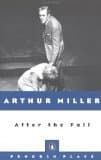
A guilt-ridden lawyer examines his past, dealing with failed marriages, his family's breakdown, and the moral consequences of the McCarthy era, all while facing humanity's capacity for destruction and connection.
The play starts with Quentin, a middle-aged lawyer, talking to an unseen listener, thinking about his life's journey and failures. He deals with a deep sense of guilt and the human capacity for destruction, shown by his recurring image of a 'tower of skulls' from a concentration camp, a place he has never visited but feels connected to. He says he plans to marry Holga, a German woman who survived the camps, and uses this moment of thought to examine his past relationships and his own part in the suffering around him. His monologue sets up a non-linear exploration of his memories, as people from his past appear on stage, acting out scenes from his story.
Quentin remembers his childhood, especially when his father, a successful businessman, lost everything in the Great Depression. This financial collapse deeply affected his parents' relationship and his mother's health. He remembers his mother's anger and her later decline, ending in her death. This early experience of loss and the breaking of his family's security left a lasting mark on Quentin, reducing his youthful idealism and showing him the harsh realities of vulnerability and human error. He sees his father's attempts to save his business as a useless fight against an unavoidable fall, like his own later struggles.
Quentin recalls his first marriage to Louise, an intellectual woman who resented being seen only as his wife. He describes their early attempts at connection, his initial respect for her intelligence, and their later struggles as she tried to create her own separate identity and career. Their marriage had a growing emotional distance, intellectual arguments, and a feeling of unfulfilled longing for both of them. Quentin admits his own role in their disconnect, acknowledging his desire to control and his inability to truly understand her need for independence, which led to their divorce.
The story moves to Maggie, a beautiful and vulnerable singer who becomes Quentin's second wife. He is drawn to her innocence and fragility, seeing her as someone he can protect. However, as Maggie's career grows, she becomes more insecure, dependent, and prone to self-destructive behavior, including alcoholism and drug abuse. Quentin, burdened by his desire to 'save' her, becomes more involved in her emotional problems. Their relationship is a downward spiral, with public scandals, private despair, and Quentin's growing realization that his love, far from saving her, might be adding to her destruction.
Mixed with his personal life is Quentin's experience during the McCarthy era. He remembers the pressure to 'name names' and the moral compromises made by many, including his friend Mickey, who was involved in communist activities. Quentin deals with his own inaction and the guilt of not speaking out more strongly or standing by his principles. He sees careers and lives destroyed because of political paranoia and betrayal. This time forces him to face humanity's capacity for cruelty and how easily people can be forced to abandon their ideals, further adding to his sense of universal guilt.
Maggie's mental and physical health gets worse quickly. Her addiction takes over, and she becomes more paranoid and manipulative. Quentin, tired and feeling trapped, struggles to handle her increasing demands and erratic behavior. He admits thinking about leaving her and even wishing for her death, a confession that deeply troubles him. The end of this part is Maggie's suicide by overdose, a moment that leaves Quentin shattered and filled with guilt, questioning his own role in her death and the limits of his capacity for love and responsibility. He sees his own ambition and desire to control as contributing factors.
After Maggie's death, Quentin meets Louise by chance. Their interaction is full of the unsaid history of their failed marriage. He tries to confess his perceived failures and seek some understanding from her. However, Louise remains somewhat guarded, showing her earlier struggles for independence. This reunion shows the lasting impact of his past relationships on his current state of mind. It highlights his ongoing search for self-understanding and his realization that he cannot simply erase the results of his actions or escape the patterns of his past.
Holga, a German woman who survived the Nazi concentration camps, shows Quentin a possible way to heal. Her experiences have given her a deep understanding of human suffering and resilience. She does not offer easy answers or forgiveness but a clear-eyed acceptance of the human condition, including its capacity for both good and evil. Holga's practical view on survival and her refusal to make victimhood romantic challenge Quentin's own self-pity and his abstract guilt. She helps him see that 'survival can be hard to bear' but also that connection and meaning are possible even after great loss.
Through his thoughts and his upcoming marriage to Holga, Quentin understands something important. He sees that his personal failures and humanity's larger atrocities are connected. The 'tower of skulls' is not just a symbol of distant evil, but a representation of the destructive potential in every person, including himself. He recognizes that his own ambition, fear, and self-deception contributed to the pain he caused and experienced. This acceptance of shared guilt, instead of isolating him, connects him to all humanity, offering a fragile hope for real connection and a future built on honesty and responsibility.
In the play's end, Quentin, having faced his past and his own involvement in suffering, is ready to embrace his future with Holga. He understands that the 'fall' is a continuous process, part of the human condition, and that true innocence is not possible. However, he also recognizes that love and connection, though risky and painful, are essential for living. He accepts the burden of his past and the fragility of the future, choosing to move forward with Holga, not with naive optimism, but with a mature acceptance of life's complexities and the ongoing struggle for meaning and connection.
The Protagonist
Quentin moves from a state of profound self-reproach and abstract guilt to a more mature acceptance of his own fallibility and a commitment to living authentically in the present.
The Supporting
Maggie's arc is a tragic descent from hopeful vulnerability to complete self-destruction, culminating in her suicide.
The Supporting
Louise's arc is one of asserting her independence and finding her own identity outside of her marriage to Quentin.
The Supporting
Holga's arc is one of quiet resilience and providing a grounded, mature perspective for Quentin's journey.
The Supporting
His arc is one of decline from prosperity to ruin, which profoundly impacts his family.
The Supporting
Her arc is one of emotional and physical decline, stemming from her family's financial ruin, culminating in her death.
The Supporting
Mickey's arc illustrates the personal cost of political persecution and the moral dilemmas faced during the McCarthy era.
The Mentioned
Her brief appearance shows her gaining confidence through Quentin's support.
Guilt, both personal and universal, runs through Quentin's story. He struggles with his direct responsibility for the suffering of those he loved, especially Maggie, and his indirect involvement in broader historical atrocities, shown by the 'tower of skulls.' He questions whether his inaction during the McCarthy era or his desire to control others makes him morally like those who commit greater evils. This theme makes the audience consider their own possible involvement in the suffering of others, blurring the lines between victim and perpetrator.
“And the fact that I am not a killer, that I am not a Hitler, that I am not a Stalin, that I am not a man who has ordered the death of millions—that doesn't mean I am not guilty. Because what is guilt? It is the knowing that one could have done otherwise.”
Quentin's relationships with Louise and Maggie explore the complexities of love, attachment, and responsibility. With Louise, love struggles against the need for individual identity. With Maggie, Quentin's desire to 'save' her becomes a destructive force, showing the dangers of dependency, the limits of love, and the line between care and control. The play asks if love is truly selfless or always tied to personal needs and expectations, suggesting that true love requires a painful acceptance of another's independence and vulnerability, even to self-destruction.
“And the truth is, I loved her more than I loved myself. And that was the lie.”
Quentin's journey is a constant search for self-knowledge, removing layers of self-deception. He faces his own ambition, his need for approval, and his capacity for cruelty, often hidden as good intentions. His thoughts on his past marriages show how he put his own needs onto his wives, failing to see them as separate individuals. The play suggests that true identity comes from an honest look at one's flaws and the painful acceptance of one's own mistakes, rather than holding onto an ideal self-image.
“I think the world is moving toward a time when we will be forced to face ourselves, our true selves, without the consolations of a God or a Party or a Cause.”
The play mixes personal memory with historical events, especially the Holocaust and the McCarthy era. Quentin's image of the 'tower of skulls' represents humanity's collective capacity for destruction, making personal guilt connect with historical atrocities. His non-linear story structure shows how the past always shapes the present, and how individuals are both products and participants in history. The play suggests that facing historical trauma, both collective and individual, is necessary for healing and moving forward.
“Is the tower of skulls only what happened to others, or is it a part of me?”
A main theme is that true innocence is not possible after humanity's 'fall' from grace, both religiously and historically. Quentin's journey leads him to accept that no one is entirely blameless, and that the capacity for evil is in everyone. His initial desire to be 'innocent' or to 'save' others fails because it denies human nature's flaws. The play argues for a mature acceptance of human error and shared guilt as a necessary step towards real connection and a more responsible way of living.
“I looked into her face, and I knew that innocence, if it ever existed, was not for us.”
Quentin's continuous, non-linear narration, directly addressing the audience as an unseen listener.
The play is primarily structured as Quentin's extended interior monologue, a stream of consciousness where his thoughts, memories, and reflections unfold in a non-linear fashion. He directly addresses an unseen 'listener,' creating an intimate, confessional tone. This device allows for deep psychological exploration, revealing Quentin's complex inner world, his self-doubt, and his relentless quest for understanding. It blurs the lines between past and present, as memories are triggered and acted out on stage, giving the audience direct access to his thought process and emotional turmoil.
Scenes from Quentin's past are performed as memories, interrupting his present-day monologue.
Instead of a chronological plot, the play employs a non-linear narrative structure. Quentin's monologue is frequently interrupted by vivid flashbacks, where characters from his past appear and act out scenes from his memories. These scenes are not always presented in strict order but rather as they arise in Quentin's mind, creating a mosaic of his life. This device effectively conveys the fragmented and associative nature of memory, emphasizing how past events continue to haunt and inform Quentin's present state of mind, and how he constantly re-evaluates his history.
A recurring symbolic image representing universal human guilt and the capacity for destruction.
The 'tower of skulls' is a powerful, recurring symbol throughout the play, representing the horrors of the Holocaust and the collective human capacity for destruction and evil. Quentin, despite never having seen a concentration camp, feels deeply connected to this image, using it as a metaphor for the universal guilt he grapples with. It serves to link his personal failures and betrayals to larger historical atrocities, suggesting that the destructive potential is inherent in humanity. This symbol underscores the play's theme of shared guilt and the illusion of individual innocence.
An implied, silent character that Quentin addresses, allowing for direct audience engagement.
Quentin's direct address to an 'unseen listener' is a crucial plot device. While this listener is never explicitly identified, it functions as a stand-in for the audience, drawing them directly into Quentin's confession and making them complicit in his introspection. This creates a sense of intimacy and urgency, as Quentin lays bare his soul and challenges the listener (and thus the audience) to confront their own moral complexities. It allows for a deeply personal and philosophical exploration without the need for traditional dialogue-driven exposition.
A sparse, abstract set that allows for fluid movement between different times and places.
The play's set is typically described as minimalist and abstract, often featuring a raised platform or a suggestion of a 'ruin' or a 'mindscape.' This design serves as a flexible space where Quentin's memories can be enacted without literal scene changes. It allows for fluidity between different times and locations, emphasizing that the action takes place primarily within Quentin's mind. The sparse nature of the set highlights the internal landscape of the protagonist and the symbolic nature of the events, rather than focusing on realistic depiction.
“The world is an oyster, but you don't crack it open with a fork.”
— Quentin reflecting on his life and ambition, early in the play.
“We are all in it together. It's a question of whether you want to live or not.”
— Quentin's internal monologue about collective responsibility and the will to live.
“The only thing is, how do you get rid of the guilt?”
— Quentin grappling with his past actions and moral culpability, particularly regarding Maggie.
“I think the world is full of people who are trying to tell you what to do, and very few who are trying to help you understand.”
— Quentin's observation about societal pressures and a lack of genuine understanding.
“Is the knowing all? Is there no forgiveness?”
— Quentin questioning whether understanding a situation fully leads to absolution.
“I saw myself, in the world, as a kind of moral accountant.”
— Quentin describing his past self-perception and his tendency to judge others.
“The world has become too dangerous to live in without love.”
— Quentin's realization about the necessity of love in a chaotic and threatening world.
“No man need ever be a stranger to another.”
— Quentin expressing a hopeful ideal about human connection and empathy.
“I think that a man who can't forgive himself is a man who can't forgive life.”
— Quentin's profound insight into the link between self-forgiveness and accepting life's imperfections.
“We are members of one another, and we betray each other at our peril.”
— Quentin's reflection on the interconnectedness of humanity and the consequences of betrayal.
“And the fact is, I am not innocent.”
— Quentin's stark admission of his own complicity and lack of blamelessness.
“There are no innocent great men.”
— Quentin musing on the nature of power and success, implying inherent moral compromises.
“The world is not a courtroom. It is a house.”
— Quentin shifting his perspective from judgment to understanding and belonging.
“What is the end of it, this constant accusation?”
— Quentin's weariness with the relentless self-recrimination and judgment he experiences.
Ready to see how well you understood this book? Take our interactive quiz with 10 questions.
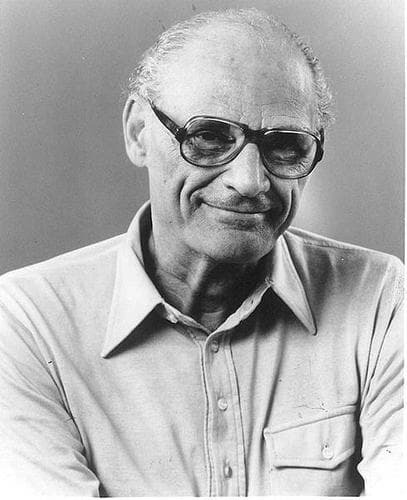
Arthur Asher Miller was an American playwright, essayist and screenwriter in the 20th-century American theater. Among his most popular plays are All My Sons (1947), Death of a Salesman (1949), The Crucible (1953), and A View from the Bridge (1955). He wrote several screenplays and was most noted for his work on The Misfits (1961). The drama Death of a Salesman is considered one of the best American plays of the 20th century.







