“Perhaps it's for the best that we should know that we're insane. It's the sane ones who are really dangerous.”
— Dr. Obispo reflecting on human nature and sanity.


Aldous Huxley (1939)
Genre
Literary Fiction / Science Fiction / Philosophy
Reading Time
9-10 hours
Key Themes
See below
Sign in to track this book
In a satirical Hollywood, a millionaire's fear of death leads to a horrifying discovery about the true cost of eternal life.
Jeremy Pordage, an English intellectual, travels to California to research the life of the Fifth Earl of Gonister for a biography. He stays at the opulent, pseudo-Gothic castle of Jo Stoyte, a wealthy, aging Hollywood magnate obsessed with living longer and terrified of death. Stoyte lives with his young, beautiful, and bored mistress, Virginia Maunciple, and employs Dr. Obispo, a cynical scientist, as his personal doctor. Pordage immediately notices the strange and artificial atmosphere of Stoyte's world, a mix of immense wealth, intellectual pretense, and underlying desperation.
During Pordage's stay, Dr. Obispo tells him about his radical scientific research. Obispo is not just treating Stoyte's illnesses; he is pursuing a theory of longevity, believing that certain body processes can be reversed or stopped, possibly leading to a much longer lifespan. His experiments involve studying how specific diets and hormones affect animals, especially baboons. Stoyte, desperate for any hope of immortality, funds Obispo's increasingly unusual and unethical research, seeing it as his only escape from death.
Life in Stoyte's castle is dysfunctional. Virginia Maunciple, Stoyte's mistress, is deeply unhappy and seeks escape in various ways, including an affair with Pete Boone, Stoyte's chauffeur, and occasional intellectual talks with Pordage. Pete himself is a troubled young man, haunted by his mother's death and prone to violence. Stoyte's possessiveness and paranoia create an oppressive atmosphere, where his wealth and fear taint every relationship. The castle, despite its grandeur, feels like a gilded cage for its inhabitants.
As Pordage examines the Fifth Earl of Gonister's papers, he finds increasingly unsettling information. The Earl, a reclusive aristocrat, had a secret life devoted to strange physiological experiments and an intense fear of aging and death. Pordage finds cryptic notes, scientific diagrams, and detailed observations that hint at the Earl's radical pursuit of longevity, similar to Dr. Obispo's own research. The historical documents begin to suggest a horrifying link between the Earl's experiments and a mysterious, secluded part of his English estate.
Jo Stoyte's paranoia about Virginia's loyalty grows. He eventually discovers her affair with Pete Boone. In a fit of jealous rage, Stoyte confronts the lovers. The confrontation turns deadly when Stoyte, armed with a gun, shoots and kills Pete. Virginia, traumatized and terrified, escapes the immediate danger, but the event throws the castle into chaos, further showing Stoyte's volatile nature and the destructive results of his unchecked desires and power. Dr. Obispo, always an opportunist, sees this as a chance to further manipulate Stoyte.
After Pete's murder, Virginia flees the castle in terror. Stoyte, consumed by guilt and a mix of remorse and possessiveness, orders Dr. Obispo to find her. During this desperate search, Stoyte tells Obispo the full extent of his obsession with the Fifth Earl of Gonister's work, including that he had bought the Earl's entire English estate, including the secluded wing and its contents, years ago. Stoyte believes the Earl held the key to immortality and that his own life's work is a continuation of the Earl's quest.
Stoyte, Obispo, and a reluctant Pordage travel to England, to the Fifth Earl's ancestral estate. They enter the long-sealed wing, which was the Earl's secret laboratory. Inside, they find a meticulously preserved environment filled with strange equipment, scientific notes, and the lingering presence of the Earl's bizarre experiments. The atmosphere is chilling, hinting at something deeply disturbing. Pordage's research into the Earl's papers now takes on a terrifying new meaning as he sees the physical manifestation of the Earl's obsessions.
Deep within the Earl's hidden laboratory, in a sealed cellar, they make a horrifying discovery. There, kept in cages, are two grotesque, ape-like creatures. These beings, clearly once human, are the result of the Fifth Earl's successful, yet monstrous, experiments in physiological regression. They are the Fifth Earl himself and his former mistress, now reduced to a primitive, animalistic existence, their minds and bodies devolved beyond recognition. The sight is a profound shock, a grotesque realization of the ultimate price of their quest for longevity.
Dr. Obispo, initially horrified, quickly understands the scientific implications: the Fifth Earl had achieved a form of extreme longevity, but at the cost of his humanity, regressing to a pre-human state. This discovery, far from stopping Jo Stoyte, sparks a new, desperate hope within him. He sees this not as a failure, but as a viable, though extreme, path to immortality. Stoyte, still terrified of death, decides to undergo the same process, believing that even a devolved existence is better than nothing. He orders Obispo to prepare the treatment for him.
Dr. Obispo, ever the pragmatist and opportunist, sees his chance for ultimate control and continued funding. He agrees to Stoyte's demand and begins the devolution process. The novel ends with a chilling suggestion of Stoyte's gradual transformation into a similar ape-like creature, trapped in a prolonged, sub-human existence. Pordage is left to consider the horrifying implications of humanity's pursuit of immortality, witnessing the ultimate degradation of two men driven by an insatiable fear of death and a perverse scientific curiosity.
The Protagonist/Antagonist
Stoyte's arc is one of escalating desperation, moving from a fear of death to a willingness to sacrifice his humanity for mere existence, culminating in his tragic devolution.
The Antagonist/Supporting
Obispo's arc shows his progressive descent into moral ambiguity, culminating in his willingness to perform the devolution on Stoyte, solidifying his role as a detached and dangerous scientist.
The Protagonist/Observer
Pordage's arc is one of disillusionment and horror as he witnesses the consequences of unchecked ambition and the degradation of humanity, moving from detached observation to profound shock.
The Supporting
Virginia's arc is one of increasing despair and trauma, culminating in her escape after Pete's murder, highlighting her victimhood.
The Supporting
Pete's arc is brief and tragic, ending in his murder by Stoyte, serving as a catalyst for the escalating violence.
The Mentioned/Catalyst
The Earl's arc is revealed retrospectively, showing his successful but monstrous devolution, serving as a cautionary tale.
The Supporting
Dr. Poole remains a static character, representing a consistent ethical standard.
This theme explores humanity's basic fear of death and how far people will go to avoid it. Jo Stoyte's entire life is controlled by this terror, leading him to fund Dr. Obispo's unethical research and eventually to accept devolution. The Fifth Earl of Gonister shows that this fear can lead to a grotesque sacrifice of humanity. The novel questions whether mere existence, without consciousness or dignity, is better than the natural cycle of life and death, as seen in the horrifying state of the devolved Earl and his mistress.
“What a world of pains and pleasures, what a world of fears and hopes, what a world of memories and anticipations, what a world of thoughts and feelings - and all to be wiped out! And for what? For nothing.”
The novel explores the dangerous results of scientific inquiry pursued without ethical limits. Dr. Obispo embodies this theme, driven by intellectual curiosity and ambition rather than moral concern. His experiments, leading to the successful but horrifying devolution of the Earl and later Stoyte, show how scientific progress, unchecked by humanity, can lead to monstrous outcomes. Huxley critiques the idea that all scientific advancement is inherently good, especially when it disregards the very definition of human dignity and existence.
“Science, like alcohol, is a good servant but a bad master.”
This theme appears most clearly in the discovery of the devolved Fifth Earl and his mistress, and in Stoyte's eventual transformation. The pursuit of extreme longevity, when achieved through physiological regression, results in a loss of consciousness, intellect, and the qualities that define humanity. The novel suggests that a longer life at the cost of one's mind and dignity is not life at all, but a grotesque imitation. It warns about humanity's potential to degrade itself in the desperate struggle against natural processes.
“To be prolonged, to be prolonged, to be prolonged... at what price?”
Jo Stoyte's immense wealth and power fail to bring him happiness or peace; instead, they increase his anxieties and enable his destructive obsessions. His castle, a symbol of his wealth, is a gilded cage where Virginia and Pete are trapped, and where violence and despair grow. The novel shows that material abundance cannot fill existential emptiness or protect against the fundamental human condition of mortality. In fact, Stoyte's wealth only provides the means for his ultimate degradation, highlighting the uselessness of materialism when facing deeper human fears.
“Money, like an acid, ate away the very foundations of his being.”
Virginia Maunciple's character shows the theme of existential boredom. Despite her luxurious life as Stoyte's mistress, she is deeply unhappy and unfulfilled, seeking comfort in illicit affairs and intellectual distractions. Her boredom highlights the superficiality of her existence and the emotional emptiness created by Stoyte's possessiveness and the artificiality of their world. This theme suggests that even with all material comforts, a life without true meaning and connection leads to deep dissatisfaction.
“The greatest tragedy is not death, but a life unlived.”
A historical mystery that foreshadows and provides the scientific blueprint for the present-day plot.
The Earl's papers and later his hidden estate function as a classic literary device, a 'mystery within a mystery'. Initially, Pordage's research into the Earl's life seems a detached academic pursuit. However, the cryptic notes and scientific diagrams found in the papers gradually reveal a horrifying parallel to Dr. Obispo's research. The eventual discovery of the Earl and his mistress in their devolved state provides the ultimate reveal and the terrifying precedent for Stoyte's fate, making the historical narrative directly intersect and drive the contemporary plot to its chilling conclusion.
An opulent, yet oppressive, setting that reflects the characters' psychological states and the story's themes.
Jo Stoyte's pseudo-Gothic castle is more than just a backdrop; it's a character in itself. Its immense, artificial opulence, filled with bizarre art and architectural affectations, mirrors Stoyte's own grotesque and unnatural pursuit of immortality. The castle serves as a gilded cage for its inhabitants, particularly Virginia and Pete, symbolizing their entrapment within Stoyte's possessive world. Its imposing, labyrinthine structure, with hidden passages and a sense of decay beneath the surface, creates an atmosphere of unease and foreshadows the horrors that unfold within its walls and later in the Earl's English estate.
The audience is aware of the true nature of the longevity experiments before the characters fully grasp it.
Dramatic irony is prevalent throughout the novel, particularly in relation to the longevity experiments. The reader, through Pordage's intellectual observations and Obispo's cynical asides, gradually pieces together the horrifying implications of 'prolonging life' long before Jo Stoyte, in his desperate fear, fully comprehends the cost. This creates a sense of dread and inevitability as Stoyte blindly pursues a fate that the reader can already foresee, making his eventual transformation all the more tragic and horrifying.
Experimental animals that serve as a parallel and a precursor to the human devolution.
Dr. Obispo's experiments on baboons, mentioned early in the novel, serve as a significant plot device. These animals are the initial subjects of his longevity research, and their physiological changes provide a subtle, yet crucial, foreshadowing of the human devolution. The baboons act as a less threatening, more 'scientific' precursor to the grotesque discovery of the Fifth Earl and his mistress in their ape-like state. They normalize the idea of species regression in a scientific context, making the later human transformation more plausible within the novel's framework, and highlighting the ethical slippery slope.
“Perhaps it's for the best that we should know that we're insane. It's the sane ones who are really dangerous.”
— Dr. Obispo reflecting on human nature and sanity.
“The secret of happiness, you see, is not found in seeking more, but in developing the capacity to enjoy less.”
— Mr. Propter's philosophical view on happiness.
“What a world! What a world! Always the same, always different. Always the same desires, always the same frustrations.”
— Jeremy Pordage's observation on the unchanging nature of human desires despite changing circumstances.
“People like to be told what they already know. Remember that. They get uncomfortable when you tell them new things.”
— Dr. Obispo's cynical advice on human psychology.
“One day, when the world is ready, we shall have a really intelligent religion.”
— Mr. Propter discussing the potential for a more rational approach to spirituality.
“The trouble with most people is that they're too busy living to learn how to live.”
— Mr. Propter's critique of modern life's priorities.
“Age is not a matter of years, but of the mind.”
— Joe Stoyte's initial belief about aging, before his later experiments.
“The future is a land from which no traveler ever returns.”
— A general reflection on the nature of time and the unknown.
“We are all of us, always, dying. It's only a question of how fast and with what degree of consciousness.”
— A somber reflection on mortality and awareness.
“Every man has his own hell. The only difference is in the scenery.”
— Dr. Obispo's view on individual suffering and experience.
“The greatest triumphs of the human spirit are achieved not in spite of, but because of, its limitations.”
— Mr. Propter's paradoxical view on human achievement.
“Power is like a drug; the more you have, the more you want, and the more you want, the less you are yourself.”
— A commentary on the corrupting nature of power.
“The ultimate freedom is to be free from oneself.”
— Mr. Propter's advanced philosophical concept of liberation.
“Immortality, if it were attainable, would be the greatest curse.”
— A character contemplating the true implications of eternal life.
Ready to see how well you understood this book? Take our interactive quiz with 10 questions.
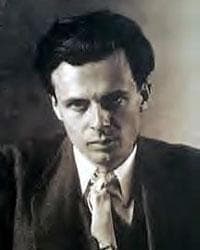
Aldous Leonard Huxley was an English writer and philosopher. His bibliography spans nearly 50 books, including novels and non-fiction works, as well as essays, narratives, and poems.







