“The wind was a living thing, blowing the scent of pine and wet earth, and the distant, elusive smell of the sea.”
— Early description of the world, emphasizing its natural beauty and mystery.

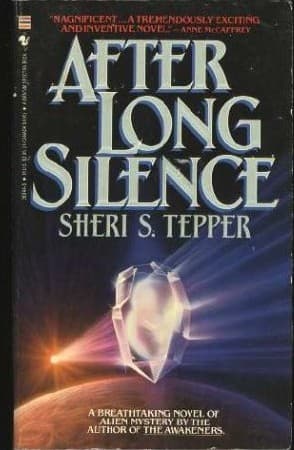
Sheri S. Tepper (1987)
Genre
Fantasy / Science Fiction
Reading Time
540 min
Key Themes
See below
Sign in to track this book
On a world where ancient matriarchal power clashes with a tyrannical patriarchy, a young woman's forbidden empathic abilities and an unexpected alien alliance become the last hope to shatter centuries of oppression.
The story opens with the annual meeting of the Hand, an order of women known as witches who can manipulate matter and energy. They live in a matriarchal society, isolated from the oppressive male-dominated cities of the planet, mainly through their ability to create and maintain their hidden valley. During their gathering, an off-world vessel crashes nearby, bringing a male alien named Cirrus. His arrival is new and causes alarm among the Hand, particularly for the young witch, Tashtego, who observes him. Cirrus, a member of the 'Pillar' race, explains his people are peaceful explorers and his ship malfunctioned. His presence challenges the Hand's traditions and isolation.
Cirrus, after recovering from his crash, communicates more fully with the Hand, mainly through Tashtego. He explains that his people, the Pillars, are a benevolent galactic civilization dedicated to helping intelligent species across the cosmos. They identify worlds ready for 'uplift,' offering advanced technology and knowledge to help them overcome societal and environmental challenges. Cirrus's mission was to assess the planet for this purpose. The Hand, led by the elder witch, Gevell, is conflicted. Outside intervention could end the tyrannical rule of the male-dominated cities, but it also threatens their independence and ancient power. They must decide whether to trust Cirrus and the Pillars.
To understand the world beyond their valley and the extent of the male-dominated cities' tyranny, Tashtego undertakes a dangerous journey. Disguising herself as a common woman, she observes the harsh realities of the patriarchal society: the subjugation of women, rigid social hierarchies, and pervasive fear from the ruling dynasty. She sees firsthand the brutal oppression and the desperate lives of the common people. This experience confirms her belief that their world needs change, aligning with Cirrus's assessment. Her journey is dangerous, as she must use her wits and subtle witch powers to avoid detection by city guards and surveillance.
Following Tashtego's report, Cirrus formally presents the Pillars' offer of uplift to the entire Hand. He details the technology, knowledge, and societal restructuring they could provide, promising an end to the planet's suffering. This offer creates a divide within the Hand. Some, like Tashtego, see it as the only path to freedom and a better future. Others, particularly the more traditional and isolationist members, fear losing their unique powers and cultural identity, believing the Pillars' 'help' could be a form of subtle conquest. Gevell struggles to maintain unity as the debate rages, highlighting the implications of accepting or rejecting such an offer.
After intense deliberation and Tashtego's arguments, emphasizing the suffering of those outside their valley, the Hand reluctantly agrees to an alliance with the Pillars. This decision marks a departure from centuries of isolation. The initial phase involves the Pillars sharing basic technological knowledge and strategies with the Hand, focusing on communication and reconnaissance. Together, they plan a covert operation to destabilize the tyrannical rule of the cities. Cirrus acts as a liaison, explaining the Pillars' non-interventionist protocols, which emphasize empowering the native population to enact change rather than direct military intervention. The alliance is fragile, built on wary trust between two different cultures.
Tashtego, using her witch abilities and understanding of the cities, alongside Cirrus's advanced technology, leads a mission to infiltrate the central stronghold of the ruling dynasty. Their objective is to gather intelligence, identify weaknesses, and potentially sow discord from within. The infiltration is dangerous, requiring precise coordination and the application of both magic and technology. They navigate heavily guarded corridors and surveillance systems, uncovering the extent of the dynasty's control and its power mechanisms. This mission is crucial for strategic planning and for showing the effectiveness of their combined forces to skeptical Hand members.
Using the intelligence gathered, the Hand and Pillars begin a campaign to awaken the oppressed people within the cities. They use discreet communication channels, spread information about the dynasty's corruption, and highlight the potential for freedom. The Hand's abilities create small, unexplained disruptions that undermine the dynasty's authority and spark hope. Cirrus's technology helps amplify these efforts without direct intervention. Gradually, discontent simmers, then boils over, leading to small acts of defiance that escalate into widespread protests and civil unrest. The people, long subjugated, begin to recognize their collective power, encouraged by the unseen hands of the alliance.
As the cities rebel, the Hand and Pillars orchestrate a direct confrontation with the ruling dynasty. This is not a military invasion but a strategic dismantling of their power structure. Tashtego, leading Hand witches, uses her abilities to disable key security systems and communication networks, while Cirrus provides technological support and analysis. The goal is to expose the dynasty's weaknesses and empower the people to overthrow their oppressors. The confrontation is tense and dangerous, with the dynasty's loyalists fighting fiercely to maintain control. The Hand's unique powers, combined with the Pillars' strategic insights, prove to be a formidable force against the entrenched tyranny.
The combined efforts of the Hand, the Pillars, and the awakened people lead to the collapse of the tyrannical patriarchal dynasty. The ruling elite are deposed, and their oppressive systems are dismantled. The immediate aftermath is a period of change and uncertainty, as the planet transitions from centuries of subjugation to a new era of freedom. The Hand emerges from isolation, now recognized as liberators, and the Pillars begin the long process of 'uplift,' sharing technology and knowledge to help rebuild society on more equitable principles. The challenge now shifts from overthrowing oppressors to constructing a just and sustainable future, a task that requires cooperation and understanding between all factions.
After the dynasty's fall, Tashtego finds herself in a new role. Instrumental in forging the alliance and leading the fight for freedom, she becomes a key figure in reconstruction. She acts as a bridge between the Hand, the Pillars, and the newly freed people, helping to integrate advanced technology with their existing culture and guiding the establishment of a more egalitarian society. Her journey from a young, isolated witch to a visionary leader is complete. The planet's future is uncertain but hopeful, as the combined wisdom of the Hand and the advanced knowledge of the Pillars lay the groundwork for a truly uplifted civilization, free from the shadows of its past.
The Protagonist
Tashtego evolves from a sheltered but curious witch into a formidable leader who brokers peace and guides her world into a new era of freedom and cooperation.
The Supporting
Cirrus successfully completes his mission, guiding a primitive world towards uplift while respecting its autonomy, and forms a lasting bond with Tashtego and the Hand.
The Supporting
Gevell evolves from an isolationist leader to one who, though reluctantly, accepts outside intervention for the liberation of her world, ensuring the Hand's legacy continues in a new form.
The Antagonist
The Patriarchal Dynasty's oppressive rule is ultimately dismantled and overthrown by the combined efforts of the Hand, the Pillars, and the awakened populace.
The Supporting
The Hand collectively moves from a state of isolation and preservation to becoming active agents of change, embracing an alliance and a new role in their world's future.
The Supporting
The Pillars successfully initiate the uplift process for a new world, demonstrating their commitment to galactic stewardship and non-interventionist progress.
This theme explores the ethical dilemma of maintaining a secluded, self-sufficient society versus the moral obligation to intervene in a world suffering under tyranny. The Hand has long protected its culture and powers through isolation, but Cirrus's arrival forces them to confront the suffering of the broader populace. Tashtego embodies the imperative of intervention, arguing that their power should be used for the greater good beyond their valley, even if it means sacrificing some traditions. The internal conflict within the Hand, particularly Gevell's struggle, highlights the difficult balance between self-preservation and altruism.
““What good is power if it serves only to keep us safe while the rest of the world burns?””
A central theme is patriarchal oppression and the struggle for liberation. The cities are a brutal, male-dominated society where women are subjugated, and societal progress is stifled. The Hand, a matriarchal society, offers a stark contrast and a potential solution. The story details the process of dismantling this oppressive system, not through direct conquest, but by empowering the oppressed. This theme explores the mechanisms of control, the resilience of those underfoot, and the societal restructuring needed to build an egalitarian future. The alliance between the Hand and the Pillars directly challenges entrenched male power.
““For generations, they have held us in chains, not of iron, but of fear and custom. It is time for those chains to break.””
The novel contrasts two forms of power: the inherent, almost magical abilities of the Hand witches and the advanced, scientific technology of the Pillars. Initially, these seem to be opposing forces, with the Hand wary of technology and the Pillars seeing magic as undeveloped science. However, the story shows that true power lies in their synergy and mutual respect. The alliance demonstrates how 'magic' (the Hand's abilities) can be enhanced by 'technology' (Pillar advancements) and vice-versa. This theme suggests that different forms of knowledge and capability, when combined, can achieve greater outcomes than either could alone, breaking down artificial distinctions.
““Your 'magic' is simply a mastery of energies we have yet to fully categorize. Our 'technology' is merely a systematic application of similar principles. Together, we are formidable.””
The interaction between the Hand's ancient, isolated culture and the Pillars' advanced, galactic civilization drives much of the narrative. This theme explores the challenges and benefits of cultural exchange. The Hand must adapt to new ideas and technologies, while the Pillars must learn to respect and integrate the Hand's traditions and powers. The process has friction, as shown by the internal debates within the Hand. However, ultimately, the story argues for the necessity of adaptation and the richness that comes from blending diverse perspectives to create a stronger, more resilient society. Tashtego embodies successful cultural bridging.
““We cannot live forever in the shadow of what was. The world outside has changed, and so must we, if we are to truly live.””
The Pillars' policy of guiding less developed civilizations towards advanced status without direct intervention.
The Uplift Protocol is a core plot device, establishing the rules and limitations of the Pillars' involvement. It dictates that the Pillars cannot directly conquer or rule a planet; instead, they provide knowledge, technology, and strategic guidance to empower the indigenous population to enact their own societal changes. This protocol creates narrative tension, as the Hand often wishes for more direct assistance, but it also forces the native species to take ownership of their liberation. It highlights the Pillars' ethical framework and ensures that the story's resolution is driven by the will and actions of the planet's inhabitants, rather than an external savior.
A secluded, magically protected valley that serves as the Hand's sanctuary and a symbol of their isolation.
The Hidden Valley is a crucial setting and plot device. It symbolizes the Hand's centuries of isolation and self-sufficiency, maintained through their unique powers. Its existence allows the Hand to survive independently of the oppressive cities, but it also represents a barrier to their engagement with the wider world. The valley's eventual 'opening' and the Hand's decision to leave its confines signify their commitment to broader societal change. It acts as a safe haven and a place of power, but also as a metaphor for the cultural and psychological walls that must be overcome for progress.
The ability of Cirrus to understand and be understood by the Hand, despite different origins.
The immediate ability of Cirrus and Tashtego to communicate, despite being from different species and worlds, is a necessary plot device that bypasses potential language barriers. While not explicitly detailed as a universal translator, it allows for direct exposition and character interaction without needing extensive scenes dedicated to learning a new language. This facilitates the rapid exchange of information and the building of trust (or mistrust) between the Hand and the Pillars, allowing the plot to focus on the ethical and political dilemmas of their alliance rather than the mechanics of translation.
The Hand's unique abilities to manipulate matter and energy, often perceived as magic.
The Hand's 'witch' powers are fundamental to their identity and their role in the story. These abilities, which allow them to create, destroy, and influence their environment, differentiate them from the city dwellers and give them the means to challenge the patriarchal dynasty. They are a source of both strength and a reason for the Hand's isolation, as their powers are often feared or misunderstood. The integration of these 'magical' abilities with Cirrus's advanced technology becomes a powerful symbol of synergy and a key factor in the successful overthrow of the tyranny.
“The wind was a living thing, blowing the scent of pine and wet earth, and the distant, elusive smell of the sea.”
— Early description of the world, emphasizing its natural beauty and mystery.
“There were those who said that knowledge was a dangerous thing, but Ignorance was a slow, creeping death.”
— A philosophical reflection on the pursuit of knowledge, a recurring theme.
“The past is not a burden to be carried, but a map to be read.”
— A character's advice on how to approach history and personal heritage.
“Magic was not a trick; it was a connection, a way of listening to the world's deepest whispers.”
— Explaining the nature of magic in the book, linking it to empathy and understanding.
“Fear was a cold companion, but hope, even a small spark, could warm the darkest night.”
— A character facing a difficult challenge, highlighting resilience.
“The greatest prison is not built of stone, but of belief.”
— A critique of rigid societal or personal dogmas.
“Sometimes, the only way to find your own path is to get lost first.”
— A character's journey of self-discovery and finding purpose.
“The forest remembers. The stones remember. Even the air remembers.”
— Emphasizing the deep history and memory embedded in the natural world.
“To truly see, you must look with more than just your eyes.”
— A lesson about perception and understanding beyond the superficial.
“Silence can be a shield, or a weapon, or simply a space to think.”
— Exploring the multifaceted nature and power of silence.
“There are always more questions than answers, and that is where true learning begins.”
— A reflection on the continuous nature of inquiry and knowledge.
“Every choice carves a new path in the world, and some paths lead to places you never imagined.”
— Discussing the impact of individual decisions and their unforeseen consequences.
“The world was not something to be conquered, but to be understood, to be lived with.”
— A core environmental and philosophical message of the book.
“Love, in its truest form, was not possession, but liberation.”
— A profound statement on the nature of love and relationships.
Ready to see how well you understood this book? Take our interactive quiz with 10 questions.
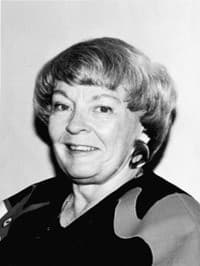
Biography coming soon.







