“The thing that makes you human…is your ability to make choices.”
— A central theme regarding human nature and free will.

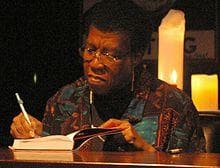
Octavia E. Butler (1988)
Genre
Fantasy / Science Fiction
Reading Time
360 min
Key Themes
See below
Sign in to track this book
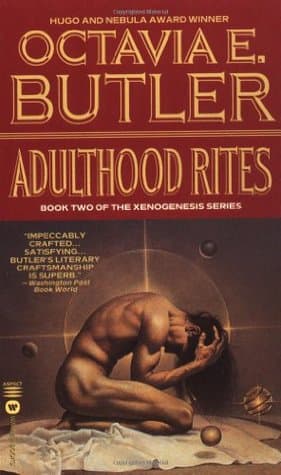
Torn between his five parents' alien legacy and humanity's self-destructive freedom, Akin, a uniquely human-Oankali child, must decide if his 'pure' human captors deserve the fertility that will inevitably lead to their own undoing.
Akin is the first male child born to Lilith Iyapo, a human, and her Oankali mates, Nikanj and Jdahya. Unlike other constructs, Akin looks entirely human at birth. This pleases and concerns his five parents (Lilith, Jdahya, Nikanj, and the ooloi, Kahal and Dichaan). He grows up in a construct community on Earth, learning Oankali languages and human customs. From a young age, Akin shows an unusual liking for human ways. He often prefers human food and resists some Oankali teachings. His unique genetic makeup, being a male with full human potential, makes him an important figure in the Oankali's plan for humanity. He spends his early years observing the strained relationship between the constructs and the 'resister' humans, who refuse genetic merging and are sterilized by the Oankali.
While on a foraging trip with his human father, Jdahya, and his ooloi parent, Dichaan, seven-year-old Akin is ambushed and kidnapped by a group of human resisters. The resisters, led by a woman named Beatrice, take Akin to their hidden settlement. The Oankali, Lilith and Nikanj, know about the kidnapping through their sensory organs. They decide not to immediately retrieve Akin. They believe Akin, given his unique genetic makeup, needs to experience life among the resisters firsthand. Lilith is distressed by this decision, but the Oankali maintain that Akin's exposure to pure human society is essential for him to understand the species he is meant to bridge.
Among the resisters, Akin learns about their fear, hatred, and desperation. He is at first treated with suspicion and some hostility, especially by Beatrice, who sees him as an alien despite his human appearance. He learns to hunt, gather, and survive in the wild. He experiences the challenges of a society without Oankali technology or assistance. Akin observes the resisters' deep fear of the Oankali and their desire for reproductive freedom, even knowing the Oankali's reasons for sterilization. He also sees their internal conflicts and violence, which supports the Oankali's assessment of humanity's self-destructive tendencies. During this time, Akin's Oankali senses begin to develop, allowing him to perceive the resisters' genetic flaws and the suffering caused by their lack of reproductive ability.
After several months, an Oankali search party, led by his ooloi parent, Kahal, retrieves Akin. He returns to his construct family, physically unharmed but deeply changed by his time with the resisters. His Oankali senses are now fully awake, allowing him to perceive the genetic 'errors' in humans and the Oankali's solutions. He tells his parents and other Oankali about his experiences. This gives a unique view on the resisters' situation. The Oankali continue to say that Akin's experiences are important for him to make an informed decision about the resisters' future. He struggles with conflicting loyalties, feeling a connection to both his construct family and the desperate humans who kidnapped him.
Akin is abducted a second time, this time by a more organized and desperate group of resisters led by a man named Joseph. They know about his unique genetic makeup and his ability to influence the Oankali. Joseph and his people ask Akin to speak for them. They promise to live peacefully if the Oankali restore their fertility. Akin, now more mature and understanding, agrees to consider their request. He recognizes the depth of their desire to reproduce and the suffering caused by their sterility. This second abduction is not as traumatic as the first. It is a direct appeal to Akin's developing empathy and responsibility towards pure humans.
Akin returns to the Oankali with Joseph and his group, acting as their advocate. He presents their case for reproductive freedom. He argues that some resisters can live without self-destruction. This proposal starts a fierce debate among the Oankali. They worry about renewed human violence and environmental damage. The Oankali acknowledge Akin's unique perspective but are wary of granting fertility to a species they believe is inherently self-destructive without their influence. Akin struggles to find a compromise that satisfies both his human empathy and the Oankali's practical concerns for long-term survival and genetic integrity.
Akin, after much thought and talking with his Oankali parents, proposes a solution: allow a select group of resisters to reproduce. This would happen only within isolated, Oankali-monitored settlements on Mars. These settlements would provide the necessary resources and oversight to prevent the resisters from destroying themselves or the environment. The Oankali would not genetically alter these humans, but would provide guidance and intervention when necessary. This plan is a compromise. It acknowledges the resisters' desire for biological continuation while lessening the Oankali's fears of renewed human chaos. It shows Akin's ability to bridge understanding between two different species.
With the Oankali's reluctant approval, Akin prepares to lead the first group of fertile resisters, including Joseph and his family, to Mars. This undertaking begins a new chapter for both humanity and the Oankali. Akin, now a young adult, fully accepts his role as a bridge between the two species. He understands the responsibility he carries and the potential for both success and failure in this experiment. The journey to Mars is uncertain, but it is the first step towards a future where pure humans can exist and reproduce without being sterilized, though under strict conditions and far from Earth.
On Mars, Akin works to help the resisters establish their new colony. He acts as an intermediary, providing guidance and support while allowing the resisters as much autonomy as possible. He observes their struggles and successes, their ability to cooperate, and their occasional relapses into conflict. The Oankali continue to monitor the colony, ready to intervene if the resisters threaten themselves or their environment. Akin's role is important in mediating between the resisters' desire for independence and the Oankali's need for control. He constantly navigates the balance between freedom and safety. He dedicates himself to proving that humans, given the right circumstances, can overcome their self-destructive tendencies.
As the years pass, Akin continues his work on Mars. He observes the growth of the resister community and the first generation of naturally born humans in centuries. His decision to advocate for their fertility, and the establishment of the Martian colonies, becomes his defining legacy. He remains a unique being, a construct with deep human empathy and Oankali wisdom, always bridging the two species. The future of humanity, both the construct population on Earth and the pure human colonies on Mars, rests on the success of Akin's experiment. This shows his courage and the Oankali's willingness to adapt their plans based on his insights. Akin's journey ends with his acceptance of his complex identity and his role in humanity's survival.
The Protagonist
Akin evolves from a curious child into a wise and decisive leader, accepting his unique identity and responsibility to both species.
The Supporting
Lilith further solidifies her role as a leader and a mother, continuing to navigate the complexities of interspecies existence and motherhood.
The Supporting
Jdahya continues his role as a nurturing parent and a bridge between species, supporting Akin's development.
The Supporting
Nikanj continues to embody Oankali pragmatism, guiding Akin towards understanding the species' collective goals.
The Supporting
Kahal continues to be a central guiding figure for Akin, particularly in his understanding of genetic and social complexities.
The Supporting
Dichaan supports the family unit, contributing to Akin's Oankali upbringing and genetic understanding.
The Supporting
Beatrice remains a symbol of unyielding human resistance, providing Akin with a stark understanding of their fear and hatred.
The Supporting
Joseph evolves from a desperate resister to a hopeful leader, trusting Akin to secure a future for pure humanity.
The novel explores Akin's struggle with his identity as a unique construct, neither fully human nor fully Oankali. His kidnappings make him confront what it means to be human, and his Oankali nature constantly reminds him of his alien heritage. He must reconcile these two aspects to form his own sense of self and purpose. This theme extends to the resisters, who cling to a 'pure' human identity, even at the cost of their species' future, and the constructs who form a new identity through genetic merging.
“He was human. He was Oankali. He was both and neither. He was Akin.”
A central theme is the need for reproduction for species survival and the Oankali's solution to humanity's 'genetic flaw.' The resisters' desire for fertility, even knowing the potential for self-destruction, shows the biological drive to procreate. Akin's decision to grant fertility to a select group of resisters, under Oankali supervision, is an experiment. It tests whether humanity can overcome its self-destructive tendencies when given the chance to reproduce. This theme questions the definition of 'survival' and the lengths a species will go to ensure its continuation.
“They wanted children. They wanted to live on in their children. It was a need as basic as hunger.”
The conflict between the resisters' desire for absolute freedom and the Oankali's benevolent but absolute control is a driving force. The Oankali sterilize humans to prevent their self-destruction, seeing it as a necessary form of control for survival. The resisters, however, see this as a violation of their autonomy. Akin's solution—allowing reproduction under Oankali supervision on Mars—tries to bridge this gap. It offers a limited form of freedom within a controlled environment. It questions if true freedom is possible or even good when a species is prone to self-destruction.
“The Oankali had saved them from themselves. But they had taken away the right to choose.”
Akin's unique position allows him to develop empathy for both humans and Oankali. His time with the resisters reveals their fear, desperation, and love. His Oankali upbringing gives him insight into their logical, long-term perspective. He acts as an empathetic bridge, translating the needs and fears of one species to the other. The novel suggests that true understanding requires stepping outside one's own species' perspective and embracing the 'other,' even when their ways are alien or contradictory.
“He felt their need, their desperation, as if it were his own.”
The Oankali's premise is humanity's 'genetic flaw' – a destructive mix of intelligence and hierarchical tendencies. They see themselves as facilitators of evolution, merging with other species to create genetically superior offspring. Akin's existence is a product of this genetic manipulation. The debates around resister fertility directly address whether humanity can evolve past its inherent flaws or if external intervention is always necessary. This theme explores the ethics and implications of genetic engineering and directed evolution.
“You are intelligent. You are hierarchical. The combination is deadly.”
The sexless Oankali gender responsible for genetic manipulation and healing.
The Ooloi are the third, sexless gender of the Oankali, possessing extraordinary sensory and genetic manipulation abilities. They are crucial for reproduction, healing, and the genetic merging of species. In 'Adulthood Rites,' the ooloi Kahal and Dichaan are Akin's parents, playing a key role in his upbringing and genetic understanding. Their ability to perceive genetic 'errors' and facilitate changes is central to the Oankali's mission and the plot's resolution, particularly in the decision to sterilize humans or grant them fertility.
Narrative told primarily through Akin's evolving consciousness.
The narrative is primarily presented through Akin's perspective, allowing readers to experience his internal conflicts and growth firsthand. This device is crucial for understanding the nuances of his dual identity and his empathy for both humans and Oankali. By witnessing events through Akin's eyes, including his kidnappings and his developing Oankali senses, the reader gains a unique, balanced insight into the complex interspecies dynamics, making his ultimate decision more impactful and believable.
Plot catalyst for Akin's exposure to pure human society.
Akin's two kidnappings by human resisters serve as a crucial plot device. The first forces him to experience pure human society, its fears, and its violence, without Oankali protection. The second is a direct plea, solidifying his role as an intermediary. These events are not merely action sequences; they are pivotal to Akin's education and character development, providing him with the experiential knowledge necessary to make his momentous decision about the resisters' fertility. They force him to bridge the theoretical understanding of humanity with lived experience.
The Oankali's justification for their intervention and genetic merging.
The 'genetic flaw' of humanity, described by the Oankali as a destructive combination of intelligence and hierarchy, is a foundational plot device. It underpins all Oankali actions, including the sterilization of resisters and the genetic merging with constructs. This flaw is consistently referenced as the reason for humanity's near self-destruction and the Oankali's intervention. Akin's developing Oankali senses allow him to perceive this flaw directly, influencing his decisions and providing a biological, rather than purely philosophical, justification for the Oankali's perspective.
A physical and symbolic space for a new human experiment.
Mars serves as a critical plot device, representing the physical space for Akin's radical experiment: allowing pure humans to reproduce under Oankali supervision. It is a place of isolation and control, but also one of potential new beginnings. Symbolically, Mars is a 'clean slate,' removed from Earth's past conflicts and the direct influence of the larger Oankali construct communities. Its harsh environment also necessitates cooperation among the resisters, testing their capacity for peaceful coexistence and self-governance, away from the destructive tendencies that plagued Earth.
“The thing that makes you human…is your ability to make choices.”
— A central theme regarding human nature and free will.
“You can’t make people grow up just by telling them to.”
— A lesson learned about maturation and the process of growth.
“Change is the only constant.”
— A reflection on the ever-present nature of transformation.
“We are not meant to be alone.”
— A statement on the fundamental need for connection and community.
“Knowledge is dangerous, but ignorance is fatal.”
— Emphasizing the importance of understanding, despite its potential challenges.
“You have to learn to choose your pain.”
— A pragmatic approach to suffering and the necessity of making difficult decisions.
“Fear can be a useful tool, but it can also be a paralyzing poison.”
— Exploring the dual nature of fear as both motivator and inhibitor.
“The past is not dead. It is not even past.”
— A reflection on how historical events and past experiences continue to influence the present.
“Survival is not enough. We need to live.”
— Beyond mere existence, the importance of purpose and quality of life.
“To truly understand, you must experience.”
— Highlighting the value of firsthand experience over theoretical knowledge.
“There are no easy answers, only difficult choices.”
— A recognition of the complexity of moral and practical dilemmas.
“The greatest strength is adaptability.”
— Emphasizing the importance of flexibility and adjustment in changing environments.
“Sometimes you have to break things to make them whole again.”
— A paradoxical idea about destruction as a precursor to rebuilding or healing.
“We are all connected, whether we like it or not.”
— A fundamental truth about interdependence and the web of existence.
Ready to see how well you understood this book? Take our interactive quiz with 10 questions.
Biography coming soon.







