“The greatest trick the devil ever pulled was convincing the world he didn't exist.”
— A character reflecting on societal deceptions.

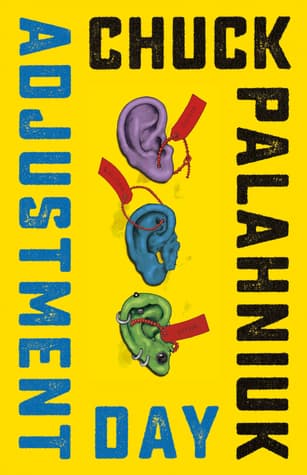
Chuck Palahniuk (2018)
Genre
Thriller / Science Fiction
Reading Time
360 min
Key Themes
See below
Sign in to track this book
In a near-future America collapsing, a mysterious book starts a radical youth movement to violently restructure society and dismantle the establishment, fulfilling separatist fantasies with brutal, satirical precision.
The novel introduces a society where young, working-class men feel marginalized by a powerful, aging elite. A clandestine organization, led by figures like Talbott Reynolds, targets them by distributing a mysterious book called 'Adjustment Day.' This book outlines a radical plan for societal restructuring, advocating for a violent overthrow of the existing order. The young men, feeling hopeless, are drawn to its promises of power and a new world where their masculinity is valued. The initial chapters show their growing disillusionment and the subtle recruitment efforts, often through underground meetings and shared readings of the subversive text.
At the same time, the narrative shifts to the perspective of the ruling elite, mainly elderly, wealthy politicians and bureaucrats, who fear the growing young male population. They see these young men as a threat to their power and resources. Figures like Senator Bobo and his cohorts devise a horrifying plan: to start a global war, specifically targeting young men for conscription and slaughter, under the guise of national defense. Their discussions reveal a cynical, self-serving motive to maintain their status and wealth by drastically reducing the 'surplus' population, especially those considered unproductive or rebellious.
The 'Adjustment Day' book, often called the 'Bible of the Dispossessed,' becomes popular among the disenfranchised. It details a specific date and a precise plan for a nationwide uprising. The book advocates for three new, segregated nations based on race and sexual orientation: 'Whitelandia' for white males, 'Blacktopia' for black males, and 'Gaysia' for gay males. The narrative shows the growing fervor among the followers, who memorize its tenets and prepare for the designated day, convinced this is their only path to liberation and self-determination. The book's influence is widespread, turning quiet resentment into active preparation for revolt.
Adjustment Day arrives, and the promised uprising erupts across the United States. Young men, armed and organized, target the elite and anyone seen as complicit in the old system. Politicians, wealthy individuals, and those considered 'overlords' are systematically rounded up and executed in public displays of vengeance. The violence is swift and brutal, reflecting years of pent-up rage and frustration. The national infrastructure collapses, and chaos reigns as the old order is violently dismantled. The initial phase of the revolution is a bloody purge, establishing the dominance of the 'Adjustment Day' followers and eliminating their former oppressors.
After the purge, 'Adjustment Day' followers begin to implement the book's vision of a new societal structure. Whitelandia, Blacktopia, and Gaysia are declared independent nations, with borders drawn and populations forcibly relocated by race and sexual orientation. The narrative explores the initial attempts to establish governance within these new states. While the intention is to create utopian societies where men can thrive, the immediate aftermath brings continued struggle, logistical nightmares, and the challenges of building a new world from the ashes of the old, often with rigid adherence to the 'Adjustment Day' doctrine.
In Whitelandia, the white male population tries to build a new society based on 'Adjustment Day' principles. However, the reality quickly falls short of the utopian ideal. The men, now in charge, struggle with basic governance, resource management, and the absence of women, who were largely excluded from the new nations. The initial thrill of liberation gives way to boredom, infighting, and a realization that simply removing the old elite does not automatically create a perfect world. The narrative highlights the absurdities and difficulties of an all-male society, where traditional roles are upended, and the lack of diversity creates its own problems.
Blacktopia, meant as a sanctuary for black men, also struggles with its existence. While free from the historical oppressions of old America, the new nation faces its own challenges, including establishing a functioning economy, defense, and social order. The narrative explores how Blacktopia's men try to build a society that reflects their unique cultural identity, but also confronts the difficulties of isolation and the lack of external resources. The initial promise of self-determination is tempered by the harsh realities of creating a sustainable society from scratch, often with limited experience in governance.
Gaysia, the nation for gay men, presents different societal dynamics. The men here are free to express their identities without prejudice, but they also face the challenges of self-governance and resource allocation. The narrative examines how this community tries to build a society that is both self-sufficient and culturally distinct. Like the other new nations, Gaysia struggles with the limitations and unforeseen consequences of a segregated society, where the absence of diversity, while initially seen as liberating, can also lead to stagnation and new internal conflict. The utopian vision clashes with the messy reality of human nature.
As the new nations struggle, a shocking revelation emerges: the author of the 'Adjustment Day' book is not one person, but a group of the same elites who were supposedly overthrown. The 'Adjustment Day' movement was a cynical, elaborate ruse orchestrated by the old guard—primarily the elderly politicians and wealthy individuals—to achieve their goal of population reduction and re-establish control. They funded and guided the movement, knowing it would lead to widespread chaos and the elimination of the young male population they feared. This twist exposes the ultimate manipulation at the heart of the revolution.
With the young male population decimated and segregated into struggling, isolated nations, the 'overthrown' elites begin to re-emerge from hiding, revealing their true victory. They had anticipated the complete collapse of the new nations and planned to step back in to 'restore order' to a significantly reduced and more manageable population. Their plan was a strategy of social engineering and orchestrated chaos, designed to eliminate their perceived threats while maintaining their own power in the long run. The revolution, meant to liberate, was a meticulously planned cull by the very people it sought to destroy.
The novel ends with the elites back in control, their plan largely successful. The segregated nations are weak and dependent, and the young men who started the revolution are dead, isolated, or disillusioned. The cycle of control has been re-established, but with a significantly altered landscape. 'Adjustment Day' served its purpose as a violent reset button for the powerful, allowing them to rebuild society on their own terms, free from the threats they once perceived. The ending leaves a bleak impression, suggesting that power structures are resilient and can adapt even the most radical movements to their own ends.
The Supporting
From a revolutionary leader to a tool of the establishment, his arc highlights the ease with which idealism can be co-opted.
The Antagonist
Remains consistently manipulative and powerful, ultimately succeeding in his Machiavellian plan.
The Protagonist (Collective)
From oppressed and angry, to revolutionary, to ultimately being casualties or isolated survivors of a manipulated revolution.
The Supporting
His role remains largely static, serving as a philosophical backdrop to the burgeoning revolution.
The Antagonist (Collective)
They successfully orchestrate a massive societal reset to consolidate their power and remain in control.
The Mentioned/Supporting
Their collective fate is to be sidelined or removed, emphasizing the new societal order.
The novel explores anxieties about modern masculinity, especially among young men who feel stripped of purpose and power. Palahniuk depicts a generation that feels economically and socially marginalized, leading to emasculation. The 'Adjustment Day' movement offers these men a violent way to reclaim a perceived lost masculinity, promising them dominion and purpose. This theme is central to understanding the young men's rage and their willingness to participate in the revolution, as seen in their desperate embrace of the 'Adjustment Day' book's directives for creating all-male societies.
“What had they done to deserve this? To be born too late for the good jobs, too early for the good wars. To be born boys and told to act like girls.”
A core theme is the cynical manipulation of an entire population by a powerful elite. The 'Adjustment Day' revolution, initially appearing as an organic uprising, is a meticulously planned scheme orchestrated by the very individuals it supposedly overthrows. This shows how easily grievances can be weaponized and directed for ulterior motives. The elites use the young men's frustrations as a tool for population control and power consolidation, demonstrating the insidious nature of social engineering and the vulnerability of the disenfranchised to sophisticated propaganda.
“All revolutions are merely the elites changing their clothes.”
The novel directly confronts the logical extreme of separatist fantasies by creating three distinct, segregated nations based on race and sexual orientation: Whitelandia, Blacktopia, and Gaysia. This theme explores the idea that complete separation, while seemingly offering freedom from conflict, leads to its own forms of isolation, stagnation, and absurdity. It questions whether true utopia can be achieved through exclusion, instead revealing the difficulties and unintended consequences of such rigid divisions, showing that even in their 'ideal' societies, the inhabitants struggle with boredom, resource management, and a lack of diversity.
“The greatest freedom is the freedom from each other.”
Ultimately, 'Adjustment Day' is a story about the relentless pursuit and maintenance of power. The elite's fear of losing control drives their extreme measures, leading them to engineer a societal collapse as a way to reassert their dominance over a smaller, more manageable population. The revolution itself becomes a tool for the powerful to eliminate threats and consolidate their authority. This theme shows the cyclical nature of power struggles and suggests that liberation is elusive when the mechanisms of control are so deeply entrenched and adaptable.
“The only constant in history is the powerful finding new ways to stay powerful.”
Palahniuk skewers various ideologies by taking them to their most extreme and often ridiculous conclusions. The 'Adjustment Day' book is a collection of radical, often contradictory, ideas that promise utopian outcomes but deliver dystopian realities. The isolated, all-male nations, born from these ideologies, quickly become absurd, highlighting the impracticality and flaws of rigid, exclusionary belief systems when confronted with human nature and the complexities of real-world governance. The novel uses dark humor and grotesque imagery to expose the absurdities within extremist thought.
“Every utopia is just a dystopia that hasn't finished cooking.”
A subversive manifesto that serves as the catalyst for the revolution.
This fictional book is the central plot device, functioning as both a sacred text for the disenfranchised young men and a manipulative tool for the elite. It outlines the philosophy, goals, and specific actions for the revolution, including the creation of the three segregated nations. Its widespread distribution and memorization by followers drive the plot, while its true authorship and purpose are revealed as a major twist, showcasing how a powerful narrative can be used to control and direct mass movements.
The shocking reveal that the revolution was orchestrated by the very elite it targeted.
The major twist is the revelation that the 'Adjustment Day' uprising was not an organic rebellion but a meticulously planned and funded operation by the elderly elites. This device completely recontextualizes all prior events, transforming the narrative from a story of liberation into one of ultimate manipulation and control. It serves to highlight the cynicism of power and the vulnerability of the oppressed, leaving the reader with a sense of profound disillusionment about the nature of societal change and control.
Using extreme and often grotesque scenarios to critique contemporary societal issues.
Palahniuk employs social satire by taking current anxieties about masculinity, political correctness, population control, and societal division to their most extreme and often absurd conclusions. The creation of segregated ethno-states and the elites' genocidal plan are exaggerated scenarios designed to provoke thought and critique the underlying currents in modern society. This device allows the author to comment on contemporary issues in a darkly humorous and provocative manner, pushing the boundaries of realism to highlight uncomfortable truths.
Shifting viewpoints between the disenfranchised youth and the ruling elite.
The narrative frequently switches between the perspectives of the young, angry men preparing for 'Adjustment Day' and the cynical, scheming elderly politicians. This device allows the reader to understand the motivations and fears on both sides of the societal divide, creating a more complex picture of the conflict. It also effectively sets up the major twist, as the reader is privy to the elites' plans while simultaneously experiencing the revolution through the eyes of its unwitting participants, creating dramatic irony and suspense.
“The greatest trick the devil ever pulled was convincing the world he didn't exist.”
— A character reflecting on societal deceptions.
“The problem with the future is that it keeps turning into the present.”
— A cynical observation about the relentless march of time.
“You are not your job. You're not how much money you have in the bank. You're not the car you drive. You're not the contents of your wallet. You're not your fucking khakis.”
— A common Palahniuk theme, here applied to the protagonists' disillusionment.
“Sometimes you have to burn your life to the ground just to see what grows back from the ashes.”
— A character contemplating radical change and destruction.
“The weak are always trying to pull the strong down.”
— A commentary on power dynamics and resentment.
“Every generation imagines itself to be more intelligent than the one that went before it, and wiser than the one that comes after it.”
— A general observation on generational hubris.
“Freedom is just another word for nothing left to lose.”
— A character's grim realization about ultimate liberation.
“The only way to make sense out of change is to plunge into it, move with it, and join the dance.”
— An argument for embracing the chaos of societal upheaval.
“Your past is a story you tell yourself. And if you don't like it, change it.”
— A character advocating for self-reinvention.
“The world doesn't need more love. It needs more hate, properly directed.”
— A provocative statement from a revolutionary character.
“You can't save people, you can only love them.”
— A moment of resignation and acceptance amidst the turmoil.
“We're all just trying to get by, until we're not.”
— A bleak but relatable sentiment about human existence.
“The future belongs to those who show up.”
— A call to action for those seeking to shape the new world.
“Sometimes the only way to find yourself is to get completely lost.”
— A character's journey of self-discovery through extreme circumstances.
Ready to see how well you understood this book? Take our interactive quiz with 10 questions.
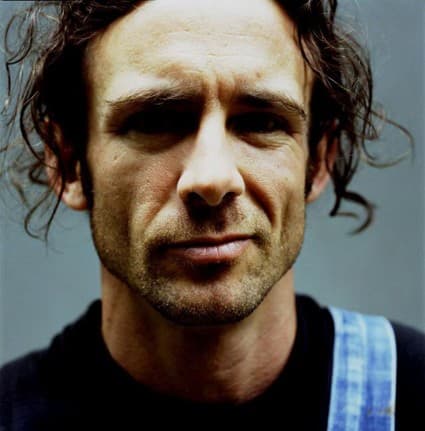
Chuck Palahniuk is a highly influential contemporary author, best known for his debut novel "Fight Club." His works, including "Haunted" and "Guts," are characterized by their transgressive themes, dark humor, and often shocking narratives. Palahniuk's distinctive style has earned him a significant cult following and cemented his reputation as a master of postmodern fiction.







