“There is in the Jew a spiritual something which the pure Aryan does not possess.”
— Max Eisenstein's early letters to Martin Schulse, before the political climate shifts.

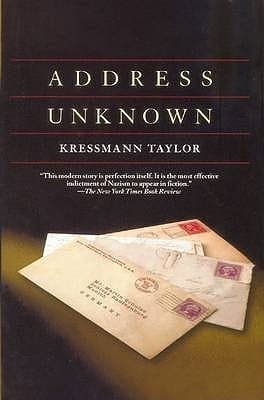
Kathrine Kressmann Taylor (1989)
Genre
Historical Fiction
Reading Time
60 min
Key Themes
See below
Sign in to track this book
As Nazism rises, the correspondence between a Jewish art dealer in San Francisco and his former German business partner changes from friendship to a dance of ideology, betrayal, and a desperate, poetic act of revenge.
The story begins in November 1932, with a letter from Max Eisenstein, a Jewish art dealer in San Francisco, to his former business partner, Martin Schulse, who has recently returned to Germany with his family. Max expresses his loneliness and misses Martin, remembering their successful art gallery, Schulse-Eisenstein. Martin's first letters are full of excitement about being back in his homeland, the scenery, and the political movement led by Adolf Hitler. He describes the enthusiasm for the new regime and his growing involvement, seeing it as a positive force for Germany's recovery and pride. Max, from America, expresses some concern but mostly focuses on their shared past and the business.
As the correspondence continues into early 1933, Martin's letters show his commitment to the Nazi Party. He details the rallies he attends, the speeches he hears, and the sense of national unity he feels. He begins to repeat the party's rhetoric, especially about the 'Jewish problem,' though at first in a detached way. He assures Max that despite the political changes, their personal friendship remains. Max, however, starts to voice serious concerns about the treatment of Jews in Germany, citing news reports. Martin dismisses these as exaggerations or necessary measures for national cleansing. He even expresses pride in his son, Heinrich, who joins the Hitler Youth.
In March 1933, Max writes to Martin about the worsening situation for Jews, mentioning the organized boycotts of Jewish businesses. He expresses his fear for his sister, Griselle, an actress performing in Berlin. Griselle had been Martin's mistress, and Max trusts Martin to protect her. He asks Martin to look after her. Martin's reply is dismissive. He warns Max to stop writing to him, stating that letters from a Jew would hurt his standing within the Party. He advises Max not to write again, cutting off their personal connection for his political ambition and safety.
Max receives a final, desperate letter from Griselle, detailing her terrifying experience: she was pursued by Nazi stormtroopers, trapped, and killed. She describes hiding, fleeing, and being cornered. The letter implies that she sought help from Martin but was denied. Max is devastated by his sister's death and Martin's betrayal. His subsequent letters to Martin become accusatory, full of grief and rage. He blames Martin directly for Griselle's death, pointing out Martin's refusal to help and his abandonment of their friendship for political gain. Max's despair turns into a desire for retribution.
Following Griselle's death, Max plans his revenge. He continues to write to Martin, but his letters change. He begins including seemingly innocent but coded information, such as details about fictitious Jewish bank accounts in Switzerland, requests for large sums of money, and discussions about the supposed Jewish ownership of their former gallery. Max knows that Nazi censors are reading all incoming mail to Germany. He crafts these letters to appear as if Martin is secretly collaborating with Jews abroad, incriminating him to the authorities.
Martin, who has been rising in the Nazi Party, begins to recognize the nature of Max's letters. He realizes that the innocent details about bank accounts and business dealings are being misinterpreted by the censors. His letters to Max become frantic, full of terror and desperation. He pleads with Max to stop writing, explaining that each letter puts his life and his family's lives in danger. He recounts being interrogated by the authorities, his home being searched, and his reputation being destroyed. He even tries to explain his earlier actions, expressing regret, but it is too late.
As Max continues his barrage of incriminating letters, Martin's life deteriorates. He describes losing his job, being ostracized by his community, and living in fear. His letters become shorter, more fragmented, and full of terror. He recounts being taken away for questioning multiple times, the increasing suspicion from the authorities, and his inability to convince them of his loyalty. He understands that Max is deliberately engineering his downfall, but he cannot stop it. He is now suffering the same persecution he once dismissed and even facilitated for others.
Max receives a final, desperate letter from Martin, dated March 1934, describing his ruin and the danger to his life. Martin writes that he has been arrested and is being taken away, implying he will be sent to a concentration camp or executed. His last words are a plea for Max to stop, an acknowledgement of the deadly trap he has fallen into. Max's final letter, dated March 1934, is addressed to 'Mr. M. Schulse' and has no return address, mirroring the address on Griselle's last letter. It is short, cold, and has no personal sentiment, simply stating: 'The bank acknowledges your draft for twelve hundred dollars. I am glad you are back in California. Yours, Max.' This implies Martin's death and Max's completed revenge.
The Protagonist
From a trusting, loyal friend to a cold, calculating avenger.
The Antagonist
From an enthusiastic nationalist to a terrified, hunted man.
The Supporting
A vibrant actress reduced to a desperate victim, whose death sparks the central conflict.
The Mentioned
No specific arc, but represents the ideological indoctrination of the young.
The Mentioned
No specific arc.
The novel shows how extremist ideology can corrupt personal relationships and moral integrity. Martin Schulse, at first a loyal friend, gradually accepts Nazi propaganda, prioritizing his social and political standing over Max's safety and their shared history. His betrayal of Griselle and his abandonment of Max show how easily human decency can be eroded when fear and ambition are fueled by a totalitarian regime. The letters track Martin's change from a man who believes he can keep his personal values amidst political change to one who participates in and benefits from the persecution of others, becoming a victim of the system he embraced.
“I can do nothing. An open act of aid to a Jew at this time would bring down on my head the total wrath of the party. I have two sons, you know. I have a position.”
After Griselle's murder, Max Eisenstein begins an effective campaign of revenge. His method, using the Nazi censorship system against Martin, changes him from a grieving brother into a cold, calculating avenger. The story explores the line between personal vengeance and a form of poetic justice. Max's actions, while morally ambiguous, ensure that Martin experiences the same terror and persecution he allowed to befall others. The book suggests that when faced with systemic injustice and personal betrayal, individuals may use extreme measures to achieve a sense of balance or closure, even if it means mirroring the cruelty they condemn.
“Do not write me again, Max. It is dangerous. You must not write me.”
The novel is a cautionary tale about the dangers of indifference and complicity when fascism rises. Martin's initial dismissiveness of Max's concerns, his belief that the 'Jewish problem' is a political necessity, and his acceptance of Nazi rhetoric show how ordinary people can become complicit in horrific crimes. His failure to act when Griselle needed help, and his rationalizations, show the slippery slope from passive acceptance to active participation in an oppressive system. The story implies that silence and inaction are not neutral but contribute to the perpetuation of evil.
“You are a Jew. I am a German. Our paths have diverged.”
The entire narrative unfolds through letters, showing communication as both a bond and a weapon. At first, the letters connect two friends across continents, conveying warmth, news, and shared history. As the political climate changes, the letters become a tool for betrayal, manipulation, and destruction. Max exploits the Nazi regime's censorship of mail, turning communication into a deadly trap for Martin. The novel shows how words, when intercepted and misinterpreted by an oppressive authority, can become instruments of terror and downfall, emphasizing the fragility and power of written correspondence.
“These letters are intercepted. They are read. Do you not understand?”
The entire story is told through a series of letters.
The novel's epistolary format is its most defining characteristic. By presenting the entire narrative as a series of letters exchanged between Max and Martin, the author creates a sense of immediacy and intimacy. This format allows the reader to witness the gradual deterioration of their friendship and Martin's moral decay directly through their own words. It also highlights the growing distance, both geographical and ideological, between them. The letters serve as both a record of their past and the instrument of Martin's downfall, as Max weaponizes the very act of correspondence.
The reader understands the implications of Martin's actions and Max's plan before the characters fully do.
Dramatic irony is prevalent throughout the novel. The reader, with the benefit of historical hindsight regarding the Holocaust, understands the full gravity of Martin's dismissive remarks about the 'Jewish problem' and his growing involvement with the Nazi Party. Furthermore, once Max begins his revenge, the reader quickly grasps his intention to incriminate Martin through coded letters, while Martin initially struggles to comprehend the danger, making his escalating panic all the more poignant and his fate seem inevitable.
The Nazi regime's mail censorship becomes a central plot mechanism.
The historical reality of Nazi mail censorship is not just a backdrop but a crucial plot device. Max's revenge hinges entirely on the certainty that his letters to Martin will be intercepted and read by German authorities. He deliberately crafts his messages to appear incriminating to the censors, knowing they will misinterpret his seemingly innocent business discussions as evidence of Martin's disloyalty. This device transforms a tool of state control into a weapon for personal retribution, making the act of correspondence itself deadly.
The final postal mark signifies Martin's fate and Max's completed revenge.
The title 'Address Unknown' carries profound symbolic weight. It refers to the final postal mark on Griselle's last letter, indicating her disappearance and death, and then chillingly mirrors the fate that Max orchestrates for Martin. When Max sends his final letter to 'Mr. M. Schulse' with no return address, he is effectively declaring Martin's 'address unknown' in the most literal and figurative sense—Martin is either dead or in a place from which he cannot return or communicate, a direct consequence of Max's revenge. It symbolizes the complete erasure and destruction of Martin's life.
“There is in the Jew a spiritual something which the pure Aryan does not possess.”
— Max Eisenstein's early letters to Martin Schulse, before the political climate shifts.
“The world is not a sweet shop, Max. One must be hard.”
— Martin Schulse's increasingly cold and pragmatic view as the Nazi Party gains power.
“A man's best friend is his dog, a woman's best friend is her money.”
— A casual observation by Martin Schulse, revealing a cynical worldview.
“I am not a Jew, Max. I am a German.”
— Martin Schulse emphatically distancing himself from Max Eisenstein and his Jewish heritage.
“Certain things are not to be done. It is a matter of breeding, of decency.”
— Max Eisenstein's initial disbelief at Martin Schulse's actions, clinging to shared values.
“You are a sentimentalist, Max. That is your trouble.”
— Martin Schulse's dismissal of Max's emotional appeals and warnings.
“The child is father of the man. The past holds the future.”
— Max Eisenstein reflecting on their shared history and its impact on their present.
“I have no power, Max. I am a small cog in a large machine.”
— Martin Schulse's excuse for his inaction and complicity.
“You cannot fight the inevitable. It is like trying to stop a tidal wave with your bare hands.”
— Martin Schulse's fatalistic view of the political changes in Germany.
“There are some wounds that never heal, Max. And some friendships that cannot be mended.”
— Max Eisenstein realizing the irreparable damage to their relationship.
“The pen is mightier than the sword, Max. Sometimes it is also more dangerous.”
— Max Eisenstein pondering the power of letters and their potential for harm.
“I have always admired your ability to see things clearly, Max. Even when I did not want to.”
— Martin Schulse's reluctant acknowledgment of Max's perception, though he chose to ignore it.
“It is not a question of right or wrong, Max. It is a question of survival.”
— Martin Schulse justifying his actions by prioritizing self-preservation.
“You have sown the wind, Martin. Now you must reap the whirlwind.”
— Max Eisenstein's final, chilling letters, foreshadowing Martin's demise.
“Address Unknown.”
— The recurring and ultimately final message on the returned letters, symbolizing the complete breakdown of their connection and Martin's isolation.
Ready to see how well you understood this book? Take our interactive quiz with 10 questions.







