“Our deeds determine us, as much as we determine our deeds.”
— Narrator reflecting on character and fate.


George Eliot (2008)
Genre
Historical Fiction / Romance
Reading Time
12-15 hours
Key Themes
See below
Sign in to track this book
In a 19th-century rural English community, the innocent love of a carpenter, Adam Bede, for the beautiful but vain dairymaid Hetty Sorrel unravels into a drama of seduction, betrayal, and its consequences after she falls for the charms of a fickle young squire.
The novel opens on a Sunday morning in June 1799, introducing Adam Bede, a skilled and principled carpenter from Hayslope. Adam is religious but also practical, often frustrated by the idleness of others, particularly his younger brother, Seth, who is a fervent Methodist preacher. Adam secretly loves Hetty Sorrel, a beautiful but vain dairymaid who lives with her uncle, Martin Poyser, at the Hall Farm. The Poyser family, including Mrs. Poyser and Dinah Morris (Mrs. Poyser's niece and a Methodist preacher), are central to the community. Adam spends his Sunday morning working on a coffin, reflecting on his duties and his affection for Hetty, while Seth attends a Methodist open-air meeting where Dinah preaches.
Hetty Sorrel, despite her humble position, has a striking beauty that draws the admiration of many, including Adam Bede. She is, however, shallow and self-absorbed, dreaming of a life of luxury and social elevation. Her vanity is further fueled by the return of Arthur Donnithorne, the young, charming, and somewhat irresponsible squire of Hayslope. Arthur, recently come into his inheritance, wants to make a good impression and implement improvements on his estate. He is immediately smitten by Hetty's prettiness, and their initial encounters are marked by playful flirtation. Adam, observing these interactions, feels a growing unease and jealousy, sensing a threat to his own hopes for Hetty.
Arthur Donnithorne, despite his good intentions and a desire to do right by his tenants, succumbs to his infatuation with Hetty. He begins a series of secret meetings with her in the woods, promising her an idyllic future, though with no real intention of marrying her due to their vast social difference. Hetty, flattered and naive, believes his promises and falls deeply in love with the idea of being a lady. Meanwhile, Adam's brother, Seth Bede, admires Dinah Morris for her piety and kindness. He proposes marriage to her, but Dinah, devoted to her spiritual calling and believing she is not meant for earthly marriage, gently refuses him, though she holds him in high esteem.
Adam Bede's suspicions about Hetty and Arthur grow as he observes their secret meetings and Hetty's increasingly detached and dreamy demeanor. He confronts Hetty, who denies any wrongdoing, but her evasiveness only solidifies his fears. Adam, a man of strong moral character, feels a sense of betrayal and worry for Hetty's reputation. In contrast to Hetty's superficiality, Dinah Morris continues her selfless work, visiting the sick and offering spiritual guidance. She attends to Lisbeth Bede, Adam's mother, who is struggling with the recent death of her husband, Thias, who drowned in a drunken accident. Dinah's calm and compassionate presence brings solace to the grieving family.
Arthur Donnithorne, preparing to leave Hayslope for military training, finally recognizes the gravity of his actions with Hetty. He writes a letter to her, intending to end their affair gently and honorably, but his weakness of character prevents him from delivering it directly. Instead, he meets Hetty for a final tryst, where he gives her money and promises to look after her, but also makes it clear that their relationship must end due to social impossibility. Hetty, heartbroken and deluded, clings to a desperate hope that he will eventually return for her. Arthur departs, leaving Hetty in emotional turmoil and false hope.
After Arthur's departure, Adam, still deeply in love with Hetty despite his lingering doubts, decides to propose marriage to her. He believes that by marrying her, he can protect her and provide her with a stable, respectable life. Hetty, however, is now secretly pregnant with Arthur's child. Trapped between her desperate hope for Arthur's return and the terrifying reality of her situation, she reluctantly accepts Adam's proposal, seeing it as her only possible escape from public shame. Her acceptance is marked by deep internal conflict and a sense of impending doom, as she struggles to conceal her secret from Adam and her family.
As the wedding day approaches, Hetty becomes increasingly distressed and paranoid, unable to face marrying Adam while carrying another man's child. Driven by a desperate hope that Arthur will save her, and terrified of her secret being discovered, she flees Hayslope under the guise of visiting a relative. Her journey becomes a desperate and aimless wandering, as she tries to find Arthur or a place where she can give birth in secret. She travels through various towns, enduring hardship and loneliness, her beauty fading under the strain of her physical and emotional suffering. Her search for Arthur proves fruitless, and she finds herself utterly alone and abandoned.
Hetty eventually gives birth to her child in secret, alone and without support. Overwhelmed by despair, fear, and abandonment, she leaves her newborn baby in a field, hoping someone else will find and care for it. This act, born of a desperate and unthinking mental state, is intended to conceal her shame and escape the consequences of her actions. However, the baby is discovered dead, and suspicion quickly falls upon Hetty. Her desperate flight and subsequent actions lead to her arrest, shattering the peace and innocence of Hayslope.
Hetty is brought to trial for the murder of her child. The evidence, though circumstantial, is damning, and her own confused and terrified testimony does little to help her case. The trial exposes her secret affair with Arthur and the tragic consequences of her vanity and his irresponsibility. The news of her arrest and trial sends shockwaves through Hayslope, particularly devastating the Poyser family and Adam Bede, who struggles to reconcile the woman he loved with the accused. Despite the efforts of her defense, Hetty is found guilty and sentenced to hang, a verdict that plunges the community into grief and moral reflection.
Just as Hetty faces execution, Arthur Donnithorne, having received news of the tragedy, rushes back to Hayslope. Overwhelmed by guilt and remorse, he uses his influence to secure a reprieve for Hetty, changing her death sentence to transportation for life. This act of intervention, though late, prevents her execution. While in prison, awaiting her fate, Dinah Morris visits Hetty. Dinah's compassion and spiritual strength finally break through Hetty's despair, leading Hetty to a moment of genuine repentance and acceptance of her fate. This interaction shows Dinah's capacity for empathy and forgiveness.
The community of Hayslope slowly begins to heal from the trauma of Hetty's tragedy. Arthur Donnithorne, deeply affected by the consequences of his actions, lives with guilt and dedicates himself to making amends and fulfilling his duties as squire. He becomes a more responsible and compassionate landlord, but the shadow of his past indiscretion remains. Adam Bede, though initially consumed by grief and anger, slowly finds peace through his work and the steadfast support of his family and friends. The novel explores the long-term impact of sin and redemption on individuals and the collective moral fabric of a rural community, emphasizing empathy and understanding.
In the years following Hetty's transportation, Adam Bede and Dinah Morris grow closer. Dinah, who had initially refused Seth's proposal due to her spiritual calling, finds that her love for Adam does not diminish her devotion to God but rather enriches it. Adam, having matured through his suffering, recognizes Dinah's goodness and inner strength. Their love blossoms, founded on mutual respect, shared values, and a deep spiritual connection. They marry and have children, creating a home filled with love and integrity. Their union symbolizes the triumph of genuine moral character and enduring affection over the fleeting beauty and superficiality that led to tragedy.
The Protagonist
From a man consumed by unrequited love and righteous anger, Adam evolves into a more understanding and compassionate individual, finding true love and spiritual fulfillment.
The Antagonist/Tragic Figure
Hetty's arc is a tragic descent from vain innocence to desperate crime, culminating in a moment of remorse and spiritual awakening in prison, largely due to Dinah's influence.
The Antagonist/Supporting
Arthur's arc is one of a flawed but well-meaning young man who learns the harsh consequences of moral irresponsibility, leading to a life of atonement and responsible leadership.
The Supporting/Moral Compass
Dinah remains steadfast in her spiritual devotion, but her arc shows her embracing earthly love and finding fulfillment in marriage without compromising her faith.
The Supporting
Seth's arc is relatively static, consistently embodying spiritual devotion and gentle resilience, accepting Dinah's friendship when he cannot have her love.
The Supporting
Mrs. Poyser remains a consistent character, a pillar of common sense and moral outrage, reacting to events with characteristic vigor.
The Supporting
Mr. Poyser remains a consistent character, embodying the steadfast and honest farmer, reacting to events with quiet dignity and distress.
The Supporting
Mr. Irwine's arc is one of consistent pastoral wisdom, offering guidance and solace to his parishioners, particularly in times of crisis.
The Supporting
Lisbeth's arc is largely static, representing the enduring maternal figure, experiencing grief and finding solace through family and faith.
The novel explores how individual choices, especially those driven by self-interest or weakness, have far-reaching and often devastating consequences for both the individual and the wider community. Arthur Donnithorne's casual flirtation with Hetty, born of irresponsibility and a lack of foresight, directly leads to Hetty's pregnancy, her desperate flight, and ultimately, her crime and condemnation. Similarly, Hetty's vanity and self-delusion prevent her from making sound decisions. Adam's initial anger and later capacity for forgiveness also show the moral journey. Eliot emphasizes that no action exists in a vacuum, showing the interconnectedness of human lives and the ethical need to consider the impact of one's behavior.
“Our deeds are like children that are born to us; they live and act apart from our own will. Nay, children may be strangled, but deeds never: they have an indestructible life both in and out of our consciousness.”
Eliot examines different forms of love and the often-painful gap between idealized perceptions and harsh realities. Adam Bede's idealized love for Hetty blinds him to her superficiality, leading to disillusionment and suffering. Hetty's love for Arthur is equally shallow, based on his social status and her own dreams of luxury, rather than genuine affection. In contrast, the novel presents Dinah Morris's love as selfless and spiritual, extending compassion to all, including Hetty in her darkest hour. Ultimately, Adam and Dinah's love, built on mutual respect, shared values, and a deep understanding of human imperfection, represents a more mature and enduring form of affection, grounded in reality rather than illusion.
“What are we but the co-operators with God, that are to complete His work?”
The novel critiques the rigid social hierarchy of 19th-century rural England and the hypocrisy often associated with it. Arthur Donnithorne's privileged position allows him to exploit Hetty without fear of immediate social repercussions for himself, while Hetty, a working-class dairymaid, faces complete ruin and condemnation for the same act. The novel highlights the double standards applied to different social classes, where the 'squire' can commit moral transgressions with relative impunity, while the 'dairymaid' bears the full brunt of social ostracization and legal punishment. This exposes the injustices embedded within the social structure and the moral failings of those who benefit from it.
“It is a grand thing to be a gentleman, and it is a grand thing to be a lady; but it's a grander thing to be a man and a woman.”
Eliot explores various facets of religion and its connection to genuine morality. Dinah Morris embodies a sincere, compassionate, and active Methodist faith that translates into selfless service and empathy for others. Her religion is not dogmatic but rather a deep, internal wellspring of goodness. Adam Bede represents a more pragmatic, duty-bound Anglican faith, focused on hard work and personal integrity. Mr. Irwine offers a more intellectual and tolerant Anglicanism. The novel contrasts these authentic expressions of faith with superficial religiosity or a lack of moral conviction, suggesting that true religion manifests in ethical behavior, compassion, and a commitment to justice, rather than mere outward observance. It also highlights the tension between established church and dissenting Methodism.
“Depend upon it, my dear, you'll never do any good in this world if you are not a little bit of a hypocrite.”
The tragic events surrounding Hetty's crime force the characters and the reader to confront questions about justice and forgiveness. The legal system, though it condemns Hetty, is portrayed as somewhat impersonal and limited in its understanding of human desperation. Adam's journey from vengeful anger to a capacity for forgiveness, particularly towards Arthur, is central to his moral growth. Dinah's unconditional compassion for Hetty in prison offers an example of spiritual forgiveness that transcends legal judgment. The novel suggests that while earthly justice has its place, true healing and moral progress often require a deeper, more empathetic understanding of human fallibility and the willingness to forgive, both others and oneself.
“There's no knowing what a man's mind is, but by what comes out of it.”
A highly intrusive and philosophical narrator guides the reader's understanding.
Eliot employs a highly self-conscious and omniscient narrator who frequently interjects with philosophical reflections, moral commentary, and direct addresses to the reader. This narrator provides deep insights into the characters' inner lives, motivations, and the social context, often pausing the narrative to offer broader observations on human nature, provincial life, and the complexities of morality. This device allows Eliot to shape the reader's interpretation, highlight thematic concerns, and create a sense of authorial presence, making the reader a participant in the moral exploration of the story rather than just a passive observer.
Detailed and unvarnished portrayal of 19th-century rural life and its inhabitants.
Eliot's pioneering use of social realism is a key device. She meticulously depicts the everyday lives, language, customs, and struggles of the rural working class in Hayslope. This includes detailed descriptions of farming practices, carpentry, domestic routines, and the specific dialect of the region. The novel avoids romanticizing rural life, presenting both its virtues (hard work, community spirit) and its harsh realities (poverty, limited opportunities, social strictures, the impact of class). This realistic portrayal grounds the moral and emotional drama in an authentic historical and social context, making the characters and their experiences feel tangible and relatable.
Contrasting characters highlight specific traits and themes.
Eliot masterfully uses foil characters to illuminate different aspects of human nature and moral choices. Adam Bede and Seth Bede, for instance, are brothers who represent different approaches to faith and practicality. Hetty Sorrel and Dinah Morris serve as the most prominent foils: Hetty's vanity, superficiality, and self-interest starkly contrast with Dinah's selfless compassion, spiritual depth, and inner beauty. This contrast underscores the novel's central themes of genuine morality versus outward appearance, and the destructive power of self-delusion versus the redemptive power of empathy. Arthur Donnithorne also serves as a foil to Adam's steadfastness and moral integrity.
The idyllic rural landscape serves as a backdrop to human drama and moral failings.
The picturesque, seemingly unchanging rural setting of Hayslope functions as more than just a backdrop; it is integral to the novel's mood and thematic resonance. Initially presented as an idyllic, harmonious community, the pastoral setting contrasts sharply with the human drama of betrayal, sin, and tragedy that unfolds within it. This contrast highlights the idea that moral failings can disrupt even the most peaceful environments. The descriptions of nature often mirror the emotional states of the characters, or provide a sense of timelessness against the fleeting human passions. The land itself is a source of stability and honest labor, grounding the characters in a tangible reality.
The reader is aware of crucial information that characters are not, heightening tension.
Dramatic irony is frequently employed to build tension and underscore the tragic inevitability of events. The reader is often privy to Hetty's secret affair with Arthur and her pregnancy long before Adam or the Poyser family become aware of it. This creates a sense of dread and anticipation, as the reader watches characters make decisions or express hopes based on incomplete information, knowing the painful truth that awaits them. For example, Adam's proposal to Hetty, filled with his earnest love and hope, is tragically ironic because the reader knows her true, desperate circumstances, making the moment poignant and laden with impending doom.
“Our deeds determine us, as much as we determine our deeds.”
— Narrator reflecting on character and fate.
“It is but a shallow haste that concludes that insincerity is one of the worst of vices.”
— Narrator discussing human nature and judgment.
“What greater thing is there for two human souls than to feel that they are joined for life—to strengthen each other in all labour, to rest on each other in all sorrow, to minister to each other in all pain, to be one with each other in silent unspeakable memories at the moment of the last parting?”
— Description of Adam Bede's ideal of marriage.
“Nature repairs her ravages—but not all.”
— Narrator on the aftermath of tragedy and loss.
“I'm not denying the women are foolish: God Almighty made 'em to match the men.”
— Mrs. Poyser's witty remark about gender relations.
“There's no pleasure i' living if you're to be corked up for ever, and only dribble your mind out by the sly, like a leaky barrel.”
— Mrs. Poyser expressing frustration with repression.
“The first condition of human goodness is something to love; the second, something to reverence.”
— Narrator on moral development and values.
“It's them as take advantage that get advantage i' this world.”
— Mrs. Poyser commenting on social inequality.
“We hand folks over to God's mercy, and show none ourselves.”
— Dinah Morris preaching about compassion and forgiveness.
“A patronizing disposition always has its meaner side.”
— Narrator critiquing social hierarchies and condescension.
“There's a great deal of unmapped country within us which would have to be taken into account in an explanation of our gusts and storms.”
— Narrator on the complexity of human emotions.
“I've never any pity for conceited people, because I think they carry their comfort about with them.”
— Mrs. Poyser's sharp observation on vanity.
“The growth of higher feeling within us is like the growth of faculty, bringing with it a sense of added strength.”
— Narrator on moral and emotional development.
Ready to see how well you understood this book? Take our interactive quiz with 10 questions.
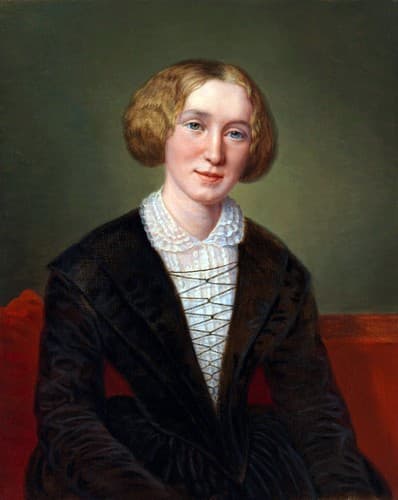
Mary Ann Evans, known by her pen name George Eliot, was an English novelist, poet, journalist, translator, and one of the leading writers of the Victorian era. She wrote seven novels: Adam Bede (1859), The Mill on the Floss (1860), Silas Marner (1861), Romola (1862–63), Felix Holt, the Radical (1866), Middlemarch (1871–72) and Daniel Deronda (1876). Like Charles Dickens and Thomas Hardy, she emerged from provincial England; most of her works are set there. Her works are known for their realism, psychological insight, sense of place and detailed depiction of the countryside.







