“There was no time for a boy to be a boy anymore.”
— Jethro's realization about the impact of the Civil War on his childhood.

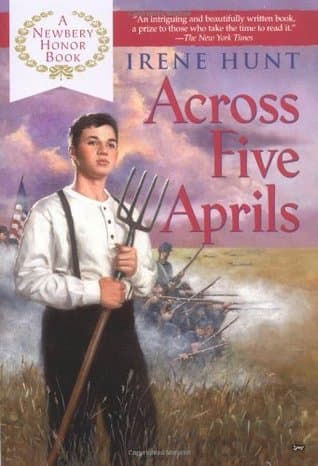
Irene Hunt (1964)
Genre
Children's / Historical Fiction / Young Adult
Reading Time
240 min
Key Themes
See below
Sign in to track this book
During the Civil War, young Jethro Creighton deals with family divisions and the harsh realities of growing up on his Illinois farm.
In spring 1861, ten-year-old Jethro Creighton lives with his family on a farm in southern Illinois. He is the youngest of a large family, many of whom have grown and moved away. The family, especially Jethro and his sister Jenny, enjoy the simple routines of farm life. However, the coming Civil War casts a long shadow. Talks about states' rights and slavery fill conversations, both at home and in the nearby town of Newton. Jethro's older brothers, Bill, Tom, and John, and his cousin Eb, all consider joining the Union, creating a clear tension that Jethro, despite his age, keenly feels and watches.
When Fort Sumter is fired upon, the war officially begins, and its immediate effects are felt within the Creighton family. Tom and Eb enlist in the Union Army, full of patriotism. Their departure leaves a big hole on the farm, increasing the workload for Jethro and his parents. But the deepest division comes from Bill, Jethro's quiet older brother. Unlike Tom and Eb, Bill shows sympathy for the Southern cause, believing the North is infringing on the South's rights. After a very emotional talk with Jethro, Bill makes the hard choice to leave home and fight for the Confederacy, changing the family forever and leaving Jethro with deep sadness and confusion.
With Tom, Eb, and Bill gone, Jethro, at just eleven, becomes the man of the house, alongside his aging father, Matt Creighton. He must plow fields, get supplies from town, and take on responsibilities far beyond his years. During a trip to Newton, he faces hostility from men who resent Bill's choice to fight for the South. He is threatened and told to leave town. On his way home, Guy Wortman, a local troublemaker and Confederate sympathizer, ambushes him and tries to hurt him. Jethro bravely defends himself and escapes, but the incident shows the real dangers and hatred now present in their daily lives, even far from the battles.
The war, at first a distant idea, becomes a harsh reality with news from the front lines. The Creightons get a letter saying Tom has been killed in battle at Pittsburgh Landing (Shiloh). This loss plunges the family into deep grief, especially his mother, Ellen, and his sister, Jenny. Soon after, the family learns that Eb, overwhelmed by the horrors of war and bad conditions, has deserted the Union Army. Eb's desertion brings shame and possible legal trouble to the family. Jethro, finding Eb hiding in the woods, makes the hard choice to write to President Lincoln, asking for advice on how to help his cousin, showing his growing maturity and moral sense.
In response to Jethro's letter, President Lincoln issues a general pardon for deserters who return to their posts, letting Eb rejoin the Union Army without severe punishment. This act of kindness brings great relief to the Creighton family and strengthens Jethro's respect for the President. However, the war's effects continue. The family faces ongoing challenges, including crop failures and the threat of starvation. Guy Wortman, still holding a grudge, tries to burn down their barn, but the community helps the Creightons, showing the strength of neighborly bonds even amid division. Jethro continues to carry the burden of farm work and the emotional weight of the war.
John, another of Jethro's older brothers, comes home for a short leave from the Union Army, bringing vivid, often grim, stories of the war's realities. He shares news of the battles and the toll on soldiers, giving the family a direct link to the conflict. His presence offers a temporary sense of safety and connection. Meanwhile, Shad, Jethro's beloved schoolteacher and Jenny's fiancé, falls gravely ill while serving in the army. Jenny, very worried and heartbroken, decides to go to Washington D.C. to care for him. Her journey highlights the sacrifices and emotional stress on those waiting at home, and the desperate steps they take for their loved ones.
Jenny arrives in Washington D.C. and nurses Shad back to health. Her steady care slowly brings Shad back from near death. During his recovery, they decide to marry, a simple ceremony during the war, but a meaningful moment of personal joy and commitment. The marriage offers a small but important sign of hope for the Creighton family, showing continuity and love even in the darkest times. Shad's gradual recovery also offers reassurance, a contrast to the many losses the family and nation have endured. Jenny sends letters home, keeping Jethro and her parents informed of their well-being.
Finally, after years of brutal conflict, news arrives that General Robert E. Lee has surrendered to General Ulysses S. Grant at Appomattox Court House, ending the Civil War. The entire nation, including the Creightons, feels immense relief and joy. The war is over, and the long wait for their loved ones to return can begin. However, this joy is tragically short-lived. Soon after, the devastating news of President Abraham Lincoln's assassination reaches the Creighton farm. The nation mourns, and the Creightons, who admired Lincoln's leadership and kindness, feel a deep sense of loss, tempering their relief with renewed sorrow.
After the war, the Creighton family anxiously awaits their soldiers' return. Eb is among the first to come home, a changed man, bearing the physical and emotional scars of battle, but grateful to be alive. John also returns, bringing news of Bill. He reveals that Bill survived the war and is now in California, unable to face returning to his family after fighting for the Confederacy. This news brings both relief and a lingering sadness to Jethro, who still deeply misses his brother. The returning soldiers show the lasting impact of the war, but their presence also marks the beginning of the family's healing and a gradual return to some sense of normal life.
As the country rebuilds, Shad and Jenny finally return to the Creighton farm. Shad, though still recovering, is determined to resume his life as a teacher. He immediately sees Jethro's intelligence and desire for knowledge, offering to take him back to Newton to live with him and Jenny, where Jethro can continue his education. This offer is a great chance for Jethro, who has given up so much of his childhood for the farm. The novel ends with Jethro looking forward to a future beyond the farm, a future of learning and possibilities, symbolizing hope for a new generation rising from the ashes of war, ready to help a reunited nation.
The Protagonist
Jethro transforms from an innocent boy into a responsible, thoughtful young man, capable of making difficult decisions and understanding the complexities of war and human nature.
The Supporting
Matt endures the immense pain of seeing his family torn apart by war and illness, growing physically weaker but remaining a pillar of strength and moral guidance for Jethro.
The Supporting
Ellen experiences profound grief and anxiety throughout the war, but her enduring faith and love for her family allow her to persevere.
The Supporting
Jenny matures from a loving sister into a devoted wife, taking charge of her own destiny and finding happiness despite the war's hardships.
The Supporting
Bill makes a difficult choice based on conscience, leading to his self-imposed exile, symbolizing the deep divisions caused by the war.
The Supporting
Shad endures severe injury and recovery, eventually returning to provide Jethro with an opportunity for education, becoming a symbol of hope and intellectual growth.
The Supporting
Eb deserts from the army but finds redemption through Jethro's intervention and President Lincoln's compassion, eventually returning to serve.
The Supporting
Tom's brief arc highlights the tragic loss of young lives in war, transforming him from an eager soldier to a symbol of the war's ultimate cost.
The Supporting
John serves honorably throughout the war, returning home scarred but resilient, providing closure regarding Bill's fate.
The novel clearly shows how war damages childhood, especially through Jethro's change. At ten, Jethro is a carefree boy, but the war quickly forces him into adult roles. He sees family division (Bill's leaving), experiences personal danger (Guy Wortman's attack), and endures deep grief (Tom's death). These events strip away his innocence, replacing it with a mature understanding of life's harsh realities and human complexities, making him a man too soon.
“He was growing up, and the world was a place of change and conflict; it was not the safe, familiar haven he had always known.”
The Creighton family reflects the divided nation during the Civil War. Bill's choice to fight for the Confederacy, while his brothers Tom and Eb join the Union, creates a painful split in the household. This personal conflict highlights the wider ideological struggles and the deep pain caused when loved ones fight on opposite sides. The family's struggle with these divisions mirrors the national trauma and the difficulty of healing, even among the closest bonds.
“This war was not a thing to be entered into lightly; it was a thing that could tear a man's heart in two, or a family, or a nation.”
While battles rage far away, the novel vividly shows the struggles of those on the home front. The Creightons face labor shortages, crop failures, money problems, and constant fear of news from the battlefield. Jethro's increased duties, Ellen's constant worry, and Jenny's trip to care for Shad all show how deeply the war affected daily life. The home front is not just a background but an active place where courage, resilience, and community support are tested against relentless hardship.
“The war was not only on the battlefields; it was here, on the prairies, in the hearts of the women and children who waited.”
Despite the brutal realities of war, compassion and forgiveness are key themes. Jethro's decision to write to President Lincoln for his deserting cousin Eb shows his deep empathy and moral courage. Lincoln's later general pardon for deserters shows a deep act of national forgiveness, offering a path to redemption. Even the community's support for the Creightons after the barn fire, despite some lingering resentment over Bill, shows the lasting power of human kindness and the chance for healing amid division.
“A man's heart ain't made to hold hate forever, Jethro. There comes a time when you gotta lay it down.”
The story follows Jethro's journey from childhood innocence to mature understanding during the Civil War.
The entire novel is structured around Jethro's growth and development. His experiences, from witnessing political debates to enduring personal losses and taking on adult responsibilities, directly shape his character. The war acts as a catalyst, forcing him to confront complex moral questions and understand the world beyond his sheltered farm life. His intellectual curiosity, particularly his love for learning, is a key aspect of his maturation, culminating in the opportunity for further education at the end of the book.
Letters serve as crucial plot points, delivering news and connecting characters across distances.
Letters are a vital means of communication and plot advancement in the novel. They bring news from the front lines, both joyous and tragic, such as the reports of battles, Tom's death, and Shad's illness. Jethro's letter to President Lincoln is a pivotal moment, leading to Eb's pardon. These letters emphasize the vast distances and the anxiety of waiting for news during wartime, making the impact of the war personal and immediate for the Creighton family.
The changing seasons and the recurring 'Aprils' symbolize cycles of life, death, and renewal.
The title 'Across Five Aprils' directly references the duration of the Civil War (April 1861 to April 1865). Each spring, with its promise of renewal, is juxtaposed with the ongoing conflict and its toll. The changing seasons parallel the family's journey through grief, hardship, and eventual hope. Spring represents new beginnings, but in the context of the war, each April brings renewed fighting and anxiety, only for the final April to bring the peace and the possibility of a new life for Jethro.
The Creighton farm represents the larger national struggle and the values at stake.
The Creighton farm is more than just a setting; it symbolizes the foundational values of hard work, family, and self-sufficiency that are tested by the war. The challenges faced on the farm—labor shortages, crop failures, threats from hostile neighbors—mirror the larger national struggle for survival and unity. The farm's perseverance, despite its losses, reflects the resilience of the American spirit, and its eventual return to peace signifies the hope for a reunited nation rebuilding itself.
“There was no time for a boy to be a boy anymore.”
— Jethro's realization about the impact of the Civil War on his childhood.
“The war was a monster with a thousand heads, and each head was a human being.”
— Jethro reflecting on the widespread human cost of the conflict.
“He knew that hate was a bad thing, but he could not help but hate the men who had brought such sorrow to his home.”
— Jethro grappling with his feelings about the war and those who caused it.
“Some things a man had to do, even if his heart was breaking.”
— Matt Creighton's stoicism in the face of family hardship and the war.
“It seemed to Jethro that the world had gone mad, and he was a small, bewildered boy caught in the midst of its madness.”
— Jethro's feeling of helplessness and confusion during the war.
“There was a loneliness about being different, a kind of ache that never quite went away.”
— Jethro's feelings about his intellect and his family's differing views on the war.
“He learned that words could be weapons, sharper than any knife.”
— Jethro's understanding of the power of communication and its potential for harm.
“The price of freedom was high, and it was paid in blood and tears.”
— Jethro's realization about the immense sacrifice required for liberty.
“He wanted to shout at them, to tell them that war was not a game, that it was blood and pain and death.”
— Jethro's frustration with those who romanticized the war.
“Hope was a fragile thing, easily broken, but it was all they had left.”
— The family's reliance on hope during difficult times.
“He had grown up in five Aprils, and in that time he had learned more than most men learn in a lifetime.”
— Jethro's reflection on his rapid maturation during the war years.
“A man had to live with his conscience, and sometimes that was the hardest part of all.”
— Bill Creighton's internal struggle with his decision to fight for the Confederacy.
“The land was a part of them, and they were a part of the land.”
— The Creighton family's deep connection to their farm and the natural world.
“Sometimes it seemed that the war would never end, that it would go on and on until there was nothing left but ashes.”
— Jethro's despair during the prolonged conflict.
Ready to see how well you understood this book? Take our interactive quiz with 10 questions.
Dan Gemeinhart
4.5
Kate O'Hearn
4.4

Jeanne Birdsall
4.4

Jen Wang
4.4

Wendelin Van Draanen
4.3

John Marsden
4.3

Chris Van Allsburg
4.3
Jennifer A. Nielsen
4.2