“Life, with its rules, its obligations, and its freedoms, is like a sonnet: You're given the form, but you have to write the sonnet yourself.”
— Mrs. Whatsit explains the nature of life to Meg and the others.

Madeleine L'Engle (1962)
Genre
Fantasy / Children's / Science Fiction / Young Adult
Reading Time
240 min
Key Themes
See below
Sign in to track this book
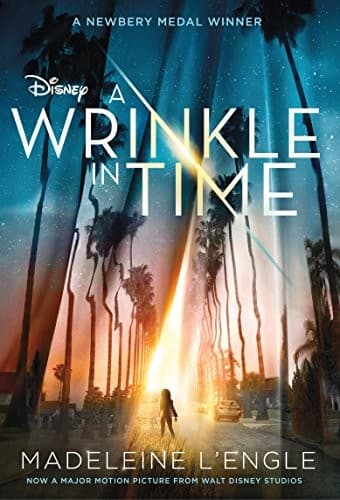
On a night as wild as her own spirit, Meg Murry, her gifted brother, and a new friend go on a cosmic trip through time and space to save her father from a growing darkness that threatens the universe.
On a dark and stormy night, Meg Murry, an insecure middle-schooler struggling in school, is worried about her own perceived flaws and the mysterious absence of her scientist father, Dr. Alex Murry. Her very smart younger brother, Charles Wallace, has an unusual ability to understand Meg's thoughts and talk to adults in a deep way. That night, an eccentric old woman named Mrs. Whatsit, new to town, visits the Murry home for a snack and conversation. During her visit, she casually mentions a 'tesseract,' something Dr. Murry was researching, suggesting it is how he traveled. This statement worries Mrs. Murry, confirming her fears that her husband's disappearance is linked to his dangerous experiments with space-time travel.
The next day, Charles Wallace takes Meg and their new friend, Calvin O'Keefe—a popular, athletic high school student who feels out of place with his own family—to the abandoned house where Mrs. Whatsit is staying. There, they meet two more unusual celestial beings: Mrs. Who, who speaks mostly in literary quotes, and Mrs. Which, who is the oldest and most powerful. She often looks like a shimmering, unclear figure and speaks with long, echoing words. The three Mrs. W's say they are ancient star-beings who fight against a cosmic evil called the Black Thing, or IT. They tell the children that Dr. Murry is trapped on a distant planet and that the children must travel through space and time to save him, using a tesseract.
The three children, led by the Mrs. W's, are tesseracted to the planet Uriel, a beautiful world with singing, winged creatures. Here, they feel joy, light, and harmony. Mrs. Whatsit shows her true form as a magnificent winged creature. From Uriel, they look into the universe and see the huge, dark shadow of the Black Thing covering planets and stars. To understand the threat better, they visit the Happy Medium, a somewhat scared but helpful being who lives in a cave. Using her crystal ball, the Happy Medium shows them Earth, also partly covered by the Black Thing, and says that Dr. Murry is in great danger on a planet completely taken over by this evil.
Their next stop is Camazotz, a planet completely controlled by the Black Thing. The planet looks perfectly ordered, but strangely uniform. They see children bouncing balls in perfect rhythm and a woman scolding her child for being out of sync. This complete sameness comes from IT's control. The Mrs. W's explain that they cannot directly interfere on Camazotz and must leave the children to continue alone. They give them gifts: Mrs. Whatsit gives Meg her faults, Charles his strength, and Calvin his communication skills; Mrs. Who gives them quotes; and Mrs. Which tells them to stay together. They enter a city and find a terrifyingly synchronized society controlled by a central brain.
Inside Camazotz's terrifyingly uniform city, the children enter the Central Central Intelligence Building, a huge, imposing structure. They meet the Man with Red Eyes, a chillingly calm and convincing figure who tries to hypnotize them with his telepathic powers. Charles Wallace, confident in his own mental strength, tries to resist the Man with Red Eyes by opening his mind to him, believing he can learn about IT. This turns out to be a big mistake. Charles Wallace, despite his intelligence, falls under IT's control. His eyes become cold and hard, his voice changes, and his personality becomes a cruel, logical part of IT, losing all his former warmth and individuality.
The now-controlled Charles Wallace leads Meg and Calvin through the Central Central Intelligence Building's confusing corridors. Charles Wallace takes them to a small, dark room where they finally find Dr. Alex Murry, Meg's father. To their dismay, Dr. Murry is trapped inside a transparent, pulsating column, unable to see or hear them. He is confused and weak, having been held captive for a long time. The controlled Charles Wallace mocks Meg's attempts to talk to her father, showing IT's cruel nature and how much power it has over him. Meg is heartbroken to see her brilliant father so vulnerable, and the situation seems hopeless.
Desperate, Meg rushes to her father's column. Her love and pain somehow let her partly get through its barrier, allowing him to feel her presence. Dr. Murry, realizing they are there, tells Meg to put on his glasses. These glasses let her see the column's atoms and molecular structure, helping her understand it. Using his scientific knowledge and the power of a tesseract, Dr. Murry manages to transport himself, Meg, and Calvin away from Camazotz. However, in their quick escape, they have to leave Charles Wallace behind, still controlled by IT. Meg is partly paralyzed by the tesseract's effects and filled with sadness and guilt over leaving her brother.
After the tesseract, Meg is badly hurt and partly paralyzed; her mind and body are in shock. Dr. Murry and Calvin land on the dark, gray planet of Ixchel, which smells strongly. Here, warm, furry, tentacled creatures with no eyes meet them. They communicate telepathically and through touch. These kind beings, called the 'Aunt Beast' by Meg, take the group in and slowly heal Meg with their gentle touches and nourishing food. They are very compassionate and understanding, a strong contrast to Camazotz's cold, logical evil. Meg slowly recovers, physically and emotionally, as she experiences their unconditional love and acceptance. This helps her deal with the trauma of Camazotz and her guilt about Charles Wallace.
Once Meg is fully healed, the three Mrs. W's reappear on Ixchel. They explain that the fight against IT is not over and that one of the children must return to Camazotz to save Charles Wallace. To Meg's horror, they tell her she is the only one who can go. She has a unique ability to connect with Charles Wallace and has learned important lessons about love and individuality. Meg is scared and feels inadequate, doubting her ability to face IT again, especially after her previous failure. However, Mrs. Whatsit gives her a final, powerful gift: love. This gift, along with encouragement from her father and Calvin, strengthens her resolve.
Filled with fear but armed with the love given by Mrs. Whatsit, Meg tesseracts back to Camazotz, directly to where Charles Wallace is held by IT. She finds him controlled by the pulsating brain, his eyes cold and empty, still a puppet of the evil entity. He tries to tempt her, to explain IT's power, and to make her conform. Meg struggles to find a way to reach him, realizing that logic and intellect are useless against IT. She remembers Mrs. Whatsit's gift and, with all her heart, projects her unconditional love for Charles Wallace towards him, repeating his name and her love. This pure, powerful love, something IT cannot understand or resist, breaks IT's hold, and Charles Wallace is freed, falling into her arms.
With Charles Wallace free from IT's control, the three children are immediately tesseracted back to Earth, landing in the Murry family's backyard exactly where and when they left. They are reunited with Mrs. Murry and the twins, Sandy and Dennys, who have not known about the children's cosmic adventure, as no time has passed for them. The family is happy to see Dr. Murry home and safe. The children are left with the deep, unspoken experience of their journey. As they celebrate their reunion, the Mrs. W's appear briefly one last time to say goodbye, confirming their mission is complete, before tesseracting away, leaving the Murrys to process their extraordinary return and the lasting impact of their adventure.
The Protagonist
Meg transforms from a self-conscious and frustrated girl into a courageous hero who saves her brother through the power of love, accepting her unique identity.
The Protagonist/Supporting
Initially a confident and gifted child, he falls victim to IT's control, only to be rescued and restored through his sister's love, learning the limits of pure intellect.
The Supporting
Calvin finds a sense of belonging and love with the Murry family, using his gifts for communication and empathy to aid the mission, and growing in confidence.
The Supporting
As a static character, she serves as a mentor, guiding the children and imparting wisdom about love and the universe.
The Supporting
As a static character, she serves as a mentor, offering wisdom through literary quotes.
The Supporting
As a static character, she serves as the primary orchestrator of the mission, guiding the children with immense power and wisdom.
The Supporting
Initially the missing catalyst, he is rescued and reunited with his family, demonstrating the importance of both intellect and human connection.
The Supporting
As a static character, she represents a loving and stable home, providing a safe haven for her children.
The Antagonist
As a static force of evil, IT represents the ultimate cosmic antagonist that the protagonists must overcome, demonstrating the power of love against its oppressive control.
The Supporting/Antagonist
As a static character, he serves as a direct manifestation of IT's manipulative power and influence.
Meg Murry's journey is about accepting who she is, including her perceived flaws. She first sees her anger, stubbornness, and academic struggles as weaknesses. But Mrs. Whatsit says these 'faults' make her strong and able to resist IT's conformity. On Camazotz, IT tries to remove individuality, but Meg's refusal to conform to its perfect, emotionless order helps her save Charles Wallace. Her change shows that real strength comes from being true to oneself, not from trying to fit in.
“"Your faults are what make you unique and special, Meg. They are your strength."”
Love is the ultimate weapon against the cosmic evil of the Black Thing and IT. IT, a being of pure intellect and hatred, cannot understand or withstand love. Meg's deep, unconditional love for Charles Wallace is what breaks IT's hold over him when logic and reason fail. The Murry family's warmth and acceptance, Mrs. Whatsit's selfless act, and the 'Aunt Beast's' nurturing care on Ixchel all show love's transformative and healing power. It is the most potent force in the universe.
“"I love you! I love you, Charles Wallace! I love you!"”
The novel clearly shows a cosmic battle between good and evil. The Black Thing, or IT, is a pervasive darkness that tries to extinguish light, individuality, and free will, taking over planets like Camazotz. Opposing this are the forces of light, like the Mrs. W's, who sacrifice themselves and guide others to fight for freedom and love. This theme is about grand cosmic forces and the choices individuals make to resist conformity and stand up for what is right, even when it is terrifying. The book emphasizes that good must actively fight evil.
“"We are not alone, you know, in our fight against the Dark Thing."”
Camazotz is the ultimate example of conformity, a planet where IT controls every action, thought, and emotion, making them perfectly synchronized. Individuality is suppressed, and any difference leads to severe punishment. The children, especially Meg, fight against this oppressive sameness. Meg's 'faults'—her anger, stubbornness, and questioning—become her greatest strengths in resisting IT. The novel champions being different, celebrating each person's unique qualities as essential to a free universe. This directly contrasts with IT's desire for absolute sameness.
“"On Camazotz, individuality is a burden. Here, we are all happy because we are all alike."”
The book explores the difference between pure intellect and true wisdom. Charles Wallace's extraordinary intelligence makes him vulnerable to IT, as he thinks his mind can outsmart the evil entity, which leads to his possession. In contrast, Meg, who often struggles with academic knowledge, uses emotional intelligence and love to win. Dr. Murry's scientific knowledge is important for their escape, but it is not enough to defeat IT. The novel suggests that while intellect is valuable, it needs empathy, intuition, and love to truly understand and overcome evil.
“"You mean you're comparing our brains with IT's? Our brains are nothing compared to IT's!"”
A fifth-dimensional wrinkle in space-time used for instantaneous travel.
The tesseract is the central scientific concept and plot device that enables the characters' journey through space and time. It's described as a 'wrinkle in time,' allowing travelers to move across vast distances instantaneously by folding space. Dr. Murry was researching it when he disappeared. The Mrs. W's use it to transport Meg, Charles Wallace, and Calvin to various planets. Its abstract nature emphasizes the blend of science fiction and fantasy, making extraordinary travel possible and driving the entire plot forward. It's both a means of adventure and a source of danger, as demonstrated by Meg's temporary paralysis after a faulty tesseract.
The cosmic embodiment of evil, conformity, and darkness.
The Black Thing, also known as IT, functions as the primary antagonist and a symbolic representation of cosmic evil, darkness, and totalitarian control. It's a vast, shadowy presence seen engulfing planets, and on Camazotz, it manifests as a disembodied, pulsating brain that enforces absolute conformity and suppresses all individuality and love. This device allows the author to personify abstract concepts of evil and oppression, providing a clear external conflict for the protagonists. Its abstract nature makes it a formidable foe that cannot be fought with physical strength, requiring a different kind of power to defeat.
Ancient, benevolent star-beings who mentor and aid the children.
The three Mrs. W's serve as wise, otherworldly mentors and magical helpers. They initiate the quest, provide crucial information, offer guidance, and bestow 'gifts' upon the children (such as Meg's faults, Calvin's communication, and Mrs. Whatsit's love). Their eccentric appearances and methods (Mrs. Who's quotes, Mrs. Which's indistinctness) add to the fantastical element of the story. They represent forces of good in the universe, actively fighting against the Black Thing, and their presence allows for exposition of the cosmic conflict and the spiritual dimensions of the story, while also providing necessary plot advancement through their power to tesseract.
Unique inner strengths and qualities bestowed upon or discovered by the protagonists.
The 'gifts' in the story are both literal and metaphorical. Mrs. Whatsit gives Meg her 'faults' (anger, stubbornness), Calvin his communication skills, and Charles Wallace his resilience. Mrs. Who gives them quotes, and Mrs. Which gives them the command to stay together. Ultimately, Mrs. Whatsit's final gift to Meg is 'love.' These gifts are not magical objects but inherent qualities or emotional strengths that prove vital in combating IT. This device highlights the theme that one's true strengths often lie in their unique personality traits and the power of human connection and emotion, rather than just physical or intellectual prowess.
“Life, with its rules, its obligations, and its freedoms, is like a sonnet: You're given the form, but you have to write the sonnet yourself.”
— Mrs. Whatsit explains the nature of life to Meg and the others.
“The only way to cope with something deadly serious is to try to treat it a little lightly.”
— Mrs. Whatsit advises Meg on dealing with serious challenges.
“Like and equal are not the same thing at all!”
— Meg argues against the conformity imposed by IT on Camazotz.
“We can't take any credit for our talents. It's how we use them that counts.”
— Mrs. Whatsit discusses the importance of using one's gifts wisely.
“I do not understand it any more than you do, but one thing I've learned is that you don't have to understand things for them to be.”
— Mrs. Which speaks about accepting the unknown and mysterious.
“You're given the form, but you have to write the sonnet yourself. What you say is completely up to you.”
— A variation on the sonnet metaphor, emphasizing personal agency.
“Maybe if you aren't unhappy sometimes you don't know how to be happy.”
— Meg reflects on the contrast between emotions and experiences.
“The shadow is only a small and passing thing: there is light and high beauty forever beyond its reach.”
— A description of the battle between light and darkness in the universe.
“But you see, Meg, just because we don't understand doesn't mean that the explanation doesn't exist.”
— Mrs. Whatsit comforts Meg about the mysteries of the universe.
“I love you. I love you. I love you.”
— Meg uses her love for Charles Wallace to break IT's control over him.
“A straight line is not the shortest distance between two points.”
— Mrs. Whatsit introduces the concept of tessering (wrinkling in time).
“You mean you're comparing our lives to a sonnet? A strict form, but freedom within it?”
— Meg questions and internalizes Mrs. Whatsit's earlier metaphor.
“We were sent here for something. And we know that all things work together for good to them that love God.”
— A reference to the characters' sense of purpose and divine plan.
“The heart has its own language, and it's not always the language of the mind.”
— Implied in the themes of the book about emotional vs. logical understanding.
Ready to see how well you understood this book? Take our interactive quiz with 10 questions.

Madeleine L'Engle was an American writer of fiction, non-fiction, poetry, and young adult fiction, including A Wrinkle in Time and its sequels: A Wind in the Door, A Swiftly Tilting Planet, Many Waters, and An Acceptable Time. Her works reflect both her Christian faith and her strong interest in modern science.







