“I have learned to live alone, but I have not learned to like it.”
— Bess reflects on her solitude after her husband's death.

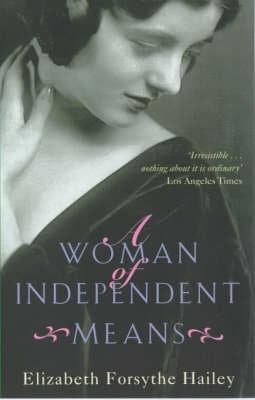
Elizabeth Forsythe Hailey (1978)
Genre
Historical Fiction / Romance
Reading Time
288 min
Key Themes
See below
Sign in to track this book
With few choices for women, Bess Steed Garner navigates love, marriage, and motherhood from the turn of the century through the 1960s, creating her own destiny with a strong spirit and lasting independence.
The story begins with Bess Steed as a young girl in turn-of-the-century Texas. She shows strong independence and will. Raised by her mother, Annie, and her Aunt Emma after her father's early death, Bess observes the world closely. She tells about her early life through letters, a format that defines her story. A key moment happens when Bess's maternal grandmother, a woman with money and a strong character, dies. She leaves Bess a large inheritance. This money gives Bess financial independence at a time when women had few such chances. It shapes her future choices and relationships. Her early letters describe her schooling, friendships, and growing awareness of social rules and expectations, which often conflict with her own desires.
As Bess grows into a young woman, several men want to marry her. Robert Garner is the one who wins her heart. Robert is handsome, charming, and from a good family. He has many qualities society considers good in a husband. Their courtship, told in her letters, shows a passionate connection, but also the first signs of trouble. This is because of Bess's strong will and Robert's more traditional ideas for a wife. Despite these tensions, Bess and Robert marry. This event begins her life as Mrs. Robert Garner. The first years of their marriage are happy, with setting up their home and planning a family. All the while, Bess tries to balance her independent nature with the demands of married life.
Bess and Robert soon have children: first their son, Robert Jr. (Bobby), and later their daughters, Eleanor and another daughter. Bess puts her energy into raising her children, writing about their milestones and her joys and frustrations as a mother in her letters. Her money lets her manage household affairs without depending on Robert financially. This both empowers her and sometimes causes small problems in their marriage. She takes an active part in her children's education and upbringing, giving them some of her own strength and resourcefulness. Despite her home duties, Bess stays involved with the world. She keeps her friendships and continues to express her opinions and observations on society and politics, often through her letters.
World War I affects Bess's comfortable life. Her letters from this time show the widespread worry and patriotism, as well as her personal fears for the future. Robert is not called to fight, but the war impacts their social group and economy. Bess, always practical, helps with wartime efforts. She shows her ability to organize and contribute beyond the home. The war also shows her how fragile life is and the suffering in the world. This broadens Bess's view beyond her immediate family and community. This time marks a small change in how she understands her place in a larger, more complex world. It strengthens her resilience.
The 1920s bring new social change, flapper culture, and economic growth. Bess watches this with her usual mix of curiosity and judgment. Her children, especially her daughters, start to grow up during this time. They adopt some of the newer fashions and attitudes, sometimes to Bess's annoyance. She deals with their independence, which reminds her of her own youth, but also with her protective feelings as a mother. Bess continues to manage her investments, proving herself good with money. Her letters from this decade show her involvement with current issues, her opinions on the changing roles of women, and her efforts to guide her children through a fast-changing world. All the while, she keeps her own distinct sense of self.
The stock market crash of 1929 begins the Great Depression, a time of great hardship for many. However, Bess's long-standing financial independence and careful management of her inheritance are very valuable. While Robert's business ventures face problems, Bess's investments, often made against Robert's advice, provide a stable base for the family. Her letters from this era describe the widespread economic trouble she sees and her own efforts to be careful with money and supportive. This time shows Bess's practical intelligence and her steady resolve in a crisis. It shows the real value of her 'independent means' beyond just wealth. She becomes an even more important source of strength for her family.
As years pass, Bess experiences significant personal losses. Her husband, Robert, dies, leaving a void in her life. This loss, described with emotion in her letters, forces Bess to face widowhood and a new phase of independence. She also goes through the pain of losing other close family members and friends over time. Despite her grief, Bess shows remarkable strength. She continues to manage her affairs, support her children and grandchildren, and keep up her many letters. These tragedies, while deeply hurtful, do not lessen her spirit but make it stronger. They show a lasting strength and acceptance of life's sorrows alongside its joys.
World War II brings another time of global conflict and personal worry. Bess, now a grandmother, watches her grandchildren grow and, in some cases, go to war. Her letters from this time show her fears for their safety, her patriotism, and her observations on the deep societal changes caused by the war. She supports the war effort from home, much as she did during World War I, but with the added perspective of age and experience. This time highlights her role as the family leader, a source of wisdom and stability for her growing family. She continues to document family events, from births to marriages, making sure the family's story is kept through her words.
As Bess enters her older years, her letters become more reflective. They are filled with memories of her past, her joys, and her sorrows. She observes the fast technological and social changes of the mid-20th century, often with a mix of wonder and mild disapproval. Her relationship with her children and grandchildren changes, as she becomes a respected, though sometimes opinionated, elder. She continues to manage her money, showing her lifelong skill. Despite the physical problems that come with age, Bess keeps her sharp wit and her interest in the world. Her letters remain her main way of expressing herself, showing her lasting spirit and her wish to connect with loved ones.
The novel ends with Bess's final letters, leading to her death. These last letters have a sense of farewell, but also peace and acceptance. Throughout her long life, Bess Steed Garner stays true to her independent spirit. She is shaped by her early inheritance, her strong will, and her steady determination. Her letters, which make up the entire story of the book, are a chronicle of an ordinary yet extraordinary woman living through a time of great change in American history. She leaves behind not just a family, but a legacy of strength, resilience, and the impact of a woman who truly lived life on her own terms, a woman of independent means in every way.
The Protagonist
Bess evolves from a spirited young girl to a wise matriarch, consistently asserting her independence while learning to balance it with the demands of family and love.
The Supporting
Robert remains largely consistent in his traditional values, but his love for Bess deepens as they navigate life's challenges together.
The Supporting
Annie remains a consistent source of maternal love and guidance for Bess throughout her life.
The Supporting
Aunt Emma remains a consistent, if sometimes opinionated, presence in Bess's family life.
The Supporting
Bobby navigates his life with varying degrees of success and independence, often seeking his own identity outside his parents' shadow.
The Supporting
Eleanor grows into a woman who balances personal aspirations with the expectations of her era, often reflecting her mother's influence.
The Supporting
Will's arc is largely contained to Bess's youth, serving as a poignant memory of an alternative romantic destiny.
The Supporting
Sally remains a constant and supportive friend throughout Bess's entire life.
The main theme is Bess's strong independence, especially her financial freedom, in an era when women often depended on men. Her inherited wealth lets her make choices, share opinions, and get through economic problems without giving in to outside pressure. This theme shows up in her marriage, her child-rearing, and her personal beliefs. It often sets her apart from others of her time. It explores the freedom and challenges that come with going against traditional expectations for women, and how true independence is not just financial but also intellectual and emotional. Her refusal to be defined only by her roles as wife and mother highlights this theme.
“I may be married, but I am still Bess Steed, and I will not be told what to do with my own money or my own mind.”
The novel tells the story of changing roles and expectations for women from the early 1900s through the 1960s, seen through Bess's eyes. Bess herself is a transitional figure, a woman ahead of her time. She manages her home life while keeping a strong public and personal voice. The experiences of her mother, friends, and daughters show different parts of womanhood across generations, from the restricted Victorian era to the more free mid-century. This theme explores the societal pressures, personal sacrifices, and gradual gains in freedom and recognition for women over six decades. It highlights Bess's unique position as a 'woman of independent means' in this changing setting.
“The world keeps changing, and I suppose women must change with it, though I sometimes wonder if the new ways are always better.”
This theme looks at the complexities of romantic love, the realities of marriage, and the lasting bonds of family. Bess's marriage to Robert is shown with deep affection and realistic problems. It explores how two strong people, one traditional and one independent, live their lives together. The challenges of motherhood, the joys of grandparenting, and the inevitable losses within a family are central to Bess's story. The novel shows how love grows, lasts, and sometimes struggles. It also shows how family provides both comfort and occasional frustration through different life stages, all seen through Bess's observant and often opinionated view.
“Marriage is not always easy, my dear, but it is a journey worth taking, with all its bumps and triumphs.”
The novel uses Bess's long life to show important historical events and societal changes over six decades of American history. From World War I and the Roaring Twenties to the Great Depression and World War II, Bess's letters connect these big historical stories to personal experience. The theme shows how global events impact individual lives and families, and how society changes in terms of technology, social customs, and gender roles. Bess's consistent voice offers a unique view on these changes. She often thinks about how the world she knew as a child is very different from the world of her grandchildren, showing the constant passage of time.
“Sometimes I feel as though I have lived through a hundred years, the changes have been so vast and so swift.”
Because the book is written as letters, this theme is tied to the story's structure. Writing and receiving letters is central to Bess's life. It is her main way of communicating, expressing herself, and connecting to the outside world. It shows how important written letters were before instant communication, emphasizing the thought and effort needed to keep relationships. Through her letters, Bess not only shares her life but also processes her experiences, thinks about her past, and keeps her identity. The limits and strengths of this communication form show the value of personal stories and the desire for lasting connection.
“My dearest friend, I find that putting pen to paper is the only way I can truly sort out my thoughts and feel connected to you.”
The entire novel is presented as a collection of letters written by Bess Steed Garner.
The novel is entirely composed of letters written by Bess Steed Garner to various family members and friends throughout her life. This intimate first-person perspective allows readers direct access to Bess's thoughts, observations, and emotions, making her a highly personal and unreliable narrator in the best sense. The format highlights her character's love for communication and reflection, while also creating a sense of immediacy and historical authenticity. It underscores the theme of connection and the passage of time, as readers witness her life unfold through her own words, often with gaps that encourage inference and reflection.
The narrative spans multiple generations within the Steed/Garner family.
The story not only follows Bess's life but also traces the lives of her mother, her children (Bobby and Eleanor), and her grandchildren. This generational saga allows the author to explore the evolution of societal norms, particularly regarding women's roles, over an extended period. It shows how personal traits and family dynamics are passed down or rebelled against, and how historical events impact successive generations differently. The passing of the torch from Bess to her descendants, and her observations on their lives, adds depth to the themes of change, legacy, and family continuity.
Major American historical events are integral to the personal narrative.
The novel uses significant American historical periods—from the turn of the 20th century through the 1960s, including World War I, the Roaring Twenties, the Great Depression, and World War II—as an active backdrop to Bess's personal life. These events are not merely mentioned but are shown to directly impact her family's fortunes, her children's choices, and her own worldview. This device grounds Bess's personal story in a larger national narrative, illustrating how individual lives are shaped by, and in turn reflect, the broader historical currents of their time. Bess's reactions to these events provide a unique, personalized historical commentary.
Bess's later letters subtly hint at future events or reflect on past decisions with newfound wisdom.
While the letters are written chronologically, Bess's mature voice often allows for subtle foreshadowing as she reflects on past decisions or hints at future anxieties. For example, early letters about Robert's traditional views might subtly foreshadow future marital disagreements, or her initial investments might hint at their importance during the Depression. This is less about explicit predictions and more about the narrator's retrospective understanding, enriching the reader's perception of her journey. This device adds layers of meaning to her experiences and highlights her growth in wisdom over time.
“I have learned to live alone, but I have not learned to like it.”
— Bess reflects on her solitude after her husband's death.
“A woman of independent means is a woman who can afford to be herself.”
— Bess asserts her financial and personal autonomy.
“Marriage is not a destination but a journey, and sometimes the road is very rough.”
— Bess contemplates the challenges in her marriage.
“I have always believed that money is a tool, not a master.”
— Bess discusses her pragmatic view of wealth.
“The heart has its reasons, which reason does not know.”
— Bess reflects on emotional versus rational decisions.
“To be a mother is to live with your heart outside your body.”
— Bess expresses the vulnerability of motherhood.
“I have made my own mistakes, and I have paid for them. That is the price of freedom.”
— Bess acknowledges the consequences of her choices.
“Time does not heal all wounds; it merely teaches us to live with the scars.”
— Bess reflects on enduring pain and loss.
“A woman's place is wherever she decides it is.”
— Bess challenges traditional gender roles.
“Love is not a possession to be held, but a gift to be given.”
— Bess shares her philosophy on love and relationships.
“I have seen the world change, and I have changed with it, but I have never lost myself.”
— Bess reflects on personal integrity amid societal shifts.
“Happiness is not a station you arrive at, but a manner of traveling.”
— Bess offers her perspective on finding joy in life.
“The greatest luxury is the freedom to choose.”
— Bess values her ability to make her own decisions.
“I have loved and I have lost, but I have never regretted loving.”
— Bess looks back on her romantic experiences.
Ready to see how well you understood this book? Take our interactive quiz with 10 questions.







