“Only in silence the word, only in darkness the light, only in dying life: bright the hawk's flight on the empty sky.”
— From the Creation of Éa, often quoted in the book.

Ursula K. Le Guin (2015)
Genre
Fantasy / Science Fiction / Young Adult
Reading Time
640 min
Key Themes
See below
Sign in to track this book
A young wizard unleashes a shadow, forcing him on a journey of self-discovery, dragon-taming, and confronting death to restore balance to Earthsea.
Duny, a young boy on Gont, lives a simple life until his aunt, a village witch, finds his natural magic talent. When Kargish pirates raid the island, Duny, in defense, summons a fog to protect his village. This act gets the attention of the wizard Ogion. Ogion takes Duny as his apprentice, giving him his true name, Ged, and begins teaching him magic's basic rules, stressing control and balance. Ged's early training is mostly theoretical, involving learning names, but he wants more active, powerful magic.
Ogion, seeing Ged's impatience for advanced learning, sends him to the School of Roke, the center of magic in Earthsea. At Roke, Ged excels, quickly surpassing many peers. But his pride and rivalry with another student, Jasper, lead him to a dangerous act. Challenged by Jasper, Ged tries to summon a spirit from the dead using a forbidden spell from an old book. The spell goes wrong, and a terrifying, formless shadow-creature is released, attacking Ged and leaving him badly hurt, both physically and mentally. The Archmage Nemmerle dies driving the shadow away, but it remains a threat.
After the incident, Ged is near death, bothered by the shadow. The new Archmage, Oakhart, nurses him back to health. Oakhart, who understands magic's balance, explains the danger of what Ged did: by meddling with death, Ged tore a hole in existence. The shadow is not just an evil spirit but a part of him, a sign of his own unacknowledged darkness. Oakhart advises Ged that to defeat the shadow, he must face it directly, but warns of the great danger.
After recovering and finishing his training, Ged receives his wizard's staff and is sent to Low Torning in the Ninety Isles to be the village mage. He performs simple spells, helps villagers, and learns practical magic. However, the shadow-creature returns, appearing in scary forms and gaining power from Ged's fear. Realizing the danger he poses to the villagers, Ged decides to leave Low Torning, beginning a quest to confront and defeat the shadow that hunts him.
Ged's pursuit of the shadow becomes a desperate flight across Earthsea. He travels to various islands, often finding temporary help. He meets the dragon Yevaud on Pendor, a powerful ancient being, and binds it to its island, showing his growing magic strength. He also visits Osskil, where he meets Serret and the sorcerer Benderesk, who tries to trap him with a magical item, the Stone of Terrenon. Ged barely escapes these dangers, but the shadow is always close, its presence growing stronger, forcing Ged to keep moving.
While on Osskil, Ged goes to the castle of the Terrenon, home to the Stone of Terrenon. There, he meets Serret, a beautiful but sad lady, and her lord, Benderesk, a sorcerer who tries to make Ged serve the stone's dark power. Ged senses the artifact's bad influence and Benderesk's bad intentions, so he refuses. He uses his magic to escape the castle. This encounter shows Ged that the shadow can use others and exploit his weaknesses, making him realize the shadow is not just a mindless beast but a clever entity.
Driven by the shadow's chase, Ged sails east across vast oceans. His journey is lonely and filled with growing despair, as the shadow's presence seems to corrupt everything. Eventually, he arrives at Iffish, where he reunites with his old friend from Roke, Vetch. Vetch, now a respected wizard, offers Ged companionship, comfort, and support. This reunion lifts Ged's spirits and helps him lose some fear, strengthening his resolve to finally face the shadow instead of running.
With Vetch, Ged sails into the uncharted eastern seas, determined to end his flight. He knows the shadow, a part of himself, cannot be outrun forever. As they go further into the empty waters, Ged senses the shadow's presence growing stronger, reaching its peak. Finally, on a small, barren island in the middle of nowhere, Ged turns to face his tormentor. He stands alone against the terrifying, formless entity, ready for the confrontation that will decide his fate and the balance of his soul.
In a final confrontation on the desolate island, Ged stands against the shadow. He uses all his magic and inner strength, not to destroy it, but to understand it. He realizes the shadow is not an outside demon but the dark, unacknowledged part of his own being, a result of his youthful arrogance. With this understanding, Ged speaks the shadow's true name, which is his own true name, 'Ged.' By naming it, he reclaims it, bringing his shadow self back into his whole being. The creature disappears, not destroyed, but reconciled, making Ged whole again.
After the act of self-reconciliation, Ged is changed. He is no longer haunted by the shadow, and his inner turmoil is gone. He has faced his greatest fear and accepted his own darkness, becoming a master of himself and his magic. With Vetch, he returns to Earthsea's populated islands, a changed man and a true wizard. His journey not only saved him from the shadow but also restored balance to the world, as his personal resolution reflects universal harmony. Ged is now Sparrowhawk, a great sorcerer, known not for his power, but for his wisdom and understanding of balance.
The Protagonist
Ged transforms from an arrogant, power-hungry youth into a wise and balanced wizard who understands the true nature of power and self.
The Supporting
Ogion serves as a foundational mentor, setting Ged on his path and providing wisdom that Ged only fully appreciates after his trials.
The Supporting
Vetch remains a steadfast friend, providing emotional support and companionship that helps Ged complete his self-reconciliation.
The Antagonist
The Shadow is ultimately reabsorbed by Ged, becoming a part of his integrated self rather than being destroyed, signifying his journey to wholeness.
The Supporting
Oakhart provides crucial wisdom and healing that sets Ged on the path to understanding and confronting his shadow.
The Supporting
Jasper serves as a catalyst for Ged's initial downfall, highlighting Ged's early arrogance.
The Mentioned
Yevaud provides a test of Ged's developing magical prowess and sense of responsibility.
The Mentioned
Serret highlights the corrupting influence of dark magic and the Stone of Terrenon, serving as a cautionary figure for Ged.
The Mentioned
Benderesk serves as an antagonist who tests Ged's resolve against dark magic and highlights the corrupting nature of power without wisdom.
The main theme involves the balance needed when using magic. Ged's early misuse of magic, driven by pride, unleashes the shadow, showing that power without wisdom is dangerous. Ogion and Oakhart's lessons always stress understanding things' true nature and existence's connections. Ged's journey is about learning to use his power responsibly, understanding that every act has consequences, and that true mastery comes from harmony, not control. This is clear when he binds Yevaud, choosing to contain rather than destroy, and finally when he accepts his shadow rather than fighting it.
“For good or ill, it is done. You have opened the door. You must close it.”
Ged's journey is about self-discovery, especially facing and accepting his 'shadow self.' The shadow is not an outside evil but a part of Ged's own unacknowledged pride, fear, and desire for power. Running from the shadow is running from himself. Only when he stops running and faces it, recognizing it as part of himself and speaking its true name (which is his own), does he become whole. This theme explores the psychological depth of facing one's inner darkness and the need to accept all parts of oneself for true maturity and wisdom.
“I am that which was, and is, and is to come. I am the shadow of your heart.”
In Earthsea, true names hold great power; knowing a thing's true name gives control over it. Ogion introduces this theme early, and it becomes important to Ged's understanding of magic. It is about deep understanding and connection, not just control. Ged's ability to bind Yevaud comes from knowing its true name. Most importantly, the conflict with the shadow ends when Ged learns and speaks the shadow's true name, which is his own. This means that true mastery is over oneself, and self-knowledge is the ultimate source of power and balance.
“A thing is what it is. Its name is the only thing it has, and its name is its truth.”
*A Wizard of Earthsea* is a classic coming-of-age story. Ged starts as a gifted but arrogant youth, making a huge mistake from pride and ignorance. His journey is a long, hard process of learning from that mistake, facing its results, and finding redemption. He not only makes up for his error but grows into a wise and humble person, showing that true strength is understanding and accepting one's flaws. His redemption comes not from an outside force but from great personal struggle and self-reconciliation, leading to a deep inner change.
“He had no fear of it any more, but only a great grief and pity. It was no longer his enemy. It was himself.”
A central institution for magical learning and a symbol of structured power.
The School of Roke serves as the primary academy for wizards in Earthsea, representing structured magical knowledge and the rules governing its use. It's where Ged learns advanced spells but also where his arrogance is most pronounced, leading to the unleashing of the shadow. Roke symbolizes the potential for both great power and great danger inherent in magic, and its Archmage acts as a guardian of the world's balance. It is a place of both great learning and great temptation for Ged.
The fundamental principle of magic where knowing a thing's true name grants power over it.
True Names are a foundational magical concept in Earthsea. Every person, animal, and object has a secret, true name known only to a few, and speaking it gives a wizard power and control over that entity. This device emphasizes the importance of understanding and essence over superficial appearance. For Ged, the ultimate significance of true names comes when he realizes the shadow's true name is his own, symbolizing self-mastery and integration rather than external control.
An externalized manifestation of Ged's inner darkness and hubris.
The Shadow is the central antagonist and a powerful plot device. It is not merely an evil monster but a direct consequence of Ged's actions and a physical manifestation of his unacknowledged pride, fear, and desire for power. Its relentless pursuit forces Ged on his journey of self-discovery and confrontation. The Shadow serves as a constant reminder of Ged's mistake and the internal struggle he must overcome, ultimately being integrated back into him rather than destroyed, symbolizing psychological wholeness.
An ancient, malevolent magical artifact that tempts with dark power.
The Stone of Terrenon is an ancient, powerful, and malevolent artifact encountered on Osskil. It represents the allure of forbidden, corrupting power that promises easy answers but demands a terrible price. Its influence over Benderesk and Serret serves as a stark warning to Ged about the dangers of seeking power for its own sake and meddling with forces beyond understanding, reinforcing the themes of balance and responsibility.
“Only in silence the word, only in darkness the light, only in dying life: bright the hawk's flight on the empty sky.”
— From the Creation of Éa, often quoted in the book.
“The only thing that gives value to life is the fact that it ends.”
— Ged's reflection on mortality and purpose.
“A man's name is a great possession. It is not to be lightly given away.”
— Ged's early lesson on the power and secrecy of true names.
“To light a candle is to cast a shadow.”
— A master wizard's teaching about the inevitable consequences of magic.
“But a mage must control himself, lest he be controlled by what he can do.”
— Ged learning self-control and the dangers of unchecked power.
“The shadow is a part of you, and it cannot be unmade. It can only be named and owned.”
— Ogion's wisdom to Ged about confronting his inner darkness.
“Have you never thought how dangerous it is to call a thing by its right name?”
— A master wizard explaining the peril and power of true names.
“It is a dangerous thing to use power that does not belong to you.”
— Ged's realization after his reckless spell unleashes the shadow.
“Look, you are a man. You are not a wolf. You must not live the wolf's life.”
— Vetch urging Ged to return to human society and responsibility.
“The world is in its place, and you are in your place. And you are a wizard.”
— Master Nemmerle's reassuring words to Ged at Roke.
“It is not possible to buy a man's life.”
— Ged's refusal to trade his life for another's freedom.
“What is learned is that there are limits, and that the only freedom is within those limits.”
— Ged's mature understanding of freedom and constraint.
“Death is the price of life. And life is the price of life.”
— A profound statement on the cyclical nature of existence.
Ready to see how well you understood this book? Take our interactive quiz with 10 questions.
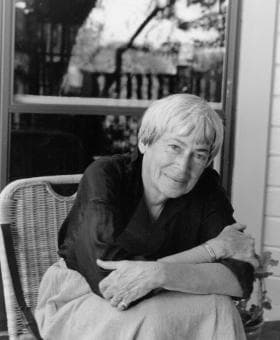
Ursula Kroeber Le Guin was an American author best known for her works of speculative fiction, including science fiction works set in her Hainish universe, and the Earthsea fantasy series. She was first published in 1959, and her literary career spanned nearly sixty years, producing more than twenty novels and over a hundred short stories, in addition to poetry, literary criticism, translations, and children's books. Frequently described as an author of science fiction, Le Guin has also been called a "major voice in American Letters". Le Guin said she would prefer to be known as an "American novelist".







