“It was a dark and stormy night.”
— Meg Murry's opening line, a classic for its literal truth and literary reference.

Genre
Fantasy / Children's / Science Fiction / Young Adult
Reading Time
200 min
Key Themes
See below
Sign in to track this book
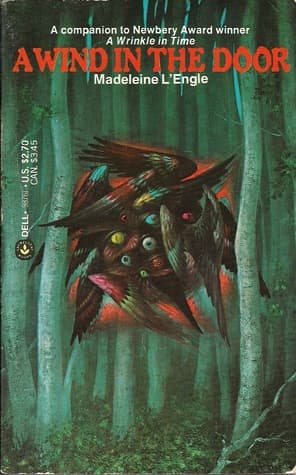
When her brilliant younger brother, Charles Wallace, is threatened by a cosmic illness that mirrors the extinguishing of stars, Meg Murry must journey with a fiery, winged cherubim and her friend Calvin into the heart of creation to confront the Echthroi, beings of pure hate, and restore the universe's harmonious song.
The story begins with Meg Murry facing high school academic struggles and the growing strangeness of her brilliant younger brother, Charles Wallace. Charles Wallace, always perceptive, starts seeing 'dragons' in the family's vegetable garden. These are shimmering, multi-winged, multi-eyed beings. His mother, Dr. Kate Murry, a microbiologist, thinks these visions are a feverish delusion as Charles Wallace quickly gets sick, becoming tired and quiet. His condition worsens fast, puzzling doctors and leaving his family worried and frustrated.
As Charles Wallace's health declines, Meg's friend Calvin O'Keefe arrives, sensing something is wrong. Suddenly, one of Charles Wallace's 'dragons' appears to Meg and Calvin: Proginoskes, a cherubim, a being of wind, fire, and many eyes and wings. Proginoskes explains that Charles Wallace has a severe spiritual illness, not a physical one, and that his life force is being drained by the Echthroi—beings of nothingness and un-Naming. Proginoskes says he was sent to ask Meg and Calvin to help save Charles Wallace and, by extension, the universe.
Proginoskes takes Meg and Calvin to an old-looking schoolhouse. There, they meet Mr. Jenkins, a former principal from Meg's past, who is now a Teacher in a cosmic order. Mr. Jenkins explains Naming – giving identity and purpose – and Un-Naming – the destructive force of the Echthroi. He gives Meg and Calvin a 'schooling' task: they must learn to 'Farandolae,' microscopic beings within Charles Wallace's mitochondria, to restore his inner balance. Calvin must learn the Farandolae's song, while Meg must learn to understand their individual differences.
With Proginoskes' guidance, Meg, Calvin, and Mr. Jenkins shrink to a microscopic size and enter Charles Wallace's body, specifically his mitochondria. This journey is shown as a vast, complex, and beautiful universe inside Charles Wallace. Their job is to find and encourage the Farandolae, who keep Charles Wallace's cells alive, but who are now being corrupted and silenced by the Echthroi. The group experiences Charles Wallace's inner world as a living entity, full of wonder and danger.
Inside the mitochondria, Meg, Calvin, and Mr. Jenkins observe the Farandolae. These tiny, star-shaped creatures are supposed to sing a harmonious song that keeps Charles Wallace alive. However, the Echthroi have gotten in, causing discord, fear, and silence among the Farandolae, which makes Charles Wallace sick. The Echthroi appear as shadowy, formless voids that absorb light and sound, spreading confusion and despair. Meg struggles to understand the Farandolae's individual 'names' and their unique roles in the song, while Calvin tries to bring back the rhythm and melody of their collective song.
Meg finds it very hard to 'Name' the individual Farandolae. Her previous wish for everything to be uniform and easy holds her back. Mr. Jenkins stresses that true Naming means seeing and valuing each unique being for its distinct qualities, even the ones that seem difficult or different. This challenge makes Meg face her own biases and her habit of generalizing. She learns that the Echthroi grow stronger with conformity and the suppression of individuality, and that the universe's strength, and Charles Wallace's, comes from the different contributions of each unique part.
Calvin, with his natural understanding of rhythm and harmony, starts to connect with the Farandolae through song. He helps them remember their collective melody, which is vital for their function. However, the Echthroi actively try to stop him, creating static and dissonance. Calvin's ability to hold onto the true song, despite the chaotic interference, becomes important. His efforts directly counter the Echthroi's goal of un-Naming, as he helps the Farandolae regain their identity and purpose through their shared music, showing the power of unity in diversity.
The Echthroi demand that Meg give them one specific Farandolae, one that is 'difficult' and 'different,' in exchange for Charles Wallace's life. This is their trap: to force Meg to choose conformity over individuality, to Un-Name a unique being. Meg realizes that giving in would destroy the essence of creation and Charles Wallace himself. She understands that the Echthroi feed on the absence of distinct identity. This confrontation tests Meg's understanding of Naming and her love for Charles Wallace and the universe.
In a moment of insight, Meg understands that she must not give up any Farandolae, but instead embrace and 'Name' the difficult one, acknowledging its unique contribution to the whole. She performs an act of pure Naming, accepting and loving the Farandolae for its distinct self. This act, combined with Calvin's restored song and Proginoskes' protective presence, creates a surge of life and light. The Echthroi, unable to withstand the power of Naming and harmonious individuality, are forced to leave, and the balance within Charles Wallace's mitochondria is restored.
With the Echthroi defeated within Charles Wallace, Meg, Calvin, and Mr. Jenkins return to their normal size. Charles Wallace, still weak but no longer in immediate danger, slowly starts to recover. The experience gives Meg a deeper understanding of herself, the universe, and the connections between all living things. Proginoskes leaves, his mission complete, leaving Meg and Calvin with the knowledge that the battle against the Echthroi continues, but that they have played a key role in upholding the balance of creation and the importance of every unique 'Name' in the universe.
The Protagonist
Meg transforms from a girl who resents her own uniqueness and struggles to accept differences in others to someone who embraces individuality and the power of Naming.
The Supporting
Charles Wallace is initially a victim of the Echthroi's influence, but his eventual recovery signifies the triumph of Naming and individuality.
The Supporting
Calvin, already empathetic and intuitive, deepens his understanding of cosmic harmony and his role in resisting chaos.
The Supporting
Proginoskes remains a steadfast guide and protector, fulfilling his role in the cosmic struggle.
The Supporting
Mr. Jenkins reveals his true, cosmic identity and reinforces the importance of his teachings on Naming.
The Antagonist
The Echthroi are temporarily repelled by the power of Naming and harmony, but their ongoing presence in the universe is acknowledged.
The Mentioned
Dr. Murry remains a pillar of love and scientific inquiry, though outside the cosmic journey.
The Supporting
The Farandolae are initially silenced and disrupted but are restored to their harmonious function by Meg and Calvin.
A main theme is the deep value of each unique individual and the concept of 'Naming' – seeing and confirming the distinct identity and purpose of every being. The Echthroi represent the force of Un-Naming, which tries to reduce everything to undifferentiated sameness and nothingness. Meg's struggle to 'Name' the difficult Farandolae shows her journey to overcome her own desire for conformity and to embrace the beauty and need for difference. The universe, and Charles Wallace's health, depend on the harmonious interaction of distinct parts, not their forced uniformity. This is shown when Meg's acceptance of the 'difficult' Farandolae defeats the Echthroi's influence, proving that true strength is in valuing uniqueness.
“''To be named is to be known. And to be known is to be loved.'”
The novel shows a cosmic fight between forces of creation and life (Naming) and forces of destruction and nothingness (Un-Naming/Echthroi). This battle is not just abstract but happens directly in Charles Wallace's body. Naming involves giving identity, purpose, and love, encouraging growth and harmony. Un-Naming, shown by the Echthroi, tries to erase identity, create discord, and reduce existence to chaos. The cherubim, Proginoskes, and the Teachers like Mr. Jenkins are active participants in upholding creation. The stakes are universal, with Charles Wallace's life being a small example of the larger cosmic balance. Every act of Naming, no matter how small, helps in the ongoing victory of creation.
“''Every time a star goes out, another Echthros has won a battle.'”
A core idea is that all parts of existence, from the microscopic Farandolae within a cell to the stars in the universe, are connected and depend on each other. Charles Wallace's illness is not just a physical problem but a disruption of the cosmic 'song' within him, affecting his whole being. Meg and Calvin's journey into his mitochondria shows that the smallest elements contribute to the health of the whole. The harmony of the Farandolae's song is essential for Charles Wallace's life, just as the 'song' of the universe relies on the unique contributions of all its parts. This theme stresses that no action or being exists alone, and that love and connection are vital for universal well-being.
“''All life is a song. And the song of the universe is a song of harmony.'”
Love, especially unconditional love and empathy, is shown as the ultimate force against the Echthroi and the power of Un-Naming. Meg's deep love for Charles Wallace drives her on her dangerous journey. Her ability to finally 'Name' the difficult Farandolae comes from empathetic understanding and acceptance, rather than just logic. Calvin's intuitive empathy allows him to reconnect with the Farandolae's song. The Echthroi, representing hate and emptiness, cannot stand the light and warmth generated by genuine connection and care. The novel suggests that love is not just an emotion but an active force that creates, sustains, and defends life and individuality.
“''You must love him, Meg. Not just because he is Charles Wallace, but because he is himself.'”
The idea that the small reflects the large, and vice versa.
The illness of Charles Wallace serves as a microcosm for a larger cosmic battle between creation (Naming) and entropy (Un-Naming). His body, specifically his mitochondria and the Farandolae within, becomes a universe in miniature, where the universal forces are at play. The health of the individual reflects the health of the cosmos, emphasizing the interconnectedness of all things. This device allows the abstract cosmic conflict to be explored through a relatable, personal struggle.
Giving human-like qualities or concrete forms to abstract ideas.
The novel personifies abstract concepts such as 'Naming' and 'Un-Naming' into tangible forces and beings. 'Naming' is the act of recognizing and affirming individuality, represented by the Teachers and the cherubim. 'Un-Naming' is the destructive force of negation and conformity, embodied by the Echthroi, who are described as shadowy, formless voids. This device makes complex philosophical ideas accessible and provides clear antagonists and protagonists in a spiritual battle.
A physical journey that mirrors an internal, psychological, or spiritual transformation.
Meg and Calvin's literal journey into Charles Wallace's body, specifically his cells, is a metaphor for an internal journey of self-discovery and spiritual growth. As Meg navigates the complex internal landscape of her brother, she is forced to confront her own prejudices, insecurities, and her understanding of individuality. Her success in 'Naming' the Farandolae is not just an external act but a profound internal shift in her perception and acceptance of difference, leading to her personal growth.
Using opposing elements to represent good and evil.
The novel extensively uses the symbolism of light versus darkness and sound versus silence to represent the forces of creation and destruction. Proginoskes, the cherubim, is a being of light, wind, and flame. The Farandolae sing a harmonious 'song' that sustains life. In contrast, the Echthroi are shadowy, formless beings that bring silence, discord, and a lack of light. The restoration of light and the harmonious song within Charles Wallace signifies the defeat of the Echthroi and the triumph of life and Naming.
“It was a dark and stormy night.”
— Meg Murry's opening line, a classic for its literal truth and literary reference.
“Only a fool is not afraid.”
— Progo the cherubim explaining the nature of courage to Charles Wallace.
“If you want to live, you have to be willing to die.”
— Progo teaching Charles Wallace about the paradox of life and sacrifice.
“The greatest joy in life is to be used for a purpose recognized by yourself as a mighty one.”
— Charles Wallace reflecting on the meaning of purpose.
“Love is not a feeling, it is a will.”
— Progo explaining the active nature of love.
“We are not alone. We are never alone. We are part of the whole.”
— Charles Wallace understanding the interconnectedness of all beings.
“Sometimes the only way to heal is to break.”
— Charles Wallace reflecting on the necessity of pain for growth.
“You can't be brave if you've never been scared.”
— Meg comforting Charles Wallace after a frightening experience.
“The only way to keep from being lonely is to be useful.”
— Mr. Murry's perspective on combating loneliness.
“There are more things in heaven and earth, Horatio, than are dreamt of in your philosophy.”
— Mr. Murry quoting Shakespeare, emphasizing the vastness of the universe beyond human understanding.
“Growth is not a straight line, it's a spiral.”
— Progo explaining the non-linear nature of development.
“To truly see, you must look with your heart, not just your eyes.”
— A lesson learned by Charles Wallace about perception.
“Every creature, no matter how small, has a song to sing.”
— Charles Wallace observing the importance of every individual's contribution.
“It's not enough to know the right answers; you have to ask the right questions.”
— Mr. Murry imparting wisdom about inquiry and understanding.
Ready to see how well you understood this book? Take our interactive quiz with 10 questions.
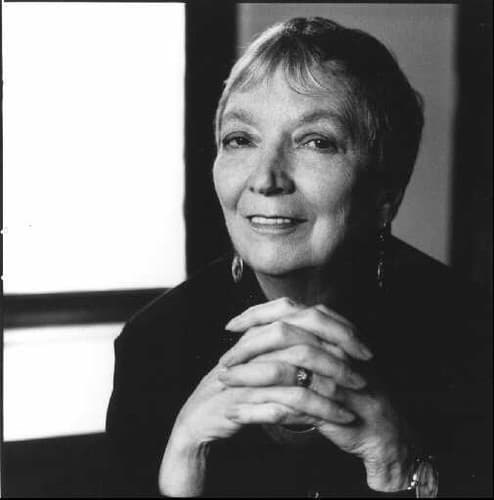
Madeleine L'Engle was an American writer of fiction, non-fiction, poetry, and young adult fiction, including A Wrinkle in Time and its sequels: A Wind in the Door, A Swiftly Tilting Planet, Many Waters, and An Acceptable Time. Her works reflect both her Christian faith and her strong interest in modern science.







