“It was impossible, I knew, to make someone love you. It was impossible to force a bond that wasn't there.”
— Shirin reflecting on her past and the nature of relationships.


Tahereh Mafi (2018)
Genre
Historical Fiction / Young Adult / Romance
Reading Time
5-6 hours
Key Themes
See below
Sign in to track this book
After 9/11, a Muslim teenager break-dancing through her pain finds her emotional walls challenged by an unexpected connection with a boy who sees beyond her hijab.
Shirin, a sixteen-year-old Muslim girl, moves with her family to a new town, the latest in many moves due to her father's job. This means another new high school, where she expects the same prejudice and isolation she has always experienced, especially in post-9/11 2002. On her first day, she faces stares, whispers, and hostility from students and even a teacher, Mr. Daniels. She has learned to cope with a tough skin and a detached attitude, relying on her brother Navid for support and finding comfort in break-dancing with him.
In biology class, Shirin is assigned a lab partner, Ocean James, a popular and seemingly carefree white boy. She expects him to be like everyone else, either ignoring her or treating her with suspicion. However, Ocean surprises her by talking to her, asking thoughtful questions, and showing genuine curiosity about her, instead of making assumptions based on her hijab or ethnicity. Shirin, cautious and guarded, tries to push him away with short, dismissive answers, but Ocean persists with gentle determination, which disarms her despite her efforts to keep her emotional distance.
Ocean continues to pursue Shirin, not romantically at first, but with a persistent desire to understand her. He talks to her during lunch, walks her to class, and even waits for her after school. Shirin, used to being invisible or disliked, finds herself slowly, reluctantly, responding to his kindness. She starts to share small details about her life, like her love for music and break-dancing, and finds herself enjoying his company, a feeling she hasn't allowed herself to experience with anyone outside her family for years. Their connection deepens, causing her internal conflict and fear.
As Shirin and Ocean grow closer, their relationship changes from friendship to romance. They spend more time together, often in secret, meeting at the library or finding secluded spots to talk. Shirin is very aware of the social implications of their relationship, knowing that Ocean, a popular athlete, risks his reputation by being with her. She also fears for her own safety and possible backlash from their community. Despite these fears, their genuine connection is strong, and Shirin finds herself falling for Ocean, a terrifying and exciting experience.
Navid, Shirin's older brother and closest confidant, notices a change in her. He sees her smiling more, talking about someone new, and generally seeming happier. He gently asks her about it, eventually learning about Ocean. While initially concerned about the potential difficulties and dangers of Shirin dating a white boy in their current social climate, Navid ultimately offers his unconditional support. He emphasizes Shirin's right to happiness and encourages her to follow her heart, providing a crucial anchor of family understanding amidst her new, secret romance.
One day, Shirin and Ocean are walking together in the school hallway, holding hands, and are seen by other students. The news spreads quickly, and the reactions are swift and negative. Ocean's friends start to distance themselves, and he faces exclusion from his social circle. Shirin is heartbroken to see him suffer for their relationship, and it reinforces her deep belief that she is a burden and attracts trouble. Despite the growing pressure, Ocean remains steady in his affection for Shirin, refusing to back down or hide their connection.
The harassment against Shirin and Ocean grows. Shirin endures more obvious racist remarks and threats, while Ocean is targeted with homophobic slurs and accusations of being a 'terrorist sympathizer.' School authorities, instead of protecting them, often add to the problem. Mr. Daniels, a history teacher, makes veiled xenophobic comments in class, and the principal, Mr. Henderson, suggests Shirin might be 'causing trouble' and implies she should just 'fit in.' The constant negative comments affect both Shirin and Ocean, testing the strength of their bond.
During a crucial basketball game, Ocean's teammates, fueled by prejudice and peer pressure, refuse to pass him the ball, effectively sidelining him. This public act of betrayal and exclusion deeply hurts Ocean. After the game, a heated argument breaks out in the locker room, where Ocean's teammates verbally assault him, using racist and Islamophobic slurs directed at Shirin. Ocean, in anger, retaliates physically, leading to his suspension from the team and further jeopardizing his academic future.
Seeing the devastating impact their relationship has had on Ocean's life — his suspension, social isolation, and potential loss of scholarship opportunities — Shirin makes the painful decision to break up with him. She believes she is a curse, that her presence only brings him pain and jeopardizes his future. Despite Ocean's protests and his declaration of love, Shirin, wanting to protect him, pushes him away, convinced that he will be better off without her. This decision leaves both of them heartbroken.
After the breakup, Shirin withdraws further into herself, finding comfort only in her music and break-dancing with Navid. She thinks about the constant injustice she faces simply for existing, and the unfairness of having to choose between her happiness and the well-being of those she loves. The pain of losing Ocean is deep, but it also strengthens her understanding of the systemic prejudice she and others like her face. She recognizes that the problem isn't her or Ocean, but the ignorance and hatred of others.
Despite Shirin's attempts to push him away, Ocean refuses to let their relationship end. He understands Shirin's reasons but believes their love is worth fighting for. He confronts his teammates and the school administration, publicly defending Shirin and calling out the racism and prejudice they faced. He makes it clear that he will not abandon Shirin and that his feelings for her are strong. This public stand, though difficult, begins to change some perceptions and shows his commitment.
Shirin's family moves again, and she enrolls in another new school. While the initial stares and whispers are still present, she finds a small group of more open-minded students. Ocean, determined to be with Shirin, finds a way to visit her. They reconcile, promising to navigate the challenges together. The book ends with them finding a glimmer of hope for a future where they can be together more openly, hinting at the possibility of a more accepting world, or at least their personal determination to create one for themselves, one step at a time.
The Protagonist
Shirin learns to open her heart to love and trust, even amidst adversity, ultimately finding strength in her vulnerability and refusing to let others define her worth.
The Supporting/Romantic Interest
Ocean's journey involves confronting his own privilege and the ingrained prejudices of his community, choosing love and justice over social acceptance.
The Supporting
Navid remains a steadfast source of support for Shirin, evolving in his role from a protective brother to a wise confidant who encourages her to pursue her own happiness.
The Antagonist
Mr. Daniels remains a static antagonist, representing the entrenched prejudice Shirin must navigate.
The Antagonist
Mr. Henderson's character remains unchanged, serving as a symbol of the institutional indifference and victim-blaming Shirin and Ocean encounter.
The Antagonist (Collective)
They remain a collective antagonistic force, never truly understanding or accepting Shirin, serving as a catalyst for conflict and a representation of societal prejudice.
The novel shows the constant prejudice and discrimination Shirin, a Muslim teenager, faces in post-9/11 America. From stares and whispers to racist comments, physical violence, and institutional bias from teachers and principals, Shirin is constantly targeted. This theme is central to her character, explaining her guarded nature and distrust. For instance, Mr. Daniels's classroom comments and the principal's victim-blaming show the systemic nature of this prejudice, making it clear that the problem is with society, not with Shirin.
“It was 2002. The whole country hated me. And it wasn’t just the country. It was the world. And it wasn’t just because I wore a headscarf. It was because of what they thought it meant. They thought it meant I was a terrorist. They thought it meant I was an enemy. They thought it meant I was a threat.”
Despite external pressures and internal fears, the developing love between Shirin and Ocean shows the power of human connection. Their relationship grows in a hostile environment, showing how love can cross cultural, racial, and social barriers. Ocean's strong commitment to Shirin, even when it costs him his friends and basketball career, highlights their bond. Their decision to fight for their relationship against all odds, as seen when Ocean publicly defends Shirin, shows that love can be a source of strength and hope against great difficulty.
“He saw me. He actually saw me. Not the hijab, not the color of my skin, not the preconceived notions. He saw me. And it was terrifying. And wonderful.”
Shirin's constant struggle with her identity as a Muslim American in a xenophobic society is a core theme. She grapples with how others see her versus who she is, often feeling like an outsider. Her hijab is a visible sign of her faith and culture, making her a target but also a symbol of her strength. Her break-dancing provides a place where she feels a sense of belonging and self-expression, free from judgment. Through her relationship with Ocean, she starts to redefine what belonging means, finding it not in external acceptance, but in genuine connection and self-acceptance, regardless of social approval.
“I was tired of being a walking stereotype. I was tired of being a symbol. I just wanted to be a girl. A girl who danced.”
Shirin's character shows strength and resistance. Despite daily harassment, she refuses to remove her hijab or change her identity. Her inner strength allows her to endure constant prejudice, finding outlets like break-dancing to channel her frustrations and maintain her spirit. Ocean also shows strength by standing by Shirin, refusing to give in to peer pressure or the racism of his community. Their combined resistance to the social pressures that try to divide them highlights the power of individual and collective strength in challenging injustice.
“I’d built these walls around myself for a reason. To keep me safe. To keep me from getting hurt. But maybe, just maybe, they were also keeping me from living.”
Allows deep insight into Shirin's internal struggles and experiences.
The story is told from Shirin's first-person perspective, which is crucial for conveying the emotional weight of her experiences. This narrative choice allows readers to intimately understand her internal monologues, her fears, her resilience, and her gradual opening up to Ocean. It immerses the reader in her constant awareness of being 'othered' and the psychological toll of daily discrimination, making her journey of finding love and self-acceptance more poignant and relatable. It also highlights the subjective reality of prejudice.
A symbolic outlet for self-expression, frustration, and connection.
Break-dancing serves as a powerful symbolic plot device for Shirin and Navid. It's their secret world, a space where they can be free, express themselves physically, and release their frustrations. For Shirin, it's an escape from the judgment and prejudice of her daily life, a place where her body, not her hijab, is the focus. It also represents a unique form of communication and connection with her brother, and later, a surprising point of interest for Ocean, subtly hinting at her hidden depths and passions beneath her guarded exterior.
A central symbol of Shirin's identity, faith, and the target of prejudice.
Shirin's hijab is a central symbolic device. It is a visible marker of her Muslim faith and cultural identity, but in the context of post-9/11 America, it also becomes a lightning rod for prejudice and misunderstanding. It's the first thing people see and often the sole basis for their judgment. For Shirin, it represents her choice and her connection to her faith, but also the constant burden of being stereotyped. The hijab is not just a piece of clothing; it's a constant reminder of the societal gaze and the challenges she faces.
Highlights the cyclical nature of prejudice and Shirin's constant adaptation.
The recurring 'new school' scenario, a common trope in YA fiction, is utilized to emphasize the cyclical and pervasive nature of the prejudice Shirin faces. Each new school represents a fresh start that inevitably devolves into the same patterns of discrimination. This device reinforces Shirin's weariness and the necessity of her emotional walls, but also makes Ocean's genuine interest stand out even more against this familiar backdrop. It underscores that the problem isn't the specific location, but the societal attitudes Shirin encounters everywhere.
“It was impossible, I knew, to make someone love you. It was impossible to force a bond that wasn't there.”
— Shirin reflecting on her past and the nature of relationships.
“I was an astronaut. I was a superhero. I was a ninja. I was a girl, and I was going to change the world.”
— Shirin's internal monologue about her aspirations and self-perception.
“Sometimes, the smallest things are the hardest to talk about.”
— Shirin acknowledging the difficulty of discussing subtle prejudices.
“The world was full of good people, and it was full of bad people, and sometimes it was hard to tell the difference.”
— Shirin's observation about human nature and moral ambiguity.
“I didn't want to be invisible anymore. I wanted to be seen.”
— Shirin's desire to break free from the stereotypes and be acknowledged for who she is.
“It was a strange thing, to feel so much and yet say so little.”
— Shirin's internal struggle with expressing her emotions and experiences.
“There was a difference between being alone and being lonely.”
— Shirin's nuanced understanding of solitude versus isolation.
“I learned to build my own world, one where I was safe, one where I was free.”
— Shirin describing her coping mechanism for dealing with external hostility.
“Sometimes, the truth hurts more than any lie.”
— Shirin reflecting on difficult realities she faces.
“It was a dangerous thing, to hope. But it was also a necessary one.”
— Shirin contemplating the risks and rewards of allowing herself to hope for a better future.
“I realized then that it wasn't about finding someone to complete me. It was about finding someone who could see me, truly see me.”
— Shirin's realization about the nature of true connection and acceptance.
“The only way to truly understand someone was to listen to their story, without judgment.”
— Shirin's philosophy on empathy and overcoming prejudice.
“It’s hard to be brave when you’re constantly afraid.”
— Shirin's internal struggle with maintaining strength in the face of ongoing discrimination.
“Maybe it wasn't about fitting in. Maybe it was about finding your own space, and owning it.”
— Shirin's shift in perspective from seeking acceptance to embracing her individuality.
Ready to see how well you understood this book? Take our interactive quiz with 10 questions.
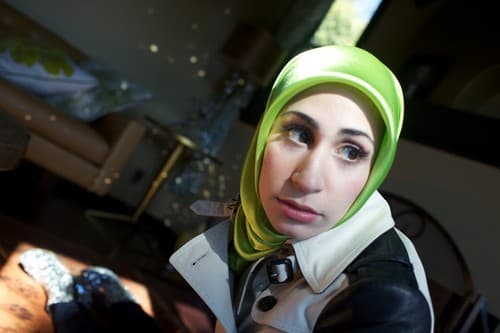
Biography coming soon.







