“There are some men who can make a fortune and some who can keep one. Seldom are they the same.”
— From the story 'The Perfect Murder', reflecting on the protagonist's financial acumen.

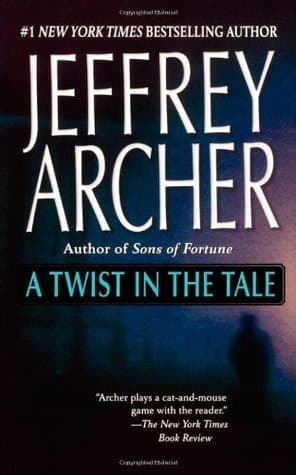
Jeffrey Archer (1987)
Genre
Thriller / Mystery
Reading Time
320 min
Key Themes
See below
Sign in to track this book
In a world of betrayals and cunning, a collection of gripping tales unveils the shocking twists of fate awaiting philandering husbands, ambitious chess champions, and finance ministers across the globe.
Sir Matthew Roberts, a wealthy QC, plans his wife, Lady Roberts', murder to marry his mistress, Elizabeth. He sets up a boating accident, ensuring no evidence points to him. The police investigate but find nothing. Sir Matthew believes he has committed the perfect crime and looks forward to his new life with Elizabeth. However, upon reading Lady Roberts' will, he discovers she foresaw his betrayal. She leaves her entire fortune to a distant cousin, with a clause that if Sir Matthew remarries, all assets will be liquidated and donated to charity, leaving him penniless and outmaneuvered from beyond the grave.
Ignatius Agrippa, Nigeria's new Minister of Finance, wants to eliminate corruption. He devises a plan to expose corrupt officials. He announces a 'clean sweep' initiative, requiring all civil servants to declare their assets and any gifts received, promising immunity for full disclosure. Many officials, believing they can hide their ill-gotten gains, declare only a fraction. Ignatius then reveals he has been secretly recording all gifts and bribes given to the officials through a network of informants. He exposes their lies and forces them to resign, recovering millions in stolen funds and earning his nation's respect.
Professor Philip Shaw, a respected art critic, is invited to authenticate a newly discovered painting attributed to a famous master. The owner, a wealthy collector named Mr. Hamilton, is convinced of its authenticity, despite some subtle anomalies. Professor Shaw examines the painting, using his knowledge of the artist's style, brushstrokes, and historical context. He notices a tiny, almost imperceptible detail — a specific type of knot in a piece of rope depicted in the painting, which wasn't invented until decades after the master's death. He exposes the painting as a forgery, saving Mr. Hamilton from a costly mistake.
Sir Alexander Heathcote acquires a seemingly unremarkable Chinese statue in 1870, believing it holds a secret. Over generations, his descendants inherit the statue, each trying to discover its true value. Some dismiss it as worthless, others see it as a family heirloom. The statue passes through various hands, including a pawn shop, until it reaches an auction house in the present day. A young expert, intrigued by the family legend, examines the statue. He discovers a tiny, almost invisible inscription at the base, revealing that the statue is merely a stand for a much smaller, incredibly valuable jade carving hidden within, making the 'worthless' statue a priceless treasure.
Lady Margaret, a seemingly frail elderly woman, suffers a series of 'accidents' — a fall down the stairs, a poisoning attempt, a car crash. Her nephew, Charles, and his wife, Clara, are her primary caregivers and beneficiaries. The police investigate, initially concluding they are indeed accidents. However, a shrewd detective notices inconsistencies and a pattern. It is revealed that Lady Margaret, far from being a victim, is orchestrating these 'accidents' herself. She is exacting revenge on Charles and Clara for their past mistreatment and their thinly veiled impatience for her inheritance, turning the tables on their perceived greed.
The First Lady of a European nation, Anna, finds her husband, the President, in a scandal that threatens his political career. A journalist, Mr. Davies, possesses incriminating evidence and plans to publish it. Anna, a strategist, devises a counter-plan. She arranges for a seemingly innocent interview with Davies, during which she manipulates him, appealing to his ego and sense of journalistic integrity. She then leaks a fabricated, less damaging scandal involving a minor official, diverting public attention and forcing Davies to prioritize the 'new' story, thus giving her husband time to recover and eventually clear his name.
Mr. Arthur Miller, an eccentric and reclusive millionaire, dies, leaving a bizarre will. His three estranged relatives — a nephew, a niece, and a distant cousin — are summoned to hear the terms. The will states that his vast fortune will be inherited by the relative who can live in his dilapidated, isolated mansion for an entire year, alone, without any contact with the outside world. The relatives, driven by greed, attempt the challenge. One by one, they fail, unable to endure the solitude and the mansion's unsettling atmosphere. The true beneficiary turns out to be Miller's loyal housekeeper, who, having lived in the house for decades, easily fulfills the condition, proving that true loyalty outlasts superficial greed.
Roger, a clever but unscrupulous man, is caught stealing a valuable antique from a stately home. He is arrested and confident of his impending conviction. However, Roger, having studied obscure legal texts, discovers a forgotten legal loophole dating back centuries. The loophole states that if an object is 'borrowed' with the intent to return it, even if without permission, it cannot be legally considered theft. During his trial, Roger argues that he merely intended to 'borrow' the antique for a short period to study its craftsmanship before returning it. Despite the prosecution's outrage, the judge is forced to dismiss the charge, much to everyone's astonishment.
Colonel Bullfrog, a veteran British officer, wants to win a crucial regimental cricket match against a rival unit. His team is considered the underdog, lacking skill and confidence. The opposing team is led by a boastful and arrogant captain. Colonel Bullfrog, known for his eccentric tactics, devises a psychological strategy. He publicly praises the opposing team's skill, while subtly undermining their confidence with seemingly innocuous comments. During the match, he uses unusual field placements and unexpected bowling changes, disorienting the overconfident opponents, leading his underdog team to an improbable and humiliating victory.
Arthur, a master con artist, targets Sir Jeremy, a greedy and arrogant millionaire. Arthur, with his team, devises an elaborate 'sting' operation. They create a fake investment opportunity, involving a non-existent oil discovery, complete with fabricated documents, expert testimonials, and a convincing front company. They slowly draw Sir Jeremy in, playing on his desire for quick, immense profits. Sir Jeremy, blinded by his own greed, invests a substantial sum. Just as the 'deal' is about to close, Arthur and his team vanish, leaving Sir Jeremy with nothing but worthless papers and the realization that he has been outsmarted and swindled.
Six old friends, all with intertwined pasts and hidden resentments, gather for their annual 'last supper' at a remote country house. The host, Julian, reveals he has been diagnosed with a terminal illness and intends for this to be their final gathering. As the evening progresses, old grievances resurface, and long-buried secrets begin to unravel. Shocking truths about betrayals, affairs, and even a past crime are exposed. The atmosphere becomes tense and accusatory, culminating in a dramatic confrontation that shatters their friendships forever, leaving them with the bitter taste of their shared, destructive history.
Richard, an ambitious politician, is about to achieve his lifelong dream of becoming Prime Minister. He is known for his pragmatic, often cynical, approach to politics, prioritizing power. While traveling to a crucial political rally, his car is involved in a severe accident, leaving him critically injured and close to death. During his recovery, Richard experiences a spiritual awakening. He re-evaluates his life and priorities, realizing the emptiness of his relentless pursuit of power. He emerges from the experience a changed man, abandoning his political ambitions to pursue a life of quiet service and philanthropy.
The Protagonist/Antagonist
From a seemingly infallible murderer, he is ultimately humbled and defeated by his victim's posthumous revenge.
The Protagonist
He rises to power and successfully cleanses a significant portion of the government, becoming a national hero.
The Protagonist
He continues to uphold the integrity of the art world through his expertise, exposing fraud.
The Supporting/Ancestral
His initial purchase sparks a multi-generational mystery that is solved long after his death.
The Protagonist/Antagonist
Transforms from a seemingly helpless victim into a masterful puppet-master of revenge.
The Protagonist
She utilizes her intelligence and strategic thinking to successfully navigate a political crisis, securing her husband's position.
The Supporting/Mentioned
His death and subsequent will reveal the true nature of his relationships and ultimately reward loyalty.
The Protagonist/Antagonist
He successfully evades conviction by exploiting an ancient legal loophole, demonstrating his cunning.
The Protagonist
He leads his underdog team to an improbable victory through cunning and psychological warfare.
The Protagonist/Antagonist
He successfully executes a complex con, leaving his wealthy mark swindled and humiliated.
The Protagonist/Catalyst
His terminal illness prompts a final gathering that exposes long-held secrets and shatters friendships.
The Protagonist
He transforms from a power-hungry politician to a man dedicated to service and philanthropy after a life-altering accident.
Many stories explore the line between justice and personal revenge. In 'The Perfect Murder,' Lady Roberts achieves a form of posthumous justice, turning the tables on her murderer. Similarly, Lady Margaret in 'A Chapter of Accidents' orchestrates 'accidents' as a calculated revenge against her greedy relatives. These narratives question whether true justice can be found outside conventional legal systems and often highlight how victims find clever ways to strike back.
“For every action, there is an equal and opposite reaction, and sometimes, the reaction comes from beyond the grave.”
Greed's destructive power is a recurring idea. Characters like Sir Matthew Roberts are driven to murder by a desire for wealth and a new life. In 'The Recluse,' the millionaire's will is designed to expose his relatives' greed, who fail to inherit because they cannot overcome their desire for material comfort. Arthur in 'The Sting' successfully preys on Sir Jeremy's greed, showing how an insatiable desire for wealth can blind even the most powerful individuals, making them vulnerable to manipulation.
“The greatest weakness of man is his insatiable desire for more.”
The triumph of wit and cleverness over brute force or conventional expectations is a central theme. Ignatius Agrippa uses intricate planning to expose corruption, and Professor Philip Shaw's keen eye for detail uncovers an art forgery. Roger in 'The Loophole' uses his knowledge of obscure laws to escape justice. These stories celebrate the human mind's power to devise clever solutions, whether for good or ill, often showing that intelligence and cunning can overcome seemingly impossible obstacles.
“The mind, when properly applied, can be a more formidable weapon than any sword.”
This theme explores how things are not always as they seem. In 'A Chapter of Accidents,' Lady Margaret appears to be a helpless victim but is, in fact, a calculating avenger. The seemingly worthless 'Chinese Statue' hides a priceless treasure within. Characters often present a facade that hides their true intentions or the true nature of their circumstances. The stories encourage readers to look beyond superficial appearances and question assumptions, revealing hidden depths and unexpected truths.
“Only when you look beyond the obvious do the true secrets reveal themselves.”
Each story, in its own way, shows that every action, whether good or ill, has inevitable consequences. Sir Matthew's murder plot leads to his financial ruin. The corrupt officials in 'Clean Sweep Ignatius' face public humiliation and loss of position. Even seemingly minor choices, like the acquisition of a statue, can have long-lasting effects across generations. The collection consistently reinforces the idea of cause and effect, where characters ultimately face the results of their decisions and behaviors, often in unforeseen and ironic ways.
“No man can escape the shadows he casts.”
A sudden, unexpected turn of events at the story's conclusion.
Archer's signature device, the twist ending, is employed in nearly every story. It serves to subvert reader expectations, providing a shocking revelation that recontextualizes everything that came before. Examples include Lady Roberts' posthumous revenge in 'The Perfect Murder,' the true nature of Lady Margaret's 'accidents' in 'A Chapter of Accidents,' and the hidden treasure within the 'Chinese Statue.' This device creates a sense of surprise and often delivers a moral punchline, making the reader re-evaluate the characters' motives and outcomes.
Outcomes where characters receive what they deserve, often in a fitting or unexpected way.
This device ensures that characters' fates are often a direct, and frequently ironic, consequence of their actions. Sir Matthew, who meticulously planned his wife's murder for her money, ends up losing everything due to her will. Greedy relatives in 'The Recluse' fail to inherit because they cannot endure the isolation, while the loyal housekeeper succeeds. This creates a strong sense of moral satisfaction for the reader, as wrongdoers are punished or outsmarted by their own flaws, and virtue is, in some form, rewarded.
Characters or situations that initially appear one way, but are revealed to be entirely different.
Archer frequently uses this device to mislead the reader and build suspense. Lady Margaret appears to be a frail victim, but is a mastermind. The Chinese statue seems worthless but holds immense value. This device challenges the reader's initial judgments and assumptions, creating a sense of mystery and encouraging deeper engagement with the narrative. It highlights the theme of appearance versus reality, making the eventual reveal more impactful and surprising.
A character's ingenious use of rules, laws, or psychology to achieve their goals.
Many stories revolve around a character's ability to find and exploit a hidden rule, an oversight, or a psychological weakness. Roger uses an ancient legal loophole to escape a theft charge. Ignatius Agrippa devises a 'clean sweep' that psychologically manipulates corrupt officials into exposing themselves. Colonel Bullfrog uses unconventional tactics to win a cricket match. This device showcases the power of intellect and strategic thinking, often allowing characters to achieve seemingly impossible feats or outmaneuver more powerful adversaries.
“There are some men who can make a fortune and some who can keep one. Seldom are they the same.”
— From the story 'The Perfect Murder', reflecting on the protagonist's financial acumen.
“The truth, like a good wine, needs no bush.”
— A general observation on honesty, appearing in 'The Expert Witness'.
“He understood that some people have a gift for making money, others for spending it, and a very few for both.”
— From 'A Chapter of Accidents', describing a character's financial insight.
“It is remarkable how quickly the human mind adapts to new circumstances, especially when those circumstances offer a distinct advantage.”
— From 'The First Lady', commenting on adaptability and self-interest.
“Justice, like beauty, is often in the eye of the beholder.”
— A recurring theme, particularly evident in 'The Recluse'.
“The greatest trick the devil ever pulled was convincing the world he didn't exist.”
— A classic line, used in a clever twist in 'The Loophole'.
“He learned that in life, as in chess, one must always think several moves ahead.”
— From 'The Man Who Never Was', detailing a character's strategic thinking.
“There are three kinds of lies: lies, damned lies, and statistics.”
— A well-known quote, cleverly deployed in 'The Perfect Murder' to discredit evidence.
“Revenge, he discovered, was a dish best served cold, and with a very long spoon.”
— From 'The Century', describing a meticulous plan for vengeance.
“It is a rare man who can resist the temptation of a secret, especially one that promises to reveal so much.”
— From 'The Luncheon', exploring human curiosity and temptation.
“Sometimes the most elaborate schemes are undone by the simplest of oversights.”
— A lesson learned in 'The Colonel's Lady', highlighting the fragility of complex plans.
“He came to understand that true power lies not in what you possess, but in what others believe you possess.”
— From 'The Traitor', a reflection on perceived vs. actual power.
“The greatest confidence trick of all is to make your mark believe they are in control.”
— From 'A La Carte', explaining a crucial element of a con.
Ready to see how well you understood this book? Take our interactive quiz with 10 questions.

Jeffrey Howard Archer, Baron Archer of Weston-super-Mare is an English novelist, life peer, convicted criminal, and former politician. Before becoming an author, Archer was a Member of Parliament (1969–1974), but did not seek re-election after a financial scandal that left him almost bankrupt.







