“I didn't want to marry you because I'm kind of fond of you, and I didn't want to lose you.”
— Jean Paget explaining her initial reluctance to marry Joe Harman.


Nevil Shute (1981)
Genre
Historical Fiction / Romance
Reading Time
340 min
Key Themes
See below
Sign in to track this book
After a surprising inheritance, a woman goes back to postwar Malaya, hoping to find the Australian prisoner of war who showed her kindness during captivity.
The story begins with Jean Paget, a young English secretary in London. Her solicitor, Noel Strachan, tells her she has inherited a lot of money from her deceased uncle, Douglas Paget, who made a fortune in Australia. The will says she gets income from the trust until she is 35, then she controls the money. During their meetings, Jean talks about her terrible experiences during World War II. As a young woman working in Malaya when the Japanese invaded, she was captured. She was forced to march across the Malay Peninsula with other European women and children, including a baby and an elderly woman, under harsh Japanese supervision. This part sets up Jean's character and the traumatic start of her war ordeal.
Jean describes the terrible conditions of the forced march across Malaya. The women, including Mrs. Holland, Miss Horsefall, and Mrs. Frith, suffered from hunger, disease, and constant threats from their Japanese captors. Many died, including the baby and Mrs. Frith. During a stop in a village, they meet Australian prisoners of war. One young Australian, Joe Harman, a stockman from Queensland, steals chickens from the Japanese and gives them to the starving women. He also gives them medicine and comfort, making a brief but important connection with Jean. This act of kindness, though short, gives Jean hope amid the despair.
The Japanese find out about Joe Harman's charity. As punishment, they nail him by his hands to a tree and leave him for dead. Jean and the women are forced to watch this before being moved on. The sight of Joe's suffering affects Jean deeply. After marching for months and seeing more deaths, the remaining women, including Jean, are abandoned by their Japanese guards in a remote village near the coast as the war turns against Japan. Local villagers take them in, and they survive until the war ends and they return to Britain. Jean remembers Joe and his sacrifice.
After several years back in England, working as a secretary, Jean still thinks about Joe Harman. With the large inheritance from her uncle, she feels she must return to Malaya to find out what happened to him. Noel Strachan, her solicitor, is at first doubtful of her plan, but Jean is determined. She believes if Joe survived, he would have gone back to Australia. She decides to use her inheritance not just to find him, but to invest in Australia, specifically the remote Northern Territory, to honor Joe and create a new life for herself.
Jean travels to Malaya. With a local lawyer and interpreter, Mr. Tan, she carefully retraces the death march route. She visits the villages they passed through, interviewing locals and gathering information. She eventually learns that Joe Harman did survive being nailed to the tree. A kind village woman rescued and nursed him back to health. He was later recaptured by the Japanese and sent to a prisoner of war camp, but he survived the war and returned to Australia. This news gives Jean great relief and new determination to find him.
Following the trail, Jean travels to Australia, with Noel Strachan, who is now more supportive. She lands in Queensland, Joe's home state, and starts asking questions. While looking for Joe, Jean begins her investment plan. She buys a small transport company in Queensland, seeing the need for better infrastructure in remote areas. She also invests in a property near Joe's family station, though she hasn't contacted his family directly yet, wanting to find him first. Her businesses are successful, setting up her future plans.
Jean's persistence works when she finally finds Joe Harman. He is a truck driver, moving goods across the large, sparsely populated Northern Territory. Their reunion is emotional and quiet, showing the trauma they both went through and the years that passed. Joe, surprised at first, recognizes Jean immediately. They share stories of survival and the years between. Joe still has physical and psychological scars from the war, but he is a survivor, like Jean. Their connection, formed during the war, is renewed, and they start to talk about their future.
Jean tells Joe her big plan: to turn the dusty, isolated cattle town of Willstown in the Northern Territory into a modern, successful community, 'a town like Alice' Springs. She plans to use her inheritance to build new industries, create jobs, and improve life for its residents. Her ideas include a shoe factory, a laundry, and other needed services in the remote outback. She sees this as a business and a way to build a future for herself and Joe, and to leave a lasting mark on the region she loves.
Jean and Joe start their project in Willstown. They face many challenges, including the harsh climate, long distances, lack of skilled workers, and skepticism from some locals who resist change. But Jean's determination, business sense, and practical approach, combined with Joe's knowledge of the land and practical skills, slowly win people over. They open the shoe factory, providing jobs for local Aboriginal women, and slowly build the infrastructure and services Willstown needs. Their partnership grows stronger both personally and professionally.
Noel Strachan, Jean's solicitor, visits Willstown to see her and her investments. He is impressed by what Jean has done, seeing the town's transformation and her positive effect on the community. He sees the successful businesses, new facilities, and Jean and Joe's happiness. Strachan, who was initially worried about Jean's plans, now fully understands and admires her vision and resilience. The story ends with Jean and Joe married, living in Willstown, and continuing their work, having found love, purpose, and a home in the Australian outback.
The Protagonist
From a traumatized survivor, Jean transforms into a visionary entrepreneur and community leader, finding love and purpose in the Australian outback.
The Love Interest / Supporting
Joe survives brutal wartime punishment and finds renewed purpose and love with Jean, helping to build a new community.
The Supporting
Noel evolves from a detached legal advisor to a supportive friend, witnessing and admiring Jean's remarkable transformation.
The Supporting
Serves as a catalyst for Jean's discovery, facilitating her journey to find Joe.
The Supporting
Survives the Malayan death march, representing the collective resilience of the captive women.
The Supporting
Endures the death march, showcasing the human capacity for survival under extreme conditions.
The Mentioned
His legacy posthumously enables Jean's entire journey and transformation.
The Mentioned
Dies during the march, symbolizing the devastating human cost of the war.
The novel shows the great strength of the human spirit when facing extreme suffering. Jean Paget's survival of the Malayan death march, seeing many deaths and enduring hunger and brutality, shows her strong will to live. Joe Harman's survival after being nailed to a tree also shows this theme. Their ability to survive and build a new life and community, overcoming past trauma, shows hope and determination winning over hardship.
““There are some things which you never get over, but you get through them.””
Jean's post-war search is driven by deep gratitude and a growing love for Joe Harman. His single act of kindness during the war, when he risked his life to give her and the other women food, leaves a lasting impression. This gratitude becomes a strong reason to find him, even years later, and forms the basis of their lasting love. Their relationship is built on shared trauma, mutual respect, and a deep appreciation for each other's resilience. It shows how love can come from the darkest times.
““She had found him again. That was all that mattered.””
The novel is a story of important new beginnings, both for individuals and the community. Jean, after surviving the war, starts a completely new life in Australia, leaving her English past behind. Her plan for Willstown is an act of rebuilding—turning a dusty, isolated town into a busy center. This theme reflects the post-war desire for reconstruction and the human ability to create a better future from the past, putting hope and effort into making something meaningful and lasting.
““She was going to make a town like Alice.””
The Australian outback is both a hard challenge and a place of great opportunity. Its size, harsh climate, and isolation are big obstacles for Jean and Joe. But it also offers freedom, space, and resources for Jean's ambitious projects. The outback becomes important in the story, shaping the lives of those who live there and giving Jean the place to create her vision for Willstown. It symbolizes the wild potential of a new world.
““It’s a country that’ll either make you or break you.””
Jean's wartime experiences are recounted through extensive flashbacks to Noel Strachan.
The initial chapters of the novel utilize a prolonged flashback narrative. Jean Paget recounts her harrowing experiences during the Malayan death march to her solicitor, Noel Strachan. This device allows the author to establish the foundational trauma and motivation for Jean's later actions without immediately placing the reader in the midst of the war. It builds suspense around Joe Harman's fate and frames Jean's post-war quest as a direct consequence of her past, providing crucial context for her character and decisions.
A substantial financial legacy that serves as the catalyst for Jean's journey and ambitions.
Douglas Paget's unexpected inheritance is the primary plot device that enables Jean's entire quest. Without the financial resources, Jean would not have been able to travel to Malaya, conduct her search for Joe, or embark on her ambitious development projects in Australia. The inheritance not only provides the means but also symbolizes a form of empowerment, giving Jean the agency to shape her own destiny and that of the community she builds. It transforms her from a survivor to a powerful agent of change.
Jean's determined journey across continents to find Joe Harman.
The central narrative arc is structured around Jean's quest to find Joe Harman. This motif provides the primary driving force for the plot, taking Jean from England to Malaya and then to Australia. The search is not merely physical; it's also a psychological and emotional journey, representing Jean's need for closure, connection, and purpose after her traumatic wartime experiences. The success of her quest provides the emotional payoff and allows for the subsequent development of her life in Australia.
Alice Springs represents a vision of a thriving community in the harsh outback, inspiring Jean's efforts.
Alice Springs serves as a powerful symbol in the novel, representing the possibility of creating a vibrant, self-sufficient community in the remote and challenging Australian outback. For Jean, the idea of 'a town like Alice' is a concrete manifestation of her vision for Willstown – a place that defies its harsh surroundings to offer opportunity and quality of life. It encapsulates her hope for progress and her belief that even the most desolate places can be transformed through ingenuity and hard work, providing a tangible goal for her efforts.
“I didn't want to marry you because I'm kind of fond of you, and I didn't want to lose you.”
— Jean Paget explaining her initial reluctance to marry Joe Harman.
“A man is a fool if he doesn't know what he wants, and a bigger fool if he does and doesn't go after it.”
— Joe Harman's philosophy on pursuing one's desires.
“The greatest happiness of life is the conviction that we are loved; loved for ourselves, or rather, loved in spite of ourselves.”
— A reflection on the nature of love and acceptance.
“It was impossible to be unhappy when you were doing something useful.”
— Jean Paget's mindset while working and building.
“There are only two kinds of people in the world, the Irish and those who wish they were.”
— A humorous observation made by an Irish character.
“What good is money if you haven't got a dream?”
— Jean Paget considering the value of financial gain versus personal aspirations.
“The only way to get rid of temptation is to yield to it.”
— A light-hearted remark about human nature.
“You can't build a town on nothing but hope, but you can't build it without hope either.”
— Discussing the practicalities and spirit needed for community building.
“She had learned that the most important thing in life was to have something to look forward to.”
— Jean Paget's realization after enduring hardship.
“It's a long way to Alice Springs, but it's a longer way to nowhere.”
— Emphasizing the importance of having a destination and purpose.
“He knew that he had to go on, because there was no going back.”
— Joe Harman's determination in difficult circumstances.
“You can always tell a gentleman by his boots.”
— A minor character's observation about appearances.
“The world was full of men who were willing to take risks, but very few who were willing to take responsibility.”
— A commentary on character and leadership.
“If you want to get something done, you have to do it yourself.”
— Jean Paget's self-reliant approach to her goals.
Ready to see how well you understood this book? Take our interactive quiz with 10 questions.
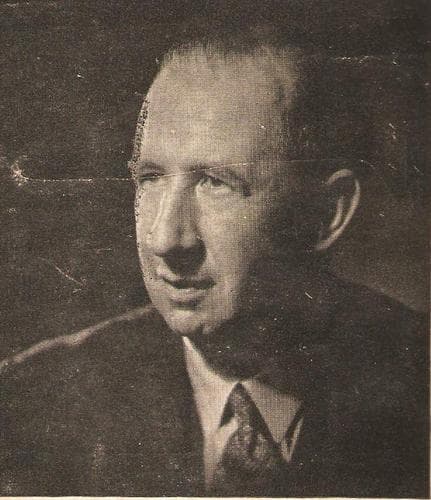
Nevil Shute Norway was an English novelist and aeronautical engineer who spent his later years in Australia. He used his full name in his engineering career and Nevil Shute as his pen name, in order to protect his engineering career from inferences by his employers (Vickers) or from fellow engineers that he was '"not a serious person" or from potentially adverse publicity in connection with his novels, which included On the Beach and A Town Like Alice.







