BookBrief
A Tale of Two Cities cover
Archivist's Choice

A Tale of Two Cities

Charles Dickens (1998)

Genre

Historical Fiction

Reading Time

12 hours 12 minutes

Key Themes

See below

Track Your Reading

Sign in to track this book

During the French Revolution, an unjustly accused man and his cynical look-alike become linked in a desperate fight against the guillotine.

Synopsis

In 1775, banker Jarvis Lorry brings Lucie Manette to her father, Dr. Alexandre Manette, who has been in the Bastille for 18 years and now works as a shoemaker. Five years later, in 1780, Charles Darnay, a French aristocrat who has disowned his family, is tried for treason in England. He is acquitted because he looks exactly like Sydney Carton, a lawyer's assistant. Both Darnay and Carton love Lucie. Lucie marries Charles Darnay, and they have a daughter. The French Revolution begins, and Darnay returns to France to help an imprisoned former servant. In Paris, Darnay is arrested as an aristocrat and sentenced to death. Dr. Manette, using his influence as a former Bastille prisoner, tries to save Darnay but finds a letter revealing the true horrors of Darnay's family, condemning him further. As Darnay awaits execution, Sydney Carton, driven by his love for Lucie and a desire for redemption, plans a swap. He drugs Darnay, takes his place in prison, and goes to the guillotine instead, saying, 'It is a far, far better thing that I do, than I have ever done; it is a far, far better rest that I go to than I have ever known.' Lucie, Darnay, Dr. Manette, and Jarvis Lorry escape France, leaving Carton to his sacrifice.
Reading time
12 hours 12 minutes
Difficulty
Medium
Pacing
Variable
Mood
Dramatic, Tragic, Hopeful, Suspenseful
✓ Read this if...
You enjoy classic historical fiction with rich character development, a powerful love story, and the dramatic backdrop of revolution and sacrifice.
✗ Skip this if...
You prefer fast-paced modern thrillers or struggle with dense, descriptive prose and complex sentence structures typical of 19th-century literature.

Plot Summary

The Dover Road

In November 1775, on a muddy road to Dover, Mr. Jarvis Lorry, an elderly banker from Tellson's Bank, travels by mail-coach. He receives a coded message: 'Recalled to Life.' Jerry Cruncher, a porter, delivers it. Lorry tells Cruncher to say he 'understands.' In Dover, Lorry meets Lucie Manette, who thinks she is an orphan. Lorry tells her that her father, Dr. Alexandre Manette, whom she thought dead, is alive. He has been freed from the Bastille after eighteen years. Lucie faints from shock, and Miss Pross, her devoted governess, revives her.

The Shoemaker

Mr. Lorry and Lucie go to Paris and visit Monsieur Ernest Defarge's wine-shop in the poor Saint Antoine district. Defarge, a former servant of Dr. Manette, shows them a small, dark attic room where Dr. Manette stays. They find him a shell of his former self, making shoes. He is mentally broken, remembering only his prisoner number, 'One Hundred and Five, North Tower.' Lucie approaches him, and her golden hair and kind voice remind him of his wife, slowly bringing him back to awareness.

A Sight at the Old Bailey

Five years later, in 1780, Lucie Manette and Dr. Manette live in London. Charles Darnay, a French emigrant, is on trial for treason at the Old Bailey, accused of giving English secrets to the French. Mr. Lorry, Lucie, and Dr. Manette testify. The prosecution's case weakens when the striking resemblance between Darnay and Sydney Carton, a dissolute but smart lawyer working for Darnay's attorney, Mr. Stryver, is shown. This resemblance creates doubt about Darnay's identity. Lucie's honest testimony, though not directly freeing him, sways the jury with its sincerity, and Darnay is acquitted.

The Jackal and the Lion

After Darnay's acquittal, Sydney Carton and Mr. Stryver, the 'lion' of the courtroom, share a drink. Carton, the 'jackal,' does the legal work but lets Stryver take credit, showing Carton's self-destructive nature. Carton tells Darnay about his self-hatred and despair, regretting his wasted life. He shows a surprising gentleness towards Lucie, admitting her presence comforts him, even as he feels unworthy. This shows Carton's inner struggle and his hidden capacity for good feelings.

Monseigneur in Town

In France, the wealthy and arrogant Marquis St. Evrémonde, Charles Darnay's uncle, represents the cruel French aristocracy. While driving his carriage carelessly through the poor streets of Saint Antoine, he runs over and kills a child, Gaspard, in front of the Defarges' wine-shop. The Marquis shows no regret, tossing a coin to the grieving father. Madame Defarge watches, knitting silently, adding his name to her list of those to be punished. This event increases the peasants' resentment.

The Marquis's Château

Charles Darnay visits his uncle, the Marquis St. Evrémonde, at his grand château. Darnay expresses his disgust at the Marquis's indifference to life and his family's history of oppression. He says he will give up his title and property, believing the family's wealth is tainted. The Marquis, scornful of Darnay's ideals, dismisses his nephew. That night, the Marquis is found murdered in his bed, stabbed by Gaspard, the grieving father of the child run over by the Marquis. A note reads: 'Drive him fast to his tomb. This, from Jacques.'

A Secret Engaged

Back in London, Charles Darnay, now a French tutor, falls in love with Lucie Manette. Before proposing, he talks with Dr. Manette, promising to tell him his true identity and reasons for living in England on their wedding morning. Dr. Manette, though initially troubled by Darnay's secret, gives his blessing. On the wedding day, after Darnay reveals he is Charles St. Evrémonde, Dr. Manette relapses into his shoemaking trance for nine days. Mr. Lorry and Miss Pross secretly dismantle his shoemaking bench and bury his tools once he recovers, hoping to prevent future relapses. Lucie and Charles marry happily.

The Storm Bursts

July 14, 1789. The French Revolution begins with the storming of the Bastille. Monsieur Defarge, Madame Defarge, and the revolutionaries of Saint Antoine lead the attack. Madame Defarge, armed with a knife, inspires the women. The prison falls, and prisoners are freed or killed. Defarge, guided by a turnkey, goes to Dr. Manette's old cell, 'One Hundred and Five, North Tower,' to find a hidden document. This event unleashes the oppressed French people's rage.

The Grindstone

Three years later, in 1792, as the Reign of Terror grows, Charles Darnay receives a desperate letter from his family's former servant, Gabelle, who is imprisoned in France. Gabelle asks for Darnay's help, saying he is held for maintaining the St. Evrémonde property. Despite the danger, Darnay, feeling a family duty, decides to return to France to help Gabelle. He travels alone, keeping his plans secret from Lucie. In France, he is immediately recognized as an aristocrat, denounced, and imprisoned in La Force prison in Paris, facing a grim future.

The Carmagnole

Lucie, Dr. Manette, and Little Lucie follow Charles to Paris, upset by his imprisonment. Dr. Manette, now respected as a former Bastille prisoner, believes his past suffering will give him influence with the revolutionaries. He works constantly, using his status to plead for Darnay's release. Lucie waits daily outside La Force, hoping to see Charles, enduring the menacing atmosphere of revolutionary Paris, including the dance of the Carmagnole, a symbol of the mob's bloodlust. Despite Dr. Manette's efforts, Darnay remains imprisoned, and the family's ordeal continues.

Darnay's Trials

Dr. Manette successfully uses his influence to get Charles Darnay's first acquittal. Darnay is released and reunited with his family for a short, happy time. However, on the night of his release, he is dramatically re-arrested at the urging of the Defarges and another accuser. He is charged with being an enemy of the Republic. This second arrest, based on new evidence and the Defarges' relentless pursuit, throws the family back into despair and shows the unpredictable nature of revolutionary justice, making his situation seem even more hopeless.

The Denunciation and the Discovery

At Darnay's second trial, Monsieur Defarge produces a letter Dr. Manette wrote while imprisoned in the Bastille, found hidden in his old cell. The letter details how the Marquis St. Evrémonde and his brother (Charles Darnay's father) imprisoned Dr. Manette to silence him after he saw their brutal abuse and murder of a peasant family, including Madame Defarge's sister and brother. The letter also condemns the entire Evrémonde family 'to the last of their race.' This revelation condemns Darnay to death, turning Dr. Manette's past suffering against his son-in-law.

A Life for a Life

Sydney Carton, now in Paris, overhears Madame Defarge planning to denounce Lucie and Little Lucie. Realizing the danger, Carton creates a desperate plan. He visits Darnay in prison, drugs him, and switches places, using their resemblance. Carton sends Darnay, unconscious and disguised as himself, out of prison with the help of Barsad and Cly. Carton then awaits the guillotine in Darnay's place, having found purpose and redemption in his sacrifice for Lucie and her family, fulfilling his earlier promise to Lucie that he would do anything for her or those she loved.

The Last Thread

As Darnay, Lucie, Dr. Manette, Mr. Lorry, and Miss Pross escape Paris, Madame Defarge, furious at Darnay's escape and seeking to eliminate the entire Evrémonde line, goes to Lucie's lodging. She intends to denounce Lucie. However, she meets Miss Pross, who stayed behind to ensure the family's safe departure. A struggle follows. Madame Defarge tries to shoot Miss Pross, but the pistol goes off, killing Madame Defarge. The gunshot also causes Miss Pross to become permanently deaf, a silent sacrifice for the family's safety.

The Golden Thread's End

Sydney Carton goes to the guillotine, calm and determined, having found peace and purpose in his sacrifice. He comforts a frightened seamstress who is also condemned. As he waits, he imagines a future where Lucie and Charles live happily, their children prosper, and he is remembered with love. He foresees the end of the Reign of Terror and a more just society emerging from the revolution. His final thoughts are of redemption and selflessness, shown in his reflection: 'It is a far, far better thing that I do, than I have ever done; it is a far, far better rest that I go to than I have ever known.'


Principal Figures

Lucie Manette

The Protagonist

She evolves from a sheltered orphan to a resilient wife and mother, demonstrating immense courage in the face of revolutionary terror.

Charles Darnay

The Protagonist

He strives to escape his family's legacy but is ultimately forced to confront it, nearly perishing for his birthright before being saved by another's sacrifice.

Sydney Carton

The Protagonist

He transforms from a cynical, wasted man into a noble hero who finds meaning and purpose in his selfless act.

Dr. Alexandre Manette

The Supporting

He is 'recalled to life' by Lucie's love, gradually regaining his sanity and becoming a protective figure, only to have his past re-emerge with devastating consequences.

Monsieur Ernest Defarge

The Supporting

He transforms from a watchful revolutionary into a zealous participant in the Reign of Terror, driven by a desire for justice.

Madame Thérèse Defarge

The Antagonist

Her character arc is one of escalating vengeance, becoming a symbol of the Revolution's merciless extreme.

Mr. Jarvis Lorry

The Supporting

He remains a steadfast, loyal friend and protector to the Manette family, often struggling to balance his professional demeanor with his deeply felt personal affection.

Miss Pross

The Supporting

Her unwavering loyalty and protective nature culminate in a heroic, self-sacrificing act.

Jerry Cruncher

The Supporting

He remains largely static in his character but provides comic relief and ultimately aids in the escape from Paris, showing a hint of moral awakening.

Themes & Insights

Sacrifice and Redemption

The novel explores the power of self-sacrifice. Sydney Carton, initially a wasted man, finds meaning and nobility by dying in Charles Darnay's place. His act is not just a swap but a moral change, letting him make up for past failures and fulfill his unspoken love for Lucie Manette. This theme appears in his last moments, where he imagines a hopeful future for those he saves, showing that a life, however flawed, can achieve greatness through selfless love. His sacrifice is a 'far, far better thing' than he has ever done, bringing him peace and purpose.

'It is a far, far better thing that I do, than I have ever done; it is a far, far better rest that I go to than I have ever known.'
Sydney Carton's inner monologue

Resurrection and 'Recalled to Life'

The idea of 'recalled to life' runs through the story, starting with Dr. Manette's release from the Bastille. His metaphorical return from eighteen years of living death is helped by Lucie's love, the 'golden thread' that brings him back to sanity. This theme extends to Sydney Carton's spiritual rebirth. Though he dies physically, his sacrifice gives his life meaning and ensures Darnay and his family's 'resurrection.' The Revolution itself, a violent rebirth, also symbolizes a society 'recalled to life' from tyranny, though through a bloody process. The phrase means renewal and the triumph of life over oppression and despair.

'Buried alive for eighteen years!'

Mr. Lorry, referring to Dr. Manette

The Brutality and Folly of Revolution

Dickens shows the French Revolution as both necessary change and terrifying, indiscriminate violence. While acknowledging the oppressed French peasants' valid complaints against the cruel aristocracy, the novel also condemns the Reign of Terror's excesses. The revolutionary mob, initially seeking justice, becomes a bloodthirsty, vengeful group, symbolized by the grindstone and the guillotine. Madame Defarge embodies this theme, her righteous anger turning into a merciless vendetta that threatens innocent lives, showing how revolutionary fervor can lead to as much injustice as it aimed to overthrow.

'Sow the wind, and reap the whirlwind.'

Narrator, referring to the aristocracy's past actions and the Revolution's consequences

Love and Loyalty

Love and loyalty contrast with the chaos and hatred of the Revolution. Lucie Manette's devotion to her father helps him recover, and her steady love for Charles Darnay supports him through his trials. Miss Pross's loyalty to Lucie is absolute, ending in her fight with Madame Defarge. Even Sydney Carton's unrequited love for Lucie drives his ultimate sacrifice. These bonds of affection create a haven of humanity and compassion amid widespread violence and suspicion, showing that personal connections can offer hope and resilience in the darkest times.

'I would embrace any sacrifice for you and for those dear to you.'

Sydney Carton to Lucie Manette

Fate and Destiny

The novel suggests an inescapable chain of events, where past wrongs lead to future punishment. The Evrémonde family's crimes against Dr. Manette and Madame Defarge's family create a debt that traps Charles Darnay. Madame Defarge's knitting, representing fate's 'register,' symbolizes this predetermined doom. While characters like Darnay try to escape their past, the story shows how personal and historical forces can pull individuals into a seemingly unavoidable destiny. However, Carton's sacrifice, though fated in some ways, also represents a choice that changes the course of destiny for others.

'The Evrémonde family was doomed to perish.'

Madame Defarge

Plot Devices & Literary Techniques

Doppelgänger (Physical Resemblance)

The striking similarity between Charles Darnay and Sydney Carton.

The uncanny physical resemblance between Charles Darnay and Sydney Carton is a crucial plot device. Initially, it serves to create reasonable doubt and secure Darnay's acquittal in his first trial. Later, it becomes the literal means by which Carton can substitute himself for Darnay in prison, allowing Darnay to escape the guillotine. This device underscores the theme of sacrifice and redemption, as Carton's physical similarity enables his moral transformation and ultimate act of selflessness, blurring the lines between their destinies.

The Golden Thread

Lucie Manette's unifying and healing presence.

Lucie Manette is repeatedly referred to as the 'golden thread.' This metaphor signifies her ability to connect, unify, and heal those around her. She literally draws her father, Dr. Manette, back from the brink of madness, and her loving presence creates a stable, compassionate home. She is the central figure around whom the other characters revolve, and her purity and goodness inspire devotion and self-sacrifice (particularly in Carton). The 'golden thread' represents hope, love, and the restorative power of human connection amidst the darkness and despair.

Madame Defarge's Knitting

A silent, ominous record of those condemned to die.

Madame Defarge's knitting serves as a powerful symbol of the Revolution's cold, methodical vengeance. As she silently knits, she is, in fact, creating a coded register of the names of those destined for the guillotine. This seemingly innocuous domestic activity becomes a chilling representation of her implacable resolve and the impersonal, predetermined nature of revolutionary justice. It highlights the theme of fate and retribution, as the names woven into her tapestry symbolize the inescapable doom awaiting the aristocracy and anyone who stands in the Revolution's way.

Dr. Manette's Shoemaking Bench

A symbol of trauma, imprisonment, and a coping mechanism.

The shoemaking bench and tools represent Dr. Manette's eighteen years of unjust imprisonment and the profound psychological trauma he endured. It is both a symbol of his past suffering and a coping mechanism he developed in solitary confinement. His relapses into shoemaking signify his mental fragility and the enduring scars of his experience. Its dismantling by Mr. Lorry and Miss Pross after Darnay's wedding symbolizes an attempt to bury the past, though ultimately the past, in the form of his prison letter, resurfaces with devastating consequences.

Critical analysis

Notable Quotes

It was the best of times, it was the worst of times, it was the age of wisdom, it was the age of foolishness, it was the epoch of belief, it was the epoch of incredulity, it was the season of Light, it was the season of Darkness, it was the spring of hope, it was the winter of despair, we had everything before us, we had nothing before us, we were all going direct to Heaven, we were all going direct the other way—in short, the period was so far like the present period, that some of its noisiest authorities insisted on its being received, for good or for evil, in the superlative degree of comparison only.

The opening lines of the novel, setting the stage for the tumultuous period of the late 18th century, specifically the years leading up to the French Revolution.

A wonderful fact to reflect upon, that every human creature is constituted to be that profound secret and mystery to every other.

The narrator's reflection on the inherent unknowability of other people, even those we are close to.

Repression is the only lasting philosophy. The dark deference of fear and slavery, my friend, will keep the dogs obedient to the whip, as long as this roof, and a good fire, and the partnership of this good wine, shall endure.

Marquis St. Evrémonde speaking to Charles Darnay, revealing his tyrannical and callous worldview regarding the lower classes.

Detestation of the high is the involuntary homage of the low.

The narrator's observation on the resentment felt by the common people towards the aristocracy.

Crush humanity out of shape once more, under the heel of the new philosophy, and it will not be long before the new philosophy will be itself crushed out of shape, and replaced by the old, which you have a natural aptitude for.

Dr. Manette warns Darnay about the cyclical nature of oppression and violence, even under a new regime.

It is a far, far better thing that I do, than I have ever done; it is a far, far better rest that I go to than I have ever known.

Sydney Carton's final thoughts as he goes to the guillotine in place of Charles Darnay.

I see a beautiful city and a brilliant people rising from this abyss, and, in their struggles to be free, avenging at last in high heroic triumph, on a stooping world, the wrongs of ages!

Carton's prophetic vision, just before his execution, of a future where the revolution's ideals are realized.

No one is so good as to be unpitying to a fault.

A general observation on human nature, suggesting that even the best individuals can be harsh.

A man who had not been at that time a very fine fellow, had been, at that time, a very dangerous fellow.

Referring to the transformation of people under the influence of the revolution and its fervor.

The load lay heavy on her heart, and she knew not how to lighten it.

Reflecting on Lucie Manette's emotional burden as she deals with the dangers facing her loved ones.

Then tell Wind and Fire where to stop, but don't tell me.

Madame Defarge's fierce response to a plea for mercy, indicating her unyielding commitment to vengeance.

To be registered as an emigrant, and to be sentenced to death. It was a mere formality.

Describing the arbitrary and brutal justice system during the Reign of Terror in revolutionary France.

I am the resurrection and the life, saith the Lord: he that believeth in me, though he were dead, yet shall he live: and whosoever liveth and believeth in me, shall never die.

The biblical passage read at a funeral, and later recalled by Sydney Carton, highlighting themes of sacrifice and eternal life.

Slight of hand and slight of foot, and slight of everything but bad deeds.

A description of the unscrupulous and cunning character of John Barsad (Solomon Pross), highlighting his deceitful nature.

Quiz

Test Your Knowledge

Ready to see how well you understood this book? Take our interactive quiz with 10 questions.

10
Questions
~5
Minutes
?
Best Score

Key Questions (FAQ)

The novel primarily revolves around the lives of several characters in London and Paris, specifically focusing on the aristocratic French émigré Charles Darnay, falsely accused of treason, and his uncanny resemblance to the cynical English lawyer Sydney Carton. Their fates become intertwined with the tumultuous events of the French Revolution, particularly the Reign of Terror.

About the author

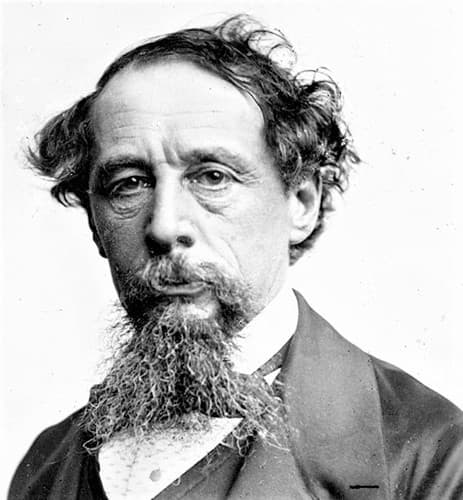
Charles Dickens

Charles John Huffam Dickens was an English writer and social critic who created some of the world's best-known fictional characters and is regarded by many as the greatest novelist of the Victorian era. His works enjoyed unprecedented popularity during his lifetime and, by the 20th century, critics and scholars had recognised him as a literary genius. His novels and short stories are widely read today.






