“Kyrie eleison. Christe eleison. Kyrie eleison.”
— The recurring refrain Elzar chants to help Charles Wallace remember and connect with the past.

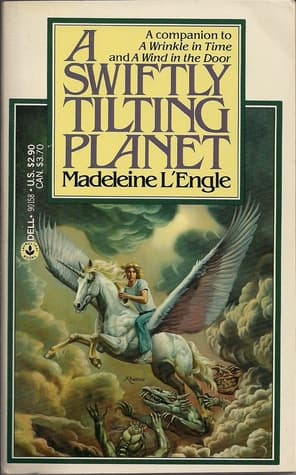
Madeleine L'Engle (1978)
Genre
Fantasy / Children's / Science Fiction / Young Adult
Reading Time
270 min
Key Themes
See below
Sign in to track this book
Fifteen-year-old Charles Wallace, aided by a unicorn and the telepathic bond with his pregnant sister, hurtles through time to prevent a mad dictator from unraveling existence.
On Thanksgiving Day, Meg Murry O'Keefe, married and pregnant, prepares dinner. Her younger brother, Charles Wallace, emerges from his room, looking troubled. He heard a voice, a 'kythe' from a dying star, calling for help to prevent nuclear war. A phone call from the President to Mr. Murry confirms a dictator, Madog Branzillo, threatens global destruction. Charles Wallace understands he must go on a perilous journey through time and space to stop Branzillo, guided by the runic riddle he heard. Meg, despite her pregnancy, promises to kythe with him, sharing his experiences and supporting him from a distance, becoming his link to their present.
As Charles Wallace considers his task, a unicorn named Gaudior appears. Gaudior explains he is a 'cherubim,' a messenger of God, and will be Charles Wallace's guide. Gaudior reveals Charles Wallace must 'name' the right people in history to prevent 'might-have-beens' from becoming 'will-bes.' Their first leap through time and space takes them to a desolate, ancient landscape. Charles Wallace senses the suffering of the land and its inhabitants, understanding Branzillo's madness began far in the past. Meg, kything with him, experiences disorientation and profound displacement.
Charles Wallace, in his first time-traveling 'naming,' lands in a primitive, prehistoric setting, taking the form of a young boy. He meets a family, including a boy named Bran and his twin sisters, Zyll and Zylle. He realizes Bran's lineage is important for understanding the future. Through kything, Meg experiences the simple, harsh life of this time, the strong family bonds, and the deep connection to the land. Charles Wallace observes the family's struggles and their sense of loss from a past tragedy. He begins to understand how all lives connect and how small past choices can affect generations.
Charles Wallace, still a young boy, witnesses a tragic event: Zyll, one of Bran's twin sisters, falls from a cliff and dies. This event deeply affects Bran and his remaining sister, Zylle. Charles Wallace realizes this tragedy is a 'might-have-been' that needs changing. He uses his ability to 'name' and, through an act of love and understanding, influences Bran to choose compassion over bitterness. He names Bran's future child 'Madoc,' hoping to instill a positive influence into the lineage that will eventually lead to Madog Branzillo, aiming to change the future through this act of naming and empathy.
Charles Wallace and Gaudior travel to a desert landscape, where Charles Wallace becomes a young man named Madoc, a descendant of Bran. Meg kythes with him, feeling the scorching sun and the vast emptiness of the desert. Charles Wallace, as Madoc, lives among a nomadic people. He learns their customs, their reverence for water, and their deep connection to the earth. He observes the beauty of their existence and their challenges. He finds this Madoc is a gentle soul, but also learns about the lingering pain and unresolved conflicts within the lineage, hinting at future darkness if not addressed.
As Madoc, Charles Wallace experiences a betrayal by a trusted friend who steals valuable resources. This act leaves Madoc's community vulnerable. At the same time, a mysterious 'wasting sickness' afflicts the desert dwellers, causing them to lose vitality and connection to life. Charles Wallace, through Madoc, feels the despair and helplessness of the people. Meg, kything, shares his frustration and sorrow, sensing the growing darkness and the influence of the 'Echthroi' – forces of unbeing – trying to corrupt this timeline. Charles Wallace realizes the sickness is spiritual as much as physical.
Charles Wallace, as Madoc, works to heal the sick and restore hope to the community, using his kindness and strength. He understands the 'wasting sickness' results from spiritual emptiness and a lack of love. Through his actions, he helps mend fractured relationships and brings purpose back to the desert dwellers. He also meets a troubled boy named Tor, a descendant of the betrayer. Recognizing the need to break the cycle of bitterness, Charles Wallace 'names' Tor with love and forgiveness, hoping to guide him towards peace and prevent the further descent into darkness that could lead to Branzillo.
Charles Wallace and Gaudior travel to a wild, ancient Welsh landscape, where Charles Wallace embodies a warrior named Llwch, a descendant of Tor. Meg kythes with him, feeling the cold, the dampness, and the readiness for battle. Llwch is involved in tribal conflicts and struggles for land and power. Charles Wallace experiences the harsh realities of this era, the constant threat of violence, and the strong loyalty to clan. He understands Llwch is a key figure whose choices will greatly impact the future. The pressures of leadership and the desire for revenge weigh heavily on Llwch, and thus on Charles Wallace.
As Llwch, Charles Wallace faces a critical decision about a retaliatory attack against an enemy tribe. He feels immense pressure from his people to seek vengeance, but also senses the futility and destruction such a path would bring. Through his connection with Gaudior and Meg, he finds the strength to choose peace and reconciliation, despite initial resistance from his warriors. He 'names' his daughter Branwen, a name associated with peace and beauty, hoping to instill these qualities into the lineage and steer it away from the destructive path that could lead to Madog Branzillo. This act affirms love over hatred.
Charles Wallace and Gaudior make their final leap, landing in a time closer to their own, in a war-torn setting. Charles Wallace embodies a young man named Bran, a direct ancestor of Madog Branzillo. This Bran is about to make a decision that will set his descendant on the path to becoming the dictator. Meg, kything intensely, feels the immense pressure and the looming threat of nuclear war. Charles Wallace, as Bran, confronts the bitter, destructive forces within himself and his lineage. He understands the 'Echthroi' are pushing Bran towards a choice of hatred and despair, mirroring Branzillo's current madness.
In a climactic moment, Charles Wallace, as Bran, faces the choice to succumb to bitterness and violence or to embrace love and forgiveness. With Meg's constant kything and Gaudior's unwavering support, Charles Wallace finds the strength to 'name' the immediate ancestor of Madog Branzillo. He names him not with a curse, but with a profound act of love and understanding, breaking the chain of hatred and despair that has plagued the lineage. This act of 'naming' changes Madog Branzillo's destructive 'might-have-been' into a peaceful 'will-be,' averting global nuclear war and saving the world.
Having completed his mission, Charles Wallace returns to his own time, exhausted but triumphant. Meg, still kything, feels the immense relief and peace that washes over him. The threat of nuclear war is gone. Later, as Meg's baby is born, a healthy boy, the family gathers. Charles Wallace, remembering his journey and the names he gave, suggests naming the baby 'Charles,' after himself, but also with deeper meaning tied to the lineage he healed. The family, especially Meg, understands the meaning behind this choice, a symbol of hope, love, and the victory of good over evil.
The Protagonist
Charles Wallace matures from a gifted but somewhat naive boy into a wise and compassionate hero, learning the profound power of individual choice and the enduring impact of love.
The Supporting
Meg deepens her understanding of cosmic interconnectedness and the power of love, growing in maternal strength and spiritual insight.
The Supporting
Gaudior remains a constant, wise guide, facilitating Charles Wallace's growth without undergoing a personal arc himself.
The Antagonist (indirect)
Branzillo's 'will-be' is averted through Charles Wallace's actions; he exists as a potential future rather than a developed character.
The Supporting (ancestor)
Bran's path is altered by Charles Wallace, leading him towards a more compassionate future than his original 'might-have-been'.
The Supporting (ancestor)
Madoc's inherent goodness is amplified by Charles Wallace, allowing him to overcome betrayal and bring healing to his people.
The Supporting (ancestor)
Tor is set on a path of healing and forgiveness, breaking a cycle of animosity within his family line.
The Supporting (ancestor)
Llwch, guided by Charles Wallace, chooses peace over vengeance, altering the trajectory of his lineage.
The Mentioned (ancestor)
Her naming signifies a successful shift in the lineage's destiny towards peace.
The Supporting
Mr. Murry remains a pillar of wisdom and stability for his family.
The Supporting
Mrs. Murry continues to be a source of unwavering love and comfort for her family.
The central theme is the power of 'naming,' not just as a label, but as an affirmation of identity, purpose, and love. Charles Wallace's mission is to 'name' Branzillo's ancestors with love and forgiveness, altering their 'might-have-beens' and preventing the dictator's destructive 'will-be.' This appears when he names Bran's child 'Madoc' or Llwch's daughter 'Branwen,' giving these names positive potential. It suggests how we perceive and acknowledge others, and ourselves, affects destiny and the fight against 'unnaming' forces.
“And the naming of parts is the naming of the whole, and the naming of the whole is the naming of the parts.”
The novel explores how all moments in time and all individuals within a lineage are connected. Charles Wallace's journey through the past shows that small choices made by ancestors can affect generations, influencing future events and personalities. The 'might-have-beens' that could lead to Branzillo's madness result from these past choices. The story emphasizes that the present is shaped by the past, and that intervention in the past can alter the future, showing a non-linear understanding of time and fate.
“All times are one time, and all places are one place.”
Love is the ultimate weapon against the forces of 'unbeing' (the Echthroi) and the destructive potential of hatred and despair. Charles Wallace's 'naming' acts are rooted in love, compassion, and forgiveness. When he helps Bran overcome grief with love, or when he forgives Tor as Madoc, these acts of love break the cycle of bitterness that could lead to Branzillo's tyranny. Meg's constant kything, an act of pure sisterly love, also sustains Charles Wallace through his journey, proving that love is a tangible, powerful force capable of altering destiny.
“Only through love can the might-have-been be changed to a will-be.”
This theme continues from previous books, showing a cosmic struggle between 'Being' (life, love, creation) and 'Unbeing' (the Echthroi, chaos, destruction). Madog Branzillo is a manifestation of 'Unbeing's' influence, aiming for global destruction. Charles Wallace's mission is to reaffirm 'Being' by mending the brokenness in the Branzillo lineage, preventing 'Unbeing' from gaining a victory. The 'wasting sickness' in the desert is a physical manifestation of the spiritual decay caused by 'Unbeing,' showing how it diminishes life and hope.
“The Echthroi are the forces of unbeing, of chaos, of nothingness.”
Throughout the narrative, characters face crucial choices with far-reaching consequences. Charles Wallace, in his ancestral forms, must make decisions that determine the future of the lineage. From Bran's choice to embrace love after tragedy, to Llwch's decision to pursue peace over vengeance, each choice carries responsibility. The story emphasizes that individual choices, even small ones, accumulate to shape destiny, and that the freedom to choose comes with the moral obligation to choose wisely and with love.
“Every choice we make, every word we speak, every thought we think, has its ripple effect through time and space.”
Telepathic and emotional communication between individuals.
Kything is a unique ability, primarily possessed by Charles Wallace and Meg, allowing them to communicate telepathically and emotionally across vast distances and even through time. For Charles Wallace, it enables him to sense the needs of the universe. For Meg, it allows her to remain connected to Charles Wallace during his perilous journey, sharing his experiences, providing emotional support, and acting as his anchor to his true self and the present. It's a vital link that sustains Charles Wallace and reinforces the theme of interconnectedness and the power of love.
The act of affirming identity and purpose, often to alter destiny.
In 'A Swiftly Tilting Planet,' 'naming' is not merely assigning a label but a powerful act of spiritual and existential affirmation. Charles Wallace's mission involves 'naming' key ancestors of Madog Branzillo with love, understanding, and forgiveness. This act redefines their identity and purpose, steering them away from destructive 'might-have-beens' and towards positive 'will-bes.' It's a direct counter to the 'unnaming' forces of the Echthroi and highlights the creative power of language and intention, emphasizing that true identity is found in love and connection, not in bitterness or despair.
Charles Wallace's ability to travel through time and inhabit the bodies of ancestors.
Charles Wallace's method of time travel involves not just moving through different eras but also temporarily inhabiting the bodies and minds of his ancestors. This allows him to directly experience their lives, understand their challenges, and, crucially, influence their choices from within. It's a highly immersive form of time travel that emphasizes empathy and personal agency. This device allows the narrative to explore the 'might-have-beens' and 'will-bes' of history, demonstrating how individual decisions across generations can shape the destiny of the world and the nature of a single individual like Madog Branzillo.
Forces of 'Unbeing' and chaos, seeking to diminish existence.
The Echthroi are the primary antagonists in the cosmic struggle, representing 'Unbeing' – the forces of chaos, emptiness, and destruction. They are not physical beings but rather a spiritual influence that seeks to 'unname' or diminish existence, leading to despair, hatred, and ultimately, annihilation. Madog Branzillo's madness and his threat of nuclear war are direct manifestations of the Echthroi's influence on humanity. Their presence underscores the constant battle between good and evil, creation and destruction, and the importance of actively choosing love and being to resist their pervasive negativity.
“Kyrie eleison. Christe eleison. Kyrie eleison.”
— The recurring refrain Elzar chants to help Charles Wallace remember and connect with the past.
“We can't take any credit for our talents. It's how we use them that counts.”
— Charles Wallace reflects on the responsibility that comes with special abilities.
“You don't have to understand everything to love it.”
— A profound statement about acceptance and affection, even for the mysterious.
“The universe is full of things we don't understand, and we have to be open to them.”
— Charles Wallace's openness to new experiences and realities.
“Love isn't just a feeling, it's a decision.”
— A deeper insight into the nature of love, beyond mere emotion.
“It's a very lonely thing, to be the only one who sees what's really happening.”
— Charles Wallace's isolation in his unique perceptions and abilities.
“Every act of love is a prayer.”
— Elzar's wisdom connecting human actions with spiritual significance.
“The past is not dead, it is not even past.”
— A central theme of the book, highlighting the interconnectedness of time.
“We are not alone. Never, ever alone.”
— Despite feelings of isolation, there's always a connection to something larger.
“Sometimes the only way to find out what you are is to find out what you're not.”
— A journey of self-discovery through contrasting experiences.
“There are some things you can only see with your heart.”
— Emphasizing intuition and emotional understanding over pure logic.
“To be truly alive, you have to be willing to die.”
— A metaphorical statement about embracing life fully and facing fears.
“The light shines in the darkness, and the darkness has not overcome it.”
— A biblical allusion used to express enduring hope against evil.
“We all have our own particular darknesses to face.”
— Acknowledging personal struggles and challenges each individual must confront.
“Every choice you make changes the world.”
— Highlighting the impact and ripple effect of individual decisions.
Ready to see how well you understood this book? Take our interactive quiz with 10 questions.
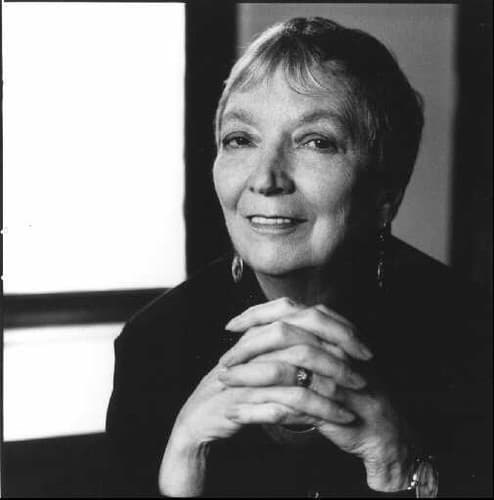
Madeleine L'Engle was an American writer of fiction, non-fiction, poetry, and young adult fiction, including A Wrinkle in Time and its sequels: A Wind in the Door, A Swiftly Tilting Planet, Many Waters, and An Acceptable Time. Her works reflect both her Christian faith and her strong interest in modern science.







