“It was impossible, I knew, to bring back the past. But I yearned for it anyway, with a ache that was almost physical.”
— Meggie reflects on her changing family and the loss of childhood innocence.

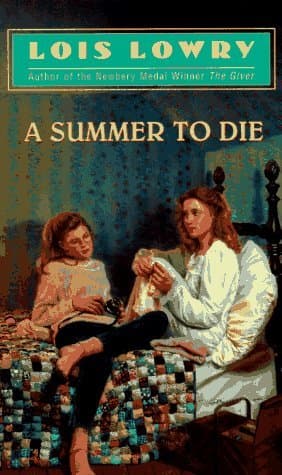
Lois Lowry (1977)
Genre
Children's / Young Adult
Reading Time
90-120 min
Key Themes
See below
Sign in to track this book
Thirteen-year-old Meg feels sibling jealousy, then faces a deeper grief when her popular sister dies from a mysterious illness.
Thirteen-year-old Meg Chambers moves from the city to a rented, isolated country farmhouse. Her father, an English professor, wants to write, and her mother, an artist, seeks inspiration. Meg dislikes the move, missing her friends and feeling out of place. She feels overshadowed by her older sister, Molly, who is sixteen, beautiful, and popular. Meg, feeling plain, compares herself to Molly, leading to a quiet resentment.
One hot afternoon, as the family settles in, Molly has a severe and long nosebleed. Though initially dismissed as common, her fatigue and general unwellness worry Meg and her parents. Molly, usually lively, starts resting more, her cheerful mood replaced by weariness. This incident marks the beginning of a subtle shift in the family, as worry for Molly starts to affect their summer.
Meg explores the nearby woods and fields, meeting two sets of neighbors. First, she meets the Driskills, a kind, elderly couple on a nearby farm. Mrs. Driskill is warm, offering Meg comfort. Later, Meg finds a young man named Ben, who lives in a small cabin and paints. Ben is older, quiet, and somewhat private, but he talks to Meg about art and perception. Meg is drawn to Ben's artistic nature and his unique way of seeing the world, finding an unexpected connection.
Meg starts spending more time with Ben, watching him paint and discussing art. Ben, noticing Meg's sharp eye and interest in capturing moments, encourages her to try photography. He lends her an old camera and offers advice, helping Meg see the world with a new appreciation. Through Ben's guidance, Meg develops her own artistic voice and finds a passion that helps her feel less overshadowed by Molly. This creative outlet becomes a significant source of self-discovery and confidence for Meg.
Molly's condition slowly worsens. She becomes weaker, paler, and has more frequent and severe nosebleeds. Her parents worry deeply and take her to a doctor, who recommends more tests. The family then faces the grim reality of Molly's serious illness, which requires a hospital stay. The lively Molly is replaced by a fragile, suffering girl, and the family's summer plans are overshadowed by this medical crisis. Meg struggles to accept her healthy sister's image with Molly's declining health.
After anxious waiting and many medical tests, the Chambers family receives the devastating news: Molly has leukemia. The news shatters the family, plunging them into shock and grief. Meg hears snippets of her parents' hushed, tearful talks, slowly understanding how serious Molly's illness is. Molly's once-envied beauty now seems tragically fleeting, and Meg's earlier jealousy is replaced by deep fear and sorrow. The family's summer has turned into a nightmare of uncertainty and impending loss.
As Molly's condition worsens, Meg struggles to process her sister's impending death. She feels a confusing mix of grief, fear, and deep guilt. Meg remembers her past envy of Molly's beauty and popularity, and she feels ashamed now, wishing she had been kinder. She withdraws, finding comfort only in her photography and quiet friendship with Ben. The weight of her emotions, combined with the somber home atmosphere, makes it hard for Meg to express her feelings, leaving her isolated in her sorrow.
Knowing Molly's illness is terminal, her parents decide to bring her home from the hospital so she can spend her final days with family in the farmhouse. The house becomes somber but tender, as everyone tries to make Molly's remaining time peaceful and loving. Meg watches her sister fade, observing the changes in Molly's appearance and spirit. During this time, Meg takes intimate photographs of Molly, trying to preserve her sister's image and memory, even as she faces the painful reality of her death.
One night, Meg has a powerful, vivid dream or vision. She sees Molly, not in her weakened state, but as she was — vibrant and beautiful — walking towards a light, serene and accepting. This experience deeply impacts Meg, giving her a sense of peace amid her grief. It feels almost prophetic, as if she is witnessing Molly's transition, not as a painful end, but as a gentle departure. This vision helps Meg begin to accept Molly's death and offers her a glimmer of comfort that her sister's suffering will soon end.
Soon after Meg's vision, Molly dies peacefully at home. The family is overcome with grief, but there is also a quiet acceptance, knowing Molly's suffering has ended. The initial shock gives way to the slow, painful process of mourning. Meg, though heartbroken, feels a strange calm, as if her earlier vision had prepared her. The family supports each other through their loss, finding strength in their shared sorrow and love for Molly. The farmhouse, once a place of summer promise, now holds bittersweet memories of Molly's last days.
After Molly's death, Meg increasingly uses photography to process her grief and remember her sister. She photographs the natural world around the farmhouse — the fields, the woods, the changing light — finding beauty and comfort in its cycles of life and death. Ben remains a quiet, supportive presence, encouraging Meg's art and helping her see the world with appreciation and understanding. Her camera becomes a tool for healing, allowing her to capture beauty and express complex emotions, helping her move forward.
As summer ends, Meg, though still grieving, has changed deeply. Molly's illness and death, along with her art and friendship with Ben, have given her a new outlook on life. She no longer feels overshadowed by Molly but cherishes her memory. Meg starts to appreciate the small, beautiful details of the world and understands life's precious, fragile nature. She recognizes the importance of living fully and finding beauty even in sorrow, carrying Molly's memory not as a burden, but as an inspiration.
Inspired by her talks with Ben and her own growing artistic vision, Meg takes a photograph that she feels captures the essence of life and death, beauty and sorrow. It is a powerful image reflecting her journey of grief and acceptance, showing her growth as an artist and as a person. This photograph symbolizes her ability to find meaning and beauty even in tragedy. It represents her transformation from a resentful, overshadowed girl to a thoughtful, observant young woman who has found her own unique way of seeing and interpreting the world.
At the end of summer, the Chambers family prepares to leave the rented farmhouse and return to the city. The farm, which began as a place of resentment for Meg, has become a place of deep transformation, sorrow, and unexpected growth. They carry the lasting memory of Molly, not just as the beautiful sister who died, but as a beloved family member whose life, though short, deeply impacted them. Meg leaves with her camera, her developed artistic eye, and a new understanding of life, death, and her own place in the world, forever changed by the summer.
The Protagonist
Meg transforms from a resentful, insecure girl into a more self-aware and compassionate young woman who finds her artistic voice and a deeper appreciation for life and its fragility.
The Supporting/Catalyst
Molly's arc is tragic; she goes from a vibrant teenager to a fragile patient, inspiring profound grief and growth in her sister through her death.
The Supporting
Ben remains a consistent, supportive presence, acting as a catalyst for Meg's artistic and emotional development.
The Supporting
Mr. Chambers endures the immense pain of losing a child, finding strength in his family and shared grief.
The Supporting
Mrs. Chambers endures the immense pain of losing a child, finding strength in her family and shared grief.
The Supporting
Mrs. Driskill remains a consistent source of comfort and gentle wisdom for Meg.
The Mentioned
Mr. Driskill's role is static, representing the quiet, steady presence of the older generation.
The central theme explores the deep impact of losing a loved one, especially a sibling. The story follows Meg through the stages of grief—shock, denial, anger, guilt, and acceptance. It shows how people cope with loss, finding ways to remember those who are gone. Molly's death forces Meg and her family to face their own mortality and life's preciousness. Scenes like Meg's guilt over past jealousy or the family gathered around Molly's deathbed clearly show the raw emotions of loss.
“And the world, the world that had seemed so perfect, so complete, was suddenly broken into pieces.”
The complex relationship between sisters begins with jealousy and comparison, then grows into deep love and sorrow. Meg's initial envy of Molly's beauty and popularity drives her character. However, as Molly's illness progresses, these feelings change into profound love, fear, and guilt. The story subtly shows how a deep bond exists even in rivalry, magnified by tragedy. The contrast between Meg's early resentment and her later desperate wish for Molly to live highlights the power of familial love.
“I had always wanted to be Molly. Now I just wanted Molly to be.”
Art, especially photography, is a key way for self-expression, coping with grief, and finding beauty. Ben's guidance helps Meg discover her artistic talent, offering her a way to process emotions when words fail. Her camera becomes an extension of her eye, helping her observe details, capture moments, and create lasting memories of Molly. Through photography, Meg learns to see the world with new clarity, finding comfort and meaning in sorrow, turning her pain into creative expression. Photographing Molly in her final days is a poignant example.
“He taught me to see. Not just with my eyes, but with my mind, and with my heart.”
Meg's journey is a powerful coming-of-age story, marked by deep personal growth during hardship. The summer, meant as a new beginning, becomes a test for her development. Through Molly's illness and death, Meg faces difficult realities, sheds insecurities, and finds her own identity. Her friendship with Ben and her passion for photography help her build self-worth beyond her sister's shadow. By the end, Meg is a more mature, empathetic, and artistically aware person, able to face life's complexities.
“I had always been Molly's shadow. Now, in the dark, I was learning to make my own light.”
Early hints of Molly's illness that build tension and dread.
The novel subtly uses foreshadowing, primarily through Molly's initial nosebleed and increasing fatigue, to hint at her underlying illness. These early symptoms, initially dismissed, gradually become more alarming, creating a sense of growing dread and unease for the reader. This device effectively builds tension and prepares the reader for the devastating diagnosis, making Molly's eventual death feel both tragic and inevitable, rather than sudden and arbitrary. It also reflects Meg's own dawning awareness of the seriousness of her sister's condition.
The camera and photographs symbolize memory, perspective, and capturing fleeting life.
Photography serves as a powerful symbol throughout the novel. Meg's camera represents her newfound artistic voice, her way of seeing and interpreting the world, and her method of processing grief. The act of taking pictures, especially of Molly in her final days, symbolizes the attempt to freeze time, preserve memories, and find beauty even in sorrow. Photographs become tangible representations of love, loss, and the ephemeral nature of life, allowing Meg to hold onto Molly's image and legacy even after her death.
The remote country setting emphasizes the family's isolation and internal struggles.
The rented farmhouse in the isolated country serves as more than just a backdrop; it's a symbolic setting that intensifies the family's experience. Its remoteness physically separates them from their usual city life and support systems, forcing them to confront Molly's illness and their grief within the confines of their immediate family. This isolation magnifies their internal struggles and makes their journey of sorrow and self-discovery more intense and personal. The quiet, natural environment also provides a contrasting backdrop for Meg's artistic awakening and her eventual solace in nature.
The narration primarily through Meg's thoughts and feelings, highlighting her emotional journey.
The story is largely told through Meg's internal monologue, giving readers direct access to her thoughts, feelings, and evolving perceptions. This device allows for a deep exploration of her complex emotions, from her initial jealousy and resentment towards Molly to her profound grief and guilt. It effectively conveys her struggle to understand the unfairness of life and death, and her gradual process of acceptance and self-discovery. By being privy to Meg's inner world, readers empathize with her journey and witness her transformation intimately.
“It was impossible, I knew, to bring back the past. But I yearned for it anyway, with a ache that was almost physical.”
— Meggie reflects on her changing family and the loss of childhood innocence.
“The ocean was a vast, indifferent presence, beautiful and terrifying all at once.”
— Meggie observes the sea, a recurring symbol in the novel.
“You can't stop time, Meggie. You can only live in it.”
— Older characters offer advice to Meggie as she struggles with the passage of time.
“Grief was a strange thing. It came in waves, sometimes gentle, sometimes crashing, and you never knew when it would hit.”
— Meggie grapples with the emotional aftermath of a significant event.
“Sometimes the things you don't say are the loudest.”
— Reflecting on unspoken feelings and their impact within relationships.
“It was a summer of endings and beginnings, of goodbyes and hellos, all tangled together.”
— A summary of the transformative summer Meggie experiences.
“The world keeps turning, even when your own world feels like it's stopped.”
— Meggie observes the continuity of life despite personal turmoil.
“There were secrets everywhere, whispered by the wind and hidden in the shadows.”
— Meggie's growing awareness of the complexities and hidden aspects of adult life.
“You can't hold onto everything, Meggie. Some things you just have to let go.”
— A lesson learned about the necessity of releasing attachments.
“The quiet moments were often the most profound, filled with unspoken understanding.”
— Highlighting the depth found in shared silence and observation.
“Fear was a cold knot in her stomach, but curiosity tugged her forward.”
— Meggie's internal conflict between apprehension and the desire to explore or understand.
“Sometimes the most beautiful things are also the most fragile.”
— Reflecting on the delicate nature of life, beauty, and happiness.
“Even in sadness, there was a strange kind of beauty, a quiet dignity.”
— Meggie finds a nuanced perspective on sorrow and its inherent qualities.
Ready to see how well you understood this book? Take our interactive quiz with 10 questions.

Biography coming soon.

Dan Gemeinhart
4.5

Kate O'Hearn
4.4

Jeanne Birdsall
4.4

Jen Wang
4.4

Wendelin Van Draanen
4.3

John Marsden
4.3

Chris Van Allsburg
4.3
Jennifer A. Nielsen
4.2