“I was born on the first day of the new century, a helpless, screaming baby, like all the others. But I was to be different.”
— Henry's opening lines, establishing his birth and perceived destiny.

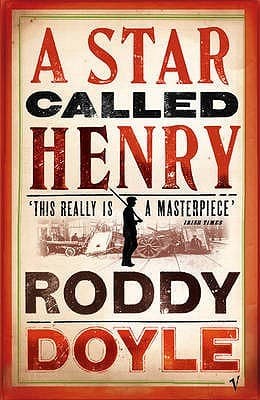
Roddy Doyle (1999)
Genre
Literary Fiction / Historical Fiction
Reading Time
684 min
Key Themes
See below
Sign in to track this book
Born in a Dublin brothel, Henry Smart fights and loves through Ireland's turbulent 20th century. He is an unforgettable witness to history, all told in Roddy Doyle's unique voice.
Henry Smart is born in Dublin in 1901, the second son of a one-legged bouncer, Henry Smart Sr., and his wife, Melody. His birth is chaotic, taking place in a squalid tenement as the new century begins. His father, a formidable figure, works for Alderman Barry, a corrupt politician who controls much of the city's underbelly. Henry's early childhood is marked by extreme poverty, hunger, and the harsh realities of slum life. He quickly learns to observe and navigate the dangerous streets of Dublin, developing a sharp wit and a defiant spirit. His older brother, Victor, is a more quiet and observant child, often overshadowed by Henry's boisterous nature. The family's existence is a constant struggle for survival, marked by his father's violent temper and Barry's pervasive influence.
Henry's father, Henry Smart Sr., is a complex and often terrifying figure. A veteran of the Boer War, he lost a leg and now works as an enforcer for Alderman Barry. He is a man of immense physical strength and a brutal temper, frequently beating his wife and children. Despite the abuse, Henry holds a strange admiration for his father's power and ability to command respect (and fear). Henry witnesses his father's involvement in various illicit activities, including collecting protection money and intimidating voters for Barry. These experiences teach young Henry about power dynamics, injustice, and the need to fight back, even against overwhelming odds. He begins to develop his own rebellious streak, often defying his father in small but significant ways.
As Henry and Victor grow, their father forces them to work for Alderman Barry. Their tasks range from delivering messages to collecting debts and even engaging in petty acts of intimidation. This exposure to Barry's criminal enterprise further immerses Henry in Dublin's dark underbelly. He becomes adept at navigating the city's hidden passages and understanding its unspoken rules. During this time, Henry also encounters other young boys involved in similar activities, forming a loose network of street children. His quick thinking and daring nature make him a valuable, though unwilling, asset to Barry's operations, even as he resents the exploitation. Victor, in contrast, remains more withdrawn, observing the world with quiet intensity.
The 1916 Easter Rising erupts in Dublin, catching Henry and his family in its violent throes. His father, initially loyal to Barry, is killed during the rebellion, shot by British soldiers while attempting to protect his family. This event is a turning point, leaving Henry and Victor orphaned and their mother, Melody, devastated. The Rising itself, though suppressed, ignites a spark of Irish nationalism and a desire for vengeance in Henry. He witnesses firsthand the brutality of the British forces and the courage of the Irish rebels. The family's tenement home is destroyed, forcing Melody and her remaining son, Victor, to flee the city. Henry, however, chooses a different path, drawn to the cause of Irish independence.
After the Easter Rising and his father's death, a young Henry Smart, barely a teenager, fully commits to Irish independence. He seeks out and joins the Irish Volunteers (later the IRA), driven by patriotic fervor and a desire for revenge against the British. His street smarts, fearlessness, and surprising skill with firearms make him a valuable, if unconventional, recruit. He quickly becomes immersed in the secret world of guerrilla warfare, participating in raids, ambushes, and acts of sabotage against British forces and their collaborators. He adopts the persona of a hardened soldier, hiding his youth to appear more formidable, and begins to earn a reputation for daring and ruthlessness among his comrades.
During his time as a rebel, Henry falls deeply in love with a fellow revolutionary, Miss O'Shea, a fierce and intelligent woman also dedicated to the cause. Their relationship is passionate and intense, giving Henry a rare sense of solace and connection amid constant danger and violence. Miss O'Shea sees past Henry's rough exterior, recognizing his underlying vulnerability and his capacity for love. She becomes a significant influence, broadening his views and challenging his often-cynical outlook. However, their love is tragically cut short when Miss O'Shea is killed during a British raid, leaving Henry heartbroken and further hardened by grief. Her death strengthens his resolve, turning his personal loss into a deeper commitment to the fight for Irish freedom.
As the War of Independence intensifies, Henry's role within the IRA becomes more prominent and more violent. He participates in assassinations, bombings, and increasingly brutal engagements against the British Black and Tans and Auxiliaries. The lines between soldier and killer blur, and Henry must make difficult moral compromises. He witnesses atrocities committed by both sides, and the idealism that first fueled him is often tested by the grim realities of war. Despite the growing toll on his conscience, Henry continues to fight with fierce determination, driven by the memory of Miss O'Shea and the belief in a free Ireland. His reputation as a daring and effective fighter grows, but so does the weight of his actions.
A truce is declared in 1921, temporarily stopping the fighting and raising hopes for peace. Henry, along with many others, is cautiously optimistic. However, the subsequent Anglo-Irish Treaty, which establishes the Irish Free State but keeps Northern Ireland under British rule and requires an oath of allegiance to the British Crown, causes a devastating split within the republican movement. Henry, deeply committed to a fully independent and united Ireland, aligns himself with the anti-Treaty forces. This division pits former comrades against each other, leading to the brutal Irish Civil War. Henry finds himself fighting former friends and allies, a conflict even more painful and disillusioning than the war against the British.
The anti-Treaty side is ultimately defeated in the Civil War. Henry, now a hunted man and deeply disillusioned by the conflict, is forced to flee Ireland to escape capture and likely execution. He leaves behind the country he fought so fiercely for, heartbroken and carrying the heavy burden of his experiences. His escape is perilous, involving secret movements and narrow escapes. He is a ghost, a survivor haunted by the ghosts of his past – his father, Miss O'Shea, and the countless others lost in the struggle. This marks a significant turning point, as Henry's story moves beyond the direct conflict in Ireland, though the war's scars remain deeply etched upon him.
After fleeing Ireland, Henry begins a new chapter of his life as an expatriate, seeking refuge in various countries, including America. He tries to shed his past as a revolutionary, adopting new identities and trying to live a normal life. He works odd jobs, always remaining vigilant and cautious, never fully trusting anyone. Despite his efforts, the trauma of his experiences in Ireland continues to haunt him. He grapples with the psychological scars of war, the loss of his loved ones, and the disillusionment of a revolution that did not deliver the utopia he envisioned. He carries with him a deep sense of rootlessness, a man without a true home, constantly searching for meaning and peace.
As an older man, Henry Smart reflects on his extraordinary and tumultuous life. His narrative voice is that of a survivor, a witness to history, and a man deeply marked by violence and loss. He recounts his story with raw honesty, often mixed with dark humor and deep melancholy. He grapples with the legacy of his actions, the choices he made, and the impact of the Irish struggle for independence on his soul. He questions the true cost of freedom and the sacrifices revolution demanded. His reflections show a man who has seen too much, loved deeply, lost everything, and yet, against all odds, has endured. He is still searching for understanding and a sense of belonging in a world forever changed by his past.
The Protagonist
Henry transforms from an abused slum child into a hardened revolutionary, then into a disillusioned exile, grappling with the legacy of violence and loss while striving for peace.
The Supporting/Antagonist
He remains largely static, a force of nature in Henry's early life, representing the oppressive forces Henry must overcome or escape.
The Supporting
Her arc is one of enduring suffering and quiet resilience, ultimately forced to flee Dublin with Victor after the Easter Rising.
The Supporting
Victor's arc is one of quiet endurance and eventual separation from Henry, representing a different path out of their shared hardship.
The Antagonist/Supporting
Barry remains a static symbol of corruption and exploitation in Henry's early life, his power diminished by the larger political upheavals.
The Supporting
Her brief but impactful arc serves to humanize Henry and underscore the personal cost of the revolution, her death becoming a catalyst for Henry's continued fight.
The Mentioned
As a historical figure, his arc is part of the larger historical narrative that Henry's story intersects with, particularly the Treaty split and Civil War.
The Mentioned
As a historical figure, his arc reflects the tragic divisions of the Civil War, influencing Henry's anti-Treaty stance.
The novel vividly portrays the grim realities of the Irish War of Independence and Civil War, removing any romanticized notions of conflict. Henry's experiences, from witnessing his father's death during the Easter Rising to his own participation in assassinations and ambushes, show the constant violence, loss, and moral compromises war demands. The division caused by the Anglo-Irish Treaty, leading to former comrades fighting each other, highlights the profound and tragic cost of revolution, leaving Henry deeply disillusioned and scarred. The narrative consistently emphasizes the human toll, both physical and psychological, of fighting for freedom.
“We were fighting for Ireland, but Ireland was tearing itself apart.”
From his birth in the squalid Dublin slums, Henry Smart's life shows the human capacity for survival and resilience. He endures poverty, abuse from his father, the death of loved ones, and the constant threat of violence during the wars. His street smarts, quick wit, and fierce determination allow him to adapt and persist through seemingly impossible challenges. Even after the disillusionment of the Civil War and his forced exile, Henry continues to find a way to live, showing an unbreakable spirit, though one heavily burdened by his past.
“I was a survivor. That's what I was. A survivor.”
Henry's journey is a quest for identity and a place to belong. Born into a chaotic and impoverished family, he initially finds purpose and belonging within the republican movement. However, the violence and internal divisions of the war ultimately leave him rootless and exiled, stripped of the identity he fought to create. As an expatriate, he constantly grapples with who he is outside of his past as a revolutionary, searching for a new sense of self and a home, often feeling like a ghost in his own life. This theme is explored through his adoption of different personas and his constant internal reflection.
“I was a man without a country, a man without a name, just a star that had fallen.”
The entire novel is Henry Smart's retrospective account of his life, making memory and storytelling central themes. Henry, as the narrator, actively constructs his past, reflecting on the reliability of his own recollections and the subjective nature of history. He uses his sharp, often darkly humorous voice to shape his narrative, revealing his biases, regrets, and moments of pride. Telling his story is a way for Henry to process his trauma, make sense of his experiences, and perhaps find a form of redemption or understanding for a life lived on the edge. The vivid, often poetic language emphasizes the power of narrative.
“I remember everything. And I remember nothing. That's the way it is with memory.”
Henry Smart recounts his life from an older, reflective perspective.
The entire novel is told through the first-person voice of an older Henry Smart, looking back on his tumultuous youth. This allows for immediate, intimate access to Henry's thoughts, feelings, and experiences, filtered through the lens of memory and subsequent disillusionment. The retrospective nature enables Henry to comment on his younger self's actions with a knowing, often cynical, wit, and to foreshadow later events. It also highlights the subjective nature of history and personal memory, as Henry grapples with what he remembers and how he chooses to tell it.
A series of episodic adventures, often involving a roguish protagonist.
The novel loosely follows a picaresque structure, with Henry Smart, a 'picaro' figure, moving through various social strata and engaging in a series of daring, often illicit, adventures. From his childhood as a street urchin to his role as a guerrilla fighter and later an exile, Henry's journey is characterized by episodic encounters and a constant struggle for survival. This structure allows Doyle to explore different facets of Irish society and the independence movement through Henry's eyes, while maintaining a sense of constant motion and unpredictability in the protagonist's life.
Incorporation of actual historical events and figures into the fictional narrative.
Doyle grounds Henry's fictional narrative in real historical events, such as the Easter Rising, the War of Independence, and the Irish Civil War, and references actual historical figures like Michael Collins and Liam Mellows. This device lends authenticity and gravitas to Henry's story, blurring the lines between fiction and historical reality. By placing a fictional character at the heart of these pivotal moments, the novel offers a personalized, gritty perspective on a crucial period in Irish history, making the grand historical narrative more immediate and human through Henry's personal experiences and observations.
The use of dark humor and irony to cope with grim realities.
Henry Smart frequently employs black humor and irony in his narration, particularly when describing the brutal realities of his life and the violence of war. This device serves multiple functions: it acts as a coping mechanism for Henry, allowing him to process and distance himself from trauma; it adds a distinct, engaging voice to the narrative; and it underscores the absurdity and futility often found amidst extreme suffering. The juxtaposition of grim events with Henry's sardonic commentary creates a unique tone that is both heartbreaking and darkly comedic.
“I was born on the first day of the new century, a helpless, screaming baby, like all the others. But I was to be different.”
— Henry's opening lines, establishing his birth and perceived destiny.
“My father was a giant of a man, and he smelled of porter and sawdust, and sometimes, if he'd been fighting, of blood.”
— Henry describing his father, the enforcer and bouncer.
“Dublin was a city of ghosts, and we were the newest ones.”
— Henry's reflection on the state of Dublin and his family's place in it.
“A man without a country is a man without a mother, and I had neither.”
— Henry's feeling of displacement and lack of belonging.
“We were not fighting for Ireland. We were fighting for the right to fight for Ireland.”
— Henry's cynical view of the Irish struggle during the Easter Rising.
“Love was a luxury we couldn't afford, a weakness that would get you killed.”
— Henry's hardened perspective on emotions amidst violence and survival.
“History was just a story told by the winners, and I intended to be one of them.”
— Henry's ambition and desire to shape his own narrative.
“The bullet had no name, but it knew my address.”
— Henry's close calls with death during the fighting.
“God was a Dubliner, and he loved a good fight.”
— Henry's characteristic irreverent and localized view of God.
“I was a soldier, a lover, a son, a brother, a killer. And I was only just beginning.”
— Henry's self-assessment and anticipation of his future.
“The past wasn't dead. It wasn't even past. It was still there, breathing down your neck.”
— Henry's realization about the lingering effects of historical events and personal traumas.
“To be Irish was to carry a burden, a history of hurt and defiance.”
— Henry reflecting on the collective identity and experience of the Irish people.
“Every man carries his own hell with him. Mine had a Dublin address.”
— Henry's personal struggle and the inseparable link to his origins.
“There were no heroes, only survivors. And I intended to be the best of them.”
— Henry's pragmatic and determined outlook on life and conflict.
Ready to see how well you understood this book? Take our interactive quiz with 10 questions.

Roddy Doyle is an Irish novelist, dramatist and screenwriter. He is the author of eleven novels for adults, eight books for children, seven plays and screenplays, and dozens of short stories. Several of his books have been made into films, beginning with The Commitments in 1991. Doyle's work is set primarily in Ireland, especially working-class Dublin, and is notable for its heavy use of dialogue written in slang and Irish English dialect. Doyle was awarded the Booker Prize in 1993 for his novel Paddy Clarke Ha Ha Ha.







