BookBrief
A Son of the Circus cover
Archivist's Choice

A Son of the Circus

John Irving (1994)

Genre

Literary Fiction

Reading Time

15-20 hours

Key Themes

See below

Track Your Reading

Sign in to track this book

An Indian film star, an American missionary, and a group of eccentrics, including separated twins and a dwarf chauffeur, head for a showdown with a serial killer in a story of fate and dark comedy.

Synopsis

Dr. Daruwalla, an Indian-born orthopedic surgeon in Toronto, visits India yearly. He claims to research dwarfism but actually writes screenplays for B-grade Hindi detective films starring Inspector Dhar. Unknown to Daruwalla, his twin brother, Farrokh, separated at birth and raised by missionaries, plays Inspector Dhar and works as a circus clown named John. As Daruwalla deals with Indian filmmaking and his past, murders of prostitutes begin, mirroring scenes from his Inspector Dhar films. Dr. Lish, an American missionary also researching dwarfism, gets involved. A young man named Martin, who thinks he is Daruwalla's son, arrives in India, making things more complex. The murder investigation grows, forcing Daruwalla to face his family's secrets and the unusual people in his life. This leads to the killer's discovery and a revelation about the connection between the circus, the films, and the characters' lives. Farrokh accepts his many identities, finding a place among the circus's unusual members.
Reading time
15-20 hours
Difficulty
Medium
Pacing
Variable
Mood
Quirky, Melancholy, Humorous, Reflective, Dark
✓ Read this if...
You enjoy sprawling, character-driven sagas with a blend of dark humor, tragedy, and the bizarre, set against a vibrant Indian backdrop.
✗ Skip this if...
You prefer straightforward plots, a fast pace, or are sensitive to graphic descriptions of violence and sexual themes.

Plot Summary

Dr. Daruwalla's Return to India and Dr. Lish's Research

Dr. Farrokh Daruwalla, an Indian-born Canadian orthopedic surgeon, visits Bombay, India, each year. He goes to a medical conference, but his real reason is to secretly write screenplays for Hindi films with his half-brother, John Daruwalla, a Jesuit missionary. Farrokh, using the name 'Dr. Daruwalla,' is a very successful but unknown writer of popular Indian movies, many of which feature Inspector Dhar, a character he created. At the same time, Dr. Lish, an American missionary and doctor, researches dwarfism in an Indian village. This research will connect with Farrokh's life in unexpected ways. Farrokh's return also happens during a series of murders of prostitutes, which will later resemble the Inspector Dhar films.

The Inspector Dhar Films and Farrokh's Double Life

Farrokh Daruwalla's Inspector Dhar films are very popular in India, known for their mix of drama, social comments, and detective work. Farrokh uses his yearly trips to India to experience the culture, find ideas, and work with John. He watches people and events, getting ideas for his plots and characters, often putting parts of his own life and worries into the stories. His double life as a respected surgeon and a popular, unknown writer creates constant tension, as he fears being found out. The films often deal with mistaken identity, outsiders, and a moral detective, reflecting India's complex society and Farrokh's own inner struggles.

Dr. Lish's Research and the Circus Connection

Dr. Lish, the American missionary and doctor, continues his research into dwarfism, especially in the village of Ganesh, known for many people with the condition. His research leads him to a local circus, where he meets several people with dwarfism. He specifically meets the Patel family, who have many dwarf members. Lish's research aims to understand the genetic and social aspects of dwarfism, but it also uncovers a deeper family history involving twins separated at birth, one of whom is Farrokh Daruwalla. The circus becomes a main symbol for the drama and hidden truths in the characters' lives.

The Introduction of Martin and the Murder Mystery

Martin, Farrokh Daruwalla's loyal and smart dwarf chauffeur, becomes part of the ongoing murder investigation of prostitutes in Bombay. Because of his unusual appearance and being in certain areas, the police question him, though he is not a main suspect. This involvement interests Farrokh, as the murders strangely look like the plots of his Inspector Dhar films. Farrokh starts watching Martin more closely, and also the police investigation, looking for ideas for his next screenplay and perhaps unconsciously trying to understand the real-world effects of the violence he writes about. The line between Farrokh's fictional world and the grim reality of the murders begins to blur.

The Revelation of Farrokh's Twin Brother

Through talks with Dr. Lish, Farrokh Daruwalla learns a surprising truth: he has an identical twin brother, John Daruwalla. John, the Jesuit missionary Farrokh has secretly worked with on screenplays for years, is his long-lost twin. They were separated at birth; Farrokh was adopted by a rich Parsi family, and John was raised in a different setting, later becoming a priest. This discovery greatly shocks Farrokh, making him rethink his identity, his past, and his relationship with John, who has been his closest creative partner without knowing they were family. The theme of mistaken identity and hidden family lines, common in Farrokh's films, is now real in his own life.

The Serial Killer's Connection to the Films

The serial killer, who targets prostitutes, knows Farrokh Daruwalla's Inspector Dhar films well. The murder methods, places, and even symbols start to match the fictional crimes in Farrokh's screenplays. This discovery deeply troubles Farrokh, who considers that his art might be inspiring real violence. He feels a growing sense of responsibility and fear, as his creative work seems to have crossed into a terrible reality. The investigation becomes more intense, and Farrokh faces a moral problem, torn between staying anonymous and potentially helping to stop the killer.

Farrokh's Confrontation with John and the Past

The discovery of their twinship makes Farrokh and John Daruwalla face their shared past and how they were separated. They talk about their upbringings, their different paths, and the strong irony of their long creative partnership, done without knowing they were family. This talk is very emotional, as they piece together their fragmented origins. The conversation covers fate, free will, and how childhood experiences last. Their reunion, though shocking at first, also gives them a chance to understand themselves and their connection better, strengthening their bond despite the difficult situation.

The Unmasking of the Killer

The serial killer's true identity is eventually revealed. It is a character who has been in the background of the story, and whose reasons are deeply linked to the social issues and character types often explored in Farrokh's Inspector Dhar films. The killer's actions come from a twisted sense of right and wrong and a desire for a strange kind of justice, showing the darker parts of the society depicted. The revelation brings an end to the murder mystery, but also leaves a lasting unease, showing how complex human nature is and how societal pressures can lead to such terrible acts. The killer's link to the other characters shows the story's complex web of relationships.

The Role of the Circus and the Misfits

Throughout the story, the circus is a strong symbol and a real meeting place for many of the book's 'misfit' characters. People with dwarfism, like Martin and the Patel family, find some acceptance and community there. The circus stands for a world outside normal society, where the unusual is valued rather than rejected. Farrokh Daruwalla's own feeling of being an outsider, despite his success, fits this idea. The circus's theatrical nature also mirrors the performative parts of life, especially Farrokh's double life as a surgeon and a secret writer. It becomes a place where hidden identities and unusual lives meet.

Farrokh's Acceptance and New Beginnings

After the murder mystery is solved and he fully accepts his twin brother, John, Farrokh Daruwalla changes significantly. He starts to bring together his two identities as a respected surgeon and a popular writer, no longer feeling he needs to keep his creative life entirely secret. His relationship with John grows deeper, becoming a strong brotherly bond beyond just work. Farrokh's journey is about self-discovery and acceptance, where he embraces his complex background and his place in the world. The book ends with Farrokh looking to a future where his different roles and relationships are more connected and real.

Principal Figures

Dr. Farrokh Daruwalla

The Protagonist

Farrokh evolves from a conflicted individual leading a double life to someone who accepts his multifaceted identity and embraces his familial connections.

John Daruwalla

The Supporting

John moves from an unknowingly separated twin to a reunited brother, integrating his familial past into his spiritual life.

Dr. Lish

The Supporting

Dr. Lish's research initially focuses on scientific understanding but eventually uncovers profound personal histories that impact the main characters.

Martin

The Supporting

Martin remains a steadfast and insightful presence, his experiences reflecting the novel's themes of identity and societal perception.

The Serial Killer

The Antagonist

The killer's actions escalate, leading to their eventual unmasking and the resolution of the immediate threat.

Inspector Dhar (Fictional Character)

The Mentioned

As a fictional character, Inspector Dhar's arc is within the films, but his influence on the real-world plot is significant.

The Patel Family

The Supporting

The Patel family's primary role is to illustrate the themes of dwarfism and community, rather than undergo a personal arc.

Themes & Insights

Identity and Dualism

The book explores identity, especially through Dr. Farrokh Daruwalla's double life as a surgeon and secret writer, and the later discovery of his twin brother, John. Farrokh constantly deals with his Parsi background versus his Canadian upbringing, and the stress between his public self and his hidden creative passion. The twins' separation at birth and their eventual reunion, along with their unwitting teamwork, show how identity can be broken, hidden, and finally put back together. The characters often feel like 'outsiders,' trying to define themselves within social rules, much like circus performers who find a community outside normal life.

"He had two lives, and his two lives were not in contact; they were not even aware of each other. He was two people, and he lived in two countries. It was a good arrangement, he thought, until it wasn't."

Narrator about Farrokh Daruwalla

The Power and Peril of Storytelling

Storytelling, especially through Farrokh's Hindi films, is a main theme. The book looks at how stories shape how we see things, affect culture, and can even blur the line between fiction and reality. Farrokh's fictional Inspector Dhar films become terrifyingly real when a serial killer copies their plots. This brings up big questions about the storyteller's duty and how art affects real events. The films also comment on Indian society, showing its dramas, social problems, and moral complexities. Writing itself is a way to create and express oneself, but it has unexpected results.

"He had written these stories, these murders. He had imagined them. And now someone was acting them out."

Narrator about Farrokh Daruwalla

Misfits and Outcasts

John Irving's common theme of outsiders is clear in the book. Characters like Martin, the dwarf chauffeur, and the Patel family members in the circus community, are physically different and often pushed aside by society. Farrokh himself, despite his success, feels like an outsider because of his dual cultural identity and secret life. The circus is a safe place for these 'unusual' people, where their differences are not just tolerated but celebrated. This theme looks at how society defines 'normal' and the strength and community found by those who live outside those definitions.

"The circus was a place for the unusual, the forgotten, the ones who didn't quite fit in anywhere else."

Narrator

Fate, Coincidence, and Interconnectedness

The story is full of seemingly unlikely coincidences that reveal deep, hidden connections between characters and events. The most important example is finding out that Farrokh and John, long-time screenwriting partners, are identical twin brothers separated at birth. Dr. Lish's research, the serial killer's actions, and the lives of the circus performers all connect in unexpected ways. This theme suggests that while characters may feel they are living their lives alone, an unseen web of fate or circumstance connects them, showing how much people affect each other, often without knowing it.

"It was a small world, Farrokh thought, but it was also a world of endless, bewildering connections."

Narrator

Cultural Clash and Assimilation

The book clearly shows the clash between Indian and Western cultures, especially through Farrokh Daruwalla's experiences. Having grown up in Canada, he regularly returns to India, dealing with his heritage's complexities, traditional customs, and the fast-changing country. His Parsi background adds another layer to this cultural balancing act. The different values, social rules, and beliefs are explored through his interactions with various characters, from his missionary brother to the local police and the film industry. The theme examines the challenges and often funny parts of fitting into a new culture and searching for a place across different worlds.

"He was a Canadian surgeon, but he was also a son of the circus, a son of India, a son of a story he was only just beginning to understand."

Narrator

Plot Devices & Literary Techniques

The Doppelgänger Motif

The use of identical twins separated at birth to explore themes of identity and fate.

The revelation that Farrokh and John Daruwalla are identical twins separated at birth is a powerful doppelgänger motif. It immediately introduces a deep layer of irony and fate, as the two have unknowingly collaborated for years. This device forces Farrokh to confront his own identity, his past, and the nature of his bond with John. It highlights the idea that despite shared genetics, environment and experience can shape vastly different lives, while still maintaining an undeniable, almost mystical connection. The motif also reinforces the novel's exploration of dualism and hidden selves.

Metafiction

A story within a story, where the fictional elements influence the 'real' plot.

The Inspector Dhar films, written by Farrokh, serve as a significant metafictional element. The plots of these popular Hindi movies begin to mirror the real-world serial murders occurring in Bombay, creating a terrifying feedback loop between art and life. This device allows Irving to explore the power of storytelling, the responsibility of the artist, and the blurred lines between fiction and reality. It constantly reminds the reader that they are consuming a story, while simultaneously showing how stories themselves can profoundly impact the characters within the narrative.

Symbolism of the Circus

The circus as a metaphor for life's theatricality, hidden truths, and a haven for misfits.

The circus in 'A Son of the Circus' is more than just a setting; it's a rich symbol. It represents a world apart, a place where the unusual is not just accepted but celebrated, providing a community for characters like Martin and the Patel family who are often considered 'misfits' in mainstream society. Its theatricality mirrors Farrokh's double life and the performative aspects of identity. The circus also embodies the hidden depths and often absurd nature of human existence, where illusions and reality can often intertwine, much like the secrets and revelations that unfold for the characters.

The Unreliable Narrator (Subtle)

While not strictly unreliable, Farrokh's limited perspective and self-deception color the initial understanding of events.

While the novel generally employs an omniscient third-person narrator, Farrokh Daruwalla's perspective often shades the initial understanding of events, particularly regarding his own past and the motivations of others. His self-imposed anonymity as a screenwriter and his anxieties about his identity lead to a form of self-deception that prevents him (and by extension, the reader) from seeing the full picture until later revelations. This subtle unreliability, stemming from his internal conflicts, heightens the impact of discoveries like his twin brother and the killer's motives, as the reader experiences the unraveling of truth alongside Farrokh.

Critical analysis

Notable Quotes

Dr. Daruwalla knew that his patients, like most people, were more interested in the future than in the past. But the future, as he saw it, was simply the past replayed with different actors.

Reflecting on his psychiatric practice and the cyclical nature of human behavior.

Life, Dr. Daruwalla often thought, was a circus. You had to perform, whether you wanted to or not, and the show always went on.

A recurring metaphor for life's demands and the central theme of the novel.

The only thing more dangerous than a secret was a secret that everyone knew but pretended not to.

Pondering the pervasive nature of secrets and unspoken truths within families and communities.

To be a good doctor, you had to be a good listener. And to be a good listener, you had to be prepared for anything.

Dr. Daruwalla's professional philosophy on the importance of empathy and openness.

Grief, like a good joke, was better when shared, but some griefs were too private, too personal, to ever be truly understood by another.

Reflecting on the isolating nature of certain kinds of sorrow.

He had always believed that the past was a weight, not a map. You carried it, but you didn't have to follow it.

Contemplating the influence of the past versus the ability to forge one's own path.

There was a fine line between eccentricity and madness, and Dr. Daruwalla had seen it crossed many times, sometimes with tragic results, sometimes with amusing ones.

Observing the spectrum of human behavior and mental states.

Love, like a good story, needed a beginning, a middle, and an end, but not necessarily in that order.

A whimsical reflection on the non-linear nature of love and relationships.

The greatest trick the devil ever pulled, Dr. Daruwalla thought, was convincing people they had free will.

A cynical, yet humorous, thought on the illusion of choice and the influence of destiny.

Children, he had learned, were the most honest critics. They saw through pretense with an unnerving clarity.

Observing the candid and perceptive nature of children.

Every family had its own mythology, its own set of stories that were told and retold, embellished and revised, until the truth became indistinguishable from the legend.

Considering the creation of family narratives and the blurring of fact and fiction.

Fear, he realized, was a kind of currency. You could spend it, or you could invest it, but either way, it would always be there.

An insightful thought on the pervasive and enduring nature of fear.

To truly understand someone, you had to understand their jokes, their fears, and what they ate for breakfast.

A quirky yet profound insight into the intimacy of knowing another person.

The world was full of coincidences, Dr. Daruwalla believed, but only the foolish called them accidental.

Reflecting on the patterns and interconnectedness of events, suggesting a deeper meaning.

Quiz

Test Your Knowledge

Ready to see how well you understood this book? Take our interactive quiz with 10 questions.

10
Questions
~5
Minutes
?
Best Score

Key Questions (FAQ)

The novel primarily follows Dr. Farrokh Daruwalla, an orthopedic surgeon from Bombay who moonlights as a screenwriter for B-grade Hindi films, often featuring Inspector Dhar. His annual visits to India from Toronto coincide with a series of murders targeting prostitutes and eunuchs, which seem to echo plots from his own screenplays, leading him to question his connection to the crimes.

About the author

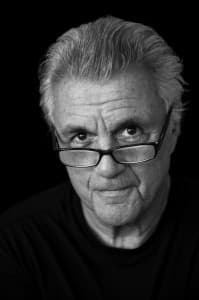
John Irving

John Winslow Irving is an American-Canadian novelist, short story writer, and screenwriter.