“Every morning, Amos McGee, a zookeeper, woke up with the sun. He put on his uniform, ate a bowl of oatmeal, and set off for the zoo.”
— Opening lines establishing Amos's routine.

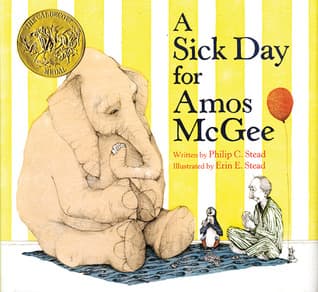
Philip C. Stead (2010)
Genre
Fantasy / Children's
Reading Time
5 min
Key Themes
See below
Sign in to track this book
When kind zookeeper Amos McGee is too sick to visit his animal friends, they return his devotion with a heartwarming house call.
Amos McGee is a kind and punctual zookeeper who spends his days with his animal companions. Every morning, he wakes early, dresses, and walks to the city zoo. He plays chess with the elephant, runs races with the tortoise (who always wins), sits quietly with the penguin, lends his handkerchief to the rhinoceros, and reads bedtime stories to the owl, who fears the dark. Amos's interactions with each animal fit their individual needs and personalities. This shows his deep care and the strong bonds he shares with the animals.
One morning, Amos wakes up feeling very ill. He has a runny nose, a cough, and a general feeling of being unwell, shown by a big 'AH-CHOO!' He realizes he is too sick to go to work, which is rare for him. This illness disrupts his organized life and, more importantly, the lives of his animal friends who rely on his daily visits. He stays in bed, feeling the impact of his absence from the zoo.
At the zoo, the animals notice Amos is gone. The elephant waits for his chess game, the tortoise for their race, the penguin for a quiet moment, the rhinoceros for his handkerchief, and the owl for his bedtime story. They are used to Amos's routine, and his absence worries them. Realizing something is wrong, they decide to act. They plan to visit Amos at his home to check on him, showing their mutual affection and concern.
The five animal friends—the elephant, the tortoise, the penguin, the rhinoceros, and the owl—leave the zoo together. They walk through the city streets, an unusual sight. They walk single file, attracting curious looks but staying focused on their goal. The journey shows their determination and how much they care for Amos. Despite their different speeds, they travel as a united group, highlighting their collective friendship.
When they reach Amos's house, the door is locked. The elephant uses his trunk to press the doorbell. When Amos doesn't answer, he gently tries the doorknob. Finding it unlocked, the elephant, followed by the tortoise, the penguin, the rhinoceros, and the owl, quietly enter the house. Their entry is respectful and careful, showing they know Amos is unwell and do not want to disturb him. They go to his bedroom, eager to see their friend.
Amos is asleep in his bed, still feeling sick. He wakes to a gentle presence and opens his eyes to see all five animal friends standing quietly around his bed. He is surprised but quickly understands why they are there. Their presence brings him comfort and a sense of being cared for, showing the strong bond of friendship he shares with them. This moment is a heartwarming role reversal, with the animals now tending to Amos.
Just as Amos cares for them, the animals now care for him. The elephant offers Amos his handkerchief, like Amos does for the rhinoceros. The tortoise lets Amos rest on his back for a moment, recalling their races. The penguin sits quietly at the foot of the bed, providing a calm presence. The rhinoceros blows Amos's nose (gently, with a tissue), a humorous twist on their usual interaction. Finally, the owl reads Amos a bedtime story, helping him fall back asleep, just as Amos does for the owl. Each act of care directly reflects Amos's kindness.
After the owl finishes reading, Amos falls asleep, feeling much better thanks to his friends' care. One by one, the animals also settle down around him. The elephant curls up on the rug, the tortoise snuggles at the foot of the bed, the penguin perches on the nightstand, the rhinoceros leans against the wall, and the owl closes his eyes on the headboard. They all fall asleep, creating a tender scene of shared companionship.
Amos wakes later, feeling fully recovered. He finds his animal friends still asleep around his room, showing their loyalty and care. Seeing them there makes him smile, reinforcing their deep friendship. He is no longer sick, and the house is filled with a peaceful silence. This scene emphasizes the healing power of friendship and the deep connection between Amos and his animal companions.
With Amos feeling better, it is time for the animals to return to the zoo. Amos, now well and energized, goes with them. They walk back through the city streets, a happy group. The book ends with the idea that their routines will continue, but with a deeper understanding of their mutual care and affection. The journey back means a return to normal, but one changed by the shared experience of illness and friendship.
The Protagonist
Amos begins as the caregiver and ends up being cared for, realizing the reciprocal nature of his friendships.
The Supporting
Remains consistently loyal and caring, demonstrating his deep affection for Amos.
The Supporting
Consistently provides calm and steady support, reinforcing his reliable nature.
The Supporting
Maintains his gentle and quiet demeanor, offering comfort through his presence.
The Supporting
Humorously reverses his usual role, showing a sweet attempt at caregiving.
The Supporting
Overcomes his fear of the dark to comfort Amos, demonstrating his growth and reciprocal care.
The main theme is the deep, mutual nature of friendship. Amos's daily care for his animal friends builds a strong bond. When Amos gets sick, the animals show their love and concern by visiting his house and caring for him as he cares for them. The elephant offers a handkerchief, the tortoise offers a rest, the penguin offers quiet company, the rhinoceros tries to blow Amos's nose, and the owl reads a story. This role reversal clearly shows that true friendship is a two-way street, built on mutual care.
“So when Amos didn't show up at the zoo, his animal friends felt that something was not right.”
Amos's character shows empathy and understanding. He does not treat his animal friends all the same; instead, he caters to each one's unique personality and needs. He plays chess with the elephant, runs with the tortoise, sits quietly with the penguin, provides for the rhinoceros's runny nose, and reads to the owl who fears the dark. This deep understanding is returned by the animals, who, in turn, sense Amos's needs when he is sick and comfort him in ways specific to their past interactions, showing their own empathy.
“He always made time to visit each one of his friends.”
The story begins by showing Amos's careful daily routine, which brings order and comfort to both him and his animal friends. His punctuality and specific interactions create a predictable and safe environment. His illness disrupts this routine significantly, not just for Amos but for the entire zoo community. The animals' trip to his house and their care for him represent a temporary but needed break from routine, highlighting the strength of their bond beyond daily habits.
“But one day—'AH-CHOO!'—Amos woke with a terrible sniffle and an awful sneeze.”
Beyond specific acts of care, the simple presence of Amos's friends helps him heal. While the animals do small comforting gestures, their collective decision to show up and be with Amos truly makes him feel better. Their shared nap at the end of the story symbolizes the comfort and peace found in companionship. Their presence eases his loneliness and sadness, showing that sometimes, just being there for someone is the best medicine.
“And by the time the sun began to set, Amos felt a little bit better.”
Giving human characteristics and behaviors to animals.
The animals in 'A Sick Day for Amos McGee' are fully anthropomorphized, possessing human-like intelligence, emotions, and behaviors. They play chess, feel concern, devise plans, and perform acts of care. This device allows for the exploration of complex themes like friendship and empathy through the relatable actions of animal characters, making the story accessible and engaging for young readers while underscoring the universal nature of human-like bonds and compassion.
The caregiver becomes the cared-for.
This device is central to the story's emotional impact. Initially, Amos is the sole caregiver, attending to the specific needs of each animal. When he falls ill, the roles are dramatically reversed as the animals leave the zoo to care for him. Each animal's act of nurturing Amos directly mirrors how Amos cares for them (e.g., the elephant offers a handkerchief, the owl reads a story). This reversal powerfully illustrates the reciprocal nature of true friendship and highlights the animals' deep affection and gratitude.
A physical journey symbolizing a thematic shift.
The animals' journey from the zoo to Amos's house serves as a significant plot device. This physical movement through the city streets symbolizes their determination and the depth of their concern. It marks a departure from their usual habitat and routine, emphasizing the extraordinary nature of their mission. The journey is not just about reaching a destination, but about demonstrating their commitment and agency in their friendship with Amos.
The story ends by returning to a familiar state, but with new understanding.
The narrative begins with Amos's daily routine of care at the zoo and concludes with him and his now recovered friends returning to the zoo, implying a resumption of that routine. However, the intervening events—Amos's sickness and the animals' care—have deepened the understanding of their bond. The story comes full circle, but with an enriched emotional landscape, reinforcing that while routines are comforting, the underlying connections are what truly matter.
“Every morning, Amos McGee, a zookeeper, woke up with the sun. He put on his uniform, ate a bowl of oatmeal, and set off for the zoo.”
— Opening lines establishing Amos's routine.
“He played chess with the elephant, and ran races with the tortoise. He sat quietly with the penguin, and lent a handkerchief to the rhinoceros, who always had a runny nose. And he read stories to the owl, who was a bit afraid of the dark.”
— Describing Amos's daily interactions with his animal friends.
“But one day, Amos woke up with a sniffle and a sneeze. He felt a bit woozy.”
— The turning point where Amos falls ill.
“The elephant waited patiently by the door. The tortoise peeked out from under his shell. The penguin waddled nervously. The rhinoceros blew his nose, and the owl ruffled his feathers.”
— The animals' reaction when Amos doesn't show up.
“They missed him.”
— A simple, powerful statement about the animals' feelings.
“So, the elephant led the way. The tortoise lumbered along, the penguin waddled, the rhinoceros trotted, and the owl flew overhead.”
— The animals decide to visit Amos at his house.
“They knocked on the door. No answer.”
— The animals' first attempt to get Amos's attention.
“Amos was in bed. He heard a knock at the door, but he was too tired to get up.”
— Amos's state while the animals arrive.
“The elephant helped Amos play chess, even though he was a bit sleepy.”
— The elephant's act of care for Amos.
“The tortoise offered Amos a warm blanket, as he was feeling a bit chilly.”
— The tortoise's thoughtful gesture.
“The penguin sat quietly with Amos, just like Amos always sat quietly with him.”
— The penguin's mirroring of Amos's previous kindness.
“The rhinoceros lent Amos a handkerchief, because Amos had a runny nose.”
— The rhinoceros returning Amos's favor.
“And the owl read stories to Amos, who was a bit afraid of the dark.”
— The owl comforting Amos in his time of need.
“By the time the moon rose, Amos felt much better. He thanked his friends for visiting him.”
— Amos's recovery and gratitude.
“And that night, Amos McGee, a zookeeper, went to bed early. He was not alone.”
— The comforting conclusion of the story, with Amos surrounded by his animal friends.
Ready to see how well you understood this book? Take our interactive quiz with 10 questions.

Biography coming soon.







