“Eventually, all things merge into one, and a river runs through it.”
— The opening lines of the novella, setting a contemplative and unifying tone.

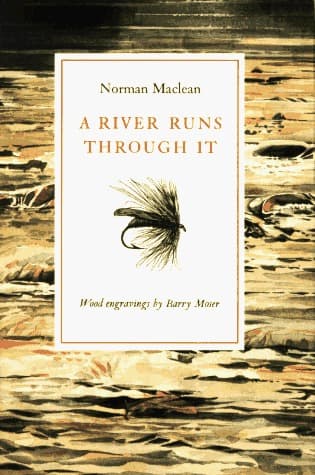
Norman Maclean (1976)
Genre
Historical Fiction
Reading Time
168 min
Key Themes
See below
Sign in to track this book
In the serene yet unforgiving Montana landscape, a family grapples with fly fishing, faith, and the tragic complexities of brotherly love.
Norman Maclean, the narrator, introduces his family and the central role of fly fishing in their lives. His father, a Presbyterian minister, taught Norman and his younger brother, Paul, the art of fly fishing with a precise, almost religious devotion. The boys learn to cast with rhythm and grace, their father emphasizing that 'all good things come by grace, and grace comes by art, and art does not come easy.' Their mother, though less involved in fishing, provides a loving and stable home. This early period establishes the deep bond between the brothers and their shared connection to the Big Blackfoot River, a bond that will be tested throughout their lives.
As the brothers grow, Paul's exceptional talent for fly fishing becomes clear. He has an innate understanding of the river and its fish, often outshining Norman and even their father. However, Paul also develops a rebellious streak, often disappearing for days without explanation and engaging in activities that suggest a wilder nature. Despite his father's attempts to guide him, Paul's independent spirit and his growing fondness for gambling and drinking hint at future struggles. Norman observes these tendencies with a mixture of admiration for his brother's gifts and concern for his increasingly reckless behavior, foreshadowing Paul's tragic path.
Norman attends Dartmouth College in the East, pursuing an academic career. This period marks a physical separation from his family and the familiar Montana landscapes. Meanwhile, Paul stays in Montana, working as a newspaper reporter and continuing to improve his fly-fishing skills. Despite the distance, their bond remains strong, sustained by letters and shared memories of the river. Norman's education and exposure to a wider world contrast with Paul's more rooted connection to his home state, highlighting their differing life paths. Norman's eventual return to Montana will bring him face-to-face with the changes in Paul and the escalating challenges he faces.
Upon Norman's return to Montana after college, he finds Paul still an extraordinary fly fisherman, known for his unique casting style and ability to catch the largest fish, especially the elusive Big Blackfoot rainbow trout. However, Paul's life has become increasingly troubled. He is often involved in card games, accumulating significant gambling debts, and his drinking has become more pronounced. Norman and his father are aware of Paul's struggles, but their attempts to intervene are often met with Paul's cheerful evasiveness or his insistence on managing his own problems. The family struggles to understand the depth of Paul's self-destructive tendencies.
Norman spends more time with Paul, often fishing together, and becomes increasingly aware of the severity of his brother's problems. He notices the signs of Paul's late nights and the toll his lifestyle is taking. Norman attempts to talk to Paul about his gambling and drinking, but Paul often deflects or minimizes the issues. Norman feels a deep sense of frustration and helplessness, recognizing that Paul is withdrawing further into his own world, despite the love and concern of his family. These interactions highlight the limits of brotherly love when faced with profound personal demons, a central theme of the story.
The family goes on what will be their last fishing trip together on the Big Blackfoot River. This trip is a poignant culmination of their shared history. Paul, despite his personal troubles, shows his skill, catching a magnificent rainbow trout using his unique 'shadow cast.' This moment is described with reverence, showing Paul's almost mystical connection to the river. Norman, his father, and Paul share a final, perfect day of fishing, a brief break from the looming darkness. The river's beauty and tranquility contrast sharply with the brewing storm in Paul's life, making the memory even more bittersweet.
Shortly after their final fishing trip, Norman receives a phone call with the shocking news that Paul has been found brutally murdered in an alley. The details are vague and disturbing, suggesting a connection to Paul's gambling debts or other illicit activities. The news shatters the family. Norman grapples with the sudden, violent end to his brother's life and the realization that he may never fully understand the forces that led to Paul's death. The abruptness of Paul's death leaves Norman with a lasting sense of loss and unanswered questions, forever changing his perspective on life and family.
After Paul's murder, the Maclean family is consumed by grief and the haunting mystery of his death. Norman and his father try to piece together what happened, but the police investigation yields no clear answers or arrests. Norman's father, in particular, struggles with the inability to help Paul, even in death, echoing his earlier struggles to understand and save his son. The family is left with the painful burden of 'not knowing,' a profound sense of incompleteness and the lasting question of why Paul, so gifted and loved, met such a tragic end. The river, once a source of joy and connection, now carries a shadow of sorrow.
Norman recounts a poignant sermon his father delivers years after Paul's death. The sermon, ostensibly about faith and God's grace, becomes a thinly veiled meditation on Paul's life and the family's inability to save him. The father speaks of the limits of human understanding and intervention, acknowledging that 'we can love completely without complete understanding.' This sermon is a powerful moment of acceptance for the father, who grapples with the profound mystery of his son's path. It highlights the central theme that while love is abundant, it cannot always bridge the chasm of another's self-destructive choices.
As the story concludes, Norman is an old man, and his parents and brother are long gone. He reflects on his life and the indelible mark his family and the Big Blackfoot River have left on him. He still returns to the river to fish, finding solace but also a persistent echo of his past. He acknowledges that despite the passage of time, he is still unable to fully understand Paul or the forces that shaped his life and death. The narrative ends with the iconic line, 'I am haunted by waters,' signifying that the river, and the memories it holds, will forever be a part of him, a source of both beauty and profound melancholy.
The Protagonist/Narrator
Norman evolves from a concerned brother to an old man who has come to terms with the unknowable aspects of life and the people he loved, finding solace in memory and the river.
The Supporting/Central Figure
Paul's arc is tragic; he remains largely unchanged in his self-destructive path, despite his family's love, culminating in his untimely death.
The Supporting
He moves from a position of attempting to control and guide to one of sorrowful acceptance of the unknowable nature of his son's path.
The Supporting
Her arc is one of enduring love and quiet grief, maintaining her steadfast nature through family tragedies.
The Mentioned
Neal's arc is static; he remains mired in his alcoholism, serving as a foil to Paul's more complex struggles.
A central theme is the tragic limitation of love and effort in truly understanding or saving another person. Despite the deep love and concern Norman and his father have for Paul, they are ultimately unable to comprehend the full scope of his self-destructive path or intervene effectively. This is powerfully articulated in the father's sermon, where he muses, 'We can love completely without complete understanding.' Paul's murder leaves an unfillable void of 'not knowing,' highlighting that some human mysteries remain impenetrable, even to those closest to us. This theme is also explored through their attempts to help Neal, which similarly prove futile.
“For it is true that we can seldom help those closest to us. Either we don't know what part of ourselves to give or, more often than not, the part we have to give is not wanted. And so it is those we live with and love and should know who elude us.”
The Maclean family's life is deeply rooted in a unique blend of Presbyterian discipline, the art of fly fishing, and the raw beauty of the Montana landscape. For the Reverend Maclean, fly fishing is not merely a hobby but a spiritual practice, a pursuit of 'grace.' The precise, rhythmic casting is like a religious ritual, demanding discipline, patience, and an almost mystical connection to the river. The Big Blackfoot River itself becomes a sacred space, a source of both profound joy and lingering sorrow. This theme suggests that for the Macleans, the spiritual and the natural world are inseparable, and art (in this case, fishing) is the medium through which they connect to both.
“In our family, there was no clear line between religion and fly fishing.”
The entire narrative is a retrospective reflection by an older Norman Maclean, looking back on his youth and the lasting impact of his family and the Big Blackfoot River. Memory is not presented as perfect recall but as a haunting, persistent presence that shapes his understanding of the past. The story is filled with a deep sense of nostalgia for a lost time and lost loved ones, particularly Paul. Norman constantly revisits past events, trying to make sense of them, especially Paul's tragic end. The river becomes a powerful reminder, continuously pulling him back to the beauty and sorrow of his past, illustrating how our identities are formed by the memories we carry.
“Eventually, all things merge into one, and a river runs through it. The river was cut by the world's great flood and runs over rocks from the basement of time. On some of the rocks are the words of the prophets written on them. As for me, I'm haunted by waters.”
At its heart, the story is an exploration of the complex, enduring bond between two brothers, Norman and Paul, and their relationship with their parents. Despite their different personalities and life choices, a deep, unspoken love and connection persist. Norman's narrative is driven by his love for Paul and his attempt to understand him, even in death. The family unit, though tested by Paul's self-destructive behavior and ultimate tragedy, remains a fundamental source of identity and meaning for Norman. The shared experience of fishing solidifies their bond, even as their individual paths diverge, emphasizing the formative power of family ties.
“Each one of us has a God-given talent. Mine is to fish. And I am good at it.”
The entire story is a reflection by an older Norman Maclean on his past.
The narrative is framed as a long flashback, with Norman Maclean as an old man recounting his youth, particularly his relationship with his brother Paul and their family's connection to fly fishing. This device allows for a reflective, philosophical tone, as the narrator can interject with insights gained from decades of perspective. It emphasizes themes of memory, the passage of time, and the enduring impact of past events on the present, allowing for a deeper exploration of the unknowable aspects of life and human nature.
The Big Blackfoot River represents life, grace, mystery, and the passage of time.
The Big Blackfoot River is perhaps the most prominent symbolic element in the novella. It represents life itself, with its currents, depths, and unpredictable nature. It is a source of joy, a classroom for moral discipline (through fly fishing), and a place of profound connection for the Maclean family. It also symbolizes grace and the elusive beauty of life, particularly through Paul's masterful fishing. After Paul's death, the river becomes a symbol of haunting memory and the persistent mystery of human existence, embodying the idea that 'all things merge into one, and a river runs through it.'
Norman and Paul, and Paul and Neal, serve as contrasts to highlight character traits.
The relationship between Norman and Paul acts as a primary foil. Norman, the academic and introspective older brother, contrasts sharply with Paul, the wild, intuitive, and self-destructive younger brother. This highlights their differing approaches to life, fishing, and their struggles. Additionally, Paul's complex, charismatic self-destruction is contrasted with Neal's more pathetic and less graceful alcoholism. These contrasts serve to illuminate the unique qualities and tragic paths of each character, particularly emphasizing the distinct nature of Paul's gifts and his demons.
Early descriptions of Paul's wildness and gambling habits hint at his tragic end.
From early in the narrative, Norman subtly foreshadows Paul's eventual tragic demise. References to Paul's late nights, his gambling, his quick temper, and his general 'wildness' all hint at a dangerous path. Norman's own feelings of helplessness and his father's struggles to understand Paul also create a sense of impending doom. This foreshadowing builds tension and emotional weight, making Paul's murder, though shocking, feel like an inevitable consequence of the life he chose, reinforcing the theme of the limits of understanding and intervention.
“Eventually, all things merge into one, and a river runs through it.”
— The opening lines of the novella, setting a contemplative and unifying tone.
“It was in the cards of the world, and there was nothing we could do about it.”
— Reflecting on the inevitability of certain life events and the limits of human control.
“And yet, I knew that I had not really learned anything until I had learned it with my whole body.”
— Discussing the difference between intellectual understanding and embodied experience, particularly in the context of fly fishing.
“We can seldom help those closest to us. Either we don't know what to say or we say the wrong thing.”
— The narrator's reflection on the difficulty of truly helping loved ones, especially his brother Paul.
“For it is not fly-fishing if you are not looking for answers to questions.”
— Emphasizing the philosophical and introspective nature of fly fishing beyond just catching fish.
“Each one of us has a call to the river.”
— A broader statement connecting the individual's destiny and connection to the natural world.
“It is those we live with and love and should know who elude us.”
— A poignant observation about the enduring mystery and elusiveness of understanding even those closest to us.
“The greatest gift God can give us is a sense of humor.”
— A lighter, yet profound, statement from the father character about coping with life's difficulties.
“Then in the Arctic half-light of the canyon, all existence fades to a being with my soul and memories and the sounds of the Big Blackfoot River and a four-count rhythm and the hope that a fish will rise.”
— A lyrical description of the immersive and almost spiritual experience of fly fishing.
“Help is the word that is only used by the helpless.”
— A stark reflection on pride and the difficulty of asking for or accepting help, particularly relevant to Paul's character.
“Like many of us, he was a master of the past and a victim of the future.”
— Describing Paul's character, highlighting his skill and his tragic fate.
“When we are young, we are always looking for the biggest fish.”
— A commentary on youthful ambition and the changing perspectives that come with age.
“I am haunted by waters.”
— The concluding line of the novella, encapsulating the enduring impact of the river and the memories associated with it.
“My father was very sure about certain matters pertaining to the universe.”
— Introducing the father's steadfast and principled character, particularly regarding morality and fly fishing.
“He was a beautiful boy, with a beautiful mind, and a terrible way of living.”
— The narrator's summary of his brother Paul's complex and ultimately tragic nature.
Ready to see how well you understood this book? Take our interactive quiz with 10 questions.

Biography coming soon.







