“You are a torch, Helene. And you will burn your way through the world.”
— Laia to Helene, acknowledging Helene's strength and destiny.

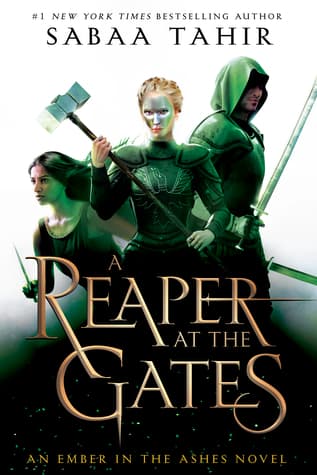
Sabaa Tahir (2018)
Genre
Fantasy / Young Adult / Romance
Reading Time
450 min
Key Themes
See below
Sign in to track this book
As war engulfs the Martial Empire, a Shrike fights to protect her family from a mad emperor, a scholar hunts a demon while facing betrayal, and a Soul Catcher battles an ancient power that threatens to sever him from the woman he loves.
Helene Aquilla, the Blood Shrike, returns to Serra after her ordeal to find the Empire in disarray. Emperor Marcus, traumatized and haunted by visions, is erratic and cruel. The Commandant, Keris Veturia, uses Marcus's instability to gain power through fear and manipulation. Helene's main goal is to protect her younger sister, Livia, who is an Empire ward, and to keep some order. She is constantly watched and must choose allies carefully, knowing one wrong move could cost her and Livia their lives. The political climate is dangerous, with every faction seeking control.
Laia of Serra, with her brother Darin and some Scholars, continues her journey through the desert to find a weapon against the Nightbringer. Their quest leads them to ancient Jinn ruins and hidden libraries, where they find lore about Jinn power and the Nightbringer's threat. Laia feels the weight of her responsibility, knowing the world's fate rests on her. Some Scholars doubt her leadership and methods. Darin's smithing skills help decipher ancient texts and understand the weapon, though he is still recovering from torture.
Elias Veturius, now the Soul Catcher, lives in the ethereal Waiting Place. He is bound to the ancient power that guides souls, forced to lead the dead to rest. This new life is a constant fight against his memories and desires, especially his love for Laia. The Soul Catcher's duties are demanding and grim, requiring him to face the suffering of new souls. He struggles to understand his powers and limitations, feeling the pull of the living world and the people he left behind. The enigmatic spirits of the Waiting Place offer cryptic advice and warnings.
The Commandant, Keris Veturia, expertly uses Emperor Marcus's declining mental state. She feeds his paranoia, subtly guiding him to make decisions that help her agenda. She removes political opponents, often framing them for treason or staging 'accidents.' Her goal is to remove any obstacles to her complete control of the Empire, with Marcus as her puppet. She uses the Martial legions to enforce her will, crushing dissent brutally. Helene is a constant problem, but Keris waits for the right moment to eliminate her. Keris's ruthlessness knows no bounds, even when it means sacrificing her own people.
In her search for the Jinn weapon, Laia and her group enter the territories of various desert tribes. She tries to form alliances, explaining the Nightbringer's threat. Some tribes, wary of outsiders and ancient prophecies, hesitate to help. Others see a chance for power or revenge against the Martials. Laia meets the enigmatic leader of the Basha tribe, who has valuable knowledge but demands a high price. Betrayals are common, as rival factions within the tribes and even among her own Scholars try to undermine her. Laia learns that trust is hard to find in the desert, and she must rely on her instincts to tell friend from foe.
Helene finds herself in an increasingly difficult situation. Emperor Marcus's madness grows, leading to public executions and widespread fear. To protect Livia, Helene must make morally questionable choices, working with people she despises and compromising her honor. She tries to guide Marcus, but he is losing his grip on reality, making him unpredictable and dangerous. Helene also deals with the growing threat of the Nightbringer's forces, which are starting to infiltrate the Empire's borders. She must balance immediate political dangers with the looming supernatural threat, all while appearing loyal to a tyrannical emperor. Her inner conflict is immense, as she feels herself becoming what she despises.
The Nightbringer, having gained power, begins to unleash his ancient horrors on the mortal world. His shadowy creatures, ghuls and other abominations, spread terror and destruction, targeting Martials and Scholars. His influence expands, corrupting minds and turning people against each other. The Nightbringer communicates with Laia and Elias through dreams and visions, taunting them and showing glimpses of his plan to plunge the world into darkness. His malevolent presence is felt throughout the story, making Laia's quest and Helene's struggle more urgent. He is a formidable, ancient foe whose power seems almost unstoppable.
Despite his vows as Soul Catcher to remain impartial, Elias is tormented by visions of Laia's struggles and the suffering of the living. He feels an irresistible urge to intervene, especially when Laia is in danger. He tries to subtly influence events, sometimes by communicating with mortals through dreams or by lending his ethereal power in small, forbidden ways. These interventions come at a cost, weakening his connection to the Waiting Place and angering the ancient spirits who oversee his duties. He constantly battles the Soul Catcher's nature, torn between his love for Laia and his sacred obligation to the dead. The consequences of his actions are severe and often unexpected.
The tensions within the Empire finally erupt into open civil war. Emperor Marcus's erratic behavior and the Commandant's power grabs lead to widespread rebellion. Various legions declare loyalty to different factions, plunging the capital and surrounding territories into chaos. Helene finds herself in the middle, trying to protect Livia and the innocent while navigating the brutal conflict. The Commandant uses the war to eliminate more rivals, consolidating her military control. The conflict weakens the Empire's defenses against the encroaching Nightbringer, making Helene's task even more desperate. The once-mighty Empire begins to tear itself apart from within, mirroring the external threats it faces.
After overcoming many obstacles and betrayals, Laia and Darin find the ancient Jinn weapon—a relic of immense power. However, their triumph is short-lived as Nightbringer forces ambush them, including some former allies who have been corrupted. Laia faces a direct confrontation with the Nightbringer, who reveals more about his past and motives. The battle is fierce, testing Laia's leadership and understanding of Jinn magic. She must wield the weapon effectively and outsmart the cunning, ancient foe. Darin's skills are crucial in understanding the weapon's true nature and how to activate its full potential against the Nightbringer's dark magic.
As the civil war rages and the Nightbringer's forces close in, Helene makes a painful choice to protect Livia. This sacrifice, deeply personal, strengthens her resolve. She finally confronts the Commandant, Keris Veturia, in a showdown that determines the fate of the Imperial capital and possibly the entire Empire. The battle is not just physical but also a clash of wills. Helene, no longer bound by loyalty to Marcus, fights with desperation and love. The outcome of this confrontation will greatly affect the Empire's survival against the Nightbringer.
Seeing Laia's desperate struggle against the Nightbringer, Elias makes a fateful decision. Defying his role as Soul Catcher and risking his existence, he intervenes directly in the mortal world. This intervention is a monumental act of defiance against the ancient powers that bind him. His actions have significant consequences for himself and for the balance between the living and the dead. This moment shows the depth of his love for Laia and his inability to passively watch the world he cherished be destroyed. His power is unleashed in a way previously thought impossible, changing the course of the battle against the Nightbringer.
After the major confrontations, the immediate threat from the Nightbringer and the Imperial conflicts is temporarily stopped, but at a high cost. Victories are hard-won and often bittersweet, leaving destruction and loss. The balance of power within the Empire changes, with new leaders and challenges. The Nightbringer, though wounded, remains a formidable threat, retreating to regroup. The characters deal with the aftermath of their battles, their sacrifices, and the realization that the larger war for the world's fate is far from over. New alliances must form, and past wounds must begin to heal.
The Protagonist
Helene starts as a loyal but conflicted servant of the Empire and evolves into a pragmatic, self-sacrificing leader willing to defy tradition for the greater good.
The Protagonist
Laia transitions from a reluctant rebel to a determined leader, accepting her role in the prophecy and mastering her unique abilities to confront ancient evil.
The Protagonist
Elias accepts his role as Soul Catcher but continually battles its constraints, ultimately choosing to defy his vows for love and the greater good.
The Antagonist
Keris begins as a powerful, cunning antagonist and further solidifies her tyrannical control, becoming a primary threat to both Helene and the Empire's stability.
The Supporting
Marcus descends further into madness and tyranny, becoming a pawn in the Commandant's schemes before his ultimate fate is decided.
The Supporting
Darin continues his recovery from torture, using his unique skills to aid Laia while grappling with his past trauma.
The Antagonist
The Nightbringer consolidates his power and actively begins his assault on the mortal world, revealing more of his ancient history and motivations.
The Supporting
Livia remains largely a symbol of Helene's devotion and the innocence at stake, her safety driving much of Helene's actions.
The Supporting
Cook continues to guide Laia, revealing more of her own history and powers as the fight against the Nightbringer intensifies.
This theme appears through Emperor Marcus's descent into madness and Commandant Keris Veturia's ruthless pursuit of control. Marcus, a reluctant ruler, becomes paranoid and violent under pressure and past trauma. Keris, already cruel, uses his instability to gain power, showing how unchecked ambition leads to tyranny and suffering. The Martial Empire, built on conquest, shows how power can dehumanize both those who wield it and those subjected to it, creating a system prone to corruption and civil strife. Helene constantly fights this corruption, even as she is forced to participate in it.
“Power is a poison. And in the Empire, it runs in every vein.”
All three protagonists make sacrifices driven by duty. Elias sacrifices his life and connection to the living world to become the Soul Catcher, constantly battling his vows for love. Helene continually sacrifices her personal desires, her honor, and ultimately makes a painful choice to protect Livia and the Empire. Laia also sacrifices her safety and happiness, taking on the burden of leading the Scholars and facing the Nightbringer, knowing it could cost her everything. This theme highlights the heavy price of leadership and the moral dilemmas in fighting for a greater cause, often forcing characters to choose between what they want and what they must do.
“Duty is a chains. But sometimes, it's the only thing that holds the world together.”
The power of love, both romantic and familial, provides emotional depth and motivation amid the chaos. Elias and Laia's love transcends life and death, driving Elias to defy his sacred vows and Laia to persist in her quest. Helene's fierce love for her sister, Livia, motivates her to endure hardship and make impossible choices. The constant threat of loss—of loved ones, hope, identity—shows life's fragility in a world on the brink of collapse. The characters are reminded of what they stand to lose, making their struggles more poignant.
“I will not let the world take you, not while I still draw breath. Not even if I can no longer draw breath.”
Despite the overwhelming darkness—the Nightbringer's evil, the Empire's self-destruction, and constant betrayals—the characters find reasons to hope and fight. Laia's belief in a better future, Helene's determination to protect the innocent, and Elias's commitment to guiding souls, even from beyond the grave, represent sparks of hope. Even with immense suffering and loss, the possibility of victory, redemption, or simply survival fuels their actions. This theme suggests that even when the world seems lost, the human (and Jinn) spirit's resilience and resistance can light the way.
“Hope is a fragile thing. But it is also the strongest.”
The book explores the complexities of good and evil, showing they are not always clear-cut. Characters like Helene must commit morally questionable acts for a greater good, blurring the lines. The Nightbringer's destructive motives come from ancient grievances, adding a layer of tragic understanding to his villainy. The Martials, while oppressive, also have individuals capable of honor and compassion. This theme challenges simple ideas of morality, asking readers to consider the grey areas and the difficult choices characters make in impossible situations, and how intentions do not always align with outcomes.
“There are no good men or bad men. Only men who make choices. And those choices decide who they are.”
Elias's cosmic binding that restricts his actions in the mortal world.
Elias's vows as the Soul Catcher serve as a major source of internal and external conflict. They bind him to the Waiting Place, preventing direct intervention in the mortal world and forcing him to observe the suffering of his loved ones. This device amplifies the stakes for Laia, as her primary protector is rendered largely powerless. It also creates immense emotional tension for Elias, who constantly battles his love for Laia against his sacred duty. The eventual defiance of these vows represents a pivotal moment of sacrifice and determination, demonstrating the power of love over cosmic law.
The Emperor's deteriorating mental state, a catalyst for political chaos.
Emperor Marcus's growing madness and paranoia act as a critical plot device, destabilizing the entire Martial Empire. His erratic behavior creates a power vacuum that the Commandant Keris Veturia ruthlessly exploits, leading to increased tyranny, civil unrest, and ultimately civil war. This instability forces Helene to make increasingly desperate and morally compromising decisions to protect Livia and maintain order. It also weakens the Empire's ability to respond to the external threat of the Nightbringer, demonstrating how internal strife can pave the way for external destruction.
An ancient artifact sought by Laia to defeat the Nightbringer.
The Jinn weapon serves as a classic MacGuffin, driving Laia's entire quest. Its existence provides a tangible goal and a glimmer of hope for defeating the Nightbringer, propelling the narrative forward across dangerous landscapes and through numerous encounters. The journey to find and understand the weapon allows for the introduction of new characters, exploration of ancient lore, and the development of Laia's leadership skills. Its unique properties and the challenge of wielding it effectively add layers of magical intrigue and strategic complexity to the conflict with the Nightbringer.
Ancient predictions that guide and burden the protagonists.
The prophecies surrounding Laia, Elias, and the Nightbringer act as a powerful plot device, shaping their destinies and adding a sense of epic scope to the narrative. These predictions, often cryptic and open to interpretation, guide the characters' actions while also burdening them with immense responsibility. They provide a framework for the larger conflict between light and darkness, suggesting that the characters are part of a grand, ancient struggle. The prophecies also introduce elements of fate versus free will, as characters often grapple with whether they are simply fulfilling a predetermined path or actively forging their own.
The ethereal realm between life and death where Elias resides.
The Waiting Place is a unique setting and plot device that allows for Elias's continued presence in the story despite his death. It provides a distinct magical system and a new perspective on the world, offering glimpses into the afterlife and the cosmic balance. This realm allows Elias to observe, and occasionally subtly influence, events in the mortal world, creating dramatic tension. It also introduces new mythical figures and rules that govern life and death, expanding the world-building and providing Elias with a new set of challenges and responsibilities that directly impact the ongoing conflict.
“You are a torch, Helene. And you will burn your way through the world.”
— Laia to Helene, acknowledging Helene's strength and destiny.
“Hope is a dangerous thing. It can drive a man to madness or to greatness.”
— A reflection on the dual nature of hope, often felt by Elias.
“We are all broken, Laia. Every single one of us. It's how we choose to put ourselves back together that matters.”
— Elias to Laia, discussing their shared pain and the path forward.
“The past is a ghost, always there, always watching. But it doesn't have to define your future.”
— Helene grappling with her past decisions and responsibilities.
“Love is a weakness. It makes you do foolish things. It makes you vulnerable.”
— A common sentiment among characters who try to suppress their feelings, like Helene.
“Sometimes, the only way to save someone is to let them go.”
— A painful realization for Laia regarding her loved ones and their individual paths.
“Fear is a powerful weapon. But courage is stronger.”
— Laia reflecting on her own battles and the internal strength required.
“Even in the darkest of times, there is always a flicker of light. You just have to find it.”
— A hopeful thought shared between characters facing immense hardship.
“Power does not corrupt. It reveals.”
— A philosophical observation on the nature of leadership and authority.
“To be a leader, you must sometimes make choices that break your own heart.”
— Helene's burden as the Blood Shrike, facing difficult decisions.
“The greatest battles are not fought with swords, but in the heart.”
— Elias's internal struggle with his destiny and desires.
“We fight not for glory, but for survival. For the ones we love.”
— Laia rallying her allies, defining their purpose in the war.
“There are some scars that never heal. You just learn to live with them.”
— A somber realization from a character dealing with deep emotional wounds.
“A true warrior fights for more than just victory. They fight for justice.”
— Laia's evolving understanding of what it means to lead and fight.
Ready to see how well you understood this book? Take our interactive quiz with 10 questions.

Biography coming soon.







