The Fatal Foul Ball
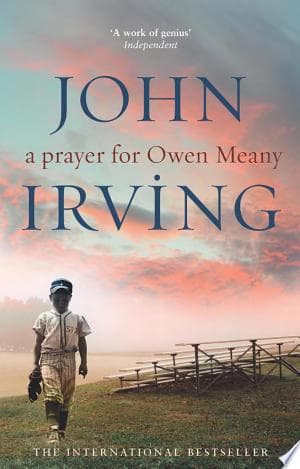
In the summer of 1953, eleven-year-old John Wheelwright and his best friend, Owen Meany, play in a Little League baseball game in Gravesend, New Hampshire. Owen, with his unusual, high-pitched voice and small size, hits a foul ball that strikes and kills John's mother, Tabitha Wheelwright, in the stands. This accident affects both boys deeply. The community sees it as a misfortune, but Owen immediately believes it was an act of God, a divine event, and that he is God's instrument. This incident defines their childhood and sets up Owen's strong belief in his destiny.
Owen's Peculiar Childhood and Faith
After Tabitha's death, Owen Meany becomes an even bigger part of John's life. Owen, born small with a high-pitched, nasal voice (shown in all capital letters in the book), is very smart and religious. He attends Gravesend Academy with John and is often an outcast because of his looks and voice, yet he has a clear charisma and moral authority. Owen believes he is an instrument of God, a belief that grows stronger. He often speaks in prophecies and has a strong faith in divine predetermination, often talking about his 'purpose' and God's plan for him.
The Search for John's Father
After his mother's death, John Wheelwright wants to find his biological father. Tabitha had always avoided the topic, and John's grandmother, Harriet Wheelwright, is also quiet about it. Owen, though young, becomes a confidant and helps John in his search. John suspects various men in Gravesend, including Reverend Merrill, but finds no answers. The mystery of his father is a background thread, showing John's search for identity and belonging, especially after his mother's death. Owen, in his prophetic way, often hints at knowing more than he says.
The Armless Man and the Virgin Mary
Owen's intense religious experiences and visions happen more often. He claims to have seen the Virgin Mary and interprets events as signs from God. One memorable incident involves Owen's vision of a Virgin Mary statue whose arms break off, which he sees as an important omen. He also carefully plans and gets an armless statue for the church. These experiences, with his belief in the foul ball incident as a divine act, strengthen Owen's conviction that he is meant for a specific, holy purpose, even if he does not fully understand it. John often finds Owen's interpretations confusing and interesting.
Vietnam War and Draft Avoidance
As John and Owen become adults, the Vietnam War is a big concern. Many young men in Gravesend are drafted, and both friends might serve. John, feeling lost, thinks about going to Vietnam, but Owen tries to stop him. Owen, despite his small size, wants to enlist, believing it is part of his divine plan. He changes his draft status to ensure he will go to Vietnam, despite John's and others' attempts to prevent him. This time shows their different views on fate and responsibility, with Owen's actions driven by his sense of destiny.
Owen's Role as a 'Wound Dresser'
Owen's desire to serve in Vietnam is not conventional patriotism, but from his belief that he has a specific, divine role. He sees a vision of himself as a 'wound dresser,' a role he takes literally. He trains and gets himself into a unit that transports bodies of fallen soldiers. This choice is, for Owen, a fulfillment of a prophecy he has seen, further solidifying his belief in his purpose and that he is a tool in God's larger design.
The Vision of the Dummy
Throughout their lives, Owen has told John about a recurring dream or vision: a dummy of himself falling, with arms outstretched, as if catching something. He believes this vision is a premonition of his death and that he will die saving Vietnamese children. This vision, with his 'wound dresser' role, strengthens his understanding of his sacrifice. Owen tells this vision with such conviction that John, despite his doubt, starts to believe in Owen's prophetic abilities. This foreshadowing builds tension for Owen's fate in Vietnam.
The Revelation of John's Father
In a key moment, John finds out his biological father is Reverend Merrill, the minister of the local Congregational church. Owen tells him, having known the truth all along and kept it secret, believing it was not the right time for John to know. The truth explains Reverend Merrill's distant behavior towards John. This revelation is tied to Owen's destiny, as Owen arranged for John to be present at the exact moment of his own death, ensuring John would see the fulfillment of Owen's prophecy.
Owen's Heroic Sacrifice
In a dramatic and planned sequence of events, Owen Meany, serving in Vietnam, sees Vietnamese children playing with a grenade. Remembering his vision of himself falling and catching something, Owen acts quickly. He throws himself on the grenade, sacrificing his life to save the children. His arms are outstretched, like the dummy in his vision, as he catches the grenade, fulfilling his prophecy. John Wheelwright, whom Owen arranged to be present at that moment, sees Owen's heroic death, making Owen a Christ-like figure and a true instrument of God.
John's Life as an Expatriate
After Owen's death, John Wheelwright, affected by the loss and disillusioned with American politics and the Vietnam legacy, moves to Toronto, Canada. He teaches English, always thinking about Owen's life, prophecies, and sacrifice. John's story is told from this future viewpoint, letting him combine memories, interpretations, and Owen's impact on his understanding of faith, destiny, and life's meaning. John remains a believer, though sometimes questioning, in Owen's divine purpose, always looking for signs of God in the ordinary and extraordinary.