“He was an artist, and he would be an artist, in spite of all the world.”
— Stephen Dedalus's internal resolve about his artistic path.

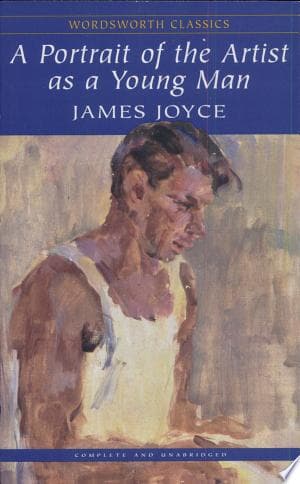
James Joyce (1992)
Genre
Literary Fiction
Reading Time
550 min
Key Themes
See below
Sign in to track this book
Through the eyes of Stephen Dedalus, Joyce crafts the journey of a young man grappling with Irish Catholicism and nationalism as he forges his own path toward artistic freedom.
The novel opens with Stephen Dedalus's fragmented childhood memories: a song, a story about a moocow, and his father's hairy face. He attends Clongowes Wood College, a Jesuit boarding school, where he experiences both camaraderie and the harsh realities of institutional life. He is bullied by Wells, who pushes him into a ditch, and later unjustly punished by Father Dolan with a pandybat across the hand for breaking his glasses. Stephen, though timid, finds the courage to appeal to the Rector, Father Conmee, who acknowledges the injustice, marking Stephen's first assertion of his individual will against authority. These early experiences begin to shape his sensitive and introspective nature, highlighting his alienation and sense of injustice.
As Stephen grows older, his family's financial situation declines, leading to frequent moves and his enrollment at Belvedere College. Here, he excels academically but also experiences a period of sexual awakening and guilt. He frequents prostitutes in Dublin, succumbing to his desires, only to be plunged into remorse. A retreat at Belvedere, led by Father Arnall, features a series of sermons on hell, sin, and eternal damnation. These sermons terrify Stephen, leading him to a desperate confession. He resolves to abandon his sinful life and embrace piety, momentarily finding solace in rigorous religious observances and a sense of spiritual purity.
Following his religious awakening, Stephen's piety is noted by his Jesuit mentors at Belvedere. He is called to the Rector's office and offered the opportunity to consider a vocation to the priesthood. Initially, Stephen is flattered and considers the offer, imagining a life of spiritual authority and influence. However, as he walks through Dublin, observing the mundane and the beautiful, he has an epiphany. He realizes that the strictures of the priesthood would stifle his artistic spirit and intellectual freedom. The images of common life, particularly a girl wading in the sea, stir within him a connection to beauty and art, cementing his decision to reject the priesthood and pursue a different path.
Stephen enrolls at University College Dublin, where he becomes a figure of intellectual curiosity and social awkwardness among his peers. He engages in lengthy, often heated, discussions with fellow students like Cranly, Davin, and Lynch, debating topics ranging from Irish nationalism and politics to philosophy, religion, and art. Stephen articulates his developing aesthetic theories, influenced by Aquinas and Aristotle, emphasizing the importance of 'integritas,' 'consonantia,' and 'claritas' in art. He feels increasingly alienated from the political and religious fervor of his classmates, viewing their commitments as hindrances to true artistic expression. His intellectual journey becomes a quest to define his own artistic identity, distinct from the prevailing ideologies around him.
Throughout his university years, Stephen's family continues its downward spiral. His father, Simon Dedalus, becomes increasingly dissolute and financially irresponsible, leading to greater poverty and instability for the family. Stephen observes his mother's quiet suffering and his siblings' struggles, which often involve him taking on responsibilities beyond his years. A Christmas dinner scene illustrates the deep divisions within the family and Irish society, as Stephen's father, his nationalist friend Mr. Casey, and the devout Dante Riordan engage in a bitter argument about Charles Stewart Parnell, tearing the family apart over political and religious loyalties. These domestic tensions further alienate Stephen, pushing him towards a complete break from his family's expectations and the confines of his homeland.
Stephen's commitment to art solidifies. He rejects the political nationalism espoused by Davin and the religious devotion of others, believing that the artist must be free from such societal and ideological constraints. He sees himself as a 'priest of eternal imagination,' destined to forge the uncreated conscience of his race. This calling requires personal sacrifice and a willingness to embrace exile. He feels a growing urge to leave Ireland, which he perceives as a spiritual and intellectual prison, to find the freedom necessary for his artistic development. His conversations with Cranly, a trusted friend, often revolve around these convictions, with Cranly attempting to understand Stephen's complex and often defiant worldview.
Stephen engages in extensive discussions, particularly with Lynch, about the nature of art and beauty. He expounds upon his Thomistic aesthetic, differentiating between proper and improper art. He defines beauty as that which causes a 'stasis' in the mind, a moment of intellectual arrest and delight. He elaborates on the three conditions of beauty: 'integritas' (wholeness), 'consonantia' (harmony), and 'claritas' (radiance or quidditas). He also discusses the different forms of art – lyrical, epical, and dramatic – and their relationship to the artist's personality, arguing that the artist, like God, should remain invisible, refined out of existence. These theoretical explorations are crucial to Stephen's self-definition as an artist and his preparation for his creative life.
Stephen increasingly rejects the three pillars of Irish identity that constrain him: nationality, religion, and family. He openly defies the nationalist sentiments of Davin and others, seeing them as provincial and limiting. He dismisses the Catholic Church's authority, having found its dogma and moral strictures suffocating to his spirit. His relationship with his family, particularly his father, becomes strained as he refuses to conform to their expectations or support their declining fortunes. He views these institutions as 'nets' flung at his soul, attempting to hold him back from his true artistic destiny. This deliberate detachment is a necessary step for him to achieve the freedom he believes essential for his artistic creation.
In a series of late-night conversations, Cranly acts as Stephen's intellectual foil and confessor. Cranly probes Stephen's motivations, particularly his rejection of his mother and his country, trying to understand the depth of his commitment to artistic exile. He challenges Stephen's coldness and apparent lack of human connection, especially regarding his family. Stephen, however, remains resolute. He explains that his artistic mission transcends conventional loyalties and that he must be free to pursue his calling, even if it means appearing heartless. These exchanges solidify Stephen's conviction that his path is solitary and demands a radical break from all that binds him to Ireland.
The novel concludes with Stephen's diary entries, which are his final declaration of independence and an artistic manifesto. He records his last interactions, his thoughts on his impending departure, and his firm resolve to leave Ireland to pursue his art. He expresses his intention to 'forge in the smithy of my soul the uncreated conscience of my race,' signifying his ambition to create art that will transcend the limitations of his homeland and offer a new vision. He bids farewell to Ireland, his family, and his friends, recognizing that his journey is one of self-discovery and creation, a flight into artistic freedom. He invokes Daedalus, his mythical namesake, as he prepares to embark on his creative odyssey.
The Protagonist
Stephen evolves from a timid, guilt-ridden child into a defiant, self-aware artist who chooses exile over conformity, embracing his individual artistic calling.
The Supporting
His character arc is one of decline, mirroring the broader decay of traditional Irish society that Stephen observes and rejects.
The Supporting
She remains a largely static character, embodying the traditional maternal and religious values Stephen ultimately rejects.
The Supporting
Cranly remains a consistent, questioning presence, serving as a catalyst for Stephen to articulate and solidify his artistic philosophy.
The Supporting
Lynch's character is largely static, serving as a pragmatic and often cynical audience for Stephen's intellectual and aesthetic explorations.
The Supporting
Davin remains steadfast in his nationalist views, serving as a symbol of the very traditional Irish identity Stephen seeks to transcend.
The Mentioned
His brief appearance serves to establish Stephen's early experiences with injustice and his nascent defiance.
The Mentioned
His brief appearance illustrates that not all authority figures are oppressive, offering a moment of validation for Stephen.
The central theme is Stephen's journey to realize his calling as an artist and the necessary rejection of his homeland. He views Ireland's political, religious, and social 'nets' (as he calls them) as stifling to his creative spirit. His decision to leave Ireland – to embrace a spiritual and physical exile – is presented as an essential step for his artistic development. This is evident in his final diary entries, where he proclaims his intention to 'forge in the smithy of my soul the uncreated conscience of my race,' a task he believes can only be accomplished through detachment and freedom from the constraints of his upbringing. His mythical namesake, Daedalus, further underscores this theme of flight and creation.
“I will not serve that in which I no longer believe, whether it call itself my home, my fatherland, or my church: and I will try to express myself in some mode of life or art as freely as I can and as wholly as I can, using for my defence the only arms I allow myself to use—silence, exile, and cunning.”
Stephen's relationship with Catholicism evolves from childhood piety and guilt to a definitive rejection. His early religious experiences are marked by fear (the sermons on hell) and a desire for purity, leading him to consider the priesthood. However, his intellectual awakening and growing aesthetic sensibilities clash with the Church's dogma and moral strictures. He comes to see religion as a 'net' that attempts to ensnare his soul, much like nationalism. His rejection is not merely intellectual but deeply personal, as seen in his refusal to fulfill his dying mother's wish for him to make his Easter duty, symbolizing his complete break from religious conformity.
“He felt that he had been an outcast from the life of the college, the life of the university, the life of his country because he had not been able to merge his soul in the common soul of the devout, of the patriot, of the citizen.”
The novel explores the complex and often divisive nature of Irish nationalism at the turn of the 20th century. Stephen's family and university friends are deeply invested in political and cultural movements, particularly the legacy of Charles Stewart Parnell. Stephen, however, increasingly distances himself from these ideologies, viewing them as provincial and restrictive to his universal artistic aspirations. He sees nationalism as another 'net' that threatens to trap his spirit, preventing him from achieving true artistic freedom. His debates with Davin and the bitter Christmas dinner argument over Parnell highlight the deep schisms within Irish society and Stephen's conscious decision to transcend them.
“When the soul of a man is born in this country there are nets flung at it to hold it back from flight. You talk to me of nationality, language, religion. I shall try to fly by those nets.”
Stephen's intellectual journey is largely a quest to formulate a comprehensive aesthetic theory that can guide his artistic practice. Influenced by Aquinas and Aristotle, he develops ideas about beauty, truth, and the role of the artist. He distinguishes between proper and improper art, defining beauty through concepts like 'integritas,' 'consonantia,' and 'claritas.' His discussions with Lynch are crucial in articulating these theories, which emphasize the artist's detachment and the artwork's autonomous existence. This theme culminates in his vision of the artist as a 'priest of eternal imagination,' a creator who, like God, remains invisible behind his creation, refining himself out of existence.
“The artist, like the God of the creation, remains within or behind or beyond or above his handiwork, invisible, refined out of existence, indifferent, paring his fingernails.”
A narrative technique that mimics the natural flow of thought.
Joyce employs stream of consciousness to immerse the reader directly into Stephen's mind, particularly in the early chapters. This allows for a fragmented, non-linear presentation of Stephen's thoughts, memories, and sensory experiences, reflecting his internal world rather than a strictly chronological external reality. It is most evident in the opening pages, where childhood impressions blend together without clear transitions, and continues throughout, providing intimate access to Stephen's intellectual and emotional development, including his guilt, epiphanies, and aesthetic theorizing.
A sudden, profound realization or manifestation of the essence of something.
Epiphanies are crucial moments of insight for Stephen, often triggered by mundane events or observations. These moments reveal to him a deeper truth about himself, his surroundings, or his artistic calling. Examples include his realization of injustice after the pandybat incident, his decision to reject the priesthood after seeing the wading girl on the beach, and his various insights into aesthetic theory. These epiphanies serve as turning points in Stephen's development, propelling him forward in his quest for self-definition and artistic purpose.
The use of objects, characters, or names to represent deeper meanings, and references to other literary or mythical works.
Joyce heavily employs symbolism and allusion. Stephen's surname, Dedalus, directly alludes to the Greek myth of Daedalus, the master craftsman who built wings to escape imprisonment, foreshadowing Stephen's own 'flight' from Ireland. The 'nets' of nationality, language, and religion symbolize the forces Stephen feels are trying to trap him. Various colors (red and green), animals (moocow, eagles), and religious imagery carry symbolic weight, enriching the narrative with layers of meaning and connecting Stephen's personal journey to broader cultural and mythical contexts.
A literary genre focusing on the psychological and moral growth of the protagonist from youth to adulthood.
The novel is a quintessential Bildungsroman, meticulously tracing Stephen Dedalus's development from infancy to young adulthood. It chronicles his intellectual, emotional, and spiritual journey as he navigates the challenges of family, education, religion, and society. The narrative follows his evolving consciousness, his struggles with guilt and desire, his intellectual awakenings, and his ultimate decision to embrace an artistic vocation, culminating in his departure from Ireland to pursue his destiny. The entire structure is dedicated to portraying his 'portrait' as he transforms into an artist.
“He was an artist, and he would be an artist, in spite of all the world.”
— Stephen Dedalus's internal resolve about his artistic path.
“Welcome, O life! I go to encounter for the millionth time the reality of experience and to forge in the smithy of my soul the uncreated conscience of my race.”
— Stephen's famous declaration at the end of the novel, as he prepares to leave Ireland.
“His heart trembled with an ecstasy of fear, so clean and pure was in his imagination the figure of the angel he had seen.”
— Stephen's reaction to seeing a girl on the beach, a moment of epiphany.
“The soul is born, he said, somewhat like a butterfly, in a cocoon of the flesh.”
— Stephen reflecting on the nature of the soul and human existence.
“When the soul of a man is born in this country there are nets flung at it to hold it back from flight. You talk to me of nationality, language, religion. I shall try to fly by those nets.”
— Stephen's conversation with his friend Davin about the constraints of Irish society.
“That was the voice of the devil. I could see the dark face of the devil. It was not God's voice.”
— Young Stephen's internal struggle with temptation and sin during his religious phase.
“He felt that he had been an outcast from the life of the college, a timid, silent, unsocial being, and even in his own family he had been a stranger.”
— Stephen's feelings of alienation and isolation.
“To discover the mode by which a soul can express itself in any art, that was the problem.”
— Stephen's artistic quest and his search for a unique voice.
“His destiny was to be an artist. His destiny was to be a priest.”
— Stephen's internal conflict between a religious vocation and an artistic one.
“The object of the artist is the creation of the beautiful. What is the beautiful? Beauty is that which satisfies the aesthetic appetite.”
— Stephen's developing aesthetic theories, influenced by Aquinas.
“Silence, exile, and cunning.”
— Stephen's proposed tools for the artist to achieve his goals.
“His identity was a changing one, he could not tell when it began or when it ended.”
— Stephen's evolving sense of self and identity.
“But neither the theologian nor the esthete could be content with a mere definition. They both sought to know the thing in itself.”
— Stephen's intellectual curiosity extending beyond surface definitions.
Ready to see how well you understood this book? Take our interactive quiz with 10 questions.
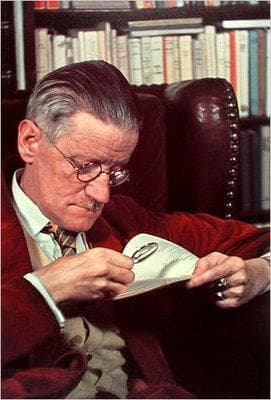
James Augustine Aloysius Joyce was an Irish novelist, poet, and literary critic. He contributed to the modernist avant-garde movement and is regarded as one of the most influential and important writers of the 20th century. Joyce's novel Ulysses (1922) is a landmark in which the episodes of Homer's Odyssey are paralleled in a variety of literary styles, particularly stream of consciousness. Other well-known works are the short-story collection Dubliners (1914), and the novels A Portrait of the Artist as a Young Man (1916) and Finnegans Wake (1939). His other writings include three books of poetry, a play, letters, and occasional journalism.







