“Perhaps I am a little like my mother, and see what I want to see.”
— Etsuko reflecting on her perception and memory of the past.

Kazuo Ishiguro (2010)
Genre
Literary Fiction / Historical Fiction
Reading Time
240 min
Key Themes
See below
Sign in to track this book
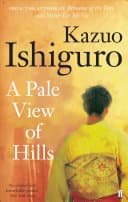
After her daughter's suicide, a Japanese woman in England remembers a summer in post-bomb Nagasaki, where a mysterious friendship and unspoken grief confuse truth and regret.
The novel begins with Etsuko, a Japanese widow in rural England, receiving a visit from her younger daughter, Niki. Niki is worried about Etsuko after the recent suicide of her elder half-sister, Keiko, who lived in Manchester. Etsuko seems detached and calm, often avoiding Niki's attempts to discuss Keiko directly. Their conversations are interrupted by Etsuko's memories, which become more frequent and vivid. Niki tries to get Etsuko to focus on present-day activities, but Etsuko's mind consistently goes back to her past in Japan, especially to a summer in Nagasaki many years ago, shortly after World War II.
Etsuko's memories take her to a hot, humid summer in post-war Nagasaki. She lives in a small, run-down housing complex with her first husband, Jiro, and their young daughter, Keiko. The community is still recovering from the atomic bomb, and the land is scarred. Etsuko often sits on her veranda, watching her neighbors and the children playing. This is when she first meets Sachiko, a woman who recently moved into a nearby dilapidated house with her young daughter, Mariko. Sachiko is often seen in Western clothes, carrying an expensive handbag, and acting superior despite her apparent poverty.
Etsuko's friendship with Sachiko grows, and she learns more about Sachiko's difficult situation. Sachiko says she is from a wealthy, respectable family but has fallen on hard times. She often talks about an American man, Frank, who promised her a new life in America, though his visits are rare and his intentions seem unclear. Mariko, Sachiko's daughter, is a quiet, solitary child who often draws disturbing pictures and seems neglected by her mother. Etsuko feels a growing concern for Mariko, observing her withdrawn nature and the sometimes harsh treatment she receives from Sachiko. Mariko often disappears to play by the river, a place her mother forbids.
Jiro, Etsuko's husband, is a diligent and traditional man who works for his father-in-law's business. He is wary of Sachiko and her Westernized hopes, seeing her pursuit of Frank and a life in America with suspicion. He questions her judgment and the potential negative influence of American culture on their community. Jiro represents a more conservative, post-war Japanese perspective, contrasting with Sachiko's desire to escape her past and embrace a new, foreign future. Etsuko often finds herself caught between Jiro's practicality and Sachiko's romanticized, though unstable, dreams.
Mariko's behavior becomes more erratic and concerning. She is found to have drowned a litter of kittens, an act that deeply disturbs Etsuko and other neighbors. This incident shows Mariko's deep emotional issues and her mother's lack of proper care. Later, Mariko tries to run away, taking a small boat down the river. Etsuko finds her and brings her back, trying to offer comfort and understanding that Sachiko seems unable to provide. These events show Mariko's fragile emotional state and her dysfunctional home life.
Frank, the American man, finally arrives in Nagasaki. His presence brings a momentary surge of hope and excitement for Sachiko, who sees him as her way to a better life. However, Frank seems somewhat indifferent, and his promises seem vague. Sachiko's desperation to leave Japan and escape her past becomes more clear as she prepares for their departure. She makes arrangements for Mariko, seemingly without much thought for her daughter's feelings or well-being. Etsuko observes Sachiko's single-minded focus on her own future, even at the expense of Mariko's stability.
As the day of Sachiko and Mariko's departure nears, Etsuko feels a mixture of relief and apprehension. She helps Sachiko with final preparations, but a sense of unease remains. Mariko stays withdrawn and quiet, seemingly resigned to her fate. The farewell is not particularly emotional, showing the transactional nature of Sachiko's relationships and her focus on the future. Etsuko's last impressions of them are tinged with doubt about whether this new life will truly bring happiness or stability, especially for Mariko. This departure marks the end of Etsuko's most vivid memories of Sachiko and Mariko.
Etsuko's story briefly mentions her own later life. After Jiro's death, she marries a British man, a decision that leads her to move to England with her daughter, Keiko. This transition marks a significant cultural shift for Etsuko and Keiko. The details of this period are less explicit than her Nagasaki memories, but it sets the stage for Keiko's later life in England and her tragic end. This memory connects Etsuko's past in Japan and her present life, heavily influenced by her daughters' experiences.
Niki's visit ends, and she leaves, leaving Etsuko alone once more in her English cottage. Despite Niki's attempts, Etsuko has largely avoided directly discussing Keiko's suicide, preferring to retreat into her past. The conversations with Niki, however, clearly made Etsuko remember Nagasaki in detail. With Niki gone, Etsuko is left to deal with the full weight of her memories, which now seem to focus on motherhood, responsibility, and loss, especially in relation to her first daughter, Keiko, and the mirrored figure of Mariko.
As the novel ends, the difference between Etsuko's memories of Sachiko and Mariko, and her present grief over Keiko, becomes increasingly blurred. Details from the past seem to match the present. The reader questions Etsuko's narration, especially how much she has projected her own guilt, anxieties, and experiences onto Sachiko, and by extension, Mariko. The similarities between Mariko's isolation and Keiko's eventual suicide, and between Etsuko's parenting and Sachiko's, become apparent, suggesting that Etsuko might be telling a veiled version of her own past mistakes and their consequences.
The Protagonist
Etsuko begins in a state of quiet grief and reflection, and by the end, she remains in that state, but with the reader gaining a deeper understanding of the potential sources of her sorrow and guilt, particularly concerning her past as a mother.
The Supporting
Sachiko's arc shows her moving from a state of hopeful desperation to a perceived escape, though the true outcome of her journey remains ambiguous and unsettling.
The Supporting
Her arc is presented as a completed tragedy before the novel begins, serving as a specter haunting Etsuko's present.
The Supporting
Mariko's arc shows her as a progressively more withdrawn and troubled child, eventually leaving Japan for an uncertain future, symbolizing the vulnerable children caught in the wake of adult desires.
The Supporting
Niki's arc is brief, serving to initiate Etsuko's reflections and then leaving, largely unchanged in her understanding of her mother's deeper turmoil.
The Supporting
Jiro remains a consistent, traditional figure in Etsuko's memories, representing the stable, if sometimes unfulfilling, aspects of her early married life.
The Mentioned
Frank's presence is a temporary disruption, offering a fleeting promise that may or may not materialize, leaving his ultimate impact on Sachiko and Mariko's lives unresolved.
The Mentioned
Ogata-san remains a static symbol of tradition and politeness, anchoring Etsuko's memories to a specific cultural past.
The novel is entirely seen through Etsuko's subjective and fragmented memories, especially of her time in post-war Nagasaki. Her recollections are not linear or fully coherent, and details often blur, especially between Sachiko and Etsuko, and between Mariko and Keiko. This unreliability makes the reader question what truly happened and how much Etsuko is re-shaping her past to cope with present grief or guilt. Remembering becomes a form of self-deception or psychological defense, as she avoids directly addressing Keiko's suicide by focusing on a seemingly parallel, yet distinct, past.
““Perhaps there are always a few areas of life where a person does not wish to see too clearly.””
A central theme is the complex and often painful nature of motherhood, especially in the context of Etsuko's grief over Keiko's suicide. The similarities between Etsuko's relationship with Keiko and Sachiko's neglect of Mariko are striking and deliberate. Etsuko's memories seem to be a way of processing her own maternal failures or anxieties, projecting them onto Sachiko. The novel explores how a mother's choices and emotional state affect her children, suggesting that both Etsuko and Sachiko, in their own ways, might have contributed to their daughters' unhappiness or tragic fates. Mariko drowning kittens can be a chilling metaphor for neglect.
““I told myself I had done all I could for Keiko, but the truth was, I had not.””
The story is deeply rooted in the aftermath of World War II in Japan, exploring the tension between traditional Japanese values and Western culture's growing influence. Sachiko's desperate desire to escape to America symbolizes the appeal of a new identity, while Jiro represents adherence to tradition. Etsuko herself has moved to England, showing her own displacement. Keiko's struggles, leading to her suicide in England, show the difficulties of cultural assimilation and the potential loss of self when caught between two worlds. The dilapidated housing and scarred landscape of Nagasaki reflect the broader societal trauma and identity crisis.
““Nagasaki was a city of ghosts. It was a city where the past was still very much alive.””
The entire story is filled with a pervasive sense of loss and grief, stemming from Keiko's suicide. However, Etsuko's grief is not expressed directly but is channeled through her memories of post-war Nagasaki. The loss of a child, the loss of a traditional way of life, and the physical devastation of the war all contribute to this overarching theme. Etsuko's detached demeanor in the present hides a deep, unresolved sorrow, and her recollections help her confront, or perhaps avoid confronting, the true nature of her pain and responsibility.
““The past, after all, was like a house with many rooms, and you could choose which room to enter.””
Throughout the novel, there is a constant tension between what characters show to the world and their inner turmoil. Sachiko maintains an air of sophistication despite her poverty, and her dreams of America are built on flimsy promises. Etsuko herself appears calm and composed, yet her internal world is chaotic with unresolved memories and guilt. The dilapidated houses in Nagasaki, once respectable, now symbolize a fallen society. This theme shows the human tendency to create facades, especially when facing trauma and societal upheaval, and the difficulty of telling truth from carefully presented appearances.
““The trouble with you, Etsuko, is that you don’t know how to relax. You’re always so serious.””
Etsuko's subjective and fragmented memories distort the truth of events.
Etsuko's narration is the primary lens through which the story is told, but her memories are demonstrably unreliable. She frequently blurs details, conflates characters (especially Mariko and Keiko, and Sachiko and herself), and avoids direct confrontation with painful truths. This device forces the reader to actively interpret the narrative, searching for clues about what truly happened and Etsuko's role in it. It creates a sense of ambiguity and psychological depth, suggesting that Etsuko is either unconsciously or consciously altering her past to cope with her present grief and guilt over Keiko's suicide.
The lives of Etsuko and Sachiko, and their daughters Keiko and Mariko, mirror each other.
The novel skillfully employs parallel narratives, particularly through the striking similarities between Etsuko's past in Nagasaki and her present in England. The friendship between Etsuko and Sachiko, and their respective relationships with their daughters, Keiko and Mariko, are presented as mirror images. Mariko's withdrawn nature and eventual disappearance to America strongly parallel Keiko's quiet struggles and eventual suicide in England. This device suggests that Etsuko is revisiting her own past maternal failures or anxieties by recounting the story of Sachiko and Mariko, effectively using them as psychological doppelgängers to process her unresolved guilt.
Keiko's suicide and Niki's visit frame Etsuko's recollections of Nagasaki.
The entire novel is framed by the present-day events of Keiko's suicide and Niki's visit to Etsuko in England. This framing device establishes the central emotional dilemma and the reason for Etsuko's deep introspection. The present-day interactions with Niki act as catalysts for Etsuko's memories, but also highlight Etsuko's emotional distance and her inability to directly confront her grief. The past narrative of Nagasaki then serves as a lengthy flashback, providing a psychological context for the present tragedy, even as the reader questions the directness of this connection.
The river represents escape and danger, while bridges symbolize transition and connection.
The river in Nagasaki holds significant symbolic meaning. For Mariko, it is a place of escape and solitude, where she goes against her mother's wishes, hinting at her desire to break free or her internal turmoil. It also carries a sense of danger, as seen in Mariko's runaway attempt. Bridges, conversely, symbolize transition, connection, or the crossing between different states of being or cultures. The broken and rebuilt bridges in post-war Nagasaki reflect the societal healing and the precariousness of new beginnings, much like the characters' attempts to rebuild their lives after profound loss and change.
“Perhaps I am a little like my mother, and see what I want to see.”
— Etsuko reflecting on her perception and memory of the past.
“There was a time when I knew very well what I was doing. I knew very well how to manage things.”
— Etsuko recalling a period in her life where she felt more in control.
“You can always tell when people are trying to make a fresh start.”
— Etsuko observing the behavior of others attempting to rebuild their lives in post-war Japan.
“It is all right, Etsuko. It is all right. It is all right.”
— Sachiko repeatedly reassuring Mariko, and perhaps herself, in a moment of distress.
“Memory, I realize, can be a great seducer.”
— Etsuko contemplating the unreliable nature of her own memories.
“The past, I have learned, is a foreign country; they do things differently there.”
— Etsuko reflecting on the vast difference between her past and present, a common literary theme.
“Sometimes, I think, we remember things not as they were, but as we wish them to have been.”
— Etsuko musing on the subjective and often idealized nature of memory.
“It is perhaps a good thing that we are not always aware of the exact moment when we are making a decision that will change the course of our lives.”
— Etsuko considering the unawareness surrounding life-altering choices.
“I suppose it is a matter of how you look at things.”
— Etsuko offering a philosophical perspective on interpretation and perspective.
“There are things in this world that are not meant for us to understand.”
— Etsuko acknowledging the limits of human comprehension regarding certain events or behaviors.
“I have learned to live with the knowledge that there are certain things I will never know for sure.”
— Etsuko accepting the ambiguity and uncertainty that comes with fragmented memories.
“It seemed to me then that I had been given a glimpse of a different world, a world where things were simpler, more straightforward.”
— Etsuko recalling a moment of perceived clarity or escape from her complex reality.
“The past is like a dream, you can't quite grasp it, but you know it was real.”
— Etsuko describing the elusive and tangible nature of her past experiences.
“It is not always easy to know what is right and what is wrong.”
— Etsuko reflecting on moral ambiguity and the difficulty of making ethical judgments.
Ready to see how well you understood this book? Take our interactive quiz with 10 questions.
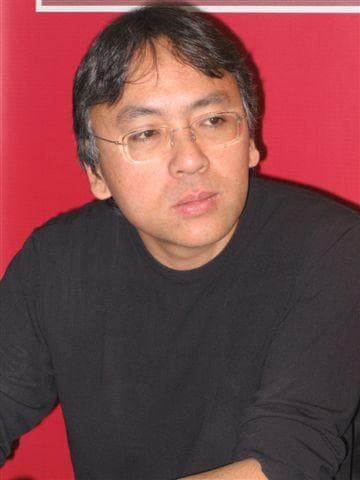
Sir Kazuo Ishiguro is a Japanese-born British novelist, screenwriter, musician, and short-story writer. He is one of the most critically acclaimed and praised contemporary fiction authors writing in English, having been awarded the 2017 Nobel Prize in Literature. In its citation, the Swedish Academy described Ishiguro as a writer "who, in novels of great emotional force, has uncovered the abyss beneath our illusory sense of connection with the world".







