“The past is a country from which there is no return, and the future is a land to which we may never journey.”
— Elfride contemplates her life and choices, reflecting on the irreversible nature of time.

Thomas Hardy (2017)
Genre
Historical Fiction / Romance
Reading Time
900 min
Key Themes
See below
Sign in to track this book
In a remote Cornish parish, a spirited rector's daughter is torn between a young architect and an older literary man, reflecting the author's own struggle between his established career and the call of literature.
Stephen Smith, a young architect, arrives in Endelstow, Cornwall, to oversee the restoration of the local church for the Rector, Mr. Swancourt. He is immediately taken with the Rector's daughter, Elfride Swancourt, a beautiful and spirited young woman with striking blue eyes. Despite their different social standings – Stephen comes from humble beginnings, though he is educated – they feel a strong mutual attraction. They spend much time together, exploring the beautiful landscape, and soon their innocent friendship turns into a secret romance, with stolen glances and tender talks. Stephen, encouraged by Elfride's affection, dreams of marrying her, believing he can overcome social barriers through hard work and success.
The Rector, Mr. Swancourt, eventually learns of Stephen and Elfride's deep feelings for each other. He strongly opposes the match, believing Stephen is socially beneath his daughter and not suitable. He confronts Stephen, making it clear that they cannot marry. Stephen reluctantly agrees to leave Endelstow to pursue his career and improve his prospects, hoping to return one day as a more worthy suitor. Elfride is heartbroken by his departure but promises to wait for him, exchanging passionate vows of loyalty. She feels pulled between her love for Stephen and her duty to her father, who starts to subtly introduce her to other, more eligible men.
After Stephen leaves, Mr. Swancourt actively encourages Elfride to consider Lord Luxellian, a much older, wealthy, and respected local nobleman. Lord Luxellian, a widower, finds Elfride charming and proposes marriage. Elfride is deeply conflicted. While she still loves Stephen and has promised to wait for him, marrying Lord Luxellian offers security, social status, and an escape from her current emotional distress, as well as pleasing her father. She struggles with her conscience, weighing her heart's desire against the practical benefits and societal expectations. She ultimately accepts Lord Luxellian's proposal, though with a heavy heart and lingering guilt.
Unaware of Elfride's new engagement, Stephen Smith returns to Endelstow, having secured a promising position and eager to claim Elfride. He is devastated to learn of her upcoming marriage to Lord Luxellian. Overcome with despair and a feeling of betrayal, he confronts Elfride. She is deeply ashamed and sorry, confessing her acceptance was partly due to her father's pressure and a moment of weakness. In a desperate attempt to fix her mistake and confirm her love for Stephen, they decide to elope. They travel to London, but a series of problems and Elfride's changing mind stop them from actually marrying, and they return to Endelstow, their secret elopement attempt known only to them.
Around this time, Henry Knight, a literary critic and a former mentor and friend of Stephen Smith, visits Endelstow. Knight is intellectual, perceptive, and considerably older than Elfride. He initially does not know about the previous relationship between Stephen and Elfride. Elfride, impressed by Knight's intellect and maturity, finds herself attracted to him. He, in turn, is charmed by her youthful innocence and beauty. A new intellectual and romantic connection begins to form between them, further complicating Elfride's already difficult emotional life. She is careful to hide her past with Stephen from Knight, fearing his judgment.
During an outing on the dangerous cliffs of Endelstow, Elfride accidentally slips and finds herself hanging precariously from the cliff edge, holding onto a tuft of grass. Henry Knight, seeing her danger, acts quickly and bravely, risking his own life to save her. This traumatic event deeply affects both of them. For Knight, it strengthens his love and admiration for Elfride, confirming his desire to protect her. For Elfride, it deepens her respect and affection for Knight, making her feel even more obligated to him and increasing her guilt about her past secrets, particularly her elopement attempt with Stephen.
Henry Knight, now deeply in love with Elfride, proposes marriage. Elfride is thrilled but immediately filled with worry. She knows Knight has very strict and traditional views on female purity and past mistakes. Her attempted elopement with Stephen, though not completed, weighs heavily on her conscience. She fears that if she confesses this secret, Knight will reject her, seeing her as 'fallen.' This inner conflict causes great emotional distress, as she desperately wants to be honest with the man she loves but is terrified of losing him due to his unyielding moral principles. She delays her confession, hoping for the right moment that never seems to come.
Stephen Smith, having achieved some professional success, returns to Endelstow once more, still loving Elfride. He meets Henry Knight and, through a series of misunderstandings and indirect disclosures, Knight eventually learns of Elfride's past relationship with Stephen and their attempted elopement. This discovery crushes Knight. His strict moral code cannot accept what he sees as Elfride's deception and lack of purity. He feels deeply betrayed and pulls away from Elfride, his love turning to cold judgment. Elfride's worst fears come true, and she is left heartbroken by his harsh condemnation.
Elfride is devastated by Knight's rejection and his unforgiving attitude. Her health and spirits decline significantly. Knight, though initially firm in his condemnation, begins to feel doubts and regret. He thinks about his own harshness and the possible unfairness of his judgment, especially as he learns more about Elfride's past and her true sorrow. He realizes that his rigid ideals might be too harsh for the complexities of human emotion and error. Despite his inner conflict, his pride and moral principles stop him from immediately reconciling with Elfride, extending her suffering.
In a desperate attempt to escape her pain and the lingering shadow of her past, Elfride eventually accepts a proposal from a kind, if somewhat unexciting, third suitor, Lord Luxellian (who is now a widower again, as his first wife died, or a different Lord Luxellian, depending on the edition's interpretation, often simplified to 'another man'). She marries him and leaves Endelstow. However, her happiness is short-lived. Not long after her marriage, Elfride falls ill and dies early. Both Stephen Smith and Henry Knight, who by this point has softened his stance and is traveling to reconcile with her, arrive too late. They meet at her funeral train, united in their shared grief and regret over the tragic loss of the woman they both loved, a sad end to Elfride's short and troubled life.
The Protagonist
Elfride transitions from an innocent, impulsive girl to a woman burdened by guilt and indecision, ultimately succumbing to the pressures of her emotional entanglements and societal judgment.
The Supporting
Stephen starts as an optimistic, hopeful suitor, endures rejection and disappointment, yet remains steadfast in his love, ultimately sharing in the tragedy of Elfride's death.
The Supporting
Knight evolves from a dogmatic intellectual who condemns Elfride to a man softened by regret and a dawning understanding of human complexity, though his realization comes too late.
The Supporting
Mr. Swancourt remains largely static, consistently seeking advantageous matches for Elfride, ultimately contributing to her unhappiness without fully realizing the depth of her suffering.
The Supporting
Lord Luxellian's role is largely functional, representing a societal expectation of marriage for status, rather than a developed personal arc.
The Supporting
Mrs. Jethway's arc is one of vengeful pursuit, successfully causing Elfride's downfall through revelation.
The Mentioned
Anna has no significant character arc, serving as a background figure.
The Mentioned
Not applicable, as she is a background plot device.
The novel clearly shows the strict social classes of Victorian England and the difficulties people faced trying to move between them. Stephen Smith's humble background is a constant obstacle to his marriage with Elfride, as her father, Mr. Swancourt, considers him unsuitable despite his education and ambition. This theme shows how love alone was often not enough to overcome societal expectations about wealth, status, and family, which ultimately influenced Elfride's tragic choices and her father's manipulation of her romantic life for social gain.
“'He's a good young fellow enough,' Mr. Swancourt had said, 'but he's not for you, Elfride. He has no position.'”
A central and destructive theme is the Victorian preoccupation with female purity and reputation. Elfride's attempted elopement with Stephen, though not completed, is seen as a serious offense against her 'purity' by Henry Knight. His inability to forgive this perceived flaw, and his subsequent rejection of her, highlights the harsh double standards applied to women. The fear of public scandal and losing one's good name drives much of Elfride's secrecy and directly contributes to her emotional distress and eventual death, as her past is used against her.
“'I cannot marry you, Elfride. You are not the woman I thought you were. Your past is a stain.'”
Elfride's character is largely defined by her swings between acting on impulse and being unable to decide. Her quick engagement to Stephen, her attempted elopement, her later engagement to Lord Luxellian, and her struggles to tell Henry Knight about her past all come from a lack of firm determination and a tendency to act on momentary feelings or outside pressures. This theme shows how not knowing oneself and being unable to commit to a path can lead to a complicated web of lies and, in the end, tragic results, as her changing loyalty and secrecy push away those she loves.
“'She was a woman of no fixed principles, but a creature of impulse and emotion.'”
Henry Knight shows the destructive side of strict idealism. He holds Elfride to an impossible standard of purity and perfection, creating an idealized image of her that cannot stand up to the reality of her human flaws and past mistakes. His intellectual and moral strictness prevents him from showing compassion or understanding, leading him to harshly condemn and reject Elfride. This theme demonstrates how a severe, uncompromising worldview, no matter how well-intended, can be deeply damaging in human relationships, leading to unhappiness and tragedy instead of the moral order it seeks to maintain.
“'He had set up a mental image of her that was as flawless as marble, and when it cracked, he could not bear to look at the pieces.'”
The novel subtly explores the tension between characters' choices and events that seem fated. While Elfride makes many decisions, from accepting proposals to attempting elopement, these choices are often shaped by strong societal pressures, personal fears, and unfortunate coincidences (like Mrs. Jethway's revenge or Stephen's poorly timed returns). The tragic ending suggests a degree of fatalism, implying that despite their efforts, the characters are ultimately caught in a web of circumstances beyond their full control, leading to an inevitable sad conclusion.
“'It was as if some unseen hand were continually guiding her into situations from which there was no happy escape.'”
A recurring symbol of peril, natural beauty, and the precariousness of life.
The dramatic cliffs of Endelstow serve as a significant setting and a powerful symbolic plot device. They represent both the sublime beauty of nature and its inherent danger, mirroring the emotional landscape of the characters. The most prominent instance is Elfride's near-fatal fall, where she literally hangs by a thread, symbolizing her precarious emotional state and her dependence on others. This incident not only solidifies Knight's affection for her but also foreshadows her ultimate vulnerability and tragic fate, constantly on the edge of disaster.
Elfride's concealed attempted elopement, driving much of the plot's conflict.
Elfride's attempted elopement with Stephen, kept secret from Henry Knight, is the central plot device that fuels the novel's dramatic tension and tragic outcome. The burden of this secret weighs heavily on Elfride, causing her immense anxiety and guilt. It dictates her actions and silences, creating a ticking time bomb within her relationship with Knight. Its eventual revelation by Mrs. Jethway acts as the ultimate catalyst, destroying Elfride's chances for happiness with Knight and directly leading to her despair and subsequent choices. The secret highlights themes of truth, deception, and the unforgiving nature of Victorian morality.
Correspondence that often arrives too late or contains partial truths, exacerbating conflict.
Letters play a crucial role in advancing and complicating the plot. They are frequently a source of miscommunication, delayed information, or incomplete confessions, which only serve to deepen the misunderstandings between characters. For example, Stephen's letters or lack thereof, Elfride's agonizing over what to write or confess to Knight, and the delays in communication contribute to the tragic timing of events. This device underscores the limitations of communication, especially over distances, and how partial truths or unsaid words can have devastating consequences in a world without instant communication.
A recurring motif symbolizing Elfride's captivating innocence and vulnerability.
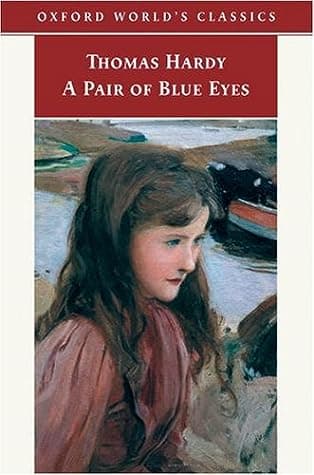
Elfride's 'pair of blue eyes' is not just a descriptive detail but a recurring motif and symbolic device. They are repeatedly mentioned as a key feature of her beauty and charm, captivating both Stephen and Knight. They symbolize her youthful innocence, her emotional depth, and her vulnerability. However, as the plot progresses and her innocence is 'tainted' by her past, the eyes become a poignant reminder of what was lost or what was perceived to be lost. The title itself draws attention to this specific feature, making it central to her identity and the men's perceptions of her.
“The past is a country from which there is no return, and the future is a land to which we may never journey.”
— Elfride contemplates her life and choices, reflecting on the irreversible nature of time.
“A man's worth is not to be measured by the length of his purse, but by the breadth of his mind.”
— Stephen Smith, a young architect, often feels the sting of his lower social standing compared to others.
“It is better to have loved and lost than never to have loved at all.”
— A common sentiment expressed after Elfride's various romantic entanglements and heartbreaks.
“The air was clear, and the sun shone with a cold, pale brilliancy; a sky of that peculiar blue which is seen only at the end of autumn.”
— A descriptive passage setting the scene for a melancholy moment in the Cornish landscape.
“What a terrible thing it is to be a woman, and to have to choose between two evils!”
— Elfride struggles with her affections for Stephen Smith and Henry Knight, feeling trapped by societal expectations.
“There are some women who have no history, and there are others who have too much.”
— A reflection on Elfride's past relationships and how they define her in the eyes of others.
“The highest happiness on earth is marriage.”
— A common Victorian ideal that characters often aspire to, despite the complexities of their own relationships.
“To be loved for one's self alone is the greatest happiness.”
— Elfride yearns for genuine affection, free from judgment about her past or social standing.
“We are all puppets in the hands of fate.”
— A fatalistic view expressed as events unfold beyond the characters' control, leading to tragic outcomes.
“The human heart is a strange thing; it will love where it should not, and hate where it should.”
— Characters' emotions are often contradictory and lead to unforeseen complications in their relationships.
“Death is the only end of all human sorrow.”
— A somber reflection on the ultimate release from suffering that one of the characters contemplates.
“It is difficult to be original in a world that values conformity.”
— Stephen Smith's struggles as an aspiring architect, trying to make his mark in a traditional society.
“The truth is often a bitter pill to swallow.”
— Characters frequently confront harsh realities about themselves or their loved ones.
“There are some women who are born to be loved, and others who are born to be admired.”
— A distinction made about Elfride's captivating beauty versus her perceived lack of conventional virtue.
Ready to see how well you understood this book? Take our interactive quiz with 10 questions.
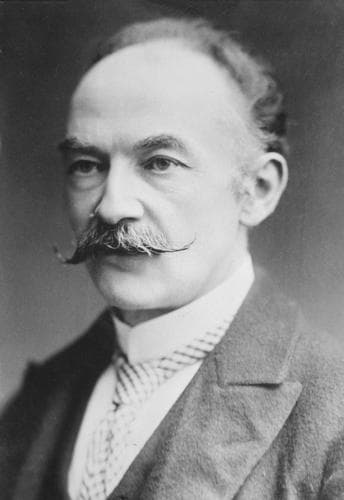
Thomas Hardy was an English novelist and poet. A Victorian realist in the tradition of George Eliot, he was influenced both in his novels and in his poetry by Romanticism, including the poetry of William Wordsworth. He was highly critical of much in Victorian society, especially on the declining status of rural people in Britain, such as those from his native South West England.







