“There are some things you can't undo, no matter how hard you try.”
— Luke reflects on the consequences of the barn incident.

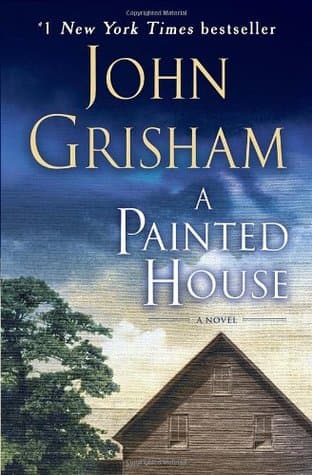
John Grisham (2000)
Genre
Thriller / Historical Fiction / Mystery
Reading Time
640 min
Key Themes
See below
Sign in to track this book
In 1952 Arkansas, a seven-year-old farm boy's innocent summer in the cotton fields turns dark when he witnesses a murder and is forced to keep secrets that threaten to unravel his family and their community.
It's September 1952 in rural Arkansas, and seven-year-old Luke Chandler is looking forward to the cotton harvest on his family's eighty rented acres. His family – parents Eli and Kathleen, and grandparents Pappy and Lillie – live in a small, unpainted house. To help with the picking, two groups arrive: a family of 'hill people' from the Ozarks, the Spruills (Perk, his wife Trot, and their four children, including Tally and Roxanne); and a truckload of Mexican migrant workers, led by Miguel. The two groups set up separate camps near the Chandler farm. Young Luke observes the clear tension between their distinct cultures and ways of life.
The hard work of cotton picking begins under the Arkansas sun. Luke, too young to pick full-time, spends his days fetching water, running errands, and watching the adults. He quickly notices the differences in how the two groups of pickers work: the Mexicans are efficient and hardworking, while the Spruills, especially Tally, are often surly and less productive. Tensions grow when Tally, known for his aggressive nature and history of violence, bothers some of the Mexican workers, leading to a fight that Pappy Chandler has to stop. Luke also develops a crush on Roxanne Spruill, who is only a few years older than him.
One evening, while exploring near the creek, Luke sees a secret meeting between Roxanne Spruill and Cowboy, one of the Mexican pickers, in the back of a truck. He keeps this secret, sensing its dangerous nature. Later, during a heavy rainstorm, picking stops, and everyone seeks shelter. When the storm passes, a discovery is made: Cowboy is found dead in the creek, murdered. Tally Spruill is immediately suspected, given his previous threats and violent behavior. The incident shocks the small community and the pickers.
The Chandlers, especially Pappy, fear the legal problems and disruption a murder investigation would bring to their farm and the harvest. They know that involving the authorities would mean delays, questions, and possibly the loss of their crop and livelihood. After much thought and pressure from Perk Spruill, who wants to protect his family, they decide to cover up Cowboy's death. Luke, despite his young age, is sworn to secrecy, a heavy burden for the seven-year-old. The body is quietly buried, and the Mexican workers, fearing trouble, quickly leave the farm.
With the Mexicans gone, the Chandlers and Spruills continue the harvest, pretending nothing happened. However, the atmosphere is full of unspoken tension and fear. Soon after, another Mexican picker, a young man named Memo, is found to be missing. His disappearance adds to the Chandlers' and Luke's worries, making them wonder if Tally is responsible for more than just Cowboy's death. Luke, already traumatized, becomes more withdrawn and watchful, aware of the dark secrets his family is now involved in. The unspoken fear that Tally is a serial killer begins to spread through the farm.
Tally Spruill's behavior becomes more erratic and threatening. He seems to enjoy intimidating Luke, often making veiled threats about what happens to people who talk too much. The pressure on Luke becomes too much. In a moment of extreme fear, he tells his grandmother, Lillie, about seeing Roxanne and Cowboy together before the murder. Lillie is horrified by this, realizing it gives Tally a strong motive, as he was known to be possessive of his sister and protective of her 'honor.' This new information puts Roxanne in great danger.
Lillie, realizing Roxanne is in immediate danger from her own brother, quickly makes a plan. She confronts Perk Spruill, urging him to take Roxanne away from Tally before he can harm her for her secret affair. Perk, though initially hesitant to interfere in his children's lives, is convinced of the seriousness of the threat. Roxanne is quickly packed into a car and driven away by her family, leaving the farm under the cover of darkness. Luke watches her leave, feeling both relief and sadness, knowing he will likely never see her again.
Even with Roxanne gone, Tally's violent nature remains a threat. He continues to intimidate and threaten the Chandlers. One night, Tally tries to sexually assault Kathleen Chandler. Eli, seeing the attack, breaks. In a desperate struggle, Eli kills Tally Spruill. This act, though horrifying, brings a grim sense of relief to the Chandlers, as the source of their terror is gone. The family now faces the difficult task of covering up a second murder, even more closely connected to them.
After Tally's death, the Chandlers quickly dispose of his body. Eli, Pappy, and Luke all help bury Tally in the same remote location where Cowboy was buried. This act binds the family even more tightly to their dark secrets. Luke, though traumatized, understands why they had to do it and the deep danger they would face if the truth ever came out. The cotton harvest, the initial source of their income and troubles, continues, but the innocence of their lives is lost forever.
The cotton harvest finally ends, and the Spruills, minus Tally and Roxanne, leave, leaving the Chandlers to their solitude and their secrets. The family tries to return to a normal life, but the events of that autumn have left a lasting mark. Luke, though only seven, has seen murder, cover-ups, and the dark side of human nature. His childhood innocence is shattered. The family never speaks of the murders again, a silent pact that binds them together in fear and complicity. The unpainted house remains a silent witness to the horrors nearby.
The Protagonist
Luke begins as an innocent child and ends as a traumatized young boy, forever marked by the violence and secrets he was forced to keep.
The Supporting
Eli transforms from a hardworking, stoic farmer into a man forced to commit murder to protect his family, forever haunted by his actions.
The Supporting
Kathleen's initial gentleness is tested by the violence and secrets, forcing her to confront the dark aspects of human nature and endure trauma.
The Supporting
Pappy's pragmatic wisdom is challenged by the escalating violence, forcing him to make morally ambiguous decisions to protect his family.
The Supporting
Lillie struggles with the moral compromises forced upon her family, ultimately acting to protect the innocent despite the risks.
The Antagonist
Tally's unchecked violence escalates throughout the story, culminating in his death at the hands of Eli Chandler.
The Supporting
Roxanne's innocent affair leads to tragic consequences, forcing her to flee her family and the farm to escape her brother's wrath.
The Supporting
Perk initially prioritizes protecting his violent son but eventually chooses to protect his daughter from his son's wrath.
The Mentioned
His brief, ill-fated romance leads to his tragic and violent death.
The Supporting
Miguel acts as a responsible leader, ensuring the safety of his crew by removing them from a dangerous situation.
Luke Chandler's abrupt loss of innocence is the most prominent theme. As a seven-year-old, he is exposed to murder, sexual assault, and a desperate cover-up, shattering his naive view of the world. He sees the dark side of human nature and the moral compromises adults make. His childhood ends early as he becomes involved in grave secrets, forever changing his idea of right and wrong. This theme is clear in Luke's thoughts and his gradual withdrawal as he deals with the horrors he has seen, such as finding Cowboy's body and the subsequent burials.
“I was seven years old, and I knew too much. I knew about murder, and secrets, and the lies people told to survive.”
The Chandler family's actions are driven by a desperate need to survive. Living on rented land, dependent on a single cotton crop, they cannot afford the disruption of a murder investigation. Pappy's decision to cover up Cowboy's death, and Eli's subsequent killing of Tally, come from a basic instinct to protect their family, their livelihood, and their freedom from a system they distrust. This theme shows the realities of poverty and the moral compromises people make under extreme pressure, showing how life on the margins can bend ethical boundaries.
“We were farmers. We picked cotton. We didn't need lawmen sniffing around, asking questions, screwing up our lives.”
The novel explores the conflict between formal justice and the family's self-preservation. The Chandlers choose to hide two murders rather than involve the law, believing that the legal system would only harm them further by disrupting their harvest, possibly jailing family members, or causing financial ruin. This theme questions how effective and accessible justice is in isolated rural communities, where families often rely on their own rules and protection. The 'justice' for Tally comes not from the law, but from Eli's desperate act to protect his family, highlighting a raw, immediate form of retribution.
“Justice wasn't something you got from the sheriff in the county seat. Justice was something you had to make for yourself, sometimes.”
The story shows the social and cultural divides between the Chandlers (poor white farmers), the Spruills (even poorer, uneducated 'hill people' from the Ozarks), and the Mexican migrant workers. These groups live close together but remain largely separate, with underlying tensions, prejudices, and misunderstandings. The Spruills' lawlessness and the Mexicans' vulnerability show their marginalized positions. The forbidden romance between Roxanne and Cowboy, crossing these cultural lines, starts the central conflict, showing how deep these divisions are and the tragic consequences of defying them.
“The hill people and the Mexicans arrived on the same day. It was a Wednesday, early in September 1952.”
The entire Chandler family is bound by the shared secret of the murders and their cover-up. This theme explores the psychological burden of keeping such deep secrets, especially for young Luke. The unspoken truths create an atmosphere of paranoia, fear, and isolation within the family. The secrets affect their relationships, their sleep, and their peace of mind, showing how hidden actions can haunt individuals and entire families, shaping their future and changing their lives forever, even without external consequences.
“We never spoke of it again. Not a word. It was a secret, too big and too dark for words.”
The entire story is told through the eyes of seven-year-old Luke Chandler.
Using Luke Chandler as a first-person narrator allows the author to present a raw, unfiltered perspective on the brutal events. Luke's innocence highlights the horror and moral ambiguity of the adults' actions, making the violence more shocking and the secrets more burdensome. His limited understanding and emotional responses provide a unique lens, often forcing the reader to interpret events alongside him, experiencing his fear and confusion. This device enhances the theme of loss of innocence, as the reader witnesses the world through a child's eyes as it darkens.
The isolated, unpainted farm house and cotton fields of rural Arkansas are integral to the story.
The setting of rural 1952 Arkansas, with its vast cotton fields and an isolated, unpainted house, functions almost as a character itself. The harshness of the environment—the relentless heat, the sudden storms, the demanding labor—contributes to the desperation and moral compromises of the characters. The isolation of the farm allows for the secrets to be kept and the cover-ups to occur without immediate external scrutiny. The 'unpainted house' itself symbolizes the family's struggle, their lack of permanence (as renters), and the plain, unvarnished truth of their lives.
Subtle hints and ominous descriptions prepare the reader for impending violence and tragedy.
Grisham employs foreshadowing through Luke's observations and the initial descriptions of characters and their interactions. For example, Tally Spruill's aggressive nature and previous acts of violence are mentioned early on, signaling his potential for future harm. The tension between the Spruills and the Mexicans, and the Chandlers' anxieties about 'trouble,' all build a sense of dread that culminates in the murders. This device creates suspense and a feeling of inevitability, drawing the reader deeper into Luke's anxious experience.
The cotton crop represents both hope for survival and the source of the family's troubles.
The cotton crop is a potent symbol. Initially, it represents hope and the family's sole means of survival and prosperity for the year. The entire Chandler family's future hinges on a successful harvest. However, the need to pick the cotton also necessitates bringing in the outside labor (the Spruills and Mexicans) who introduce violence and chaos into their lives. Thus, the crop becomes intrinsically linked to the family's desperate situation, their moral compromises, and the secrets they must keep to protect their livelihood, making it a double-edged sword.
The physical state of the house symbolizes the family's status and the raw truth of their lives.
The titular 'painted house' (or rather, the unpainted one) serves as a powerful symbol. It reflects the Chandlers' poverty and their temporary status as renters, unable to invest in the appearance of a home they don't own. More profoundly, it symbolizes the unvarnished, raw truth of their existence and the lack of pretense in their lives. The house witnesses the family's struggles and secrets, remaining 'unpainted' as a testament to the unadorned, harsh realities they face, contrasting with any facade they might try to maintain.
“There are some things you can't undo, no matter how hard you try.”
— Luke reflects on the consequences of the barn incident.
“Money was a cruel master, and it had a grip on everyone in our family.”
— Luke observes the constant struggle for financial stability.
“Fear can make you do things you never thought yourself capable of.”
— Luke's internal thoughts after witnessing violence.
“The truth, like a river, will always find its way out.”
— Luke's understanding of secrets and their eventual revelation.
“We were country folk, and we knew how to keep a secret when we had to.”
— The family's unspoken pact after the murder.
“A man's word was his bond, especially in the Delta, where there wasn't much else to hold onto.”
— Luke's grandfather's philosophy on integrity.
“It was a strange feeling, being a child and knowing more than the adults around you.”
— Luke's precocious awareness of the hidden events.
“Sometimes doing nothing is the hardest thing of all.”
— Luke grapples with his inability to change certain outcomes.
“The smell of fresh paint on a new house was the smell of hope.”
— Luke's initial excitement about the prospect of a painted house.
“Life had a way of taking you by surprise, even when you thought you'd seen it all.”
— Luke reflects on the unexpected turns his life takes.
“Justice, I was learning, was not always swift or fair.”
— Luke's disillusionment with the legal system and consequences.
“The Delta could be beautiful and brutal, sometimes in the same breath.”
— Luke's description of his home region.
“Some memories are like scars; they never truly fade.”
— Luke thinking about the lasting impact of his experiences.
“We were all just trying to survive, one way or another.”
— Luke's general observation about the struggles of his family and neighbors.
Ready to see how well you understood this book? Take our interactive quiz with 10 questions.

Biography coming soon.







