“Every family has its secrets. Some are just better at keeping them.”
— A recurring theme about the hidden lives within a family.

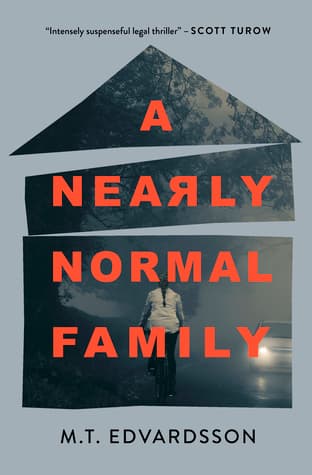
M.T. Edvardsson (2019)
Genre
Thriller / Mystery
Reading Time
800 min
Key Themes
See below
Sign in to track this book
A pastor and a criminal defense attorney must face their family's dark secrets when their daughter is accused of murder, challenging their love and morality.
The story begins with the shocking arrest of Stella Sandell, an 18-year-old high school student from a seemingly normal family in Lund, Sweden. She is taken into custody for the murder of Ulf Sandberg, a 43-year-old businessman with a questionable reputation. Her father, Adam Sandell, a pastor, and her mother, Ulrika Sandell, a criminal defense lawyer, are devastated. The police have strong evidence, including a knife found near the crime scene with Stella's fingerprints and a witness who saw her near Ulf's apartment. Stella, despite her parents' desperate pleas, remains mostly silent, adding to their confusion and fear.
The story shifts to Ulrika's perspective, as she thinks about Stella's past troubles, including an incident where Stella was accused of assaulting a boy named Robin. Ulrika, a criminal defense attorney, is immediately conflicted, torn between her professional duty and her maternal instinct to protect her daughter. She understands the seriousness of the situation and the possibility of a life sentence. Ulrika starts to piece together the events leading to the murder, re-examining Stella's recent behavior, her secret phone calls, and her sudden interest in money, all while grappling with the possibility that her daughter could be capable of such an act.
Adam's section describes his struggle to accept his daughter's alleged crime and his own moral compass as a pastor. He remembers Stella's relationship with Amina, her best friend, and her new, more rebellious boyfriend, Chris Olsen. Adam feels he failed as a father, questioning how he could have missed the warning signs. He begins his own investigation, subtly looking into Stella's life, talking to her friends, and trying to understand her world, all while battling his conscience about possibly covering up the truth to save his daughter.
The trial begins, and the prosecution presents a compelling case against Stella. Ulf Sandberg is portrayed as a manipulative and dangerous person, known for exploiting young women. It is revealed that Ulf had been messaging Stella, offering her money for 'favors.' The defense, led by attorney Mikael Blomgren, tries to discredit the witness and raise doubts about the forensic evidence. Ulrika, though not directly representing Stella, is deeply involved, examining every detail and advising Blomgren, while Adam struggles with the moral implications of their defense strategy, which often pushes ethical boundaries.
In a key moment, Stella, pressured by her parents, finally tells her version of what happened on the night of the murder. She admits to meeting Ulf Sandberg, who had been blackmailing her over a previous, minor theft incident with Amina. Stella claims she went to his apartment to confront him and get incriminating evidence. She describes a struggle, but maintains she did not kill him. Her story has inconsistencies and omissions, leaving Adam and Ulrika to wonder how much is true and how much is made up to protect herself.
Driven by a mother's instinct, Ulrika looks deeper into Stella's life and her relationship with Ulf. She discovers that Ulf was not just blackmailing Stella; he had been sexually exploiting Amina, Stella's best friend. This changes everything. Ulrika realizes that Stella's actions were likely driven by a desire to protect Amina, not just herself. This knowledge adds complexity to the family's dilemma, as it explains Stella's motive but also implicates Amina, creating a new moral problem for Ulrika.
Adam, after learning the full extent of Ulf's predatory behavior and Stella's motive to protect Amina, falls into a deep moral crisis. His faith as a pastor is tested as he grapples with the injustice of the situation. He understands Stella's protective instincts but struggles with the idea of condoning murder, even if it was done to defend another. He considers confessing the truth to the police, but the thought of Stella spending her life in prison is unbearable. This internal conflict weighs heavily on him, challenging his core beliefs.
Realizing the full implications of the truth, Adam and Ulrika decide together to protect Stella, no matter the cost. They work to create a revised story for the defense, carefully leaving out details that would implicate Amina or reveal the full extent of Ulf's abuse. They decide to focus on Stella's self-defense claim, even if it is not entirely accurate, manipulating the truth to secure her freedom. This decision strengthens their family bond but also forces them to compromise their moral integrity.
The trial ends, and the jury begins its deliberation. The tension is clear as the Sandell family awaits the verdict. The prosecution has presented a strong case, but the defense has managed to create doubt, highlighting Ulf's questionable character and Stella's youth. Adam and Ulrika are on edge, knowing that their carefully constructed story might not be enough. They reflect on the sacrifices they have made and the boundaries they have crossed to protect their daughter, unsure if their efforts will succeed.
Stella is acquitted of murder, largely because of her parents and the defense team's manipulation of the story. The family returns to their 'normal' life, but the experience leaves a lasting mark. While Stella is free, the emotional toll on Adam and Ulrika is immense. They live with the knowledge of what they did and the secrets they keep. The ending suggests that while they protected their daughter, their family can never truly be 'normal' again, forever changed by their choices and the dark secret they share.
The Protagonist
Stella evolves from a secretive, troubled teenager to someone who confronts the difficult truths of her actions and the sacrifices made for her.
The Protagonist
Ulrika transforms from a professional bound by law to a mother willing to bend and break rules for her child, sacrificing her moral integrity for Stella's freedom.
The Protagonist
Adam moves from a man of strict moral principles to one who makes profound moral compromises for his family, challenging his faith and identity.
The Antagonist/Victim
Ulf's character is revealed posthumously, evolving from a mysterious murder victim to a predatory figure whose actions directly caused the conflict.
The Supporting
Amina's hidden suffering is gradually revealed, becoming the key to understanding Stella's motive and the family's desperate actions.
The Supporting
Blomgren remains a consistent legal professional, guided by the Sandells' narrative while working to secure Stella's acquittal.
The Supporting
Chris's role is primarily to add a layer of mystery and misdirection to Stella's life before the full truth is revealed.
The Mentioned
Robin's role is static, serving as a past event that foreshadows Stella's potential for violence.
The novel explores how truth is subjective and can be changed, especially when love and self-preservation are involved. Each character's story offers a partial, often biased, view of events, making the reader question what actually happened. The Sandell family actively constructs and manipulates the truth to protect Stella, highlighting moral grey areas. For instance, Ulrika, a lawyer, strategically withholds information and guides Stella's testimony, while Adam, a pastor, struggles with his conscience over the lies they tell. The book suggests that 'truth' can be sacrificed for a greater, more personal, good.
“How well do you know your own children? How far would you go to protect them?”
The novel is an examination of how far parents will go to protect their children. Both Adam and Ulrika, despite their different moral beliefs, unite in their desperate effort to save Stella from a murder conviction. Ulrika sacrifices her professional ethics and Adam his spiritual integrity, showing that for them, parental love is more important than all other obligations. This theme is clear in Ulrika's careful planning of Stella's defense and Adam's difficult decision to support a fabricated story, illustrating the strong and sometimes destructive nature of unconditional love.
“A mother’s love is a dangerous thing. It can drive you to do things you never thought yourself capable of.”
The story looks at moral ambiguity, questioning clear definitions of right and wrong. While Stella is accused of murder, the victim, Ulf Sandberg, is shown to be a predatory figure, complicating the idea of justice. The Sandells' actions, though legally questionable, are presented as morally defensible given Ulf's exploitation of Amina. The novel asks if justice is truly served when the legal system is manipulated to protect someone who, though perhaps guilty of murder, acted with a clear, protective motive. The acquittal highlights the flaws in a system that relies on presented evidence, not necessarily the full truth.
“Sometimes, justice isn't about what's right, but about what you can prove.”
The title hints at this theme. The Sandells appear to be a 'nearly normal family' – a pastor father, a lawyer mother, and a high school daughter. However, the murder accusation shatters this facade, revealing the hidden tensions, secrets, and vulnerability beneath the surface of any family. The crisis forces them to confront how little they truly knew about Stella and each other. Their desperate attempts to restore normalcy after the trial are bittersweet, suggesting that once broken, the illusion of a perfect family can never be fully repaired, leaving them forever changed by the secret they share.
“We were a nearly normal family. Until the day Stella was arrested.”
The story is told through the alternating viewpoints of Stella, Ulrika, and Adam.
The novel's three-part structure, with each section narrated by Stella, Ulrika, and Adam, is a crucial plot device. This allows the author to gradually reveal information, build suspense, and explore the moral dilemmas from different angles. Each character's perspective offers a piece of the puzzle, often contradicting or adding new layers to previous revelations, forcing the reader to constantly re-evaluate their understanding of the events and the characters' true motives. This technique highlights the subjective nature of truth and deepens the psychological complexity of the family's ordeal.
Characters withhold or manipulate information, creating ambiguity.
Closely tied to the multiple perspectives, unreliable narration is a key device. Each character, particularly Stella, Ulrika, and Adam, consciously or unconsciously omits details, exaggerates certain aspects, or outright lies to themselves and others. Stella's initial silence, Ulrika's strategic legal maneuvering, and Adam's internal moral struggles all contribute to an ambiguous narrative. This unreliability keeps the reader guessing about the full truth until the very end, mirroring the family's own struggle to discern what truly happened and what they are willing to believe.
Subtle hints and past events allude to future developments.
The novel uses foreshadowing effectively to build suspense and hint at the deeper complexities of the plot. Early mentions of Stella's past violent incident with Robin, her sudden secretive behavior, and Ulf Sandberg's dubious reputation all serve to prepare the reader for the shocking revelations to come. These subtle clues create a sense of unease and anticipation, suggesting that there is more to the story than initially presented, and that Stella's 'normal' life was always teetering on the edge of crisis.
The knife with Stella's fingerprints serves as a central, tangible piece of evidence.
The knife found near Ulf Sandberg's body with Stella's fingerprints acts as a classic MacGuffin, a plot device that drives the initial mystery and investigation. While its presence is crucial for Stella's arrest and the start of the legal proceedings, the story's true focus shifts beyond the weapon itself to the motives behind the murder and the family's desperate attempts to cover up the truth. The knife is the undeniable evidence that sets the plot in motion, but the narrative delves much deeper into the characters' psychology and moral choices.
“Every family has its secrets. Some are just better at keeping them.”
— A recurring theme about the hidden lives within a family.
“The truth is a tricky thing. It can set you free, or it can destroy everything.”
— Reflecting on the consequences of revealing or concealing the truth.
“Sometimes, the people you trust the most are the ones who hurt you the deepest.”
— A character grappling with betrayal from a loved one.
“Fear can make you do things you never thought you were capable of.”
— Explaining the motivations behind a desperate act.
“We build our lives on a foundation of lies, and then we're surprised when it all crumbles.”
— A cynical observation about the characters' self-deception.
“Justice isn't always about what's right. Sometimes, it's about what you can get away with.”
— A character's jaded view on the legal system and morality.
“You never truly know someone until you see what they're willing to do to protect the ones they love.”
— Highlighting the extreme measures taken for family.
“The past is never really past. It's always there, waiting to catch up to you.”
— Referring to the inescapable influence of past events on the present.
“A parent's love can be the strongest force in the world, and also the most dangerous.”
— Exploring the complexities and potential destructiveness of parental love.
“It's easy to judge from the outside, but you never know what battles people are fighting within their own walls.”
— A plea for empathy and understanding the hidden struggles of others.
“Some wounds never heal, they just scar over, reminding you of what you lost.”
— A character reflecting on enduring grief and trauma.
“The line between right and wrong can blur so easily when you're desperate.”
— Explaining a moral compromise made under duress.
“We all wear masks, some thicker than others, to hide the monsters within.”
— A character's introspection on human nature and hidden darkness.
“Silence can be louder than any scream when it carries the weight of unspoken truths.”
— Describing the oppressive atmosphere created by hidden information.
Ready to see how well you understood this book? Take our interactive quiz with 10 questions.







