BookBrief
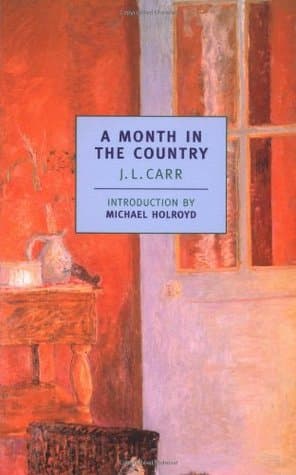
A Month in the Country cover
Archivist's Choice

A Month in the Country

J.L. Carr

Genre

Literary Fiction / Historical Fiction / Creativity

Reading Time

180 min

Key Themes

See below

Track Your Reading

Sign in to track this book

A WWI veteran, haunted by his past, finds unexpected solace and a fragile rebirth while restoring a medieval mural in a tranquil English village, only to have the beauty of summer and his peace slip away with the changing seasons.

Synopsis

Tom Birkin, a veteran scarred by the Great War and a failed marriage, arrives in the quiet Yorkshire village of Oxgodby in the summer of 1920. His task is to uncover and restore a medieval mural depicting the Apocalypse in the local church. He settles into the church's bell tower, finding solace in the rhythmic work and the beauty of the surrounding countryside. As he uncovers the mural, he slowly integrates into village life, forming a camaraderie with Charles Moon, another war veteran who is excavating a forgotten grave near the church. Birkin also develops a tender, unspoken connection with Alice Keach, the vicar's young wife, and observes the villagers. The restoration progresses, revealing the anonymous medieval artist's vision, and Birkin finds himself healing, his sense of purpose and hope gradually returning. As summer draws to a close, Moon departs, and Birkin completes his work, leaving the village and the unspoken possibilities behind. Decades later, Birkin reflects on that summer, recognizing it as a restorative period in his life, and finding comfort in the memory of art, friendship, and the brief attachment to a place and time.
Reading time
180 min
Difficulty
Easy
Pacing
Slow
Mood
Atmospheric, Reflective, Poignant, Serene, Melancholy
✓ Read this if...
You appreciate quiet, reflective literary fiction with beautiful prose, a focus on memory, art, and the healing power of nature and simple human connection.
✗ Skip this if...
You prefer fast-paced plots, high drama, or clear-cut romantic resolutions.

Plot Summary

Arrival in Oxgodby and Initial Impressions

In the summer of 1920, Tom Birkin, a young man scarred by the Great War and a failed marriage, arrives by train in the remote Yorkshire village of Oxgodby. He has been hired by the churchwarden, Mr. Ellerbeck, to uncover and restore a recently discovered medieval wall painting depicting the Last Judgment in the parish church of St. Mary. Birkin is to live in the church's bell tower, a solitary existence that suits his melancholic state. Upon arrival, he meets the kind Mrs. Keach, who will provide him with meals, and quickly begins to appreciate the tranquility and natural beauty of the rural setting, a stark contrast to his recent past.

Settling In and Meeting the Villagers

Birkin settles into his spartan accommodation in the bell tower, finding peace in the routine and the solitude. He meets the vicar's young wife, Alice Keach, a woman of quiet beauty and intelligence, and quickly develops an unspoken bond with her. He also encounters Charles Moon, a fellow veteran and archeologist, who is camping nearby and excavating a medieval grave in the churchyard. Moon, equally damaged by the war, provides companionship and shared understanding. Birkin begins the work of uncovering the mural, carefully removing layers of whitewash to reveal the ancient artwork beneath.

The Unveiling of the Mural

Day by day, Birkin works on the mural, slowly bringing the medieval painting of the Last Judgment back to life. The process is meditative and absorbing, allowing him to escape the trauma of his past. He feels a kinship with the anonymous medieval artist across centuries. The colors and figures emerge, revealing a powerful and detailed depiction. This work provides Birkin with a sense of purpose and a distraction from his inner turmoil, a quiet healing process he hadn't anticipated.

Friendship with Moon and Local Interactions

Birkin's friendship with Charles Moon deepens. They share meals, conversations about their war experiences, and a mutual appreciation for the past. Moon is excavating the grave of a medieval knight, and they often discuss their respective discoveries. Birkin also interacts with the local villagers, observing their simple, hardworking lives. He enjoys the hospitality of Mrs. Keach, who provides him with excellent meals and a sense of home. The slower pace of life and the kindness of the people begin to mend his fractured spirit, making him feel less like an outsider.

A Growing Connection with Alice Keach

A quiet connection develops between Tom Birkin and Alice Keach, the vicar's wife. Their interactions are often brief, consisting of shared glances, gentle smiles, and unspoken understanding. Alice, intelligent and sensitive, seems to recognize Birkin's inner pain and offers him a compassionate presence. Their bond is never explicitly romantic but is deeply significant, providing Birkin with comfort and a sense of being seen. He finds himself drawn to her quiet strength and beauty, and her presence becomes an important part of his time in Oxgodby.

The Village Fête and a Sense of Belonging

As summer progresses, the village holds its annual fête. Birkin, despite his usual reticence, participates in some of the festivities. He observes the community spirit and the simple joys of rural life. This event further integrates him into the fabric of Oxgodby, even if only temporarily. The fête provides a moment of lightheartedness and a break from his solitary work, allowing him to experience a fleeting sense of normalcy and connection with others, momentarily forgetting his past sorrows and the impending end of his stay.

Moon's Departure and the Mural's Completion

Charles Moon completes his archaeological excavation and, much to Birkin's quiet regret, departs from Oxgodby. Birkin is left alone again, intensifying his focus on the mural. As the weeks pass, the restoration work nears completion. The full splendor of the medieval painting is revealed, a result of both the original artist's skill and Birkin's dedication. The completion of the mural signals the imminent end of his restorative month in the country, bringing with it a melancholic awareness of his inevitable departure.

The Last Days and Unspoken Farewells

In his final days in Oxgodby, Birkin savors the remaining moments of peace. He takes long walks through the countryside, absorbing the beauty that has healed him. He has a quiet, almost wordless, farewell with Alice Keach, a moment charged with unspoken emotion and mutual understanding. There is a sense of regret for what might have been, but also gratitude for the connection they shared. He also says goodbye to Mrs. Keach, expressing his thanks for her kindness and hospitality, which made his stay comfortable and nurturing.

Departure from Oxgodby

His work finished, Birkin packs his meager belongings. He takes one last look at the restored mural, a symbol of his own restoration. He leaves Oxgodby by train, looking back at the village and the church tower. The month he spent there has changed him, offering a respite from his trauma and a renewed sense of hope. Though he leaves behind the quiet beauty of the countryside and the gentle connections he formed, he carries with him the healing power of art and the memories of his time in the country.

Reflections from the Future

The narrative is framed by Birkin's reflections many years later, looking back on that summer. He acknowledges that the month in Oxgodby was a unique, almost magical, interlude in his life, a time when he truly began to heal. He reflects on the people he met – Moon, Mrs. Keach, and especially Alice Keach – and the impact they had on him. The memory of the mural, the quiet village, and the kindness of strangers remains a cherished and powerful force in his life, offering solace and a lasting appreciation for beauty and connection.

Principal Figures

Tom Birkin

The Protagonist

Birkin transforms from a traumatized, melancholic individual into a man with a renewed sense of purpose and hope, though tinged with the bittersweet knowledge of impermanence.

Alice Keach

The Supporting

Her character remains somewhat static but her presence provides a catalyst for Birkin's emotional healing and growth.

Charles Moon

The Supporting

Moon provides companionship and shared understanding to Birkin before his departure, his own journey mirroring Birkin's in its search for meaning in the past.

Mrs. Keach

The Supporting

She remains a consistent source of comfort and practical support for Birkin, embodying the restorative power of simple kindness.

Mr. Ellerbeck

The Supporting

He serves as a catalyst for Birkin's arrival and the subsequent events, primarily a functional character.

Mr. Keach

The Supporting

He remains a largely static, background figure, serving to emphasize Alice's quiet suffering and the traditional village structure.

The Anonymous Medieval Artist

The Mentioned

Through his art, the anonymous artist inspires Birkin's own healing and artistic connection, their influence spanning centuries.

Themes & Insights

Healing and Restoration

The novel explores the theme of healing, both physical and psychological. Tom Birkin arrives in Oxgodby broken by war and a failed marriage, but the quiet solitude of the village, restoring the mural, and the kindness of the villagers gradually mend his spirit. Restoring the ancient painting mirrors Birkin's own internal restoration, as he peels back layers of trauma to reveal a renewed sense of purpose and hope. The natural beauty of the Yorkshire countryside also contributes to his recovery, offering a balm to his wounded soul.

For a while, at least, I'd had a purpose. It was a good time. A good place.

Tom Birkin (narrator)

The Power of Art and Creativity

Art, specifically the medieval mural, is central to the novel's themes. It is a conduit for Birkin's healing and connects him across centuries to the anonymous artist. Creation and restoration are presented as a profound, almost spiritual, endeavor. The mural itself, depicting the Last Judgment, prompts reflection on life, death, and meaning. Art provides an escape from the harsh realities of the present and a timeless source of beauty and understanding. Birkin's dedication to uncovering and preserving the mural highlights the enduring significance of artistic expression.

And the mural. It was a good thing to do. A good thing to bring it back.

Tom Birkin (narrator)

Memory and the Passage of Time

The entire narrative is framed by Tom Birkin's reflections many years after the summer of 1920, emphasizing the subjective and enduring nature of memory. He grapples with the bittersweet reality that this idyllic period was temporary and unrepeatable. The past, both his own and the distant past embodied by the mural and Moon's archaeological finds, constantly informs the present. The novel suggests that while time passes and things are lost, the vividness of certain memories and their emotional impact can offer consolation and shape who we become.

We can't go back, of course, or be what we were. But the past is a country from which we have all emigrated, and its loss is part of our common humanity.

Tom Birkin (narrator)

Solitude and Connection

Birkin initially seeks solitude to escape his pain, finding it in the bell tower. However, his time in Oxgodby also reveals the quiet power of human connection. His friendship with Moon, his unspoken bond with Alice Keach, and the kindness of Mrs. Keach all contribute to his healing. The novel explores the delicate balance between the need for personal space to process trauma and the human desire for companionship and understanding. It suggests that even brief, subtle connections can have a lasting impact on one's well-being.

It seems that I was happy then. I had no idea. It was one of those times that you only recognize in retrospect.

Tom Birkin (narrator)

The Idyllic Nature of Rural Life

Oxgodby and its surrounding countryside are portrayed as an almost Edenic sanctuary, a stark contrast to the devastation of war and the complexities of modern life. The novel romanticizes the simplicity, tranquility, and natural beauty of rural existence, presenting it as a restorative force. The rhythm of village life, the unchanging landscape, and the nature of its inhabitants offer Birkin a refuge and a sense of timelessness. This idyllic setting is crucial to his recovery, providing a gentle environment where he can slowly mend.

It was a place of peculiar peace, and even the bells in the tower were not a disturbance, but a comfort.

Tom Birkin (narrator)

Plot Devices & Literary Techniques

First-Person Retrospection

The entire narrative is told from Tom Birkin's perspective, looking back years later.

The novel employs first-person retrospection, with an older Tom Birkin recounting his experiences from the summer of 1920. This narrative choice imbues the story with a sense of wistfulness, melancholy, and profound reflection. It allows the narrator to offer insights into the lasting impact of his time in Oxgodby, highlighting how memory shapes understanding and how certain moments resonate throughout a lifetime. The 'then and now' perspective emphasizes themes of loss, change, and the enduring power of the past.

The Medieval Mural (Symbolism)

A central symbol representing healing, the enduring power of art, and connection across time.

The medieval mural of the Last Judgment is not just a plot device that gives Birkin a job; it is a potent symbol. It represents the possibility of restoration and renewal, mirroring Birkin's own psychological healing as layers of trauma are 'removed.' It also symbolizes the timelessness of art and human creativity, connecting Birkin to an anonymous artist across centuries. Furthermore, its depiction of the Last Judgment subtly reflects on the themes of judgment, redemption, and the search for meaning in life, especially for a man who has witnessed the horrors of war.

The Oxgodby Countryside

The natural setting as a therapeutic and symbolic landscape.

The Yorkshire countryside around Oxgodby functions as more than just a backdrop; it is a therapeutic character in itself. Its beauty, tranquility, and unchanging nature provide a powerful balm for Birkin's wounded spirit. The descriptions of fields, rivers, and the open sky emphasize themes of peace, natural cycles, and the regenerative power of nature. It symbolizes a return to simplicity and purity, offering a stark contrast to the industrial warfare Birkin experienced, and contributes significantly to his emotional and psychological restoration.

The Great War (Off-stage Catalyst)

The unseen, yet deeply influential, catalyst for Birkin's emotional state.

While the war itself is not depicted, its aftermath is the primary catalyst for Tom Birkin's arrival in Oxgodby. The Great War serves as an unseen but pervasive force, explaining Birkin's trauma, his failed marriage, and his initial melancholic disposition. It represents the broader societal wounds of the era and underscores the need for healing and escape. The shared veteran status between Birkin and Moon creates an immediate bond, highlighting the silent suffering and camaraderie born from such cataclysmic events.

Critical analysis

Notable Quotes

We can ask and ask but we can't have again what once seemed ours for ever—the ways things looked, that church alone in the fields, a bed on a belfry floor, a remembered voice, the touch of a hand, a loved face. They've gone and you can only wait for the pain to pass.

Tom Birkin reflects on loss and the passage of time.

I had come to the country to heal myself, and the country had done its work.

Birkin describes his recovery from war trauma through rural solitude.

It's a funny thing, but when you're painting, you're not thinking about anything else. It's like being in another world.

Birkin discusses the immersive nature of his artistic work.

The past is a foreign country: they do things differently there.

A famous line reflecting on how time changes perspectives and customs.

I had stumbled upon a kind of happiness, a contentment that I had never known before.

Birkin finds unexpected peace in his summer restoration project.

You can't go back, you can only go forward. But sometimes, going forward means remembering.

Birkin contemplates moving on while honoring the past.

The wall painting was like a message from another time, a whisper from the past that I was privileged to hear.

Birkin feels a connection to history through his restoration work.

In that quiet church, with the dust motes dancing in the sunbeams, I found a peace that the world had denied me.

Describing the tranquil setting that aids his recovery.

We are all restorers of something, trying to mend what time has broken.

Birkin muses on the human desire to repair and preserve.

Love doesn't always shout; sometimes it's just there, in the small things, the quiet moments.

Reflecting on subtle expressions of affection and connection.

The summer stretched out before me like a promise, and I intended to keep it.

Birkin embraces the potential of his temporary stay.

Art is not just about creating; it's about discovering what's already there, hidden beneath the surface.

Birkin explains his approach to uncovering the medieval mural.

Sometimes the most profound changes happen when you're not looking for them.

Birkin realizes personal transformation occurred subtly.

That month in the country was a parenthesis in my life, a brief escape from the noise of the world.

Birkin views his summer as a meaningful interlude.

Quiz

Test Your Knowledge

Ready to see how well you understood this book? Take our interactive quiz with 10 questions.

10
Questions
~5
Minutes
?
Best Score

Key Questions (FAQ)

The novel follows Tom Birkin, a World War I veteran with PTSD and a failed marriage, who spends a summer in 1920 in the Yorkshire village of Oxgodby. He is hired to restore a medieval mural of the Last Judgment in the local church, and through this work and the peaceful rural setting, he gradually heals from his trauma and forms meaningful connections, particularly with archaeologist Charles Moon and the vicar's wife, Alice Keach.

About the author







