“The course of true love never did run smooth.”
— Lysander speaks to Hermia about the obstacles they face in their love.

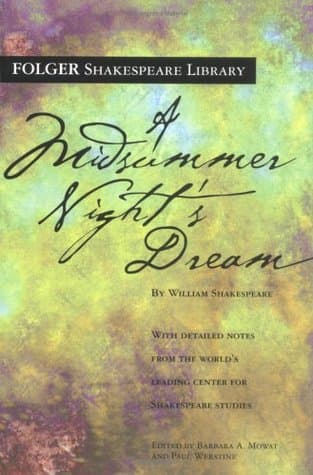
William Shakespeare (1995)
Genre
Fantasy / Romance
Reading Time
240 min
Key Themes
See below
Sign in to track this book
In an enchanted forest, mischievous fairies, lovesick mortals, and clumsy actors clash in a chaotic, dreamlike story of mistaken identities and magical affections, all set in motion by a meddling Puck with a strong love potion.
The play starts in Athens, where Duke Theseus is getting ready for his wedding to Hippolyta. Egeus, an Athenian nobleman, brings his daughter Hermia before Theseus, demanding she marry Demetrius, his choice for her. Hermia loves Lysander and refuses. Egeus uses an old Athenian law, giving Hermia three choices: marry Demetrius, become a nun, or face death. Lysander argues his case, noting Demetrius's changeable nature, having previously pursued Helena. Theseus gives Hermia until his wedding day to decide. Faced with this choice, Hermia and Lysander secretly decide to run away into the forest outside Athens, hoping to escape the city's strict laws.
After Hermia and Lysander make their escape plan, they tell Helena, Hermia's friend. Helena loves Demetrius, who has rejected her for Hermia. Trying to win Demetrius's favor, Helena tells him about Hermia and Lysander's plan to run away into the forest. Demetrius, angry, decides to chase the lovers, determined to get Hermia back. Helena, though scorned by Demetrius, follows him into the enchanted forest, hoping he might eventually return her feelings.
Meanwhile, a group of Athenian tradesmen, or 'mechanicals' – Nick Bottom (a weaver), Peter Quince (a carpenter), Francis Flute (a bellows-mender), Tom Snout (a tinker), Snug (a joiner), and Robin Starveling (a tailor) – gather to rehearse a play. They plan to perform 'Pyramus and Thisbe,' a tragic love story, for Duke Theseus's wedding celebration. Peter Quince, the director, has trouble managing the eager but clumsy Bottom, who wants to play every role. They decide to rehearse their play in the same forest where the lovers are now, unaware of the magical beings and coming chaos.
Deep in the forest, the fairy king Oberon and his queen Titania are in a bitter fight. Their argument is about a beautiful Indian changeling boy, whom Titania has adopted and will not give to Oberon to be his knight. Oberon, feeling his power questioned, promises revenge. He tells his mischievous sprite, Puck (also known as Robin Goodfellow), to find a magical flower called 'love-in-idleness.' This flower, once hit by Cupid's arrow, can make anyone fall deeply in love with the first creature they see upon waking after its juice is put on their eyelids.
Oberon, having heard Demetrius reject Helena unkindly, decides to use the love potion to help her. He tells Puck to find the 'disdainful youth' (Demetrius) and put the potion on his eyes so he will fall in love with Helena. However, Puck, mistaking Lysander for Demetrius (as both wear Athenian clothes), puts the potion on Lysander's eyes while he sleeps. Lysander wakes to find Helena nearby, immediately falling in love with her and leaving a sleeping Hermia. Helena, still chasing Demetrius, is confused and upset by Lysander's sudden declarations of love, thinking he is making fun of her.
Oberon continues with his plan against Titania. He puts the love potion on her eyes while she sleeps. Meanwhile, the mechanicals are rehearsing their play in the same part of the forest. Puck, always looking for mischief, finds their rehearsal. He decides to play a trick on Nick Bottom, changing his head into that of a donkey. The other mechanicals, scared by Bottom's new look, run away in fear. Bottom, confused, starts to sing to show he isn't afraid, accidentally waking Titania. Under the spell of the love potion, Titania immediately falls in love with the donkey-headed Bottom, showering him with affection and ordering her fairies to serve his every wish.
Oberon finds Puck's mistake about Lysander and, seeing the chaos, tells Puck to fix it. He then puts the love potion on Demetrius's eyes, hoping to make things right. Demetrius wakes, sees Helena, and instantly falls in love with her, joining Lysander in saying he loves her. Now, both Lysander and Demetrius love Helena, while Hermia is confused and sad, left by Lysander. The four lovers are now in a silly love quadrangle, with Helena believing both men are making fun of her, and Hermia feeling betrayed by everyone, especially Helena.
The situation among the four lovers turns into a furious argument. Helena accuses Hermia of working with the men to torment her, leading to a physical fight between the two former friends. Lysander and Demetrius, now rivals for Helena's affection, decide to duel. Oberon, seeing the growing chaos, tells Puck to lead the lovers astray in the dark forest, making them wander separately until they are tired. As they fall asleep, Puck puts an antidote on Lysander's eyes, making sure he will return to his original love for Hermia upon waking, while Demetrius's love for Helena stays.
As dawn breaks, Puck removes the donkey's head from Bottom, and Oberon frees Titania from her enchantment. Titania, horrified by her love for Bottom, makes up with Oberon, and they dance together. The four lovers wake up, finding themselves lying near each other. They are disoriented, remembering the night's events as a strange, vivid dream. Lysander's love for Hermia is back, and Demetrius's love for Helena remains. Duke Theseus, Hippolyta, and Egeus find the sleeping lovers. Egeus still demands Hermia marry Demetrius, but Demetrius now says he loves Helena, making Hermia free to marry Lysander. Theseus, seeing the new, harmonious pairings, orders that all three couples will marry alongside him and Hippolyta.
The play ends with the triple wedding ceremony of Theseus and Hippolyta, Lysander and Hermia, and Demetrius and Helena. During the wedding feast, the Duke and his guests watch the mechanicals' performance of 'Pyramus and Thisbe.' Despite their serious efforts, the play is a complete failure, full of misunderstandings, over-the-top acting, and funny mistakes, to the amusement of the noble audience. The Duke and his court find joy in the mechanicals' sincerity and the sheer silliness of their performance. As the newlyweds go to bed, the fairies, led by Oberon and Titania, bless the palace and the couples, ensuring their happiness and many children.
The Supporting
Puck remains largely unchanged, serving as a catalyst for the plot and a source of comic relief, ultimately helping to resolve the chaos he created.
The Supporting
Oberon begins as vengeful and controlling but ultimately reconciles with Titania and restores order to the magical and mortal worlds.
The Supporting
Titania is humiliated by a love spell but is ultimately restored to her senses and reconciles with Oberon, regaining her dignity.
The Protagonist
Hermia bravely defies her father, endures magical confusion and abandonment, but ultimately marries her true love, Lysander.
The Protagonist
Lysander begins as a devoted lover, falls prey to a magic spell, becomes fickle and cruel, but is ultimately restored to his true love and marries Hermia.
The Protagonist
Helena endures unrequited love and public humiliation, but through magical intervention, she ultimately wins the love of Demetrius.
The Protagonist
Demetrius shifts from a fickle, unwanted suitor to Hermia to a genuinely loving fiancé to Helena, thanks to magical intervention.
The Supporting
Bottom experiences a magical transformation and an improbable romance with the fairy queen, returning to his human form with only a 'dream' to remember it by.
The Supporting
Theseus presides over the initial conflict and ultimately brings order and resolution to the lovers' predicaments, celebrating multiple marriages.
The Supporting
Hippolyta is a constant, dignified presence, marrying Theseus and offering insightful commentary on the nature of dreams and imagination.
The play shows how easily love can change and how illogical it is. The love potion literally makes this happen, causing characters like Lysander and Demetrius to leave their old loves and fall for someone else in moments. Helena's unrequited love for Demetrius and his changing nature before the potion also show this theme. The quick changes in affection show that love is not always based on reason or logic, but can be a whimsical, even cruel, force. The forest, with its magic, symbolizes this unpredictable and wild side of love.
“The course of true love never did run smooth.”
Magic is the main cause of the plot's problems and solutions. The fairy world, with its potions and transformations, directly affects the mortal world, creating chaos and eventually restoring order. Puck's love potion causes the lovers to misalign, while Bottom's transformation into a donkey shows how appearance can be misleading. The mortals eventually dismiss the entire forest experience as a 'dream,' blurring the lines between reality and illusion. This theme explores how outside, unseen forces can shape human experience and perception, making reality seem flexible and personal.
“Lord, what fools these mortals be!”
The play constantly blurs the line between dreams and reality, especially for the mortal characters. The events in the enchanted forest are so strange and confusing that the characters, upon waking, can only explain them as a dream. Bottom, after his transformation and romance with Titania, believes he has had 'a most rare vision, a most excellent dream.' This theme suggests that dreams can hold deep, even if hard to understand, experiences, and that reality itself can sometimes feel like a dream. It also allows the fantastical parts of the plot to be accepted without needing a strict logical explanation.
“I have had a most rare vision. I have had a dream, past the wit of man to say what dream it was.”
The play shows a clear difference between the strict order of Athenian society and the chaotic, magical disorder of the forest. In Athens, laws dictate marriage and punishment, as seen with Egeus's rule against Hermia. The forest, however, is a place of unrestrained emotion, magic, and disorder, where identities are confused and feelings are easily manipulated. The initial fight between Oberon and Titania even disrupts the natural order of the seasons. The play's ending sees the order of Athens re-established, but changed by the experiences in the forest, suggesting a necessary balance between strict rules and natural, irrational forces.
“If we shadows have offended, / Think but this, and all is mended, / That you have but slumber’d here / While these visions did appear.”
The mechanicals' play, 'Pyramus and Thisbe,' comments on what theater and illusion are. Their serious but clumsy attempts to create dramatic illusion, like having a man play the wall or the moon, show the artificiality and rules of art. The audience's reaction to their play, finding humor in its flaws, reflects the audience's own experience watching 'A Midsummer Night's Dream' itself. This theme explores how art tries to show reality, often imperfectly, and how audiences engage with and understand these representations, willingly suspending disbelief.
“The best in this kind are but shadows; and the worst are no worse, if imagination amend them.”
A magical flower juice that causes infatuation.
The love potion, derived from the 'love-in-idleness' flower, is the central magical device that drives the plot's romantic complications. Applied to the eyelids of sleeping individuals, it makes them fall in love with the first creature they see upon waking. It is initially used by Oberon to punish Titania and then by Puck, both intentionally and mistakenly, to manipulate the mortal lovers. This device directly symbolizes the irrational and arbitrary nature of love, highlighting how easily affection can be swayed by external forces, leading to both comedic and dramatic misunderstandings.
A liminal space where magic and human desires intertwine.
The forest outside Athens acts as a crucial setting and a symbolic plot device. It is a liminal space, a realm of magic and disorder that stands in stark contrast to the rigid laws and reason of Athens. It is here that the fairy world actively interferes with the mortal world, and where inhibitions are shed. The forest's darkness and wilderness mirror the characters' emotional confusion and the irrationality of their magically altered affections. It provides the perfect backdrop for the fantastical events, allowing for the suspension of disbelief and the exploration of themes like dreams and illusion.
A visual comedic device highlighting folly and the power of magic.
Puck's transformation of Nick Bottom's head into that of an ass is a key comedic and symbolic plot device. Visually striking, it serves multiple functions: it emphasizes Puck's mischievous nature, provides immense comic relief, and creates the absurd pairing of the majestic fairy queen Titania with a beast-headed mortal. This transformation underscores the theme of illusion versus reality, as Bottom remains oblivious to his altered state. It also highlights the idea that love, especially under enchantment, can be blind and irrational, making even the most beautiful fall for the most grotesque.
A metatheatrical device that comments on art and reality.
The mechanicals' performance of 'Pyramus and Thisbe' is a significant metatheatrical device. This amateur play mirrors the larger themes of 'A Midsummer Night's Dream' itself – impossible love, tragic misunderstandings, and ultimate death – but is presented in a comically inept manner. It serves as a parody of tragic romance and a commentary on the nature of theatrical illusion, highlighting the contrast between the actors' earnest efforts and the audience's perception. It allows the play to reflect on its own artifice, demonstrating how audiences engage with and interpret fictional narratives, finding truth and amusement even in flawed artistic endeavors.
A comedic device creating confusion among the lovers.
Mistaken identity is a pervasive comedic device, primarily driven by Puck's errors with the love potion. Puck initially mistakes Lysander for Demetrius, leading to Lysander falling in love with Helena. Later, when Demetrius is also enchanted, both men pursue Helena, leading to Hermia's confusion and the lovers' quarrel. This device capitalizes on the visual similarity of the Athenian youths and the darkness of the forest to create layers of misunderstanding and farcical situations. It emphasizes the arbitrary nature of the lovers' affections and the chaotic consequences of magical interference.
“The course of true love never did run smooth.”
— Lysander speaks to Hermia about the obstacles they face in their love.
“Lord, what fools these mortals be!”
— Puck observes the chaotic and foolish behavior of the human lovers in the forest.
“And though she be but little, she is fierce.”
— Helena describes Hermia's spirited and determined nature.
“The lunatic, the lover, and the poet are of imagination all compact.”
— Theseus reflects on the power of imagination that unites different kinds of people.
“I have had a most rare vision. I have had a dream, past the wit of man to say what dream it was.”
— Bottom awakens after being transformed by Puck and tries to describe his surreal experience.
“Love looks not with the eyes, but with the mind, and therefore is winged Cupid painted blind.”
— Helena laments how love is irrational and not based on physical sight.
“So we grew together, like to a double cherry, seeming parted, but yet an union in partition.”
— Helena reminisces about her close friendship with Hermia before their conflict.
“I'll put a girdle round about the earth in forty minutes.”
— Puck boasts about his magical speed and abilities to Oberon.
“The more I hate, the more he follows me.”
— Helena expresses frustration over Demetrius's unwanted pursuit despite her disdain.
“Bless thee, Bottom! bless thee! thou art translated.”
— Quince exclaims in shock upon seeing Bottom transformed with a donkey's head.
“My heart is true as steel.”
— Hermia declares her unwavering loyalty and love for Lysander.
“The iron tongue of midnight hath told twelve.”
— Theseus announces the late hour, marking the end of the night's events.
“I am that merry wanderer of the night.”
— Puck introduces himself, describing his playful and mischievous nature.
“The poet's eye, in a fine frenzy rolling, doth glance from heaven to earth, from earth to heaven.”
— Theseus continues his speech on imagination, praising the creative vision of poets.
Ready to see how well you understood this book? Take our interactive quiz with 10 questions.
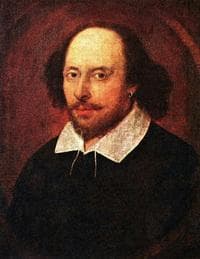
William Shakespeare was an English playwright, poet and actor. He is widely regarded as the greatest writer in the English language and the world's pre-eminent dramatist. He is often called England's national poet and the "Bard of Avon". His extant works, including collaborations, consist of some 39 plays, 154 sonnets, three long narrative poems, and a few other verses, some of uncertain authorship. His plays have been translated into every major living language and are performed more often than those of any other playwright. Shakespeare remains arguably the most influential writer in the English language, and his works continue to be studied and reinterpreted.







