
Biography coming soon.

William Wharton (1982)
Genre
Historical Fiction
Reading Time
12 Minutes
Key Themes
See below
Sign in to track this book
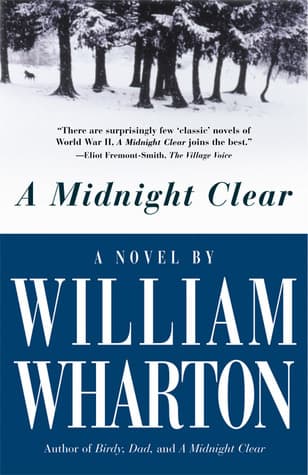
On Christmas Eve in the Ardennes, a small group of American soldiers in an isolated chateau find themselves in a surreal game with an enigmatic enemy, whose intentions are as mysterious as the holiday truce they seem to offer.
On Christmas Eve 1944, in the Ardennes Forest, Sergeant Will Knott, an intelligent and thoughtful soldier, leads his small squad of five GIs—Miller, Bud Miller, Mother, Father, and Stan—to an abandoned chateau. Their mission is to set up an observation post in what they think is no-man's-land, near German lines. The chateau, once elegant, offers a temporary refuge from the cold and the war. Knott, with his mix of academic curiosity and military discipline, tries to keep his men, a group of reluctant warriors and thinkers, focused. They settle into their isolated routine, at first finding comfort in the quiet surroundings.
Their isolation ends with a series of strange events. First, a scarecrow appears in a nearby field, facing the chateau. Then, equipment they'd dropped during a hasty retreat is found neatly arranged. These aren't attacks, but unsettling signs of a German presence observing them, perhaps even communicating. Knott and his men are confused; the gestures are too deliberate, too non-threatening, for wartime. A growing unease settles over the squad as they try to understand these signals.
The clearest sign of German presence is a small fir tree, mysteriously decorated with fruit, candles, and cardboard stars, placed where they can see it. This act, so out of place with the war, deeply affects Knott and his men. It's a clear message, a human gesture on Christmas Eve, crossing battle lines. Knott, a philosopher, sees it as an invitation, a challenge to their ideas about the enemy. The squad struggles with what this means, realizing the Germans are not just faceless enemies but individuals capable of human acts.
Needing to understand these communications, Knott leads a patrol closer to the German lines. They meet a German patrol, and instead of fighting, a strange, tense interaction occurs. The Germans, to Knott's surprise, also seem unwilling to fight. A hesitant, almost conversational exchange reveals that this German unit is also weary of war. The encounter is less about military strategy and more about shared humanity, a mutual wish for the violence to end. This first, non-lethal contact strengthens Knott's belief that something unusual is happening.
Through more unusual encounters and 'gifts' from the Germans, Knott and his squad begin to understand their situation. The German unit, it becomes clear, is made up of older men and boys, equally disillusioned and wanting the conflict to end. They aren't trying to fight but to survive, and perhaps, to connect across the war's divide. Knott realizes the Germans are not just observing them, but trying to communicate a desire for a temporary truce, a moment of peace amid the fighting. This understanding challenges what it means to be an enemy.
The German unit, through increasingly direct and desperate messages, proposes a plan: they want to surrender, but in a way that lets them escape the Eastern Front, where they expect certain death. They suggest a staged surrender to Knott's small American unit, believing this would offer them a better chance of survival and humane treatment. Knott faces an unprecedented moral dilemma. Accepting their surrender would defy military protocol and risk his unit, but refusing would condemn these men to a terrible fate. This decision weighs heavily on Knott.
Knott struggles with the ethical and practical issues of the Germans' proposal. His men, initially wary, are also moved by the Germans' peace overtures. The absurdity of their situation—being asked to help an enemy surrender unofficially—is clear to them. Knott understands the immense risk for both his squad and the Germans. He weighs military rules against the human desire for survival and peace. This internal conflict shows the moral ambiguities of war, where right and wrong blur under extraordinary circumstances and shared vulnerability.
After much thought and internal struggle, Knott, driven by empathy and a desperate hope for a momentary truce, agrees to the Germans' plan. He sees it as a chance to save lives and show a different kind of humanity in war. The agreement is based on trust and a shared understanding of their situation's futility. The staged surrender is carefully planned to look legitimate to outsiders while ensuring both units' safety. This decision is a major departure from standard military conduct, showing Knott's unique leadership and moral sense.
The day of the staged surrender arrives, filled with tension and fragile hope. Both American and German units prepare, each man aware of the risks. Knott and his squad, despite their philosophical leanings, are still soldiers, and orchestrating a fake battle and surrender is dangerous. The desperate Germans trust Knott's word. The atmosphere is thick with anticipation, a mix of fear and a longing for peace. The stage is set for an event that will either bring peace or chaos.
As the staged surrender begins, a terrible misunderstanding or sudden violence shatters the fragile peace. A real firefight erupts, possibly due to an outside force, miscommunication, or panic. The carefully built illusion of surrender collapses into a devastating reality. American and German soldiers are killed in the chaos, including Knott's own men. The dream of a peaceful resolution is brutally extinguished. This climax is a shattering comment on the impossibility of escaping war's brutal logic, even when individuals strive for humanity. Knott is left to witness the devastating results of his attempt at peace.
In the aftermath of the tragedy, Knott surveys the carnage. The chateau, once a sanctuary, now shows the brutal reality of their failed plan. The loss of his men and the German soldiers, all seeking an end to the war, weighs heavily on him. The futility of their efforts, the cruel irony of their attempts at peace leading to more bloodshed, is a crushing blow. Knott must now face official military inquiries, knowing the truth—a desperate, unauthorized attempt at a humanitarian surrender—will likely be misunderstood or condemned. He carries the burden of survivor's guilt and the indelible scars of a war that stole not just lives, but hope.
The Protagonist
Knott's arc sees him transform from a weary but dutiful soldier into a man who attempts to transcend the rules of war for a greater humanitarian purpose, ultimately facing tragic consequences.
The Supporting
Miller moves from initial skepticism about the Germans' intentions to a reluctant acceptance and participation in Knott's unconventional plan.
The Supporting
Bud Miller's character develops as he increasingly accepts the unconventional nature of their situation, aligning with Knott's humanitarian perspective.
The Supporting
Mother maintains his role as a compassionate, supportive figure, his initial skepticism giving way to a shared hope for peace.
The Supporting
Father's arc shows his quiet acceptance of the extraordinary circumstances, finding a measure of solace in the hope of a peaceful resolution.
The Supporting
Stan's character remains largely consistent as a representation of youthful innocence caught in the brutality of war.
The Antagonist/Supporting
The German Commander's arc is defined by his desperate but ultimately tragic attempt to save his unit through a peaceful surrender.
The Supporting
The German soldiers collectively represent the 'enemy' who transforms into a group seeking a shared humanity and peaceful resolution.
The novel shows the senselessness of war, especially through Knott's observations and the strange interactions between the American and German units. The characters, particularly Knott, constantly question the war's purpose, showing how arbitrary and destructive conflict can be. The tragedy of the staged surrender, where an attempt at peace leads to more bloodshed, powerfully illustrates war's inherent folly, suggesting its brutal logic often overrides individual acts of humanity.
“War is a game played by children, but with real lives.”
A central theme is that humanity crosses national and ideological lines, even during war. The German soldiers' gestures—the scarecrow, the Christmas tree, the organized equipment—are not aggressive but desperate attempts to communicate. Knott and his men come to see the 'enemy' not as monsters, but as individuals equally tired of fighting and wanting to survive. This theme challenges dehumanizing war propaganda, emphasizing the universal desire for peace and the capacity for empathy even for those on the opposing side.
“The enemy is just like us, only on the other side.”
The novel explores the complex moral choices soldiers face in unusual situations. Knott's decision to stage a surrender, though driven by humanitarian motives, goes against military rules and carries great risks. The story examines the gray areas where rules break down, and individuals must make decisions based on conscience rather than strict orders. This theme highlights the personal cost of war and the difficult compromises made when lives are at stake, questioning what counts as 'right' action in an immoral situation.
“Sometimes, the right thing to do is the wrong thing to do, according to the book.”
Despite the characters' earnest efforts for peace, the novel shows how fragile peace is during wartime. The hope for a staged surrender is brutally shattered by unforeseen events, leading to a tragic climax. This theme suggests that even the best-intentioned attempts to escape violence can be overwhelmed by war's inherent chaos and brutality. It's a poignant comment on how easily hope can be extinguished when faced with the overwhelming forces of conflict.
“Hope, like a fragile glass, can shatter in an instant.”
A potent symbol of peace, humanity, and shared longing.
The decorated fir tree left by the Germans is a powerful symbol. It represents a universal desire for peace, hope, and shared humanity, especially poignant on Christmas Eve amidst the brutality of war. Its appearance acts as a catalyst, forcing Knott and his men to reconsider their perception of the enemy and opening the door for unconventional communication. The tree stands in stark contrast to the violence surrounding them, highlighting the profound human need for connection and solace even in the most desolate circumstances. It's an invitation to transcend the conflict, albeit a ultimately tragic one.
A setting that mirrors the characters' isolation and internal conflict.
The deserted chateau serves as more than just a physical setting; it's a symbolic space. Its isolation mirrors the squad's detachment from the larger war and their internal struggles. The chateau, a relic of a more elegant past, contrasts sharply with the grim reality of their present, highlighting the destructive power of war on beauty and order. It becomes a crucible for their philosophical discussions and ethical dilemmas, a temporary sanctuary where the lines between friend and foe blur, and where their desperate hope for peace takes root.
Knott's subjective perspective shapes the understanding of events.
While not explicitly stated as unreliable, the story is largely filtered through Sergeant Knott's highly intelligent, philosophical, and introspective mind. His interpretations of German actions, his internal monologues, and his emotional responses heavily influence the reader's understanding of events. This subjectivity creates a sense of intimacy but also raises questions about the absolute truth of the situation, especially concerning the Germans' exact intentions and the precise cause of the tragic climax. It emphasizes the individual's struggle to make sense of war's chaos and the personal biases that color perception.
Subtle hints of impending danger and tragic outcomes.
Throughout the narrative, there are subtle hints and a pervasive sense of unease that foreshadow the tragic climax. The very nature of their 'game' with the Germans, the inherent risks of a staged surrender, and the constant threat of discovery or misunderstanding all contribute to an escalating tension. Knott's own philosophical musings often touch upon the futility of war and the fragility of hope, subtly preparing the reader for a less-than-optimistic outcome. This foreshadowing builds suspense and underscores the novel's commentary on the inescapable nature of war's brutality.
Ready to see how well you understood this book? Take our interactive quiz with 10 questions.
Biography coming soon.







