“He was a boy from Dublin who had become a man in the trenches, and he did not know what he was anymore.”
— Willie Dunne reflecting on his transformation and identity loss after experiencing the horrors of World War I.

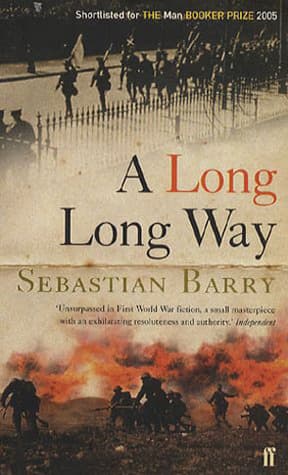
Sebastian Barry (2005)
Genre
Literary Fiction / Historical Fiction
Reading Time
360 min
Key Themes
See below
Sign in to track this book
Naive Irish solider Willie Dunne confronts the horrors of World War I, only to return home and find his Ireland fractured by a different, equally devastating war.
In 1914, eighteen-year-old Willie Dunne, small and slow to understand, enlists in the Royal Dublin Fusiliers. He does this because he feels it is his duty and he wants to impress his stern father, a policeman in Dublin. His fiancée, Gretta, sees him off, sad but understanding. Dublin is a city changing, with the Home Rule movement growing and the Irish Volunteers and Ulster Volunteers forming. Willie's father, a strong loyalist, views these changes with suspicion. Willie joins his regiment for training in the Curragh, a big change from his quiet Dublin life, and is soon sent to the Western Front in France, far from the political issues at home.
Willie quickly experiences the brutality of trench warfare. He endures constant shelling, the smell of death, and the terror of 'going over the top' into no man's land. He forms a close bond with his fellow Irish soldiers, especially Jesse Kirwan and Christy Moran, finding comfort in their shared suffering and dark humor. The land is always muddy, scarred by craters and full of bodies. Willie sees horrific injuries and the senseless deaths of friends, which deeply affect him. His simple understanding of good and evil is broken by the violence, and he starts to question the reason for their fight, holding onto letters from Gretta and his family as his only link to sanity.
The Battle of the Somme is a particularly awful experience for Willie and his company. They are sent into a terrible fight, facing German machine-gun fire and artillery. Willie survives, but many of his closest friends, including Jesse Kirwan, are killed or badly hurt. The sheer amount of death and destruction leaves Willie deeply scarred, leading to a growing sense of detachment and shell-shock. He relies more on the friendship of the remaining Irish soldiers; their shared identity is a small comfort amidst the chaos. The war takes away his innocence, replacing it with a grim acceptance and a deep tiredness that affects everything he does.
While still on the Western Front, Willie gets news that shocks him: the Easter Rising has happened in Dublin in April 1916. Irish nationalists have rebelled against British rule, leading to fighting in his home city. This news causes a huge inner conflict for Willie. He is fighting for the British Crown in France, while at home, his own countrymen are fighting against it. The executions of the Rising's leaders, including James Connolly and Patrick Pearse, shock the Irish regiments. Willie struggles to balance his loyalty to his uniform with his new understanding of Irish nationalism, feeling more and more separate and confused by his nation's divided loyalties.
Willie is given leave and returns to Dublin, a city he barely recognizes. The streets show marks of battle, buildings are destroyed, and the air is full of tension and anger. He finds his family whole but stressed; his father, a policeman, is caught between his duty and his Irish heritage, now suspected by some of his neighbors. Gretta is happy to see him but senses the deep changes within him. Willie sees the public's different reactions to the executed rebels – some see them as heroes, others as traitors. He feels like an outsider, a soldier in a British uniform in a city increasingly hostile to British symbols, and the warmth of home is lessened by an unsettling feeling of being separate.
During his leave in Dublin, Willie is walking with a friend when British soldiers stop them. Even though he is in uniform, Willie is treated with suspicion because of the general fear after the Easter Rising. He is taken in for questioning, accused of being involved with republican supporters. The experience is humiliating and confusing for Willie, who has just been fighting for the British Empire. It shows the deep distrust and divided loyalties within Ireland, as even loyal Irish soldiers are not safe from suspicion. This event further breaks his already fragile sense of identity and belonging, showing the irony of his situation.
Willie's leave ends, and he has to return to the Western Front, leaving Gretta and his family again. The short break has not healed his inner wounds, and he feels more alone than ever. The war continues, and Willie goes further into despair and mental exhaustion. He finds it harder to connect with others, even his remaining comrades, as the shared trauma binds them but also pushes them into individual shells of suffering. His letters home become less frequent and more resigned, showing his growing hopelessness and the psychological toll of long combat.
The Armistice is announced in November 1918, ending the brutal conflict. Willie, against all odds, has survived. However, the end of the fighting does not bring immediate relief. He is a shell of his former self, thin and deeply traumatized. The psychological scars of the war are deep and permanent, appearing as a constant tiredness, difficulty expressing emotions, and a deep feeling of being separate. He struggles to process the years of violence and loss, and the idea of returning to a 'normal' life seems almost impossible. The victory feels empty, overshadowed by the huge personal cost.
Willie finally returns to Dublin, but his homecoming is quiet. The city has changed a lot politically and socially, and the returning Irish soldiers who fought for the British are not celebrated by everyone. Many are viewed with suspicion or ignored, overshadowed by the memory of the Easter Rising and the growing support for Irish independence. Gretta is still there, but the years of separation and his change have created a gap between them. His father struggles to understand the extent of his son's suffering. Willie finds it impossible to talk about his experiences, feeling disconnected from those who did not see the war's horrors. His attempts to find work and purpose are difficult, leaving him with a deep sense of disappointment.
Willie Dunne lives the rest of his life quietly, forever changed by the war. He never fully recovers from his experiences, carrying the trauma daily. He eventually marries Gretta, but their relationship is based on unspoken understanding rather than strong connection, as the war has taken too much from him. He works odd jobs, never finding a true calling, and his inner world remains full of trenches and fallen comrades. He is one of many forgotten soldiers, his sacrifice unrecognized by a nation moving towards its own independence. Willie's story shows the lasting, invisible wounds of war and the cost of divided loyalties.
The Protagonist
From naive enlistee seeking his father's approval, Willie transforms into a deeply traumatized survivor, forever marked by war and alienated by the political shifts in Ireland.
The Supporting
Gretta remains a steadfast figure, adapting to the return of a changed Willie and accepting the limitations of their post-war life together.
The Supporting
He remains largely unchanged in his loyalist views, but the war and the Rising expose the vulnerability of his position and the pain of seeing his son suffer.
The Supporting
Jesse's arc is tragically cut short by his death in battle, serving as a poignant example of the war's indiscriminate cruelty.
The Supporting
Christy, like Willie, endures the war's horrors, becoming a fellow survivor deeply scarred by his experiences.
The Supporting
She remains a consistent figure of maternal love and worry, bearing the emotional burden of her son's war.
The Supporting
He remains a largely static figure of military authority, observing the war's impact on his men.
The Mentioned
Not a character in the traditional sense, but his historical actions shape the plot and the soldiers' experiences.
The novel shows the realities of trench warfare, emphasizing the physical and psychological toll on soldiers like Willie Dunne. Descriptions of mud, blood, constant shelling, and the endless stream of dying comrades remove any romantic ideas of war. Willie's gradual descent into shell-shock and emotional numbness shows how war reduces individuals to parts of a destructive machine, taking away their humanity and innocence. The sheer amount of death and the senselessness of the violence appear often, showing how the conflict dehumanizes people.
“The mud was like a living thing, sucking at their boots, trying to swallow them whole. It was everywhere, in their food, in their clothes, in their very souls.”
Willie Dunne's story explores identity, especially what it means to be Irish during World War I. He fights for the British Crown, only to learn of the Easter Rising in Dublin, where his countrymen rebel against that same Crown. This creates an inner conflict, leaving him feeling separate from both sides. His uniform, initially a source of pride, becomes a symbol of his divided loyalties upon his return to a Dublin leaning towards nationalism. The novel shows the difficult position of Irish soldiers who served in the British Army, often forgotten or criticized by their own people.
“He was an Irishman fighting for the Empire, while at home, other Irishmen were fighting against it. He was a man without a country, a soldier without a clear cause.”
A main theme is the lasting psychological trauma of war, especially Willie's struggle with shell-shock (PTSD). The novel shows how the horrors he sees make him unable to talk about his experiences or reconnect with his pre-war self. His quietness and emotional detachment upon returning home are not a sign of indifference but of an unbearable burden that cannot be put into words. This inability to communicate creates a gap between Willie and those who did not experience the war, leading to a deep feeling of isolation and misunderstanding.
“The words wouldn't come. They were stuck somewhere deep inside him, buried under the mud and the memories of the dead.”
The novel shows how the past, especially the traumatic experiences of war, continues to affect the present. Willie's memories of the trenches, his fallen comrades, and the sounds and smells of battle are always there, shaping his post-war life. Even decades later, he cannot escape the war's hold. The novel suggests that for those who lived through such events, the past is not simply over but an active, persistent force. This theme is shown by Willie's broken memories and his inability to fully move on from what he endured.
“The war was over, but it wasn't over for him. It was still there, in the quiet places of his mind, waiting.”
Provides deep insight into Willie's fractured mental state and poetic observations.
The narrative frequently employs Willie Dunne's internal monologue, offering direct access to his thoughts, fears, and fragmented memories. This technique allows the reader to experience the war's psychological impact firsthand, revealing Willie's poetic sensibility despite his outward simplicity. It highlights his struggle to process trauma and the disjunction between his inner world and his inability to express himself. This device is crucial for conveying the profound sense of isolation and the lasting mental scars of the war, making the reader intimately familiar with Willie's internal suffering.
Contrasts the horrors of war with the political turmoil and domestic life in Dublin.
Barry masterfully juxtaposes the brutal, muddy, and senseless violence of the Western Front with the increasingly politicized and divided home front in Dublin. This contrast amplifies the tragedy of Willie's situation, as he fights for one cause abroad while his own city fights another at home. The news of the Easter Rising, reaching him in the trenches, highlights the irony and futility of his sacrifice. This device underscores the theme of divided loyalties and the profound alienation Willie experiences upon his return, finding a home that has changed irrevocably.
Grounds the fictional narrative in real historical events and figures to enhance authenticity.
The novel is rich with specific historical allusions, referencing battles like the Somme, historical figures like General Gough, and the pivotal event of the Easter Rising and its subsequent executions. This grounding in historical reality lends immense authenticity and weight to Willie's fictional journey. It contextualizes his personal suffering within the broader historical canvas of World War I and the Irish struggle for independence, making his story a microcosm of a generation's experience. The details of trench warfare and Dublin's political climate are meticulously researched, enhancing the novel's realism.
Immerses the reader in the visceral experience of war through vivid descriptions of sights, sounds, and smells.
Barry uses powerful and often gruesome sensory imagery to convey the overwhelming reality of the trenches. Descriptions of the pervasive mud, the stench of death and gunpowder, the deafening roar of artillery, and the sight of shattered bodies are constant throughout the narrative. This vivid, visceral language doesn't just describe the setting; it directly communicates the psychological impact of such an environment on Willie and his comrades, forcing the reader to confront the physical and emotional toll of the war in an immediate and unforgettable way.
“He was a boy from Dublin who had become a man in the trenches, and he did not know what he was anymore.”
— Willie Dunne reflecting on his transformation and identity loss after experiencing the horrors of World War I.
“The war was a great maw that swallowed men and spat out ghosts.”
— Narration describing the devastating, dehumanizing effect of the war on soldiers.
“Ireland was a small country with a big quarrel, and he was caught in the middle of it.”
— Willie's realization of his conflicted position as an Irish soldier fighting for Britain during the Easter Rising.
“The mud was the true enemy, more patient and more deadly than any German.”
— Description of the relentless, suffocating conditions in the trenches.
“He had gone to war for the love of a uniform and stayed for the love of his comrades.”
— Willie's reflection on his evolving motivations and bonds with fellow soldiers.
“Home was a word that had lost its meaning, a place that existed only in memory.”
— Willie's sense of dislocation and the erosion of his connection to Ireland.
“In the silence after the guns, the world seemed to hold its breath, waiting for the next atrocity.”
— A moment of eerie calm in the trenches, highlighting the constant tension and anticipation of violence.
“They were all ghosts in the making, men living on borrowed time in a borrowed landscape.”
— Narration on the soldiers' precarious existence and the transient, unnatural world of the front.
“The rebellion in Dublin was a wound in the heart, a betrayal that cut deeper than any bayonet.”
— Willie's emotional turmoil upon learning of the Easter Rising and its impact on Irish soldiers.
“He had seen too much of death to believe in the glory of war, but too little of life to understand its purpose.”
— Willie's conflicted, disillusioned perspective on war and existence.
“The letters from home were like messages from another planet, written in a language he had almost forgotten.”
— Willie's growing alienation from his family and pre-war life in Ireland.
“In the end, it was not the enemy he feared, but the emptiness inside himself.”
— Willie confronting his inner void and psychological scars from the war.
“The rain fell like tears on the graves of the unknown, as if the sky itself mourned their passing.”
— Poetic description of a battlefield cemetery, emphasizing universal grief and loss.
“He fought for a king he did not know, in a country that was not his own, for a cause that was not his making.”
— Willie's reflection on the absurdity and alienation of his role as an Irish soldier in the British Army.
Ready to see how well you understood this book? Take our interactive quiz with 10 questions.

Sebastian Barry is an Irish novelist, playwright and poet. He was named Laureate for Irish Fiction, 2019–2021.







