“I will escape, and then I will be free.”
— Rosamond's unwavering determination to break free from Philip's control.


Louisa May Alcott (1995)
Genre
Thriller / Historical Fiction / Mystery / Romance
Reading Time
7-8 hours
Key Themes
See below
Sign in to track this book
After selling her soul for freedom, a young woman is swept into a perilous, globe-trotting chase across 19th-century Europe, relentlessly pursued by the enigmatic and obsessive man who first promised her escape.
Rosamond Vivian, a beautiful and spirited young woman, lives an isolated and oppressive existence on the Isle of Wight, a prisoner to her cruel and avaricious grandfather. She spends her days reading and dreaming of escape, feeling stifled by the monotony and the old man's tyranny. One stormy night, she gazes out at the sea and, in a moment of despair and rebellion, cries out that she would 'gladly sell her soul to Satan for a year of freedom.' Soon after, a mysterious and charismatic stranger, later revealed as Phillip Tempest, arrives on the island. He is immediately captivated by Rosamond's beauty and spirit, and she, equally drawn to his adventurous nature and the promise of a life beyond her confinement, begins a dangerous flirtation with him, seeing him as her potential liberator.
Phillip Tempest, a man of wealth and charm, swiftly seduces Rosamond, promising her a life of excitement and luxury away from her oppressive grandfather. Despite a vague sense of unease and a warning from a local woman about Tempest's true nature, Rosamond, desperate for freedom, succumbs to his allure. He orchestrates her escape from the island, taking her aboard his magnificent yacht. Their journey begins with a whirlwind of travel and opulent experiences, fulfilling Rosamond's desire for adventure. However, beneath the surface of this glamorous escape, Rosamond soon starts to see a possessive and controlling streak in Phillip, a subtle shift from his initial charming demeanor, hinting at the true nature of her new 'freedom.'
Phillip Tempest and Rosamond travel to Paris, where he insists on marrying her. Rosamond, still somewhat enthralled and believing him to be her true love, agrees. The wedding is a private affair, and soon after, they settle into a luxurious life. However, Rosamond's contentment is shattered when she overhears a conversation between Phillip and a servant, revealing a shocking truth: Phillip is already married, and their union is a sham. The woman he refers to as his 'wife' is alive and well, making Rosamond's marriage to him bigamous and invalid. This revelation plunges Rosamond into despair and horror, transforming her dream into a nightmare of deceit and entrapment, and igniting her desperate need to escape this fraudulent relationship.
Devastated by the truth of Phillip's bigamy, Rosamond realizes she is trapped in a morally compromising and dangerous situation. She meticulously plans her escape, gathering what little resources she can. One night, she seizes an opportunity and flees their Parisian residence, leaving Phillip behind. Her initial freedom is exhilarating but short-lived. Phillip, enraged by her departure and consumed by his possessive obsession, immediately begins to pursue her. He uses his vast wealth and network to track her movements, showing a terrifying determination to reclaim her. Rosamond's flight marks the beginning of a relentless, cat-and-mouse chase across various European cities and countries, constantly looking over her shoulder.
Rosamond, seeking anonymity and safety, makes her way to Italy. She finds temporary refuge in a remote convent, hoping that its sacred walls and the reclusive life will shield her from Phillip's relentless pursuit. She adopts a new identity, Clara, and attempts to immerse herself in the quiet, devotional routine, finding a brief respite from her terror. However, Phillip Tempest's reach proves to be far-reaching. Through cunning and determination, he eventually discovers her whereabouts. His appearance at the convent gates shatters Rosamond's fragile peace, forcing her to abandon her sanctuary and continue her desperate flight, realizing that no place seems safe from his obsessive grasp.
The constant stress of being hunted takes a severe toll on Rosamond's mental and physical health. She eventually ends up in Germany, where her erratic behavior and distress lead her to be committed to a mental asylum. In this vulnerable state, stripped of her identity and agency, she becomes even more susceptible. Phillip Tempest, ever watchful and relentless, eventually locates her in the institution. He manipulates the situation, using his influence to gain access and control over her. Her time in the asylum becomes another form of imprisonment, a psychological torment made worse by Phillip's presence, highlighting her utter powerlessness against his schemes.
After escaping the asylum, Rosamond, now more cunning and desperate, devises a new strategy for evasion. She dyes her hair, alters her appearance, and adopts the persona of a plain, unassuming governess named Miss Grey. She secures a position in a wealthy household in France, hoping that this mundane and respectable role will make her invisible to Phillip Tempest. For a time, her disguise proves effective, and she experiences a period of relative peace and anonymity. She dedicates herself to her work, forming bonds with the children she cares for, and daring to hope that she has finally eluded her tormentor, finding a semblance of normalcy in her new life.
Despite Rosamond's careful precautions and her convincing disguise, fate intervenes. Phillip Tempest, perhaps by chance or through his continued, relentless searching, eventually encounters Rosamond in her governess persona. Initially, he does not recognize her, but a fleeting glance, a familiar gesture, or a subtle mannerism triggers his suspicion. He soon pieces together the truth, realizing that Miss Grey is indeed his 'lost' Rosamond. His discovery shatters her fragile peace. Once again, Rosamond is forced to abandon her new life, the children she has grown to care for, and the brief sense of security she had cultivated. The chase resumes, more intense and terrifying than ever.
In her desperate flight, Rosamond remembers an estranged relative, her aunt, who lives in a grand, isolated château. She makes her way there, hoping that the aunt's influence and the château's remoteness will offer a secure haven. Her aunt, a kind but somewhat eccentric woman, welcomes her, offering both shelter and a sense of family that Rosamond has long craved. Rosamond tries to live a quiet life, but the shadow of Phillip Tempest looms large. He meticulously tracks her to the château, showing an almost supernatural ability to find her. The château, once a symbol of safety, becomes another stage for their deadly game of cat and mouse, with Phillip closing in.
The relentless pursuit culminates in a dramatic and tragic confrontation. Phillip Tempest, having cornered Rosamond at the château, attempts to force her to return with him, his obsession reaching a fever pitch. Rosamond, no longer the naive girl who first fled, fiercely resists, determined to maintain her freedom and integrity, even at the cost of her life. During the struggle or a desperate attempt to escape, a fatal accident occurs. Phillip falls from a height or is otherwise fatally wounded, ending his tyrannical pursuit. Rosamond is left with the devastating aftermath of their twisted relationship, forever marked by the long, fatal love chase and the loss of her youth and innocence.
The Protagonist
Rosamond evolves from a passive victim of circumstances into an active, determined survivor who fights for her freedom and identity against an relentless oppressor.
The Antagonist
Phillip's character remains largely static in his obsession, but his methods become increasingly desperate and violent as Rosamond continues to elude him.
The Supporting
Remains static, a symbol of initial oppression.
The Supporting
Provides a temporary safe haven for Rosamond, demonstrating her resilience and resourcefulness.
The Mentioned
Not applicable, as she is only mentioned.
The Supporting
Represents a pivotal stage in Rosamond's development as a survivor, demonstrating her ability to adapt and strategize.
The central conflict is Phillip Tempest's destructive, possessive obsession with Rosamond, which he mislabels as love, and Rosamond's desperate quest for genuine freedom and autonomy. Phillip's 'love' is a cage, shown by his bigamy, his relentless pursuit, and his desire to control every aspect of Rosamond's life. Rosamond's initial wish for 'a year of freedom' quickly escalates into a lifelong struggle against emotional and physical imprisonment. Her journey across Europe, from convent to asylum to governess, is a constant battle to define and reclaim her own existence, proving that true love cannot exist without liberty.
“I'd gladly sell my soul to Satan for a year of freedom.”
Deception is a pervasive theme, starting with Phillip Tempest's bigamy and his elaborate lies to ensnare Rosamond. Rosamond herself is forced to adopt multiple false identities (Clara, Miss Grey) to evade her pursuer, highlighting the fluidity and fragility of identity when one is constantly on the run. Each new identity is a desperate attempt to become invisible and escape the shadow of her past. The novel explores how circumstances can strip away one's true self and force the adoption of masks for survival, blurring the lines between who one is and who one pretends to be.
“I was a nameless thing, a shadow, a ghost of myself.”
The novel powerfully illustrates the precarious position of women in the 19th century, particularly those without financial independence or strong male protectors. Rosamond's initial confinement by her grandfather, her susceptibility to Phillip's charms due to her desperation for escape, and her subsequent powerlessness against his wealth and influence underscore this vulnerability. Her experiences in the asylum and her need to hide as a governess show the limited options available to women seeking autonomy and safety. The story highlights how easily a woman's reputation, freedom, and even sanity could be jeopardized by manipulative men and societal structures.
“A woman's fate is often in the hands of the man who claims her.”
Rosamond's initial desperate wish for freedom, born of recklessness and despair, sets in motion a chain of tragic events. Her desire to escape her dreary life leads her to embrace a dangerous stranger, ignoring early warning signs. Similarly, Phillip Tempest's unchecked desire and obsession lead him to commit bigamy and pursue Rosamond relentlessly, destroying both their lives. The novel explores the consequences of impulsive decisions and unchecked passions, showing how a moment of desperate longing can lead to a 'long fatal love chase' with devastating and irreversible outcomes for all involved.
“Be careful what you wish for, lest it come true.”
The story is primarily told from Rosamond's perspective, colored by her emotional state.
While not strictly unreliable in the sense of intentionally misleading, Rosamond's intense emotional distress, fear, and initial naiveté mean her perception of events, particularly early on, is colored by her subjective experience. Her initial idealization of Phillip Tempest, her descent into paranoia in the asylum, and her desperate attempts to maintain her sanity all contribute to a narrative that reflects her internal state, making the reader experience the world through her terror and confusion. This device enhances the psychological thriller aspect of the novel, immersing the reader in her harrowing journey.
Rosamond's initial wish for freedom, which drives the entire plot.
Rosamond's desperate cry to 'sell her soul to Satan for a year of freedom' acts as a symbolic MacGuffin. While not a tangible object, it is the initial catalyst that sets the entire plot in motion. It represents her deepest desire and unknowingly invites the devil-like figure of Phillip Tempest into her life. The 'year of freedom' is never truly granted as she envisioned, but its pursuit defines her existence throughout the story. This wish serves as a powerful symbol of her yearning for escape and the ironic, tragic fulfillment of her desire through a dangerous bargain.
Phillip Tempest's unceasing chase of Rosamond across Europe.
The relentless pursuit is the primary engine of the plot, creating constant suspense and a sense of claustrophobia. Phillip Tempest's ability to track Rosamond across countries, through various disguises and hiding places, makes him an almost supernatural force. This device emphasizes Rosamond's powerlessness and the pervasive nature of his obsession. It transforms the narrative into a high-stakes cat-and-mouse game, constantly raising the tension and highlighting the psychological toll it takes on Rosamond, showcasing her resilience while also demonstrating the inescapable nature of her tormentor.
Rosamond's use of new personas to evade her pursuer.
Rosamond's repeated adoption of disguises and assumed identities (Clara, Miss Grey) is a crucial plot device for her survival and a thematic exploration of identity. Each new persona offers her temporary respite and a chance to reinvent herself, albeit briefly. This device allows for changes in setting and social class, showcasing Rosamond's adaptability and resourcefulness. It also highlights the precariousness of her situation, as each identity is ultimately vulnerable to Phillip's relentless tracking, emphasizing that true freedom comes not from changing her name, but from escaping her tormentor completely.
“I will escape, and then I will be free.”
— Rosamond's unwavering determination to break free from Philip's control.
“Love is a dangerous game, and I am not afraid to play it.”
— Philip's audacious and manipulative approach to his relationships.
“My past is a shadow that follows me, but my future is mine to create.”
— Rosamond's struggle to overcome her past and forge her own destiny.
“There are some chains that bind tighter than iron.”
— Rosamond reflecting on the psychological and emotional bonds holding her captive.
“Happiness is a fleeting butterfly, difficult to catch, easy to lose.”
— Rosamond's pessimistic view on the elusive nature of happiness in her life.
“He thought he owned me, but my spirit was never his.”
— Rosamond's internal resistance to Philip's possessiveness.
“A woman's wit can be a sharper weapon than any sword.”
— Rosamond's reliance on her intelligence to navigate dangerous situations.
“The heart has its reasons that reason knows nothing of.”
— A reflection on the irrationality of love and emotion, particularly in Rosamond's choices.
“Sometimes, the most beautiful things hide the darkest secrets.”
— A thematic observation about appearances versus reality, especially concerning Philip.
“I would rather die free than live a slave.”
— Rosamond's ultimate resolve in the face of her confinement.
“Revenge is a dish best served cold, and I have a long memory.”
— Philip's ominous declaration of his enduring vindictiveness.
“Every step I take is a step towards my own liberation.”
— Rosamond's journey, both literal and metaphorical, towards freedom.
“The world is a stage, and we are all merely players.”
— A philosophical observation on the performative aspects of life and identity.
“There is a wildness in me that cannot be tamed.”
— Rosamond's inherent independent and untamable spirit.
Ready to see how well you understood this book? Take our interactive quiz with 10 questions.
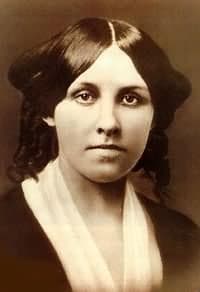
Biography coming soon.







