“You can't go back and change the beginning, but you can start where you are and change the ending.”
— Reflection on personal growth and redemption.

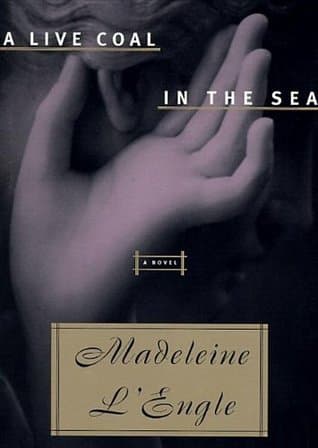
Madeleine L'Engle (1996)
Genre
Literary Fiction / Young Adult
Reading Time
420 min
Key Themes
See below
Sign in to track this book
When a granddaughter's unsettling question unearths generations of family secrets, Dr. Camilla Dickinson must confront a legacy of evil and the complex interplay of faith, love, and loyalty that binds her troubled lineage.
The novel opens with Dr. Camilla Dickinson, an elderly woman and respected psychiatrist, living a seemingly tranquil life. Her teenage granddaughter, Sarah, asks her an unsettling question: 'Are you really my grandmother?' This question shatters Camilla's composure, forcing her to confront the carefully constructed facade of her family history. The question acts as a catalyst, pulling Camilla back into the memories of her past, particularly those involving her own mother, Rose, and her son, Artaxias. Sarah's directness and the anxiety in her question hint at a deeper, unspoken family secret that has been simmering for generations, now threatening to demand answers.
Camilla's thoughts immediately turn to her mother, Rose, a woman of beauty and charm, but also one whose life was marked by extramarital affairs. Rose's infidelity created an unstable and emotionally difficult environment for young Camilla. Her father, a kind but passive man, was unable to shield Camilla from the pain and confusion caused by Rose's actions. Camilla remembers the constant tension, the hushed arguments, and the longing for a stable, loving family unit that was perpetually out of reach. Rose's magnetic personality attracted many, yet her inability to commit to a conventional life left a lasting scar on Camilla's psyche, influencing her own choices and her understanding of love and commitment.
As Camilla navigates her early adulthood and establishes herself as a psychiatrist, she meets Nikos Xanthakos, a brilliant and passionate Greek man. Their connection is immediate, offering Camilla the stability and deep love she had always wanted, a stark contrast to the chaotic emotional setting of her childhood. They marry, and their union is soon blessed with a son, Artaxias. Camilla pours all her hopes and dreams into this new family, determined to create a loving and secure home, free from the shadows of her own past. However, even in these early days, there are subtle hints of challenges to come, particularly in Artaxias's intense and sometimes demanding nature.
From a young age, Artaxias is a challenging child. He is intelligent and charismatic, but also prone to deep moods, manipulative tendencies, and an insatiable need for attention. Camilla, despite her professional expertise, struggles to understand and connect with her son on a fundamental level. As Artaxias grows older, his charm and talent lead him to become a successful television idol, adored by millions. However, the public persona hides a troubled individual, wrestling with inner demons, a volatile temper, and a tendency towards self-destructive behavior. His fame only amplifies his complexities, making it harder for Camilla to reach him.
Artaxias's personal life mirrors his internal turmoil. He enters into a series of tumultuous relationships and marriages, each one ending in heartbreak and chaos. He marries a woman named Leah, and they have a daughter, Sarah (the granddaughter who questioned Camilla). However, Artaxias's erratic behavior, infidelity, and emotional abuse eventually drive Leah away, leaving Sarah in Camilla and Nikos's care for extended periods. Artaxias's actions bring pain and disappointment to Camilla and Nikos, who watch helplessly as their son spirals further into self-destruction, seemingly unable to find peace or stability, despite their unwavering love and attempts to intervene.
As Sarah grows up, Camilla observes a resemblance between her granddaughter and her own mother, Rose – not just in physical appearance, but in a certain spirited, independent quality. This observation is coupled with a shocking revelation: Camilla learns that Leah, Artaxias's wife and Sarah's mother, has a hidden past. It is revealed that Leah is, in fact, the biological daughter of Rose and one of her many lovers. This discovery means that Artaxias and Leah are half-siblings, unknowingly marrying each other, and that Sarah is the product of this incestuous union. This revelation provides an answer to Sarah's initial question and explains the inherited complexities within the family.
The full, devastating truth comes to light: Leah is Rose's daughter, making her Artaxias's half-sister. Sarah's parentage is therefore rooted in an unknowing incestuous relationship. This revelation is a shock to Camilla, Nikos, and eventually, to Sarah herself. It casts a dark shadow over their family history, connecting Artaxias's troubled nature and Rose's promiscuity in a disturbing way. The family grapples with the ethical, emotional, and psychological implications of this legacy. Camilla, as a psychiatrist, understands the potential for inherited trauma and mental health challenges, and she feels the weight of this secret, recognizing how it has shaped and perhaps even cursed her family line.
Throughout the escalating family crises, Nikos Xanthakos remains Camilla's rock. His love for her is unwavering, and his deep faith provides a constant source of strength and hope. He is the moral compass of the family, often offering insights and compassion where Camilla, burdened by her professional understanding and personal pain, struggles. Nikos's Greek Orthodox background informs his perspective on forgiveness, mercy, and the enduring power of grace, even in the face of human failings. He believes in the possibility of redemption and that love can transcend even the darkest of circumstances, providing a vital counterpoint to the despair that threatens to engulf Camilla.
Camilla, despite her professional understanding of human psychology, finds it difficult to extend true forgiveness and mercy to Rose and Artaxias. The pain and trauma inflicted by her mother's actions and her son's destructive path run deep. She intellectualizes their behaviors but struggles to reconcile her emotional wounds. The concept of 'a live coal in the sea' – a symbol of divine mercy that can burn even in the most unlikely places – is a central metaphor for her internal struggle. She yearns to release her bitterness and resentment, to embrace the radical forgiveness that Nikos embodies, but finds the path challenging, especially when confronted with the ongoing repercussions of their choices.
Sarah, the victim of these intertwined family legacies, embarks on her own quest for truth and healing. Her initial question to Camilla was not born of malice, but a deep intuition that something was amiss. As she gradually learns the horrifying details of her parentage, she must reconcile this truth with her identity. Supported by Camilla and Nikos, Sarah begins to process the shock and pain, seeking to understand her place in the world and how to move beyond the shadow of her family's past. Her journey represents the possibility of breaking cycles of trauma and finding a future defined by hope rather than inherited pain, showing a generational shift towards healing.
Despite his long history of self-destruction, Artaxias experiences a moment of spiritual awakening and repentance towards the end of his life. This is not a sudden, miraculous cure for all his demons, but a genuine turning point where he acknowledges the pain he has caused and expresses a desire for forgiveness and connection. This moment of grace, however, is cut short. Artaxias dies prematurely, leaving his family to grapple with his complex legacy and the bittersweet nature of his late-found peace. His death, while painful, allows for a measure of closure and shows the novel's exploration of redemption, even in the final moments of a troubled life.
The novel concludes with Camilla, Nikos, and Sarah finding a path forward, scarred but not broken by the revelations and tragedies of their past. Camilla, through Nikos's unwavering example and her own deep reflection, begins to embrace the concepts of forgiveness and mercy, not as a denial of pain, but as a release from its bondage. Sarah, with the love and support of her grandparents, starts to forge her own identity, understanding her history but choosing not to be defined by its darkest aspects. The family learns that even amidst human failings and inherited trauma, love, faith, and the act of mercy can act as a 'live coal in the sea,' burning brightly and offering hope for healing and renewal across generations.
The Protagonist
Camilla moves from intellectualizing her family's trauma to truly embracing emotional forgiveness and mercy, finding peace with her past.
The Supporting
Nikos remains a steadfast source of spiritual and emotional strength, continually guiding Camilla towards mercy and forgiveness.
The Supporting
Rose's life is presented retrospectively, her character unchanging in her self-absorption, but her legacy is profoundly reinterpreted through later revelations.
The Supporting
Artaxias lives a life of self-destruction but experiences a moment of grace and repentance before his death, offering a bittersweet redemption.
The Supporting
Leah's arc is largely revealed through retrospective discovery, as her true parentage reshapes the family's understanding of its history and her role within it.
The Supporting
Sarah moves from an intuitive sense of unease to confronting the truth of her origins and beginning a path toward self-acceptance and future healing.
The Mentioned
His character remains static, serving as a historical point of reference for Camilla's childhood experience.
The novel explores how identity is shaped by family history, secrets, and the choices of previous generations. Sarah's initial question, 'Are you really my grandmother?', forces Camilla to re-evaluate her own identity in the context of her mother's past and her son's tragic life. For Sarah, discovering her true parentage challenges her sense of self, requiring her to reconcile a painful truth with her own aspirations. The characters must decide if they will be defined by their inherited traumas or forge their own path, embracing self-discovery amidst complexity.
“Are you really my grandmother?”
A central theme is the struggle to offer and receive forgiveness, particularly for deep hurts. Camilla, despite her professional understanding, finds it difficult to forgive Rose for her infidelities and Artaxias for his destructive behavior. Nikos, with his unwavering faith, embodies radical mercy, suggesting that grace can extend even to the most undeserving. The 'live coal in the sea' metaphor symbolizes this concept – that mercy can burn and bring light in the most unlikely and seemingly impossible circumstances, ultimately leading to healing for those who embrace it.
“A live coal in the sea—that's mercy. It burns even in the deepest, coldest places.”
The book examines how the choices of one generation can ripple through and impact subsequent ones. Rose's infidelity leads to Leah's hidden parentage, which in turn results in Artaxias and Leah's unknowingly incestuous marriage and Sarah's complicated birth. This creates a generational cycle of pain, secrecy, and psychological struggle. The novel probes the question of whether individuals are condemned to repeat family patterns or if it's possible to break free from such a legacy through conscious effort, love, and a willingness to confront the truth.
“The past is never dead. It's not even past.”
L'Engle explores the nature of love within a family context – the unconditional love of a parent, the complexities of marital love, and the enduring bond between grandparents and grandchildren. Despite the betrayals and pain, love remains a powerful, if sometimes strained, force within the Xanthakos family. Nikos's steadfast love for Camilla and Artaxias, and Camilla's protective love for Sarah, demonstrate its resilience. The novel suggests that true family love involves not just joy, but also the capacity to endure hardship, offer forgiveness, and continuously choose connection despite flaws.
“Love does not make you weak, it makes you vulnerable, and that is where your strength lies.”
The narrative shifts between the present and Camilla's past to reveal generational secrets.
The novel masterfully employs a dual timeline, constantly shifting between the present-day interactions of Camilla and Sarah and Camilla's vivid flashbacks to her childhood with Rose and her early life with Nikos and Artaxias. This device is crucial for gradually unfolding the complex family history and the long-held secrets. The past informs the present, with each flashback adding layers of understanding to the characters' motivations and the origins of the family's deep-seated traumas, culminating in the shocking revelation of Leah's true parentage and Sarah's origins.
Sarah's innocent question serves as the inciting incident for the entire narrative.
Sarah's simple question, 'Are you really my grandmother?', acts as the primary catalyst for the entire plot. It is not just a query but a profound challenge that shatters Camilla's carefully maintained composure and forces her to confront the buried truths of her family. Without this direct and unsettling question, Camilla might have continued to suppress the past. This device immediately establishes the central mystery and the emotional stakes, propelling the narrative forward as Camilla delves into her memories to find an answer, both for Sarah and for herself.
A recurring symbolic phrase representing divine mercy and enduring hope.
The phrase 'a live coal in the sea' functions as a powerful, central metaphor throughout the novel. It is primarily associated with Nikos's deep faith and his understanding of radical mercy – the idea that divine love and forgiveness can exist and even thrive in the most unlikely, darkest, or seemingly impossible circumstances, much like a burning coal in the depths of the ocean. This symbol provides a counterpoint to the pervasive themes of sin and trauma, offering hope for redemption and healing. It serves as a guiding principle for Camilla's eventual journey towards forgiveness.
Physical and behavioral similarities across generations hint at underlying truths.
The novel uses inherited resemblances, both physical and behavioral, as a subtle but significant plot device. Camilla notes Sarah's striking similarity to Rose, not just in looks but in a certain spirit, long before the biological connection is revealed. Artaxias's charismatic yet destructive tendencies can also be seen as an echo of Rose's self-centered charm and its consequences. These patterns serve as premonitions and clues, suggesting a deeper, often uncomfortable, genetic and psychological inheritance that foreshadows the eventual revelation of the incestuous family tree and the complex legacy of trauma.
“You can't go back and change the beginning, but you can start where you are and change the ending.”
— Reflection on personal growth and redemption.
“The only way to deal with an unfree world is to become so absolutely free that your very existence is an act of rebellion.”
— Discussion on freedom and resistance.
“We are all strangers in a strange land, longing for home, but not knowing where it is.”
— Exploration of belonging and identity.
“Love is not a feeling, it is an act of will.”
— Philosophical insight on the nature of love.
“The past is never dead. It's not even past.”
— Reflection on the enduring impact of history.
“To be human is to be flawed, and to be flawed is to be beautiful.”
— Meditation on human imperfection.
“Sometimes the most important thing in a whole day is the rest we take between two deep breaths.”
— Advice on mindfulness and self-care.
“The truth will set you free, but first it will make you miserable.”
— Observation on the painful process of truth.
“We do not see things as they are, we see them as we are.”
— Philosophical insight on perception.
“The only real failure is the failure to try.”
— Encouragement to take risks.
“In the midst of winter, I found there was, within me, an invincible summer.”
— Reflection on inner strength during hardship.
“The wound is the place where the light enters you.”
— Metaphor for healing and growth.
“To live is the rarest thing in the world. Most people exist, that is all.”
— Commentary on the depth of living.
“The unexamined life is not worth living.”
— Philosophical assertion on self-reflection.
Ready to see how well you understood this book? Take our interactive quiz with 10 questions.
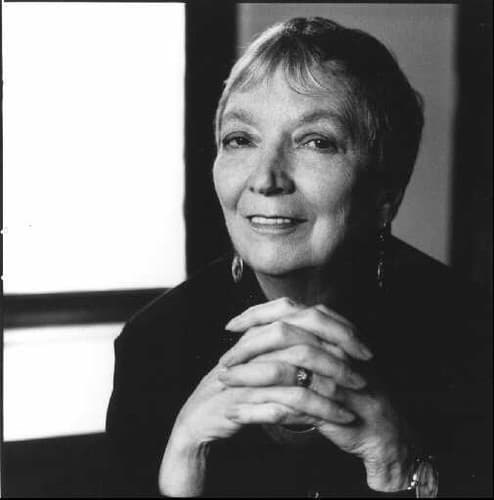
Madeleine L'Engle was an American writer of fiction, non-fiction, poetry, and young adult fiction, including A Wrinkle in Time and its sequels: A Wind in the Door, A Swiftly Tilting Planet, Many Waters, and An Acceptable Time. Her works reflect both her Christian faith and her strong interest in modern science.







