“He knew, then, that he was going to be an outsider his whole life, and all he could do was try to soften the edges of his exile.”
— Jude's early realization about his place in the world.

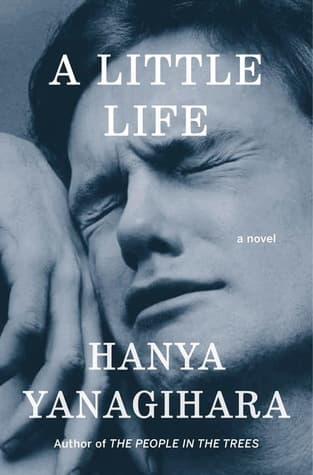
Hanya Yanagihara (2015)
Genre
Literary Fiction
Reading Time
1200 min
Key Themes
See below
Sign in to track this book
Follow four college friends navigating ambition, art, and devastating trauma in New York City, as their unwavering bond is tested by the enigmatic and increasingly broken Jude, whose unspeakable past threatens to define their lives forever.
The story opens with four friends—Jude St. Francis, Willem Ragnarsson, JB Marion, and Malcolm Irvine—graduating from a small Massachusetts college and moving to New York City. They share a cramped apartment in Chinatown, each pursuing their careers. Willem, an actor, works as a waiter. JB, an artist, struggles for recognition. Malcolm, an architect, faces disillusionment at a firm. Jude, the most private of the group, is brilliant and pursues a career in law. Their early days include shared meals, late-night conversations, and the close bond of their friendship, which is a support system as they navigate their new lives in the city. Jude's past, however, remains a carefully guarded secret, hinted at only by his physical scars and reticence.
As the friends mature, Jude St. Francis's career as a litigator skyrockets, making him a partner at a prominent law firm. Despite his professional success, his personal life is plagued by severe self-harm and chronic pain, stemming from a traumatic childhood. He frequently cuts himself, battles a debilitating back condition, and suffers from mysterious seizures. His friends, particularly Willem, grow concerned, though Jude remains private about his suffering and its origins. He pushes away attempts to help, often withdrawing or becoming irritable, creating a cycle of worry and frustration among those who love him. He eventually forms a deep bond with his former law professor, Harold Stein, and his wife, Julia.
Willem Ragnarsson, initially an actor, achieves significant success in Hollywood. Despite his demanding career, he remains Jude's most devoted friend, eventually becoming his life partner. Willem becomes Jude's primary caregiver, managing his medical appointments, tending to his self-inflicted wounds, and offering emotional support. He learns to interpret Jude's silences and anticipate his needs, becoming familiar with the patterns of Jude's pain and self-destruction. Their relationship deepens into a profound, platonic, and eventually romantic love. Willem provides a stable, loving presence that Jude desperately needs but often struggles to accept fully, fearing his own capacity for love and happiness.
JB Marion, the group's artist, achieves fame through his portraiture, often depicting his friends. His success is accompanied by a drug addiction, which strains his relationships. In a moment of artistic ambition and drug-fueled carelessness, JB creates a controversial series of portraits of Jude, depicting him in vulnerable and humiliating states, hinting at his suffering and scars without explicit detail. Jude perceives this public display as a betrayal of his trust and privacy. The incident causes a significant rift between JB and Jude, challenging their friendship and highlighting JB's self-centered tendencies and his struggle with empathy amidst his artistic pursuits.
Malcolm Irvine, the architect, eventually finds professional fulfillment and personal happiness, marrying Sophie and having children. He achieves a comfortable and stable life, a stark contrast to the tumultuous existences of Jude and JB. While Malcolm remains a loyal friend, his life becomes more separate from the intense daily dramas of Jude's struggles. He offers practical support and a steady presence, often hosting the friends at his home. Malcolm represents a different kind of success and normalcy within the group, a reminder of the varied paths their lives have taken, and his steady love for his friends, particularly Jude, is a quiet but constant force.
Harold Stein, Jude's former law professor, and his wife, Julia, grow close to Jude over the years. Witnessing Jude's loneliness and unaddressed trauma, Harold, who has no biological children, decides to formally adopt Jude as his son. This act provides Jude with the unconditional paternal love and familial stability he has craved his entire life. The adoption is a moment that offers Jude a sense of belonging and a legal familial identity. Harold's patient, unwavering love and support become a pillar in Jude's life, helping him to navigate his past, though the deep-seated wounds remain difficult to heal.
Through fragmented memories, therapy sessions, and confessions, the horror of Jude's childhood is gradually revealed. He was abandoned as an infant, raised in a monastery where he suffered sexual abuse, then passed through various foster homes and group homes, enduring further severe physical and sexual abuse, exploitation, and torture at the hands of multiple perpetrators. These revelations explain the depth of his self-harm, his chronic pain, his aversion to physical touch, and his inability to trust or accept love. The narrative explores the specific, graphic details of his past, illustrating how these experiences have irrevocably shaped his identity and continue to haunt his present, making true peace seem almost impossible.
Even with the love of Willem, Harold, and his friends, and despite years of therapy, Jude's self-destructive patterns persist. His self-harm escalates, sometimes requiring hospitalization, and his mental health deteriorates. He struggles with severe depression and anxiety, often feeling unworthy of love and convinced that he is a burden. The narrative emphasizes the chronic nature of his trauma, showing that love, while essential, is not a simple cure. His past is not something he can 'overcome'; it is a part of him that he constantly battles, leading to periods of extreme despair and isolation, even when surrounded by those who cherish him most.
In a shocking turn of events, Willem Ragnarsson dies in a car accident. He is hit by a drunk driver while returning home. Willem's death plunges Jude into unbearable grief and exacerbates his already fragile mental state. Willem was Jude's deepest connection, his protector, his lover, and his constant source of comfort and stability. His loss removes the primary anchor in Jude's life, leaving him feeling utterly alone and without hope. The accident is a catastrophic blow, confirming Jude's deepest fears about his inability to hold onto happiness and reinforcing his belief that he is destined for suffering and loss.
After Willem's death, Jude's remaining friends—Harold, JB, and Malcolm—rally around him, trying to provide support. Harold, in particular, becomes his steadfast companion, moving in with him. Despite their efforts, Jude's grief and his lifelong battle with trauma become insurmountable. He is haunted by Willem's absence and the memories of his past. The narrative portrays his slow decline into deep despair, marked by increasing self-isolation and a profound weariness. His friends continue to love him fiercely, but they are unable to save him from himself. The book concludes with Jude's eventual suicide, a tragic culmination of his lifelong suffering, but also a reflection of the enduring, though ultimately insufficient, love that surrounded him.
The Protagonist
Jude's arc is less about overcoming trauma and more about the relentless, lifelong struggle to live with it, ultimately finding moments of profound love and belonging before succumbing to its overwhelming weight.
The Supporting/Protagonist
Willem evolves from a naive aspiring actor into a devoted partner, his life increasingly defined by his selfless love and care for Jude, tragically cut short.
The Supporting
JB's arc sees him achieve artistic success but struggle with addiction and the consequences of his self-absorption, leading to estrangement and eventual reconciliation with Jude, marked by lingering regret.
The Supporting
Malcolm's arc is one of finding quiet contentment and stability, becoming a loving husband and father while remaining a steadfast, if sometimes distant, friend to Jude.
The Supporting
Harold's arc is defined by his profound act of paternal love, offering Jude a family and a sense of belonging, and enduring the heartbreak of Jude's persistent suffering.
The Supporting
Julia's arc is intertwined with Harold's, demonstrating a quiet, steadfast maternal love and acceptance for Jude.
The Supporting
Andy's arc is one of unwavering professional and personal commitment to Jude's health, enduring the frustrations and heartbreaks of Jude's self-destructive patterns.
The Mentioned/Antagonist
Brother Luke's 'arc' is not personal development but rather his lasting, destructive impact on Jude's life, serving as a foundational source of his trauma.
The novel explores how early childhood trauma, particularly abuse, shapes an individual's entire life. Jude's self-harm, chronic pain, inability to trust, and deep-seated feelings of unworthiness are direct consequences of his past. The book argues that trauma is not something one simply 'gets over,' but rather a fundamental alteration of self that requires constant management and often defines one's existence. Despite love and support, Jude's trauma remains an insurmountable force, demonstrating its relentless and pervasive power. This is evident in Jude's constant physical and psychological suffering, his cycles of self-mutilation, and his inability to fully accept happiness, as seen when he pushes away Willem or struggles with the concept of being loved by Harold.
“He was always like this: a man afraid of happiness, because he knew it could not last.”
The novel is a meditation on the redemptive and sustaining power of love, particularly within male friendships. The bond between Jude, Willem, JB, and Malcolm, and later Harold and Julia, is the central light in Jude's dark world. Willem's devotion, Harold's adoptive fatherhood, and the collective support of his friends provide Jude with moments of happiness and belonging. However, the book also starkly portrays the limits of love. While love can offer solace, companionship, and a reason to live, it cannot erase or fully heal the deepest wounds of trauma. Jude's friends try everything, but ultimately, they cannot save him from himself, highlighting that some suffering is too profound for even the strongest love to conquer.
“You see, Jude, in the end, love is all there is. It's the only thing that matters.”
Jude's identity is linked to his trauma. He sees himself as 'broken' and 'unworthy,' a perception that colors every interaction and decision. The novel explores how his past prevents him from forming a healthy sense of self. He struggles with his sexual identity, his professional identity as a respected lawyer, and his personal identity as a loved individual. His self-harm is a physical manifestation of his internal struggle, an attempt to control the pain by inflicting it upon himself. The repeated references to his scars, both visible and invisible, underscore how his past has literally inscribed itself onto his body and soul, making it impossible for him to escape the person he believes he is.
“He knew it was a luxury, to be loved. He knew it was a gift. He was not worthy of it.”
The book explores human suffering in its most extreme forms, detailing the horrific abuses Jude endures. It also examines the resilience of the human spirit, as Jude, despite everything, builds a successful career and forms deep, loving relationships. However, his resilience is not a linear path to recovery but a constant, exhausting battle. The novel questions whether there is a limit to how much a person can endure and still truly live. It shows that while the body and mind can survive unimaginable horrors, the cost of that survival can be a life forever marked by pain and a yearning for an end to the struggle, as seen in Jude's persistent suicidal ideation.
“But what was the point of living, if you had to be careful with your life?”
For Jude, happiness is a fleeting and often terrifying state. He views it with suspicion, convinced it cannot last and will inevitably be followed by greater pain. The novel explores how trauma can prevent one from fully embracing joy, creating a cycle where moments of contentment are undermined by a deep-seated fear of loss or unworthiness. Even when surrounded by love and success, Jude struggles to find lasting peace, seeing happiness as a temporary reprieve rather than a sustainable state. This theme is poignant in his relationship with Willem, where moments of joy are always tinged with Jude's underlying despair and fear of abandonment.
“He was perpetually waiting for the other shoe to drop.”
The story jumps between different time periods and perspectives.
The novel frequently shifts between different points in time, from the friends' college days to their middle age, and uses flashbacks to reveal Jude's traumatic past in fragments. This non-linear structure mirrors the fractured nature of memory and trauma, slowly piecing together Jude's history and the evolution of his relationships. It creates a sense of suspense and allows the reader to understand the present-day consequences of past events without fully knowing their origins until much later in the story.
The narrative often shifts its focus to different characters' internal lives.
While Jude is the central character, the narrative frequently delves into the thoughts and feelings of Willem, JB, Malcolm, and Harold. This allows the reader to understand the profound impact Jude has on those around him and to witness their varying struggles to understand and help him. It also highlights the different ways each friend processes their shared experiences and their individual relationships with Jude, creating a more comprehensive and empathetic portrayal of their complex dynamics.
Explicit and unflinching descriptions of violence and its aftermath.
The novel employs extremely graphic and detailed descriptions of Jude's self-harm and the past abuses he suffered. This unflinching portrayal serves to convey the severity and reality of his trauma, making it impossible for the reader to distance themselves from his pain. It is a deliberate choice to immerse the reader in the visceral experience of his suffering, underscoring the novel's themes of trauma and its enduring impact, and challenging conventional notions of what is comfortable to read.
Jude's physical scars represent his invisible emotional wounds.
Jude's numerous physical scars, both from childhood abuse and self-harm, are a recurring motif. They are not merely superficial injuries but profound symbols of his internal, emotional wounds. They serve as a constant reminder of his past, a barrier to intimacy, and a visible manifestation of his hidden suffering. The act of self-harm itself is symbolic of his attempt to control his pain, to make the internal external, and to punish himself for a past he believes defines him as unworthy.
Certain aspects of Jude's past remain ambiguous or unexplained.
Despite the extensive revelations about Jude's childhood, some elements of his past, particularly the earliest years at the monastery, remain shrouded in a degree of ambiguity or are only partially explained. This reflects the fragmented nature of traumatic memory and the limitations of recollection. It also emphasizes that some suffering is so profound it defies full articulation or understanding, mirroring the psychological reality that not all questions about deep trauma have clear, definitive answers, leaving a lasting sense of mystery and horror.
“He knew, then, that he was going to be an outsider his whole life, and all he could do was try to soften the edges of his exile.”
— Jude's early realization about his place in the world.
“You don't just love someone from a distance; you love them up close, and you love them through their worst, and you love them through their best, and you love them, and you love them, and you love them.”
— Willem reflecting on the nature of his deep love for Jude.
“The only way to get through life is to suffer, and to suffer, and to suffer. And then to die.”
— Jude's bleak outlook on existence, reflecting his trauma.
“Wasn't that the point of life: to be in pain, to be in love, to be in joy, to be in awe?”
— A more nuanced, if still complex, perspective on life's experiences.
“Friendship was witnessing another's slow, careful descent into themselves, and then, over years, decades, guiding them back.”
— Malcolm's understanding of deep friendship.
“He wonders if it is possible to be a person who is not afraid, a person who doesn't constantly feel as if he were walking a tightrope, a person who doesn't constantly feel as if he were about to fall.”
— Jude's internal struggle with anxiety and fear.
“What was the point of life if you couldn't be together with the people you loved?”
— A character grappling with the pain of separation and loss.
“You can't be friends with someone if you're always trying to save them.”
— Andy's advice to Willem about his relationship with Jude.
“He learned that what you didn't say was often as important as what you did.”
— Jude's experience with unspoken truths and secrets.
“There are times in life when you feel like the world is ending, and you just want to curl up and die. But then you remember that you have people who love you, and you can't abandon them.”
— A moment of despair countered by the thought of loved ones.
“It was a terrible thing to be an adult. To be responsible for your own happiness. To know that you would never be saved.”
— Jude's somber reflection on adulthood and self-reliance.
“He had wanted to be good. He had wanted to be worthy. He had wanted to be loved.”
— Jude's fundamental desires, often unmet due to his past.
“But the thing about remembering is that it's a choice.”
— A character contemplating the burden and power of memory.
“What was the point of being alive if you didn't try to make things better for other people?”
— Harold's philanthropic and compassionate view on life's purpose.
Ready to see how well you understood this book? Take our interactive quiz with 10 questions.

Biography coming soon.







