“For the Lord God is a sun and shield; the Lord bestows favor and honor. No good thing does he withhold from those who walk uprightly.”
— A key biblical verse that underpins the themes of God's provision and faithfulness throughout the narratives.

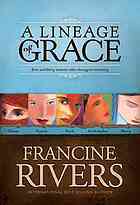
Francine Rivers (2003)
Genre
Historical Fiction / Spirituality / Romance
Reading Time
Variable (as it's a compilation, likely several hours)
Key Themes
See below
Sign in to track this book
Five ordinary women—Tamar, Rahab, Ruth, Bathsheba, and Mary—defied social rules and followed God's call to be part of Christ's family line.
Tamar, wife of Judah's oldest son Er, becomes a widow when Er dies, called wicked by God. Judah gives her to his second son, Onan, who also dies because he would not have children with Tamar to give his brother an heir. Judah, worried about his third son Shelah, sends Tamar back to her father's house, promising to give Shelah to her when he grew up. Years pass, and Shelah is old enough, but Judah does not keep his promise. Realizing Judah will not keep his word, Tamar acts. When she learns Judah is coming to Timnah for sheep shearing, she dresses as a prostitute and waits for him by the road. Judah, not knowing who she is, sleeps with her, offering his signet ring, cord, and staff as a promise for a young goat. Tamar gets pregnant and later shows her pregnancy and Judah's fatherhood, using the items as proof. Judah publicly says she is right, and she gives birth to twin sons, Perez and Zerah, making sure she is in the family line.
Rahab works as a prostitute in Jericho, a city full of fear as news of the coming Israelites and their God's power spreads. When two Israelite spies, Salmon and Phinehas, come to Jericho to look at the land, they find shelter in Rahab's house, which is part of the city wall. The king of Jericho, hearing they are there, sends soldiers to catch them. Rahab, despite the great danger, hides the spies under stalks of flax on her roof. She then lies to the king's men, telling them the spies had already left the city. After the soldiers leave, Rahab goes to the spies and says she believes in the God of Israel, having heard of His acts, including the Red Sea parting. She makes an agreement with them, asking that when the Israelites take Jericho, her family be saved. The spies agree, telling her to tie a red cord in her window as a sign. Rahab helps them escape by lowering them down the city wall, and she and her family stay safe during Jericho's attack and destruction.
Naomi, an Israelite woman, moves to Moab with her husband Elimelech and two sons during a famine in Bethlehem. Her sons marry Moabite women, Orpah and Ruth. Sadly, Elimelech and both sons die, leaving Naomi, Orpah, and Ruth as widows. Naomi decides to go back to her home, Bethlehem, and tells her daughters-in-law to stay in Moab with their own people. Orpah sadly agrees, but Ruth refuses to leave Naomi. Ruth says with strong loyalty and faith, 'Where you go I will go, and where you stay I will stay. Your people will be my people and your God my God. Where you die I will die, and there I will be buried.' They travel to Bethlehem, arriving at the start of the barley harvest. Naomi is sad and tells the townspeople to call her Mara (meaning bitter) instead of Naomi (meaning pleasant). Ruth, showing her commitment, goes to gather grain in the fields to get food, specifically in the field of Boaz, a rich and kind relative of Elimelech.
Ruth continues to gather grain in Boaz's fields, where she is treated with kindness and protection, thanks to Boaz's orders to his workers. Naomi, seeing Boaz's role as a family redeemer, plans for Ruth to approach him. Following Naomi's instructions, Ruth goes to the threshing floor where Boaz is sleeping after cleaning barley. She uncovers his feet and lies down. When Boaz wakes up, surprised, Ruth shows herself and asks him to 'spread the corner of your garment over me,' a request for marriage and protection as a family redeemer. Boaz, moved by her loyalty and goodness, agrees, but says there is a closer relative. He promises to fix the matter. The next day, Boaz talks to the closer relative at the city gate in front of the elders. The relative first agrees to buy Elimelech's land but refuses when he learns it also means marrying Ruth and having a child in Elimelech's name, fearing it would harm his own family inheritance. Boaz then publicly says he will buy the land and marry Ruth. The elders bless the marriage, and Ruth and Boaz marry, later having a son named Obed, who becomes King David's grandfather.
Bathsheba, Uriah the Hittite's wife, a loyal soldier in King David's army, is seen by David bathing from his rooftop. David, wanting her, sends for her and sleeps with her, resulting in her pregnancy. To hide what he did, David tries to bring Uriah home from battle, hoping he will sleep with Bathsheba and think the child is his. Uriah, however, will not go home while his fellow soldiers are fighting. Desperate, David tells his commander, Joab, to put Uriah in the hardest part of battle, making sure he dies. Uriah is killed, and after a time of sadness, David marries Bathsheba. The Lord is unhappy, and the prophet Nathan tells David a story, showing his sin. David feels deep sorrow. The child born from their adultery gets sick and dies because of their sin. David and Bathsheba mourn, but later, they find comfort and have another son, Solomon. Through her change of heart and trust in God, Bathsheba goes from a troubled past to become the mother of Israel's wisest king and an ancestor of Jesus.
Mary, a young virgin in Nazareth engaged to Joseph, a carpenter, is visited by the angel Gabriel. Gabriel greets her with the words, 'Greetings, you who are highly favored! The Lord is with you.' Mary is troubled by this greeting, wondering what it means. Gabriel tells her not to be afraid, for she has found favor with God. He then gives her the news: she will have a son, and she is to name him Jesus. This child will be great and called the Son of the Most High; the Lord God will give him the throne of his father David, and he will rule over Jacob’s family forever; his kingdom will never end. Confused but not doubting God's power, Mary asks how this can be, since she is a virgin. Gabriel explains that the Holy Spirit will come upon her, and the power of the Most High will cover her, so the holy one born will be called the Son of God. As a sign, he tells her that her older relative Elizabeth, who was thought unable to have children, is also pregnant. Mary, with humility and faith, answers, 'I am the Lord’s servant; may your word to me be fulfilled.' She then travels to visit Elizabeth.
After getting the angel Gabriel's message, Mary travels to the hill country of Judea to visit her relative Elizabeth, who is also miraculously pregnant in her old age. As soon as Mary greets Elizabeth, the baby in Elizabeth's womb (John the Baptist) jumps for joy, and Elizabeth is filled with the Holy Spirit. Elizabeth says, 'Blessed are you among women, and blessed is the child you will bear! But why am I so favored, that the mother of my Lord should come to me? As soon as the sound of your greeting reached my ears, the baby in my womb leaped for joy.' This moment confirms Gabriel's message to Mary and shows her miraculous pregnancy is real. Mary then sings a hymn of praise, known as the Magnificat, honoring God for His acts, His mercy, and His faithfulness to His promises, especially in helping the humble and remembering His servant Israel. Mary stays with Elizabeth for about three months before returning home to Nazareth, her faith stronger and her understanding of God's plan deeper.
When Mary returns to Nazareth, her pregnancy becomes clear. Joseph, her engaged partner, is a good man and is troubled by this. He knows the child is not his, and under Jewish law, Mary could face public shame or even death. Not wanting to shame her, Joseph quietly decides to divorce her. However, before he can do this, an angel of the Lord appears to him in a dream. The angel tells Joseph, 'Joseph son of David, do not be afraid to take Mary home as your wife, because what is conceived in her is from the Holy Spirit. She will give birth to a son, and you are to give him the name Jesus, because he will save his people from their sins.' The angel also says this fulfills Isaiah's prophecy: 'The virgin will conceive and give birth to a son, and they will call him Immanuel' (which means 'God with us'). Joseph, waking from his dream, obeys the angel's command right away. He marries Mary, showing his faith and commitment to God's plan, though he does not sleep with her until after Jesus' birth.
Emperor Augustus orders a count of everyone, requiring all to return to their family towns for registration. Since Joseph is from David's family, he must travel from Nazareth in Galilee to Bethlehem in Judea, David's town. Mary, very pregnant, goes with him on the long journey. When they get to Bethlehem, all the inns are full, leaving them nowhere to stay. They must find shelter in a stable, a simple place for animals. While there, Mary gives birth. She delivers her first son, Jesus, and wraps him in cloths, laying him in a manger, an animal feeding trough. In nearby fields, shepherds are watching their flocks when an angel of the Lord appears to them, announcing the good news of the Savior's birth. Many angels then praise God. The shepherds immediately go to Bethlehem and find Mary, Joseph, and the baby in a manger, as the angel had told them.
Some time after Jesus' birth, wise men from the East arrive in Jerusalem, guided by a star. They look for the 'king of the Jews' who has been born, having seen his star and come to worship him. King Herod is troubled by this news, as are all in Jerusalem. He secretly calls the wise men and learns from them when the star appeared. He then sends them to Bethlehem, telling them to search for the child and report back to him, pretending he wants to worship the child himself. The star appears again and leads the wise men directly to the house where Jesus is with Mary and Joseph. They bow down and worship him, offering gifts of gold, frankincense, and myrrh. Warned in a dream not to return to Herod, they leave for their own country by a different way. After they leave, an angel of the Lord appears to Joseph in a dream, warning him of Herod's plan to kill Jesus and telling him to flee to Egypt with Mary and the child. Joseph immediately obeys, taking his family to Egypt, where they stay until Herod's death, fulfilling prophecy.
The Protagonist
From a grieving and wronged widow, Tamar transforms into a proactive agent of her own destiny, securing her place in God's plan.
The Protagonist
Rahab transitions from a woman living in sin and fear to a woman of profound faith and courage, redeemed and integrated into God's chosen people.
The Protagonist
Ruth transforms from a grieving foreign widow into a beloved and respected member of Israel, finding security and purpose through her steadfast faith and loyalty.
The Supporting
Naomi's arc moves from deep despair and bitterness to renewed hope and joy, finding her family's legacy restored through Ruth's faithfulness.
The Supporting
Boaz, already a righteous man, acts as God's instrument of redemption, fulfilling his role as kinsman-redeemer and becoming a patriarch in the lineage of Christ.
The Protagonist
From a victim of circumstance and her own beauty, Bathsheba endures tragedy and finds redemption, becoming a wise queen and mother of Solomon.
The Supporting
David's arc in this story highlights a fall from grace due to sin, followed by deep repentance, divine judgment, and eventual restoration through God's mercy.
The Protagonist
Mary's arc is one of humble acceptance of a divine calling, transitioning from an ordinary girl to the revered mother of the Messiah, navigating societal challenges with unwavering faith.
The Supporting
Joseph's arc portrays a man who, despite personal confusion and societal pressure, chooses faith and obedience to God's plan, becoming a protective and loving earthly father to Jesus.
This theme is a main idea in 'A Lineage of Grace,' showing God's mercy and ability to use even the most difficult situations for His plans. Each woman, from Tamar's desperate act to Bathsheba's adultery, finds herself in a situation that would usually bring shame. Yet, God's grace lifts them up, using their stories—and their human faults—to complete His plan of salvation through Jesus Christ. Rahab, a prostitute, is changed through faith; Ruth, a foreigner, is accepted; and Mary, a humble virgin, is chosen for a great honor. The story always shows that God's favor is not based on what people deserve or their social standing, but on His choice and saving love.
“For where sin increased, grace increased all the more.”
Each woman in the family line shows faith and obedience when facing personal and social difficulties. Tamar acts from faith that God wants Judah to have an heir. Rahab chooses to believe in the God of Israel and risks her life to protect His spies. Ruth's commitment to Naomi, and to Naomi's God, is a strong act of faith. Bathsheba, after her fall, finds her way to change and trust in God's mercy. Mary's humble 'I am the Lord’s servant; may your word to me be fulfilled' shows great obedience. Their stories show that true faith often means making hard choices and trusting God's plan even when it does not make human sense or follow usual rules.
“I am the Lord’s servant; may your word to me be fulfilled.”
A repeated theme is God's way of working through unexpected people and situations, often going against human hopes and social rules. The women chosen for Christ's family line are not all from perfect backgrounds; they include a woman who used deception (Tamar), a prostitute (Rahab), a foreign Moabite (Ruth), and a woman involved in adultery (Bathsheba). Even Mary's virgin birth is a great change from the natural order. This theme shows that God's wisdom and power go beyond human limits and judgments, showing His ability to use the 'weak' and 'foolish' things of the world to do His plans, thus showing His power and questioning common ideas of 'worth.'
“God chose the foolish things of the world to shame the wise; God chose the weak things of the world to shame the strong.”
The book shows these five women as strong, determined people who actively shape their lives and help God's plan. They are not passive but women who make brave decisions, take chances, and show strength. Tamar's will to secure her family line, Rahab's bold act of faith, Ruth's loyalty and action, Bathsheba's journey of change and wisdom, and Mary's humble yet deep acceptance of her call all show their active roles. Their stories question the male-dominated rules of their time, showing their important parts in the story of salvation and their worth and strength.
“She rises while it is yet night and provides food for her household.”
Expands on brief biblical accounts to create rich, character-driven narratives.
Rivers takes the sparse, often terse biblical accounts of these women and dramatically expands upon them. She fills in emotional gaps, imagines dialogue, and creates detailed psychological profiles and socio-cultural contexts for each character. This device allows readers to deeply empathize with the women's struggles, motivations, and triumphs, making their stories more accessible and impactful than the original scriptural summaries. It transforms historical figures into relatable individuals facing profound moral and spiritual dilemmas, without contradicting the core biblical narrative.
Connects seemingly disparate stories through the shared theme of Christ's ancestry.
The overarching structure of the book, presenting five distinct novellas, is united by the common thread of each woman's place in the lineage of Jesus Christ. This device highlights the miraculous and intentional nature of God's plan, showing how diverse lives, across different eras and circumstances, were purposefully woven together to bring about the Messiah. It emphasizes the continuity of God's covenant promises and His meticulous attention to detail in human history, demonstrating that every life, regardless of its perceived status or past, can contribute to His divine purpose.
Focuses intensely on the internal lives, motivations, and spiritual journeys of the protagonists.
Rather than merely recounting events, the narrative delves deeply into the inner world of each woman. Rivers explores their fears, desires, spiritual struggles, and moments of decision. This device allows readers to understand *why* each woman made the choices she did, particularly in challenging moral or social situations. It fosters a strong sense of empathy and makes their spiritual transformations and acts of faith more powerful and resonant, emphasizing the personal and relational aspects of their walk with God.
Uses specific objects or actions to convey deeper theological meaning.
The scarlet cord in Rahab's story is a potent symbol of salvation and a foreshadowing of the blood of Christ. Similarly, the act of 'spreading a garment' over Ruth by Boaz is a deeply symbolic gesture of protection, commitment, and redemption. These symbols enrich the narrative, connecting the specific events of each woman's life to broader biblical themes of covenant, sacrifice, and ultimate salvation. They provide visual and narrative cues that resonate with readers familiar with Christian theology, deepening the spiritual impact of the stories.
“For the Lord God is a sun and shield; the Lord bestows favor and honor. No good thing does he withhold from those who walk uprightly.”
— A key biblical verse that underpins the themes of God's provision and faithfulness throughout the narratives.
“Sometimes God uses the most unlikely people to accomplish His purposes.”
— A recurring realization as the stories of women with checkered pasts unfold.
“Fear can be a prison, but faith can set you free.”
— A lesson learned by several characters who faced daunting challenges.
“Love is not a feeling; it is a choice. It is a commitment.”
— Explored through various marital relationships, highlighting the endurance required.
“God's grace is sufficient for all our weaknesses, our mistakes, our sins.”
— A core theological message emphasized through the forgiveness and new beginnings offered to the women.
“Even in our darkest moments, God is there, working His will.”
— Characters facing despair and hardship find solace and purpose through their faith.
“A woman's greatest strength is often found in her quiet submission to God's plan.”
— Highlighted through the lives of women who, despite their personal desires, ultimately align with God's will.
“No matter how far we stray, God's arms are always open to welcome us home.”
— Reflects the prodigal son theme, often applied to characters who return to faith.
“True beauty comes from within, from a heart devoted to God.”
— Contrasted with superficial beauty, emphasizing spiritual depth over physical appearance.
“God uses broken people to do His greatest work.”
— A powerful theme as characters overcome their pasts and are used for divine purposes.
“The past does not define you; God's grace does.”
— Characters struggle with their past mistakes but find freedom and identity in God's grace.
“Faith is not the absence of doubt, but the courage to believe despite it.”
— Characters often face moments of doubt and uncertainty, yet choose to trust God.
“Every life has a purpose in God's grand design, no matter how insignificant it may seem.”
— Encourages readers to see their own lives as part of a larger divine plan.
“Forgiveness is not just for the one who wronged you, but for your own heart.”
— Characters often grapple with bitterness and resentment, finding peace through forgiveness.
Ready to see how well you understood this book? Take our interactive quiz with 10 questions.
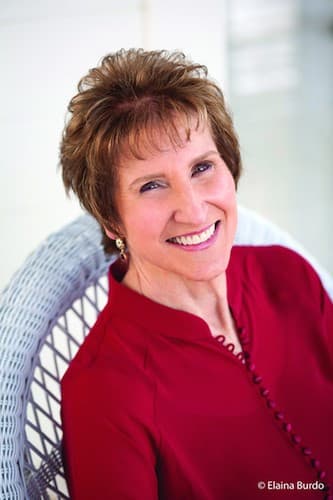
Francine Sandra Rivers is an American author of fiction with Christian themes, including inspirational romance novels. Prior to becoming a born-again Christian in 1986, Rivers wrote historical romance novels. She is best known for her inspirational novel Redeeming Love, while another novel, The Last Sin Eater, received its own film adaptation released in 2007 by Fox Faith. A film based on Redeeming Love was released on January 21, 2022 through Pinnacle Peak Pictures and Universal Pictures.







