“A man can be poor in money, but he can be rich in land.”
— Tobias MacIvey reflecting on the value of land over wealth.

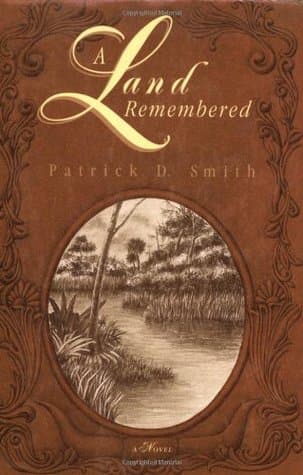
Patrick D. Smith (1984)
Genre
Historical Fiction
Reading Time
10-12 hours
Key Themes
See below
Sign in to track this book
From the Florida frontier of 1858 to the exploited land of 1968, three generations of the MacIvey family climb from poverty to real estate wealth, only to face the cost of their own ambition.
In 1858, Tobias MacIvey, a poor cracker, arrives in the Florida wilderness with his wife Emma and their two-year-old son, Zechariah (Zech). They settle near Lake Okeechobee, immediately facing challenges from the harsh environment, including mosquitoes, alligators, and dense scrub. Their first home is a simple lean-to, and they survive by Tobias's hunting and Emma's cleverness. They quickly learn the dangers of the land, meeting Seminole Indians and other early settlers. Tobias wants to make a living and raise cattle, a goal that defines the family's first fight against nature and isolation. He trades with distant settlements, slowly gaining possessions and establishing their presence in the vast, wild territory.
The MacIveys build a log cabin and begin to get cattle, branding them with their 'TB' mark. Tobias learns survival skills from a Seminole named Keith Tiger, including how to navigate swamps and hunt. A bad freeze kills most of their cattle, leaving the family almost starving. Tobias shows his strength by walking hundreds of miles to buy new stock, showing his strong will. During this time, Zech grows, learning to ride and hunt with his father, forming a close bond with the land and its animals. The family faces threats from rustlers and the constant dangers of the wilderness, but their connection grows stronger through shared difficulties.
The Civil War causes Tobias to leave his family and join the Confederate army. Emma and Zech are left alone to manage the growing cattle herd and protect their home. They face extreme hardship, relying on their intelligence and the help of their black friend, Skillit. Confederate deserters become a big threat, raiding their supplies and trying to steal their cattle. Zech, still a boy, has to grow up fast, often taking on the role of protector. When Tobias returns, he is changed by the war. The family rebuilds their lives, but the war's effects stay with them, especially Tobias, who struggles with the violence he saw.
With the war over, the need for beef in Cuba and the North grows, leading Tobias and Zech to start long cattle drives across Florida to the coast. These drives are full of danger, including stampedes, difficult swamps, and encounters with wild animals and hostile people. They partner with Skillit, who becomes a vital part of their work. Through hard work and good business sense, the MacIveys begin to get rich, changing from small farmers to important cattlemen. Zech, now a young man, shows himself to be a skilled cracker and a natural leader, having his father's strength and love for the land.
Zech meets and falls in love with Solly, a strong and independent young woman. They marry and have a son, Solomon, continuing the MacIvey family. Zech takes over more of the daily cattle business, expanding their herds and influence. Solly, like Emma, proves to be a strong frontier woman, supporting her family and helping their success. The family's wealth grows, allowing them to get more land and improve their homes. However, Florida's changing environment, with more settlers and development, begins to shift the family's connection to the wild land they once knew.
After a long life, Tobias MacIvey dies, leaving Zech to continue the family's work. Tobias's death is a turning point, as Zech fully takes on leadership. He keeps expanding the cattle business, getting large amounts of land. Zech's son, Solomon, grows up learning the cattle trade, just as Zech did from Tobias. Zech keeps the family's close connection to the land, though he also sees progress coming. He teaches Solomon the importance of hard work, respect for nature, and family, preparing him for the challenges of a rapidly changing Florida.
As Solomon MacIvey grows, Florida changes greatly. Cattle drives become less common as railroads and new transport methods appear. Real estate development booms, and the large lands the MacIveys had for cattle become very valuable. Solomon, unlike his father and grandfather, is more interested in business and development than in the hard life of a cracker. He sees the chance for wealth in selling parts of the family's land. This change moves away from the family's first values, as the focus shifts from living off the land to making money from selling it.
Solomon fully uses the chances offered by Florida's land boom. He starts selling large parts of the MacIvey estate, developing them into towns, farms, and resorts. His business skill leads to great wealth and influence, changing the MacIveys from pioneering cattlemen into powerful real estate owners. He builds big homes and lives a rich life, far from Tobias's humble beginnings. While very successful, he feels an internal conflict as he sees the lasting damage to the natural Florida his ancestors valued, a land he himself is now helping to reshape.
As Solomon gets older, he sees the results of the unchecked development he led. The once clean rivers and swamps are polluted, wildlife is destroyed, and the large, open spaces are replaced by concrete and neighborhoods. He sees the destruction of the wilderness that supported his family for generations. A deep feeling of guilt and regret begins to affect him, realizing that getting rich has come at a permanent cost to the land he inherited. He feels less connected to the values of Tobias and Zech, who lived in harmony with nature.
In his later years, Solomon MacIvey, an old man in 1968, tries to make up for his part in destroying Florida's wilderness. He buys a large area of untouched land, like the clean Florida his grandfather Tobias first saw. His goal is to preserve this land, making sure at least one piece of the original wilderness stays untouched by development. This act is a moving attempt to reconnect with his family's past and to honor Tobias and Zech. He thinks about the irony of his family's journey, from struggling to survive on the land to using it for profit, and his final effort to protect a piece of what was lost.
The Protagonist
From a dirt-poor pioneer fighting for survival, Tobias builds a cattle empire through sheer grit, always remaining true to his humble origins and respect for nature.
The Supporting
Emma transforms from a young mother facing desperate circumstances into a pillar of strength, maintaining her grace and resolve throughout a life of hardship.
The Protagonist
From a wilderness-raised boy who learns directly from his father, Zech grows into a powerful cattleman, maintaining the family's connection to the land while expanding their fortune.
The Supporting
Solly joins the MacIvey family, bringing her own strength and intelligence, and helps guide the family into its next generation.
The Protagonist
Solomon transforms from an ambitious real estate tycoon contributing to environmental destruction, to a man filled with regret who attempts to preserve the last vestiges of wild Florida.
The Supporting
Skillit remains a constant, loyal, and skilled companion to two generations of MacIveys, showcasing unwavering friendship and professionalism.
The Supporting
Keith Tiger briefly appears as a wise mentor, imparting crucial survival knowledge to Tobias, then fades as the Seminoles are pushed further into the Everglades.
The Supporting
Frog remains a steady presence, embodying the enduring spirit of the Florida cracker cowboy even as the world around him changes.
The novel's main theme is humanity's interaction with the Florida wilderness, from struggle to eventual exploitation. Tobias and Emma first fight nature for survival, respecting its power while trying to make a living. Scenes of freezes, hurricanes, and animal encounters show this struggle. As generations pass, the relationship changes from living together to control, ending with Solomon's generation actively changing and destroying the natural land for money. The book laments the loss of the wild land, showing the lasting impact of human progress.
“And there was the land, a land of beauty and terror, of endless promise and crushing despair. A land to be remembered.”
The MacIvey family's journey is a classic American success story: rising from poverty to great wealth and influence. Tobias's first dream is simply to support his family and own land. Zech expands this into a large cattle business. Solomon then turns this into a real estate fortune. However, the novel explores the moral and environmental cost of this dream. The pursuit of wealth leads to the destruction of the land that gave them their first chance, making Solomon face the emptiness of material gain without caring for the environment.
“He knew that what he had done was wrong, that he had helped destroy the beautiful land his father and grandfather had loved.”
The novel carefully follows three generations of the MacIvey family, showing how each generation adapts to and changes Florida. Tobias establishes the pioneering spirit and connection to the land. Zech expands the cattle business, bridging the gap between wilderness and growing civilization. Solomon, however, marks a big change, putting profit over preservation, which leads to a crisis of conscience. The theme explores how values and priorities change across generations, and how one generation's choices affect the next, for good or bad.
“Each generation had its own dreams, its own battles to fight, its own way of looking at the land.”
Initially, the MacIveys, especially Tobias and Zech, show great respect for Florida's land and wildlife. Tobias learns from the Seminoles, and both he and Zech live in balance with the environment, understanding its cycles and limits. This respect extends to their relationships with people like Skillit and the Seminoles, valuing individuals regardless of race or background. As the family gets richer and Solomon takes over, this respect fades, replaced by seeing the land as something to sell. The novel is a strong lament for this lost respect, urging a return to caring for the land.
“The land was not something to be owned, but something to be cared for, to be loved.”
From Tobias's early fight against starvation and a bad freeze to Zech's hard cattle drives and battles with rustlers, the MacIvey family shows remarkable strength. They face huge difficulties, including natural disasters, war, poverty, and isolation, yet they never give up. This theme highlights the strong spirit of early Florida pioneers and their ability to overcome problems through sheer determination and hard work. Their persistence is the basis of their eventual success, even as that success ultimately leads to new kinds of conflict.
“They had learned to live with the land, to take its blows and rise again, stronger for the struggle.”
Follows the MacIvey family across three generations, illustrating societal and environmental changes.
The novel spans over a century, chronicling the lives of Tobias, Zech, and Solomon MacIvey. This generational structure allows Patrick Smith to illustrate the profound transformation of Florida from a wild frontier to a developed state. It highlights how the family's values, relationship with the land, and definition of 'success' evolve (and sometimes devolve) with each passing generation. This device also emphasizes the long-term consequences of human actions on both the environment and family legacy, culminating in Solomon's reflective regret.
Florida's wilderness is a dynamic, living entity that shapes the characters and plot.
Florida's natural environment – the swamps, scrub, forests, rivers, and wildlife – is not merely a setting but an active force in the narrative. It challenges the MacIveys, provides for them, and ultimately suffers at their hands. The land's transformation from pristine wilderness to exploited resource mirrors the family's journey and is central to the novel's thematic concerns. Descriptions of its beauty and its devastation are vivid and emotionally charged, making the land's fate as compelling as that of the human characters.
Epic journeys that serve as a crucible for character development and plot advancement.
The long, perilous cattle drives undertaken by Tobias and Zech are recurring plot devices. These drives are not just economic endeavors; they are tests of endurance, skill, and character. They provide opportunities for the MacIveys to demonstrate their resilience, forge deep bonds with companions like Skillit, and confront the dangers of the wilderness. The drives also mark the passage of time and the growth of the MacIvey fortune, while vividly illustrating the arduous life of a Florida cracker cowboy and the scale of their enterprise.
Solomon's reflections in 1968 frame the historical narrative of his ancestors.
The story begins and ends with an aged Solomon MacIvey in 1968, looking back on his family's history. This framing device allows the entire narrative of Tobias and Zech to be presented as a long flashback or a remembered history. It provides Solomon's perspective, colored by his regret and the environmental destruction he witnesses, giving the historical events a poignant context and emphasizing the theme of loss. It underscores that the past is always present, informing the moral reckoning of the final generation.
A simple cattle brand symbolizing family identity, heritage, and connection to the land.
The 'TB' brand, initially created by Tobias MacIvey for his cattle, serves as a powerful symbol throughout the novel. It represents the family's identity, their hard-won heritage, and their claim to the land. As the cattle empire grows, the brand becomes synonymous with the MacIvey name and their success. It signifies their roots in the cracker tradition and their initial connection to the wild Florida. Even as Solomon shifts to real estate, the 'TB' brand is a constant reminder of where the family came from and the values that originally defined them.
“A man can be poor in money, but he can be rich in land.”
— Tobias MacIvey reflecting on the value of land over wealth.
“The land is all we have. It's our past and our future.”
— Solomon MacIvey discussing the family's connection to Florida.
“You don't own the land; the land owns you.”
— Zech MacIvey realizing the deep bond with the wilderness.
“We came to this land with nothing but our hands and our will.”
— Tobias recounting the family's humble beginnings in Florida.
“The only thing that lasts is the land. Everything else is just passing through.”
— Solomon reflecting on changes over generations.
“A man's word is his bond, and his land is his soul.”
— Tobias teaching Zech about integrity and connection to place.
“We fought the land, and the land fought back, but in the end, we learned to live with it.”
— Zech describing the family's struggles with Florida's wilderness.
“Money comes and goes, but the land remains.”
— Solomon advising against selling off family property.
“The cracker way is to take only what you need and leave the rest for tomorrow.”
— Zech explaining the family's sustainable approach to living.
“This land remembers all who have walked upon it.”
— Narration emphasizing the historical and spiritual depth of Florida.
“We built this life from the sweat of our brows and the strength of our backs.”
— Tobias proud of the family's self-made success.
“The river doesn't care about a man's plans; it flows where it will.”
— Zech observing the unpredictable nature of the Florida wilderness.
“A family is like a tree, rooted in the land, growing through the years.”
— Solomon metaphor for the MacIvey family's endurance.
“You can't tame this land, but you can learn to love it.”
— Zech's realization about coexisting with Florida's environment.
Ready to see how well you understood this book? Take our interactive quiz with 10 questions.

Biography coming soon.







