“I was born with a talent for taking, and I have never met an object I didn’t believe belonged to me.”
— Maurice's self-reflection on his innate avarice and ambition.

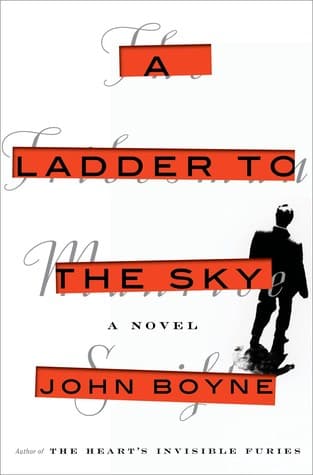
John Boyne (2018)
Genre
Literary Fiction / Historical Fiction
Reading Time
732 min
Key Themes
See below
Sign in to track this book
An ambitious writer, without talent, betrays and steals stories across Europe and America, charming everyone on his way to literary fame, only to find the top a dangerous place.
In 1988, Maurice Swift is a young, ambitious waiter at a hotel in West Berlin. He wants to be a famous writer but has no original ideas. He targets the known, reclusive novelist Erich Ackermann, who is staying at the hotel. Maurice pretends to admire Erich and share his literary passion, slowly earning Erich's trust. Erich, a lonely older man, eventually tells Maurice about his past as a boy in Nazi Germany. He reveals a dark secret: he murdered a Jewish boy to survive. Maurice sees this as his chance and records every detail, planning to use it for his first novel. He keeps up the pretense of deep friendship with Erich.
After getting Erich's story, Maurice quickly writes his first novel, 'The Child in the Photograph,' presenting it as his own. The book is a success, making Maurice a literary star. Erich reads the novel, is devastated, and confronts Maurice, realizing the betrayal. Maurice shows no remorse, dismisses Erich's accusations, and leaves him. Erich, heartbroken, eventually takes his own life. Maurice's career, built on this lie, continues to grow, establishing him as a brilliant new writer.
To get more literary connections and material, Maurice becomes an assistant to American writer Gore Vidal at his villa in Ravello, Italy. Vidal, a cynical and observant man, quickly sees Maurice's manipulative nature but finds him entertaining. Maurice watches Vidal, learning from his wit and social skills. While there, Maurice starts an affair with Sarah, a student researching Vidal. He also meets other literary figures, always looking for stories to use, improving his charm and deception under Vidal's watchful eye.
Maurice becomes close with Sarah, an aspiring writer. She shares details of her family history, including a tragic event with her brother. Maurice, seeing an opportunity, uses Sarah's personal story in his second novel, 'The Uninvited Guest.' When Sarah finds out, she is devastated and confronts him. The emotional impact, along with feeling violated, leads Sarah to commit suicide. Maurice coldly dismisses this as an unfortunate outcome, putting his career first.
Maurice, now a celebrated author, marries Penelope, a wealthy, connected woman, mainly for her social standing and the access she provides to high society. He keeps writing successful novels, each subtly or openly taken from others' lives. His charm and looks keep him popular in the literary world, despite some suspicion from those who find his work too perfect or his personality too smooth. During this time, he meets and befriends Woodford, an aspiring poet and academic, who becomes fascinated with Maurice and his perceived genius.
Maurice builds a close relationship with Woodford, who admires him greatly. Woodford, a talented poet and intellectual, shares his thoughts, academic work, and personal experiences with Maurice. Maurice sees Woodford's brilliance and subtly manipulates him, encouraging him to confide more, while absorbing Woodford's perspectives and ideas. He eventually takes Woodford's original research and essays, using them in his next novel. Woodford, at first happy to be near his idol, slowly realizes how much Maurice has taken, which leads to a painful confrontation and the end of their friendship.
Woodford, after seeing his insights and research in Maurice's published work, feels deeply betrayed. He confronts Maurice, accusing him of plagiarism and emotional exploitation. Maurice, as always, denies the accusations strongly, using his charm to deflect blame. However, Woodford is no longer easily convinced. His admiration for Maurice turns into resentment and a resolve to expose the truth. This marks a turning point, as Maurice's carefully built world of deceit begins to crack, with Woodford becoming his first vocal accuser.
Despite the growing rumors and Woodford's accusations, Maurice remains mostly unharmed, protected by his fame and charm. He divorces Penelope and targets Helen, an elderly, respected, and reclusive author. Maurice strategically woos Helen, pretending great literary respect and affection. Helen, lonely and flattered by a younger, famous writer, falls for his manipulation. They marry, and Maurice gets access to Helen's private world, including her study and unpublished manuscripts, which he sees as valuable material for his next 'original' work.
Maurice examines Helen's unpublished works, finding a brilliant, personal manuscript he decides to claim as his own. He prepares to publish it, expecting his greatest literary success. However, Helen, despite her age, is more perceptive than Maurice realizes. She knows his true nature and history of plagiarism, having been subtly told by Woodford and others in the literary world. She lets him think he has succeeded, but she has a secret plan to expose him.
Just as Maurice is about to launch his 'new' novel, Helen causes his public downfall. She reveals that the manuscript he plans to publish is hers. She has changed it to include a detailed account of Maurice's life of literary theft and emotional manipulation, from Erich Ackermann to Sarah and Woodford, and his betrayal of her. The book exposes Maurice's career. His reputation is shattered, his lies revealed. Maurice Swift, the charming literary star, is disgraced and left with the ruins of his fabricated life.
The Protagonist/Antagonist
From a seemingly innocent waiter, he evolves into a serial plagiarist and emotional predator, ultimately experiencing a spectacular public downfall.
The Supporting/Victim
He is initially a respected, reclusive author, then becomes a trusting confidante, and finally a tragic victim of Maurice's ambition.
The Supporting/Victim
She begins as a hopeful, trusting young woman and ends as a heartbroken victim, driven to despair by Maurice's betrayal.
The Supporting/Victim/Accuser
From an adoring fan and intellectual partner, he transforms into a disillusioned accuser, determined to expose Maurice's deceit.
The Supporting/Mentor
He remains largely static, a keen observer of human nature, providing a backdrop for Maurice's developing manipulative skills.
The Supporting
She is initially a social asset for Maurice, then becomes a discarded wife as his ambition leads him to new conquests.
The Supporting/Antagonist
Initially appearing as a vulnerable, lonely older woman, she reveals herself to be a shrewd and powerful figure who brings about Maurice's retribution.
The novel explores identity, especially how it is formed and if real authenticity can exist when ambition is ruthless. Maurice Swift creates his entire literary identity by stealing others' life experiences and creative works. His 'self' is made of stolen parts, leaving him with no real core. This theme questions what it means to be an artist and if success built on lies can ever be truly satisfying. The tragic fates of Erich and Sarah show the devastating impact of this fabrication on those whose lives are taken.
“He understood that his gift was not for writing, but for absorbing the lives of others and making them his own.”
Maurice's character shows ambition without moral limits. The novel examines the ethical cost of success driven by pure self-interest. Maurice's rise leaves a trail of victims—Erich, Sarah, Woodford—whose lives are destroyed or damaged. This theme makes readers confront the dark side of wanting recognition and power, asking where the line between aspiration and depravity is. Maurice's downfall serves as a warning about putting personal gain above everything else.
“The stories were out there, waiting to be claimed. Why should he bother to invent his own?”
Betrayal is a repeated idea throughout the novel, supporting every important plot point. Maurice consistently betrays the trust of those who care for him or admire him, from Erich's confidences to Sarah's love and Woodford's friendship. Each betrayal helps Maurice's career but also builds the foundation for his eventual collapse. The consequences are wide-ranging, leading to suicides and deep emotional damage for his victims. Helen's calculated betrayal of Maurice, using his own methods against him, brings about his deserved punishment, showing that betrayal, even when successful for a time, eventually leads to consequences.
“He thought he could take a life, a story, and leave no trace. But life, and stories, always leave a trace.”
The novel looks at the literary establishment, showing it as a world often influenced by charm, good looks, and marketing rather than real talent. Maurice Swift, despite not being original, becomes a celebrated author, showing how superficial critics and readers can be to a well-crafted facade. Figures like Gore Vidal, while perceptive, also contribute to the system's flaws. The story suggests that the line between inspiration and taking ideas can be dangerously unclear, and that wanting literary fame can corrupt creativity.
“The truth, he had learned, was often less interesting than the story you told about it.”
Maurice Swift's perspective often shapes the narrative, presenting his actions as justified or inevitable.
While not strictly a first-person narrative, the story often aligns with Maurice's perspective and internal justifications. His charm and self-serving logic can initially make readers understand, if not condone, his actions. This device forces the reader to critically evaluate Maurice's motivations and the truth of his success, highlighting his self-deception and moral blindness. The gradual reveal of his victims' suffering and the eventual exposure by Helen serve to dismantle this unreliable view, revealing the stark reality beneath his polished exterior.
The audience is often aware of Maurice's deceptions before his victims, building tension and suspense.
Dramatic irony is a key device, particularly in the early stages of Maurice's manipulations. The reader is privy to Maurice's true intentions as he ingratiates himself with Erich Ackermann or Sarah, while his victims remain oblivious. This creates a sense of dread and anticipation, as the reader knows the impending betrayal. It underscores Maurice's ruthlessness and the vulnerability of those around him, making his eventual downfall all the more satisfying as justice is served.
The title itself symbolizes Maurice's relentless, upward climb through deceit, implying an inevitable fall.
The novel's title, 'A Ladder to the Sky,' functions as a central metaphor for Maurice Swift's career. Each rung of the ladder represents a stolen story or a discarded relationship, propelling him higher in the literary world. The 'sky' signifies the ultimate, almost divine, level of fame he seeks. However, the metaphor inherently suggests instability and the potential for a great fall, foreshadowing Maurice's eventual public disgrace. It encapsulates his ambition and the perilous nature of his fabricated success.
The recurring act of stealing others' life stories and written works for personal gain.
This is the primary plot engine and a central symbol of Maurice's character. The stolen manuscript or story is not just a plot point but represents Maurice's parasitic nature. From Erich's wartime secret to Sarah's family tragedy, Woodford's academic work, and finally Helen's unpublished novel, each theft propels Maurice's career. It highlights his lack of original talent and his profound moral bankruptcy, making the final, self-incriminating manuscript the ultimate poetic justice.
“I was born with a talent for taking, and I have never met an object I didn’t believe belonged to me.”
— Maurice's self-reflection on his innate avarice and ambition.
“The only difference between a thief and a writer is the quality of the disguise.”
— Maurice's cynical view on the nature of authorship and plagiarism.
“Every lie I told was a brick in the ladder I was building to the sky.”
— Maurice justifying his deceitful actions as necessary steps toward success.
“Fame is a hungry beast, and it eats its own children.”
— A comment on the destructive nature of celebrity.
“The past is never dead. It's not even past.”
— A reflection on how past actions and choices continue to influence the present.
“To be a writer, you must first be a reader. To be a great writer, you must be a great thief.”
— Maurice's twisted philosophy on literary creation.
“There are some people who are born with a hole in their soul, and they spend their lives trying to fill it.”
— A character observing the inherent emptiness in others, particularly Maurice.
“Truth, like beauty, is in the eye of the beholder. Or, in my case, the eye of the person who writes it down.”
— Maurice's manipulative view of truth and narrative control.
“We all wear masks, some of us just have better tailors.”
— A commentary on the facades people present to the world.
“Regret is a luxury I could never afford.”
— Maurice's refusal to acknowledge remorse for his actions.
“The greatest stories are not invented, they are stolen.”
— Maurice's core belief about the origin of compelling narratives.
“Loneliness is the price of genius, or at least, the price of my particular brand of genius.”
— Maurice's rationalization for his isolation and lack of genuine connection.
“A good book, like a good lie, should always leave you wanting more.”
— Maurice's understanding of engaging storytelling and deceit.
Ready to see how well you understood this book? Take our interactive quiz with 10 questions.

John Boyne is an Irish novelist. He is the author of fourteen novels for adults, six novels for younger readers, two novellas and one collection of short stories. His novels are published in over 50 languages. His 2006 novel The Boy in the Striped Pyjamas was adapted into a 2008 film of the same name.







