“The problem with sleeping for a hundred years is that everyone you know dies.”
— Talia reflects on the consequences of her enchanted sleep.

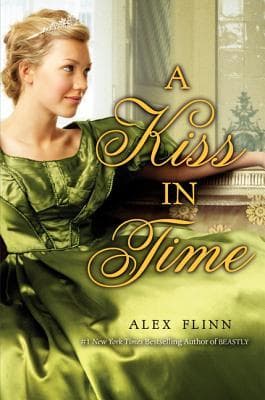
Alex Flinn (2009)
Genre
Fantasy / Young Adult / Romance
Reading Time
300 min
Key Themes
See below
Sign in to track this book
A rebellious modern teen accidentally awakens a 17th-century princess with a kiss, sending them on a chaotic adventure across time, dodging royal anger, and navigating a 316-year age gap.
Princess Talia, heir to Phantasia, is a curious and adventurous young woman. Despite warnings from her nursemaid, she finds the forbidden spinning wheel in an abandoned tower. The spindle, cursed by a malevolent fairy named Malvolia (whose invitation to Talia's christening was deliberately withheld by Talia's parents), pricks Talia's finger. Instantly, Talia and everyone in the castle fall into a deep sleep. A magical, impenetrable hedge of thorns grows around the kingdom, hiding it from the outside world. The curse is to last for 300 years, to be broken only by a kiss from a prince.
Three hundred years later, Jack, a modern American teenager on a family vacation in France, is bored with his parents' historical tours. Ditching his group, he wanders off and discovers a strange, overgrown castle surrounded by an impossibly dense thorn hedge. Curious, he pushes through a small opening in the thorns. He finds himself in a seemingly abandoned castle where everyone appears to be asleep. He soon finds Talia, beautiful and still, in a grand bedchamber, and driven by a mysterious impulse, he kisses her.
Jack's kiss breaks the spell. Talia awakens, followed by her entire court. The castle, preserved in time, is now exposed to the modern world. Talia, believing Jack is the prince destined to save her, is thrilled. However, she quickly realizes that Jack is not a prince and her world has changed greatly. She is overwhelmed by modern technology, language, and customs, finding cars, phones, and even simple concepts like democracy completely foreign. Jack, meanwhile, is confused by Talia's old-fashioned ways and expectations.
King Gregor, Talia's father, awakens to find his daughter alive but his kingdom exposed to the outside world. He is angry that Jack, a commoner, broke the spell and, more importantly, that Phantasia's magical protection has vanished, leaving it open to danger. Blaming Jack for the trouble and fearing for his kingdom's future, King Gregor declares Jack a criminal and orders his execution. Talia, feeling responsible for Jack and seeing no other choice, convinces Jack to escape with her, taking a trunk full of her family jewels as their only way to survive in the new world.
Jack and Talia manage to travel to New York City, where Jack's family lives. They use Talia's jewels to find a place to stay and begin the difficult process of adapting. Talia struggles greatly with everything from traffic and fast food to basic social interactions. Jack, though initially annoyed by Talia's demanding and naive nature, becomes protective of her. He tries to teach her about modern life, enrolls her in school, and attempts to explain concepts she finds utterly strange, like money, privacy, and personal choice, all while keeping her true identity a secret.
Talia, now pretending to be Jack's cousin, attends high school with him. She struggles with academics but begins to make friends, especially with a girl named Simone, who helps her understand modern fashion and slang. Talia also feels increasingly attracted to Jack, despite their constant arguments and her lingering belief that he is her destined 'prince.' Jack, too, develops deeper feelings for Talia, moving past his initial annoyance to appreciate her resilience and unique perspective, though he is cautious of their very different backgrounds.
The ancient curse, though broken, has an unexpected result: Malvolia, the evil fairy who cast the original spell, is reawakened and drawn to Talia. Malvolia, now strengthened by the disruption of Phantasia's magic, wants to finish what she started and take over the kingdom. She begins to subtly influence events, sending ominous signs and eventually revealing herself to Talia and Jack. Her magic is strong, and she is determined to capture Talia and destroy Phantasia, which she believes is rightfully hers.
Talia discovers an old prophecy that states the curse will be broken by a 'prince' who is pure of heart and will save the kingdom. Initially, she believed this meant royal lineage, but as she spends time with Jack, she starts to understand that 'prince' might mean character rather than title. She learns that Malvolia seeks to exploit a loophole in the prophecy to claim Phantasia, and that Talia herself holds a key to defeating the fairy, not just by being awakened, but by actively fighting for her kingdom's future.
Realizing the danger Malvolia poses to Phantasia, Talia and Jack decide they must return to her kingdom. They plan to confront Malvolia, combining Talia's knowledge of ancient magic and Phantasia's history with Jack's modern cleverness. They gather some of Talia's loyal subjects who have also begun to adapt to the new world, and prepare for a final fight with the malevolent fairy. The stakes are high, as Phantasia's existence, and Talia's future, depend on the outcome.
In a climactic confrontation within Phantasia's castle, Talia and Jack face Malvolia. Malvolia uses powerful dark magic, trying to control Talia and take over the kingdom. However, Talia, using her own inherent magical abilities and the strength she gained from her experiences in the modern world, fights back. Jack, using his quick thinking and resourcefulness, helps Talia by distracting Malvolia and finding weaknesses in her defenses. Together, they weaken Malvolia, ultimately trapping her in an enchanted mirror, ending her terror and fully breaking the curse on Phantasia.
With Malvolia defeated, King Gregor acknowledges Jack's bravery and the true meaning of the prophecy. Talia, now mature and confident, accepts her role as Queen of Phantasia. She understands that her kingdom must adapt to the modern world, and she is determined to lead it. Jack, having proven himself a true 'prince' through his actions and love for Talia, decides to stay in Phantasia and help her guide the kingdom into the future. Their relationship, formed across centuries, strengthens as they look forward to building a new life together, bridging the gap between two very different worlds.
The Protagonist
From a sheltered, naive princess, Talia transforms into a strong, adaptable queen capable of leading her kingdom into a new era.
The Protagonist
Jack evolves from a bored, self-centered teenager into a responsible, selfless 'prince' who embraces love and adventure beyond his world.
The Antagonist
Malvolia's arc is one of consistent evil, ultimately leading to her defeat and imprisonment, signifying the triumph of good over ancient malice.
The Supporting
From a fearful, traditional ruler, King Gregor learns to accept change and the true nature of heroism, entrusting his kingdom's future to Talia and Jack.
The Supporting
Simone remains a supportive friend, providing a stable, modern perspective amidst the magical chaos.
The Mentioned
Her role is primarily to establish the initial conflict and the ancient nature of the curse.
The story explores the funny and difficult parts of a person from a medieval, magical kingdom adapting to modern New York City. Talia's struggles with technology, language, social norms, and even basic concepts like money show the vast differences. Jack, in turn, is forced to see his own world through fresh, confused eyes. This theme is clear in scenes where Talia mistakes a cell phone for a magical device, or her anger at not being immediately recognized as royalty, pushing both characters to grow and connect their worlds.
““I tried to explain about democracy, but she just looked at me like I was speaking Martian. Which, in a way, I guess I was.””
The novel redefines the traditional fairy tale idea of a 'prince' and 'true love.' Talia initially expects a royal prince, but she learns that heroism and love are defined by actions, character, and selflessness, not by birthright or magic. Jack, a seemingly ordinary modern boy, proves to be the true hero by protecting Talia, helping her adapt, and fighting for her kingdom. Their love grows through shared experiences, challenges, and mutual respect, going beyond the superficiality of a fairy tale. This is clear when Talia realizes the prophecy's 'prince' is a state of being, not a title.
““He wasn't a prince, not in the way my father meant. But he was my prince. My rescuer. My hero.””
The conflict between King Gregor's wish to keep Phantasia's ancient traditions and isolation, and the need to embrace the modern world, is central to the story. Breaking the curse forces Phantasia to face centuries of technological and societal advancement. Talia, initially a product of tradition, becomes the link between these two worlds, supporting progress while respecting her heritage. This theme is explored through the kingdom's vulnerability after the curse is broken, and Talia's eventual decision to lead Phantasia into the modern era rather than clinging to its past.
““My father wanted to keep Phantasia frozen in time, but time, I was learning, was a river. It only flowed forward.””
Both Talia and Jack experience significant self-discovery. Talia, removed from her royal context, must create a new identity in a foreign land. She learns to be independent, resourceful, and to define herself beyond her princess title. Jack, too, discovers his ability for bravery, responsibility, and deep affection, moving past his teenage indifference. Their journey is as much about understanding who they are as individuals as it is about their relationship. Talia's change from a demanding princess to a compassionate leader is a prime example of this theme.
““I was no longer just the sleeping princess. I was Talia, and I had to decide who Talia would be.””
A magical enchantment that suspends time for 300 years.
The sleeping curse, triggered by the cursed spindle, is the foundational plot device. It not only initiates Talia's long slumber but also creates the massive time gap that allows for the culture clash between Talia's medieval world and Jack's modern one. It isolates Phantasia, preserving its ancient ways, and provides the catalyst for Jack's accidental discovery. The breaking of the curse then unleashes both the challenges of modernity and the return of the antagonist, Malvolia, setting up the entire conflict.
The narrative effect of a character waking up centuries in the future.
While not traditional time travel, Talia's awakening 300 years after her curse functions as a form of it. This device is crucial for creating the dramatic irony and humor derived from her inability to comprehend modern society. It also allows the author to explore themes of progress, adaptation, and the enduring nature of human connection across vast temporal divides. Her 'time travel' is the engine for the culture shock and her personal growth.
An ancient prediction dictating the terms of the curse's breaking and Phantasia's future.
The prophecy serves as a guiding element, initially misunderstood by Talia and her family. It dictates that a 'prince' will break the curse and save the kingdom, leading to initial confusion about Jack's role. The ambiguity of 'prince' (royal lineage vs. noble character) allows for the reinterpretation of heroism and love. It also provides Malvolia a framework to exploit, forcing Talia and Jack to decipher its true meaning to defeat her and secure Phantasia's future.
An impenetrable barrier that conceals Phantasia for centuries.
This magical barrier serves as a physical manifestation of Phantasia's isolation and the curse's power. It visually reinforces the 'sleeping beauty' trope and acts as a plot device to keep the kingdom hidden from the outside world for 300 years. Jack's ability to penetrate it, albeit accidentally, signals the beginning of the end of Phantasia's magical seclusion and its forced entry into the modern world, making him the chosen one in a non-traditional sense.
“The problem with sleeping for a hundred years is that everyone you know dies.”
— Talia reflects on the consequences of her enchanted sleep.
“I was a princess. I knew how to curtsy, how to waltz, how to embroider. But I didn't know how to order a pizza.”
— Talia struggles with the mundane aspects of modern life after waking up.
“Sometimes the greatest curse is a gift you don't understand.”
— Talia ponders the nature of her magical sleep and its implications.
“He didn't need a sword or a dragon. He just needed to be brave enough to be himself.”
— Jack's internal conflict about his role in Talia's story.
“A kiss is just a kiss, unless it's a kiss that changes everything.”
— Reflecting on the magical kiss that awakens Talia.
“Being a princess in a fairy tale is easy. Being a girl in the real world is hard.”
— Talia contrasts her past life with her present reality.
“Maybe happily ever after isn't a destination, but a journey.”
— Talia's evolving understanding of fairy tale endings.
“You can't live in the past, no matter how beautiful it was.”
— Talia learns to let go of her previous life and embrace the present.
“Sometimes the person you're meant to be with is the one who helps you discover who you truly are.”
— Talia and Jack's relationship helps them grow.
“The world doesn't stop for anyone, not even for a sleeping princess.”
— Talia realizes the world has moved on without her.
“It's not about being rescued; it's about finding your own way.”
— Talia's journey of independence and agency.
“Even a curse can have a silver lining, if you look hard enough.”
— Talia finds unexpected positives in her century-long sleep.
“Fairy tales don't tell you what happens after the kiss.”
— Talia grapples with the complexities of life post-awakening.
“He was my prince, but I was also my own hero.”
— Talia's realization about her own strength and role in her story.
Ready to see how well you understood this book? Take our interactive quiz with 10 questions.

Alex Flinn is a best-selling author known for her captivating young adult fantasy novels. Her notable works include "Beastly," a modern retelling of Beauty and the Beast, and "Bewitching," which explores themes of magic and romance. Flinn's imaginative storytelling and relatable characters have earned her a dedicated readership in the fantasy genre.







