“The greatest joy of all is to give joy to others.”
— Santa Claus reflecting on his purpose.

L. Frank Baum (1969)
Genre
Fantasy / Children's / Young Adult
Reading Time
15 min
Key Themes
See below
Sign in to track this book
Five demons conspire to kidnap Santa Claus, forcing the magical creatures of Laughing Valley to save Christmas and show that generosity endures.
Santa Claus lives in the magical Laughing Valley, a place of constant joy and safety, within the Forest of Burzee. He is never sad, because sadness cannot enter the valley's magic borders. His home is a large castle, where he makes toys with the help of various magical creatures: the small, busy Ryls who make beautiful things, the playful Pixies who like tricks, the wise Knooks who care for nature, and the graceful Fairies. Santa's main goal is to bring happiness to children worldwide, and he works constantly all year, getting ready for his Christmas Eve journey. He is a purely kind figure, fully dedicated to spreading joy.
Far from Laughing Valley, in deep, dark caves, live five powerful Imps. These are the Imps of Selfishness, Envy, Hatred, Malice, and Repentance. They represent human flaws and strongly resent Santa Claus and the happiness he brings, as it directly reduces their power over people. They hold a secret meeting, complaining that Santa's good deeds are weakening their influence and making children less open to their temptations. They decide Santa Claus must be stopped, and they begin to plan how to prevent him from delivering gifts, believing this will let them regain control over human hearts.
The Imps start their plan. Their first attempt involves sneaking into Santa's castle in Laughing Valley to destroy the many toys he has made for Christmas. However, the valley's magical residents, the Ryls, Knooks, Pixies, and Fairies, are always watchful and strongly protect Santa and his work. They discover the Imps' entry and quickly gather to defend the toys. Using their combined magic and cleverness, they drive the Imps away before any real harm is done. The Imps retreat, frustrated but not beaten, realizing they need a more direct and forceful method to reach their goal.
After their first failure, the Imps meet again, angrier and more determined. They realize that just destroying the toys is not enough; Santa Claus himself is the source of joy. The Imp of Malice suggests a bolder, more extreme plan: they will kidnap Santa Claus. By removing him completely, they believe Christmas will be ruined, and children will be sad, making them open to the Imps' influence again. They carefully plan how to ambush Santa, knowing that Laughing Valley's magic makes direct entry hard, but that Santa must eventually leave its protected borders.
Finally, Christmas Eve arrives. Santa Claus, unaware of the specific threat against him, prepares his sleigh and reindeer for his yearly journey. He leaves the safety of Laughing Valley, going out into the world to deliver gifts. As he flies through the night, the five Imps spring their trap. They ambush Santa's sleigh, overpowering him with their combined dark magic and strength. Despite his kind nature, Santa is not a fighter and is easily overcome. The Imps seize him, tie him up, and drag him away to their dark caves, leaving his sleigh and reindeer stranded and Christmas in danger.
Back in Laughing Valley, the magical creatures grow worried as time passes and Santa does not return. The Ryls, Knooks, Pixies, and Fairies, who depend on Santa's presence for their own joy, sense that something is very wrong. They send out scouts, who soon find Santa's abandoned sleigh and reindeer, a clear sign of trouble. The news spreads quickly through the valley, causing alarm and sadness. They realize their beloved Santa Claus has been kidnapped, and they understand the serious effects this has for Christmas and for children's happiness everywhere. They promise to rescue him.
Determined to save Santa and Christmas, Laughing Valley's magical creatures unite. The wise Knooks lead the effort, using their knowledge of nature to track Santa's captors. The quick Ryls, the clever Pixies, and the magical Fairies all use their unique skills in the search. They leave their safe valley, going into the darker, more dangerous parts of the world where the Imps live. Their journey is risky, but their loyalty to Santa and their commitment to Christmas drive them forward, overcoming their natural dislike for the darkness and evil that fill the Imps' home.
Following the trail, the magical creatures eventually find the Imps' dark, gloomy caves. They bravely enter the sinister lair, where they find Santa Claus tied up and imprisoned. The five Imps, enjoying what they think is their victory, are surprised by the intrusion. A tense meeting follows, with the magical creatures demanding Santa's immediate release. The Imps, full of their usual evil and pride, refuse, making fun of the creatures and taunting Santa. They believe they have won and will not give up their captive, setting the stage for a direct fight between good and evil.
A fierce battle breaks out inside the dark caves. The Ryls, with their surprising strength, work to untie Santa. The Pixies, with their speed and tricks, distract and confuse the Imps, causing disorder. The Fairies, with their subtle but strong magic, cast spells to weaken the Imps, while the powerful Knooks directly fight them, using their connection to nature to create obstacles and diversions. Despite the Imps' strong dark powers, they are not ready for the coordinated and selfless attack from Santa's friends. The magical creatures fight with a single goal, driven by their love for Santa and their wish to save Christmas.
Through their combined efforts, the magical creatures manage to overpower the Imps. Santa Claus is finally freed. Though shaken by the experience, he is very thankful for his loyal friends. With no time to waste, Santa quickly gathers his sleigh and reindeer, which the creatures had also found. He sets off again, racing against the last hours of Christmas Eve. While some children might have woken up to empty stockings for a short time, Santa, with his renewed determination, manages to deliver gifts to most, making sure Christmas is celebrated, even if a little late, bringing joy back to the world.
The Imps are defeated and driven back into the deeper parts of their caves; their plan failed. However, the story makes it clear they are not destroyed. They only retreat, holding onto their complaints and waiting for another chance to spread their influence. This ending shows that evil, in its different forms (selfishness, envy, hatred, malice, and even regret for good deeds), is a natural and lasting part of existence. While good can win in specific fights, the basic forces of negativity will always remain, offering a more complex and less rosy view of the world, even in a children's fantasy.
The Protagonist
Santa's arc is less about internal change and more about demonstrating his unwavering commitment to his mission, even when faced with direct threats.
The Antagonist
Remains consistently evil, defeated but not changed, reinforcing the idea of inherent evil.
The Antagonist
Remains consistently evil, defeated but not changed, reinforcing the idea of inherent evil.
The Antagonist
Remains consistently evil, defeated but not changed, reinforcing the idea of inherent evil.
The Antagonist
Remains consistently evil, defeated but not changed, reinforcing the idea of inherent evil.
The Antagonist
Remains consistently evil, defeated but not changed, reinforcing the idea of inherent evil.
The Supporting
Their loyalty and effectiveness are demonstrated throughout the story, reinforcing their essential role in Santa's operation.
The Supporting
Their resourcefulness and loyalty are highlighted through their actions in defending Santa and his mission.
The Supporting
Their leadership and protective nature are central to the successful rescue of Santa.
The Supporting
Their magical abilities are crucial in the confrontation with the Imps, showcasing their protective role.
This theme is key to the story, showing good (Santa and his friends) and evil (the five Imps) as basic, opposing forces. The Imps' constant attempts to stop Santa, and their defeat but not destruction, highlight that this struggle is ongoing. The story suggests that while good can win in certain battles, evil remains a natural part of existence, always present. This is clear when the Imps retreat to their caves, beaten but not gone, implying they will always be a threat. It offers a more complex view than a simple 'good always wins' story.
“For there is always evil in the world, and it is a thing that cannot be done away with.”
Santa Claus represents selfless giving, dedicating his life to bringing joy to children without expecting anything back. His life and actions are a direct contrast to the Imps' motives of selfishness, envy, hatred, and malice. The story stresses that this pure, true joy is a strong force that strengthens children and makes them less open to evil. Santa's determination to deliver gifts, even after being kidnapped, reinforces the idea that true joy and giving are strong and vital for human well-being.
“His only thought was to make children happy, and he succeeded so well that the Imps found their power over the little ones growing less and less.”
The loyalty of the magical creatures (Ryls, Pixies, Knooks, and Fairies) to Santa Claus is a strong theme. When Santa is kidnapped, his friends immediately go on a dangerous rescue mission. Their combined effort, using their unique strengths and working together, ultimately saves Santa and Christmas. This highlights the strength found in unity and a shared goal, showing that a strong community, held together by loyalty and love, can overcome big challenges, even against powerful evil forces.
“And the Ryls and the Knooks and the Pixies and the Fairies, who loved Santa Claus dearly, were filled with sorrow and anger.”
The story explores how childlike innocence can be affected by the Imps' bad influences, and how Santa's work protects that innocence. The Imps target children specifically, aiming to create negative feelings like selfishness and envy. Santa, by bringing joy and encouraging generosity, shields children from these harmful forces. The story suggests that nurturing joy and selflessness in children is important for their moral growth and for resisting the widespread presence of evil in the world.
“They hated Santa Claus because he made the children happy, and happy children do not readily fall under the sway of the Imps.”
Abstract evils are embodied as distinct characters (Imps).
The story uses the personification of vices by giving distinct forms and names to abstract negative concepts: Selfishness, Envy, Hatred, Malice, and Repentance. This device makes the forces of evil tangible and easier for young readers to understand and identify. By presenting them as active, plotting characters, the narrative concretizes the struggle against these internal and societal evils, allowing for a clear antagonist in the story and making the conflict more engaging and relatable.
A magical, protected haven for good.
The Laughing Valley serves as an enchanted sanctuary, a magical place where sadness cannot enter and good thrives under Santa's care. This device establishes a clear contrast between the purity and joy of Santa's world and the darkness and malice of the Imps' domain. It highlights the vulnerability of good when it leaves its protected space, as seen when Santa is kidnapped outside the valley. The sanctuary symbolizes the ideal state of innocence and happiness that the forces of evil seek to disrupt.
Diverse magical creatures aiding the protagonist.
Santa Claus is aided by a diverse group of magical creatures—Ryls, Pixies, Knooks, and Fairies—each with unique abilities. This device provides the means for Santa's operations (toy-making) and, more importantly, for his rescue. It demonstrates the power of collective effort and diverse skills working towards a common good. Each creature's specific talent contributes to the overall success, emphasizing that even seemingly small or mischievous beings can play vital roles in overcoming great evil.
A time-sensitive goal that creates urgency.
The narrative uses the Christmas Eve deadline as a crucial plot device to create urgency and raise the stakes. Santa's kidnapping on this specific night means that the entire celebration of Christmas, and the joy it brings, is in jeopardy. This time constraint motivates the magical creatures to act quickly and decisively in their rescue mission. It heightens the tension and makes the ultimate success of delivering gifts, even if late, feel like a significant triumph against adversity.
“The greatest joy of all is to give joy to others.”
— Santa Claus reflecting on his purpose.
“It is a sad thing when good children are forgotten.”
— Santa Claus observing neglected children.
“For many years I have been the friend of children, and I shall not desert them now.”
— Santa Claus's resolve after being kidnapped.
“There are no bad children, only unfortunate ones.”
— Santa Claus's philosophy on children's behavior.
“The Knooks were a queer lot, with their long beards and their love for all things cold.”
— Description of one of the groups that kidnapped Santa.
“Even the most mischievous of creatures can be swayed by kindness.”
— Santa Claus observing the effects of his nature on his captors.
“The joy of a child's smile is worth more than all the gold in the world.”
— Santa Claus valuing children's happiness.
“It is not the gift itself, but the thought behind it, that counts.”
— Santa Claus's perspective on presents.
“The Immortals had long ago decided that Santa Claus was too important to be allowed to grow old.”
— Explaining Santa's eternal youth.
“Fear not, little ones, for Santa Claus will always find a way.”
— A reassuring thought when Santa is in trouble.
“The Ryls and the Knooks and the Pixies and the Goblins all lived in the Forest of Burzee.”
— Setting the scene for Santa's magical world.
“He knew that even in the darkest dungeons, a spark of hope could still flicker.”
— Santa Claus's internal thoughts during his captivity.
“The most powerful magic of all is the magic of love and generosity.”
— Santa Claus reflecting on his own power.
Ready to see how well you understood this book? Take our interactive quiz with 10 questions.
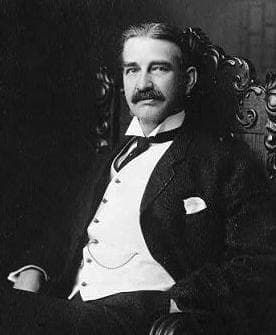
Lyman Frank Baum was an American author best known for his children's fantasy books, particularly The Wonderful Wizard of Oz, part of a series. In addition to the 14 Oz books, Baum penned 41 other novels, 83 short stories, over 200 poems, and at least 42 scripts. He made numerous attempts to bring his works to the stage and screen; the 1939 adaptation of the first Oz book became a landmark of 20th-century cinema.







