“It's fierce, an' it's wild, an' it's not bothered about anybody, not even about me right. And that's why it's great.”
— Billy describing his kestrel, Kes, to his class.

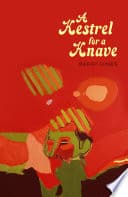
Barry Hines (2010)
Genre
Children's / Young Adult
Reading Time
180 min
Key Themes
See below
Sign in to track this book
In a bleak Yorkshire mining town, a neglected boy's only escape from a brutal future is the kestrel he secretly trains.
The novel opens with a typical morning for Billy Casper, a working-class boy living in a mining town in Yorkshire. He wakes up late, is immediately bullied and physically abused by his older half-brother, Jud, who works down the pit. Billy struggles to get ready for school, where he is consistently late and underperforming. On his way to deliver newspapers, Billy spots a kestrel's nest in a barn. Driven by a sudden impulse, he climbs up and takes a kestrel chick, hiding it in his jacket. This act of defiance and curiosity starts his secret passion, offering a contrast to the drudgery and violence that define his home and school life.
At school, Billy is an underachiever, regularly getting into trouble with teachers like Mr. Gryce and Mr. Farthing. He is often late, dirty, and uninterested in academic subjects. During a harsh caning session with Mr. Gryce for a minor infraction, Billy's resentment and alienation are clear. However, during a break, he encounters Mr. Farthing, his English teacher, and begins to talk about his kestrel, whom he has named Kes. To Mr. Farthing's surprise, Billy articulates his knowledge and passion for falconry with an intelligence and eloquence he never displays in class, showing a hidden depth.
Billy spends his afternoons and evenings training Kes. He steals a book on falconry from a local shop, which he secretly studies to learn the techniques of luring, manning, and flying the kestrel. He uses a lure made from a piece of cloth and a dead mouse to teach Kes to fly to his hand. This training takes place in the fields and moors surrounding his town, a private world where Billy can escape the realities of his home and school. Through this process, Billy develops a bond with Kes, finding a sense of purpose, responsibility, and freedom that is absent from every other aspect of his life. He shows patience and understanding with the bird.
Mr. Farthing, intrigued by Billy's earlier descriptions, asks him to bring Kes to school to demonstrate his training. Billy reluctantly agrees. In front of Mr. Farthing and a few other students, Billy expertly handles Kes, showing off her impressive flying and hunting skills. Mr. Farthing is impressed by Billy's knowledge, patience, and the connection he shares with the kestrel. This demonstration is a rare moment of validation and respect for Billy, where his unique talent is acknowledged and appreciated by an adult, contrasting sharply with the usual reprimands he receives from authority figures.
Despite his solace with Kes, Billy's home life remains a source of stress. His mother, an overworked and often indifferent woman, pays little attention to him beyond basic needs. His half-brother, Jud, continues to dominate the household, demanding money, food, and obedience from Billy. Jud frequently resorts to physical violence and verbal abuse, making Billy's life miserable. Billy often has to run errands for Jud, including buying cigarettes and placing bets, further entangling him in his brother's petty criminal activities. These domestic pressures weigh on Billy, threatening his fragile peace of mind and his ability to care for Kes.
One morning, Jud gives Billy money to place a bet on two horses for him. Billy, distracted or rebellious, uses the money to buy fish and chips and a comic, and then goes to watch a film instead of placing the bet. He returns home late, hoping Jud won't notice. However, Jud discovers that his horses won, and the betting slip was never placed. Enraged by Billy's disobedience and the loss of his winnings, Jud, in revenge, kills Kes. He wrings the kestrel's neck and leaves her body in the coalhouse for Billy to find.
Billy returns home, unaware of the tragedy. He goes to the coalhouse to check on Kes, only to find her lifeless body. The discovery shatters him. His only companion, his only source of pride, freedom, and purpose, has been taken from him. The act is a devastating blow, representing the destruction of the one thing that made his life bearable. Billy's despair is profound, showing the impact Kes had on his life and the brutal reality of his circumstances, where even his most cherished possession can be snatched away.
In a private act, Billy takes Kes's body and buries her in a quiet spot on the slag heap, a desolate landscape that mirrors his internal state. This burial signifies the end of his brief period of joy and self-discovery. With Kes gone, Billy is left with nothing but the bleak reality of his life – the oppressive home, the uncaring school, and the path to the coal mine. The novel ends with Billy facing a future without the connection and hope that Kes had provided, emphasizing the harsh and cyclical nature of poverty and limited opportunity in his environment.
The Protagonist
Billy begins as a lost and rebellious boy, finds a brief period of purpose and joy through Kes, only to have it tragically taken away, leaving him facing a bleak and uncertain future.
The Antagonist
Jud remains static, a consistently oppressive force in Billy's life, showing no remorse or change.
The Supporting
He develops from a typical teacher to one who sees and appreciates Billy's unique talent, offering a brief, positive influence.
The Supporting
She remains a largely passive and unchanging figure, unable to offer Billy the support he needs.
The Supporting
Kes is tamed and thrives under Billy's care, only to be brutally killed, symbolizing the crushing of Billy's spirit.
The Supporting
He remains a static, oppressive figure, representing the institutional barriers Billy faces.
The Supporting
He briefly shows interest in Billy's unique talent.
The Mentioned
He is a static, negative influence, contributing to Billy's school misery.
Escape is central to Billy's story, with Kes representing his only true freedom from the oppressive realities of his life. His time spent training and flying Kes on the moors is a contrast to the violence of his home and the drudgery of school. This private world offers him psychological liberation and a sense of control he lacks elsewhere. The physical act of flying the kestrel mirrors his desire to rise above his circumstances, even if only temporarily. When Kes is killed, this escape is snatched away, leaving Billy with no solace.
“'He's a wild bird, isn't he? They're not like dogs, you know. They don't belong to anybody.'”
Billy's life is defined by neglect and abuse, both at home and within the school system. His half-brother, Jud, regularly subjects him to physical violence and verbal degradation. His mother is indifferent, offering little emotional support or protection. At school, teachers like Mr. Gryce and Mr. Sugden resort to corporal punishment and public humiliation, failing to understand or engage with Billy's individual needs. This neglect fosters Billy's isolation and contributes to his disengagement, showing the systemic failures to support vulnerable children in such environments.
“'You’re a dirty little sod, aren’t you?'”
The novel portrays the realities of working-class life in a 1960s mining town, where opportunities are limited. Billy's future seems predetermined to be 'down the pit,' mirroring Jud's fate. The education system fails to offer a pathway out, instead reinforcing the sense of hopelessness. Poverty and lack of social mobility are forces that shape the characters' lives and choices. Billy's fleeting joy with Kes is a sign of his spirit, but the constraints of his social class reassert themselves, crushing his aspirations.
“'What's he going to do when he leaves school, Mr. Farthing?' 'Go down the pit, like everybody else.'”
Nature, embodied by Kes, offers Billy a connection and a source of strength that the human world denies him. The kestrel is not just a pet; she is a symbol of wild beauty, resilience, and an untamed spirit. Billy's interactions with Kes are characterized by mutual respect and understanding, contrasting with his strained relationships with people. The natural world of the moors provides a sanctuary where Billy can truly be himself, free from judgment. Kes's ability to fly represents an aspiration for freedom that transcends his earthly limitations.
“'She’s a lovely bird, Mr. Farthing. She flies for me, you know. Only for me.'”
The narrative primarily follows Billy Casper's experiences and internal world.
The story is told from a third-person limited perspective, focusing almost exclusively on Billy Casper's thoughts, feelings, and experiences. This narrative choice immerses the reader in Billy's isolated world, allowing for deep empathy with his struggles and triumphs. We see the harshness of his home and school life through his eyes, making his connection with Kes all the more poignant. This perspective highlights his internal resilience and the profound impact of his environment, without the intrusion of other characters' full internal lives.
Kes represents freedom, hope, and Billy's untamed spirit.
Kes is the central symbol of the novel. She embodies freedom, wildness, and the fleeting hope that Billy finds amidst his oppressive life. Her ability to fly represents Billy's aspirations to escape his predetermined fate. Kes also symbolizes Billy's own untamed spirit and intelligence, which are stifled by his environment but flourish in his relationship with the bird. Her eventual death is a powerful symbol of the crushing of Billy's spirit and the brutal reality that his hopes and dreams are ultimately vulnerable to the harshness of his world.
Subtle hints throughout the narrative suggest an impending tragedy.
Foreshadowing is used to build a sense of impending doom and highlight the fragility of Billy's happiness. The constant threat of Jud's violence, the general bleakness of Billy's prospects, and the inherent danger of keeping a wild bird in such an environment all subtly hint that Billy's joy with Kes cannot last. For instance, Jud's escalating anger and Billy's fear of him create a tension that suggests a violent outburst is inevitable, though the specific act of killing Kes is still shocking. This technique heightens the tragedy of the ending.
Contrasting elements highlight the stark realities of Billy's life.
The novel frequently uses juxtaposition to emphasize the stark contrasts in Billy's life. The brutal, confining atmosphere of his home and school is juxtaposed with the freedom and beauty of the moors where he trains Kes. His inarticulate, rebellious persona at school is contrasted with his eloquent, passionate descriptions of falconry to Mr. Farthing. This device effectively highlights the profound discrepancy between Billy's potential and the limited opportunities afforded to him by his environment, making his brief moments of joy with Kes all the more precious and his ultimate loss more devastating.
“It's fierce, an' it's wild, an' it's not bothered about anybody, not even about me right. And that's why it's great.”
— Billy describing his kestrel, Kes, to his class.
“You can't just let it go. It's not a toy.”
— Billy explaining the responsibility of caring for Kes to his brother Jud.
“It's not the winning, it's the taking part.”
— Mr. Farthing encouraging Billy during a cross-country run.
“He's got nowt, and he knows it.”
— Billy's mother reflecting on his bleak prospects.
“It's like a little bit of freedom, that bird.”
— Billy thinking about Kes while feeling trapped in his life.
“You've got to have patience with a hawk.”
— Billy learning falconry from a book.
“It's not fair. It's just not fair.”
— Billy after Jud kills Kes.
“He's a good lad, really. He just needs a chance.”
— Mr. Farthing defending Billy to another teacher.
“You can't keep a wild thing in a cage.”
— Billy reflecting on Kes's nature.
“It's all right for some.”
— Billy observing others with better opportunities.
“He's got a way with that bird, I'll give him that.”
— A neighbor acknowledging Billy's skill with Kes.
“It's not about being clever. It's about caring.”
— Billy explaining his connection to Kes.
“You'll never amount to anything.”
— Billy's teacher criticizing him.
“It's the best thing that ever happened to me.”
— Billy talking about finding and training Kes.
Ready to see how well you understood this book? Take our interactive quiz with 10 questions.
Dan Gemeinhart
4.5
Kate O'Hearn
4.4

Jeanne Birdsall
4.4

Jen Wang
4.4
Wendelin Van Draanen
4.3

John Marsden
4.3

Chris Van Allsburg
4.3
Jennifer A. Nielsen
4.2