
Biography coming soon.

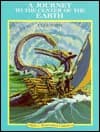
Raymond James (1997)
Genre
Fantasy / Children's / Science Fiction
Reading Time
12 Minutes
Key Themes
See below
Sign in to track this book
A cryptic message from an ancient alchemist sends Professor Lidenbrock, his nephew Axel, and a stoic guide on a dangerous descent into an arctic volcano, challenging all known science as they journey towards the Earth's molten core.
Professor Otto Lidenbrock, an eccentric mineralogist, finds an old Icelandic saga. Inside, he discovers a cryptic parchment in runic script. He tries to decipher it, but fails, frustrating both him and his nephew, Axel. The Professor becomes obsessed, neglecting his work and meals. Axel, more cautious, watches his uncle's growing fixation with concern, knowing any discovery will lead to a grand, likely dangerous, adventure.
After days, Axel accidentally finds the key to the runic cipher. While fanning himself with the parchment, the Latin message becomes clear. It is from Arne Saknussemm, a 16th-century Icelandic alchemist, detailing his trip to the Earth's center through a volcano in Snaefellsjökull, Iceland, and providing directions. Terrified, Axel tries to keep it secret, fearing his uncle's decision to go. However, the Professor quickly gets the truth from Axel, and his excitement is immense.
Professor Lidenbrock, now convinced of Saknussemm's claims, immediately prepares for the journey. He tells Axel they are leaving for Iceland, despite Axel's attempts to stop him. The Professor is firm, dismissing Axel's scientific arguments about the Earth's molten core as mere theory, favoring Saknussemm's account. He gathers equipment: instruments, weapons, ropes, provisions, and a new explosive. Axel, resigned, helps with the arrangements, dreading the dangers ahead.
The Professor and Axel travel by ship from Hamburg to Copenhagen, then to Reykjavik, Iceland. They arrive to a stark, volcanic landscape and unique culture. Their first task is to find a guide to Snaefellsjökull. They meet Hans Bjelke, a stoic eider-hunter known for his strength and efficiency. Hans agrees to go, his calm contrasting with the Professor's enthusiasm and Axel's apprehension.
With Hans leading, the trio begins the climb up Snaefellsjökull. The journey is hard, over rugged terrain, lava fields, and glaciers. Axel struggles physically and with growing anxiety, but the Professor remains determined. Hans, with his knowledge of the land, navigates the slopes easily. They reach the summit, a desolate peak, where the three chimneys from Saknussemm's parchment await.
At the summit, the Professor searches for the correct chimney, following Saknussemm's instructions: the shadow of Scartaris must fall on the opening at noon on the last day of June. After a tense wait, the shadow points to the opening. Without hesitation, the Professor, then Axel and Hans, descends into the dark shaft. The start is terrifying as they lower themselves with ropes, lanterns lighting the unknown. Axel's fear is clear, but the Professor's drive pushes them on.
As they go deeper, the explorers find a maze of passages. At a crossroads, Professor Lidenbrock chooses a path that leads them astray, despite Axel's doubts. They wander for days, provisions dwindling, and water running low. Axel suffers from thirst and exhaustion. The Professor, though outwardly strong, shows worry. Hans plans to search for water by listening for springs, but the situation becomes serious, threatening the expedition.
Just as they despair, Hans finds a hidden stream, providing much-needed water. Refreshed, they continue their descent, entering a huge cavern. Before them is a vast, illuminated underground sea, with a stormy horizon. This confirms Saknussemm's accounts and excites the Professor. The air is warm and humid, and strange, phosphorescent light reveals a unique ecosystem. They name it the 'Lidenbrock Sea'.
To cross the Lidenbrock Sea, Hans builds a raft from petrified wood. The trio sails across the dark waters. They see incredible things, including an electrical storm and a battle between prehistoric marine reptiles – an ichthyosaur and a plesiosaur – a terrifying glimpse into a lost world. Axel is both amazed and scared, while the Professor records every observation. The sea's vastness makes them feel small.
After days of sailing, a storm shipwrecks them on a sandy shore. Exploring, they find a forest of giant mushrooms and ancient plants and animals. More surprisingly, Axel finds a graveyard of mastodons and, carved into a rock face, the initials 'A.S.' – Saknussemm's signature – confirming his earlier passage. Nearby, they also find a rusted dagger. They locate another passage deeper into the Earth, marked by Saknussemm, but a large boulder blocks it, creating a new challenge.
Faced with the boulder, Professor Lidenbrock decides to use dynamite. Despite Axel's fears of collapsing the passage, Hans carefully sets the charge. The explosion clears the way but causes an earthquake and a flood of boiling water. The explorers are swept away, descending deeper. They enter a narrow shaft where the water rises due to volcanic activity. They realize they are being carried upwards by an impending eruption, their journey to the center reversed.
The upward journey inside the volcanic chimney is terrifying, with molten lava threatening them. The heat is unbearable, and they are violently tossed by the rising magma. After a harrowing ascent, they are ejected from the volcano's crater, not in Iceland, but on Stromboli, an active volcano in Sicily, Italy. They emerge disheveled but alive, having traveled across the Earth's interior in hours. Local villagers are astonished. The Professor, though he did not reach the absolute center, is thrilled by their survival and discoveries.
News of their journey spreads, and Professor Lidenbrock, Axel, and Hans become celebrities. They return to Hamburg to a hero's welcome. The Professor publishes his findings, initially met with skepticism, but his detailed accounts and their survival slowly convince doubters. Axel, changed by the experience, marries his beloved Graüben and leads a more adventurous life. Hans, after his payment, returns to Iceland. The expedition, though not reaching the Earth's core, challenges existing science and leaves a lasting mark.
The Protagonist
From a man driven purely by intellectual conquest, he learns to appreciate the value of his companions and the sheer wonder of discovery beyond strict scientific validation. He also gains humility regarding the unpredictability of nature.
The Protagonist/Narrator
Initially fearful and reluctant, Axel transforms from a timid young man into a seasoned explorer, overcoming his anxieties and developing a deeper understanding and appreciation for the unknown. He finds his own courage.
The Supporting
Hans remains consistently stoic and reliable throughout the journey, serving as an anchor for the more excitable characters. His arc is less about personal transformation and more about demonstrating unwavering competence and loyalty.
The Supporting
Graüben's role is primarily to provide emotional grounding for Axel before and after the journey; she doesn't undergo a significant personal arc within the main narrative.
The Supporting (posthumous)
His 'arc' is entirely historical; his past journey and discovery set the stage for the present narrative, inspiring the characters and validating the possibility of their own expedition.
This theme drives the story, seen mostly in Professor Lidenbrock. It explores the human desire to expand knowledge, question theories, and explore the unknown. The Professor's relentless pursuit of Saknussemm's secret and his drive to prove the Earth's interior is traversable show the thrilling, often obsessive, nature of scientific inquiry. The story celebrates the courage and intellect needed to explore new areas, whether physical or theoretical, and how these efforts impact human understanding.
“'Science, my lad, is made up of errors, but of errors that it is good to commit, for they lead little by little to the truth.'”
The journey to the Earth's center is a constant fight against nature's powerful and often terrifying forces. From the hard climb up Snaefellsjökull to the vast, stormy underground sea and the volcanic eruption, the explorers face extreme environments. This theme explores human vulnerability against nature's power, as well as resilience and ingenuity in adapting and surviving. It highlights the awe-inspiring beauty and the deadly indifference of the natural world, making the characters confront their limits and the planet's scale.
“'We were merely atoms in this vast, underground world, at the mercy of its colossal forces.'”
The balance between courage and fear is central to Axel's development and the story. Axel's initial hesitation and constant worry contrast with Professor Lidenbrock's almost reckless bravery. The journey forces Axel to face his deepest fears – claustrophobia, thirst, isolation, and the unknown – and gradually grow his own courage. The story suggests that true bravery is not lacking fear, but acting despite it. It also shows how different people, like the stoic Hans, show courage in various ways.
“'I was a coward, but I had to follow my uncle, for he was leading me to the greatest discovery of the age.'”
The book's main idea relies on the appeal of the unknown and imagination's ability to conceive extraordinary possibilities beyond common understanding. Saknussemm's message and the Professor's belief in it start an adventure into a world science deemed impossible. The underground realm, with its prehistoric creatures, glowing seas, and ancient forests, shows the wonders that might exist beyond common knowledge. This theme encourages readers to question assumptions and embrace discovery in unexpected places.
“'What a spectacle! What a panorama! My eyes were never weary of contemplating this subterranean ocean!'”
The catalyst for the entire journey.
The coded parchment, hidden within an ancient Icelandic saga, serves as the primary inciting incident and plot driver. Its decipherment by Axel reveals Arne Saknussemm's incredible claim of reaching the Earth's center, providing the Professor with both the motivation and the initial instructions for the expedition. This device creates immediate mystery and suspense, setting the stage for the extraordinary adventure. It also acts as a historical link, connecting the present-day explorers to a forgotten predecessor and validating the seemingly impossible journey.
A vast, subterranean ocean that reveals a lost world.
The discovery of the Lidenbrock Sea is a major turning point and a key plot device for expanding the scope of the adventure. This vast underground ocean, complete with its own weather systems, prehistoric marine life, and unique illumination, allows for new forms of exploration (sailing) and introduces significant dangers (sea monsters, storms). It provides a vivid illustration of the unknown wonders that exist deep within the Earth, challenging previous scientific assumptions and offering a profound sense of awe and terror for the characters and the reader.
The unexpected force that reverses the journey and brings them back to the surface.
The sudden onset of volcanic activity, specifically the rising magma and boiling water that sweeps the explorers upward, functions as a powerful deus ex machina. While it places the characters in extreme peril, it ultimately provides the mechanism for their miraculous return to the surface after being trapped deep within the Earth. This device cleverly resolves the seemingly impossible challenge of exiting the planet's interior, bringing the journey to a dramatic and unexpected conclusion while also transporting them geographically to a new location (Italy).
Ready to see how well you understood this book? Take our interactive quiz with 10 questions.
Biography coming soon.







