“I was thirty-four years old, and I had lived in this town all my life, and I knew every single person in it, and I knew what they were going to say before they said it.”
— Rachel's reflection on her life and familiarity with Manawaka.

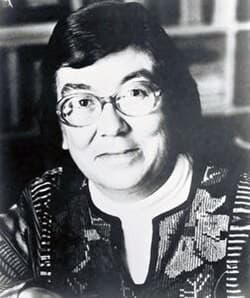
Margaret Laurence (1965)
Genre
Literary Fiction
Reading Time
240 min
Key Themes
See below
Sign in to track this book
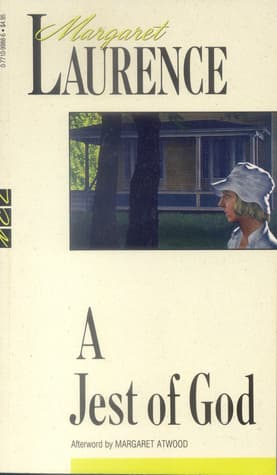
In the stifling prairie town of Manawaka, a repressed Sunday school teacher embarks on a secret summer affair, forcing her to confront her own desires and her mother's judgment.
Rachel Cameron, a thirty-four-year-old, unmarried schoolteacher, lives a quiet life of desperation in the small Canadian town of Manawaka. She shares a house with her widowed, hypochondriac mother, Mrs. Cameron, whose constant demands and veiled criticisms stifle Rachel. Rachel teaches at the local elementary school, where she struggles with her own anxieties and her students' difficult behavior, especially James Doherty. Her social life is almost nonexistent, marked by awkward encounters and a deep sense of isolation. She often retreats into her own mind, imagining conversations and examining her actions, always feeling judged and inadequate. Her mother's judgmental gaze and the town's narrow-mindedness reinforce this feeling.
As the school year ends and summer begins, Rachel attends a stifling church picnic, an obligation her mother imposes. Feeling out of place and uncomfortable, she watches the townspeople with disdain and longing. Here, she meets Nick Kazlik, a childhood acquaintance who now works at the local creamery. Nick, a Ukrainian-Canadian, represents a different kind of life, less bound by Manawaka's strict social norms. Their first conversation is hesitant but sparks an interest in Rachel, a rare feeling in her monotonous life. This meeting plants the seed for a possible escape from her loneliness.
After their meeting at the picnic, Rachel and Nick begin spending time together, and their interactions turn into a secret affair. They meet discreetly, often in Nick's car or at secluded spots, away from Manawaka's prying eyes. For Rachel, this relationship is a revelation. Nick's directness, his physical presence, and the simple act of being desired awaken a dormant part of her. She experiences intimacy, both physical and emotional, for the first time in a meaningful way, which challenges her deep-seated inhibitions and sense of unworthiness. This affair becomes her private rebellion against the suffocating expectations of her life with her mother and the town.
Despite the intoxicating newness of her affair with Nick, Rachel cannot fully escape her past and her mother's influence. She constantly hears her mother's critical voice in her head, analyzing her every move and feeding her self-doubt. Rachel's memories of her father, a stern undertaker, and her childhood in the funeral parlor add to her anxieties about death, decay, and life's fragility. These internal struggles make her guarded with Nick, preventing her from fully opening up. She fears judgment and rejection, projecting her insecurities onto him and their potential future, always expecting its end.
As summer goes on, Rachel experiences unsettling physical changes and a growing unease. She notices missed periods and other symptoms that suggest a terrifying possibility: pregnancy. This realization causes deep panic. The thought of being pregnant, unmarried, and in her mid-thirties, living with her judgmental mother in Manawaka, is overwhelming. She struggles to accept this potential reality with her carefully constructed, if lonely, life. Her thoughts become frantic, moving between denial, fear, and a desperate search for answers, all while trying to appear normal.
Overwhelmed by her fears, Rachel finally confronts Nick about her possible pregnancy. His reaction is not what she expects. While he offers to marry her, his proposal feels more like duty than genuine love or enthusiasm. Rachel, sensing his reluctance and her own deep insecurities, rejects his offer, convinced that a marriage born of obligation would only lead to more unhappiness. The conversation leaves her feeling more isolated than ever, confirming her darkest fears about her worth and their affair's temporary nature. Nick, perhaps relieved, quietly accepts her decision, and their relationship ends.
Driven by growing physical discomfort and the need for a clear answer, Rachel secretly visits Dr. MacAfee, the local physician. She expects to confirm her pregnancy, preparing for the inevitable shame and consequences. However, Dr. MacAfee delivers a diagnosis far more shocking and strange: she is not pregnant with a child, but has a fibroid tumor, a benign growth in her uterus, which has caused her body to mimic pregnancy symptoms. This news is a deep shock, a cruel twist that leaves Rachel reeling with relief, bewilderment, and a profound sense of cosmic jest.
After the diagnosis, Rachel has surgery to remove the fibroid tumor. The procedure is successful, and she begins her recovery, first in the hospital and then back in her mother's house. This period is marked by physical weakness but also intense reflection. The false pregnancy and subsequent surgery force Rachel to confront her own body, her desires, and her deep fears about life and death. She thinks about her relationship with Nick, her mother, and her own identity, feeling both vulnerable and a strange, newfound clarity about her existence.
After Rachel's surgery, her mother, Mrs. Cameron, makes an unexpected decision. She announces her intention to sell their house in Manawaka and move to Vancouver to live with her other daughter, Beth. To Rachel's surprise, Mrs. Cameron insists that Rachel come with her. While living with her mother in a new city is not ideal, the move away from Manawaka is a significant change for Rachel. It offers a chance to escape the stifling environment and the town's judgmental eyes, presenting a tentative opportunity for a fresh start, even if still connected to her mother.
As Rachel and her mother prepare to leave Manawaka, Rachel experiences a complex mix of emotions. She feels a sense of liberation from the town's limits and the memories of her past failures, yet also a pang of regret for the life she never quite built there. She reflects on her affair with Nick, her false pregnancy, and the lessons she has learned about vulnerability, self-acceptance, and life's unpredictable nature. As she looks out the car window, leaving Manawaka behind, Rachel carries a fragile hope for the future, understanding that while she may never truly escape herself, she can at least embrace the possibility of change and a different kind of existence.
The Protagonist
Rachel moves from a state of stifling repression and self-loathing to a tentative acceptance of her own vulnerability and a fragile hope for a more authentic future.
The Supporting
Her character remains largely static, but her decision to move to Vancouver unexpectedly provides Rachel with a chance for change.
The Supporting
Nick serves as a catalyst for Rachel's awakening but does not undergo significant personal development himself.
The Supporting
James's character remains consistent, serving primarily as a reflection of Rachel's internal struggles and her yearning for genuine connection.
The Mentioned
His influence is primarily felt through Rachel's memories and their lasting impact on her psyche.
The Supporting
Serves as the bearer of the pivotal plot twist, initiating Rachel's journey of self-acceptance.
Rachel's life is shaped by Manawaka's social expectations and her own deep repression. The small town's gossip, her mother's judgmental gaze, and her puritanical upbringing stop her from expressing her true desires or seeking real connection. Her thoughts are filled with self-criticism and imagined judgments, showing how completely she has absorbed these pressures. Her affair with Nick is a desperate attempt to break free, but even then, she struggles to shed her inhibitions, always fearing exposure and shame. This theme is clear when she rejects Nick's marriage proposal, fearing a life born of obligation rather than genuine love, a fear rooted in her repressed desires.
“What on earth did I expect? A man, a man. And I got him. And now what?”
A central struggle for Rachel is understanding who she is beyond her roles as 'daughter' or 'teacher' in Manawaka. She grapples with her sexuality, her loneliness, and her feelings of inadequacy. The false pregnancy becomes a strange event that helps her discover herself. It forces her to confront her body, her desires, and her deepest fears about life and death. The revelation that she was never truly pregnant but had a tumor is a cruel cosmic joke, yet it also frees her from the immediate social judgment of an unmarried pregnancy. This allows her to begin accepting her own flawed humanity, moving towards a more authentic, though still uncertain, sense of self.
“I am Rachel, I am Rachel, I am Rachel. What else is there?”
Rachel's deep loneliness is present in every part of her life. She longs for intimacy and understanding but cannot truly connect with others. Her relationship with her mother is one of co-dependence and resentment, not genuine warmth. Her affair with Nick, while offering moments of physical and emotional closeness, is ultimately brief and does not resolve her deeper solitude. Even in her classroom, she feels disconnected from her students. The novel shows how repression and fear isolate Rachel, preventing her from forming the deep connections she desperately wants, until the very end when she takes a small step towards self-acceptance.
“Oh God, let me not be lonely. Let me not be lonely.”
The novel has a sense of the grotesque and absurd, especially through Rachel's morbid interests and the main plot twist. Her upbringing in a funeral parlor, her anxieties about decay, and her thoughts often focus on life and death's unpleasant aspects. The ultimate 'jest of God' is the false pregnancy – a cruel, ironic twist that both fulfills and frustrates Rachel's deepest desires and fears. This absurdity highlights existence's unpredictable and often meaningless nature, challenging Rachel's attempts to bring order or meaning to her life, and forcing her to confront the inexplicable.
“A jest of God. That's what it was. A jest.”
Rachel's constant, unfiltered thoughts and self-analysis.
The novel is almost entirely narrated through Rachel Cameron's first-person internal monologue. This device allows the reader direct access to her anxieties, self-criticism, desires, and observations, immersing them in her subjective experience. It reveals her profound loneliness and repression, as she often 'speaks' more honestly to herself than to anyone else. The stream-of-consciousness style underscores her neurotic tendencies and her constant struggle with self-acceptance, making her a deeply sympathetic, if often frustrating, character.
The small town representing stagnation, judgment, and limited possibilities.
Manawaka functions as more than just a setting; it is a symbol of Rachel's constricted life. The town embodies the rigid social conventions, gossip, and lack of opportunity that trap Rachel. Its smallness and insularity mirror her own internal confinement. The recurring imagery of the town as stifling and judgmental reinforces the psychological weight Rachel carries. Her eventual departure, even with her mother, symbolizes a tentative escape from these symbolic chains, offering a glimmer of hope for a different future.
A significant plot twist that serves as a 'jest of God' and a catalyst for Rachel's transformation.
The revelation that Rachel is not pregnant with a child but has a fibroid tumor is the central plot device. This 'jest' is a cruel irony that simultaneously fulfills Rachel's secret desire for a child and punishes her for her illicit affair. It forces her to confront her body, her desires, and her fears about societal judgment. The absurdity of the situation propels her towards a deeper self-awareness, allowing her to shed some of her self-imposed limitations and begin a path towards a fragile form of self-acceptance.
Rachel's frequent recollections of her childhood and her father's funeral parlor.
Rachel's narrative is interspersed with vivid flashbacks and memories of her childhood, particularly those related to her father, the undertaker, and their home being intertwined with the funeral parlor. These recollections explain her morbid fascinations, her anxieties about death and decay, and the origins of her repressed nature. They provide crucial context for her present-day struggles, illustrating how her past experiences continue to shape her perceptions and inhibit her ability to live fully in the present.
“I was thirty-four years old, and I had lived in this town all my life, and I knew every single person in it, and I knew what they were going to say before they said it.”
— Rachel's reflection on her life and familiarity with Manawaka.
“Perhaps I wasn't meant to be happy. Perhaps I was meant to be one of those people who just… existed.”
— Rachel pondering her own existence and potential for happiness.
“It was as though my life, all the years of it, had been a rehearsal, and now the real play was about to begin.”
— Rachel's feeling of a turning point after a significant event.
“The past is a foreign country; they do things differently there.”
— A general reflection on the past, though not a direct quote from the book, it captures a key theme of looking back.
“I was a stranger to myself, and that was the most frightening thing of all.”
— Rachel grappling with her changing self-perception.
“Loneliness was a country she knew well, a landscape she had mapped in her own heart.”
— Describing Rachel's long-standing familiarity with solitude.
“There are some things in life you just have to bear, like a stone in your shoe, and you can't take it out.”
— Rachel's acceptance of enduring difficulties.
“God, if You exist, You are a cruel joker.”
— Rachel's angry and desperate plea, questioning divine will.
“I had always thought of myself as a good person. But what did that mean, anyway? What was 'good'?”
— Rachel's introspection about morality and self-perception.
“The future stretched out before me like an unwritten page, terrifying and exhilarating all at once.”
— Rachel contemplating the uncertainty and potential of her future.
“It was not a question of forgiveness, but of simply going on.”
— Rachel's pragmatic approach to moving forward after difficult events.
“You can't go back. Not really. You can only go forward, or stand still.”
— Rachel's realization about the irreversibility of time and choices.
“The greatest sorrow is not to die, but to live and know the reason why.”
— A philosophical musing on the burdens of self-awareness and understanding.
“I had always lived my life as though it were a carefully folded handkerchief, and now it was all crumpled.”
— Rachel's feeling of her life being in disarray after unexpected events.
Ready to see how well you understood this book? Take our interactive quiz with 10 questions.
Biography coming soon.







