“How could it be that Mr Biswas, a man who had never been able to build a house, was now, at the age of forty-six, to have one built for him?”
— The opening lines of the novel, setting up Mr Biswas's lifelong aspiration.


V. S. Naipaul (2016)
Genre
Literary Fiction
Reading Time
16-20 hours
Key Themes
See below
Sign in to track this book
Haunted by a prophecy of misfortune and trapped by his in-laws, Mr. Biswas begins a darkly comic and sad journey to get his own house in post-colonial Trinidad.
Mohun Biswas is born into a poor Hindu family in rural Trinidad. He has an extra finger, which a pundit says is a sign of bad luck. His father, Raghu, a sugar cane worker, is told to keep the child away from dead bodies and to please the gods. When Mr. Biswas, as he is called throughout his life, is six, he and his cousins, including the playful Oodhoo, play near a pond. Oodhoo dares Mr. Biswas to touch a neighbor's dead body, pulled from the water. Scared, Mr. Biswas throws a stone at his father, who is nearby. Raghu, surprised, falls into the pond and, unable to swim, drowns. This accidental event is blamed on Mr. Biswas, causing his family to quickly break apart. His mother, Bipti, and his siblings are scattered, sent to live with various relatives, and Mr. Biswas goes to live with his aunt Tara and uncle Ajodha.
After his father's death, Mr. Biswas's childhood is unsettled. He first lives with his Aunt Tara and Uncle Ajodha, where he feels like an unwanted burden, neglected emotionally and punished physically. He then moves to live with his Aunt Chinta and Uncle Jairam, where he is treated slightly better but still wants to belong. He goes to school off and on, showing some intelligence but lacking consistent guidance. He tries various apprenticeships—with a pundit, a sign painter, and a shopkeeper—but finds himself unsuited to each, often due to his rebellious nature, sensitive personality, or the exploitative conditions. These early experiences strengthen his feelings of displacement and his wish for an independent life, free from others' control.
While working as a shop assistant for his cousin Oodhoo, Mr. Biswas meets the beautiful Shama Tulsi. Wanting affection and making a naive attempt at flirting, he writes her a love letter, misunderstanding her family's social customs. Shama's strict sister, Padma, and her husband, Seth, find the letter. The Tulsi family, a large and powerful group, sees Mr. Biswas's actions as a marriage proposal. Despite his protests and lack of real intent, he is quickly pressured into marrying Shama. This sudden marriage brings him into the large, controlling world of the Tulsis, a family whose sheer size and collective will dominate his life for decades, dictating where he lives and works, and stifling his individuality.
After his marriage, Mr. Biswas moves into the Tulsi family's old home in Arwacas, a large, run-down compound filled with relatives. He gets a small, shared room and quickly becomes part of the Tulsi way of life. He is expected to work in one of their many businesses, first as a store manager, and his wages are often controlled by Mrs. Tulsi or Seth. His attempts to assert himself or bring new ideas to the family are met with ridicule or ignored. He feels trapped and powerless due to the family's strong collective will and their constant involvement in his life. His artistic interests, especially his sign-painting skills, are mostly dismissed or used for the family's benefit, further showing his lack of freedom.
Driven by his strong desire for his own home, Mr. Biswas, against the Tulsis' advice, starts building a small house on land given to him by Seth. He puts his small savings and much effort into this project, seeing it as his escape from the Tulsi compound. However, because of his inexperience and cheap materials, the house is poorly built. During a heavy rainstorm, the partly built structure collapses, a devastating blow to his hopes. This event is an early symbol of his struggle for independence and the repeated setbacks he faces, often due to his own lack of resources, practical skills, and the Tulsis' constant influence. Despite their help, they also contribute to his failures through subtle undermining and a lack of real support for his personal goals.
Over the years, the Tulsis assign Mr. Biswas to manage various stores and sugar cane estates they own, moving him and his growing family from place to place. He manages a store in The Chase, then another in Green Vale, enduring isolation and constant scrutiny from Tulsi relatives. He is often underpaid or has his wages manipulated, reinforcing his economic dependence. These postings are not promotions but strategic moves by the Tulsis to expand their empire, with Mr. Biswas serving as a convenient, though unhappy, employee. He experiences further humiliation when he is put in charge of a sugar estate and is expected to manage the laborers, a role he finds uncomfortable and morally difficult. Each move, though offering a temporary change of scenery, ultimately ties him more to the Tulsi family's economic machine and prevents him from forging his own path.
A major change happens when Mr. Biswas gets a job as a reporter and features writer for The Sentinel, a newspaper in Port of Spain. This move allows him to escape the Tulsi family's direct, daily control and gives him a steady income and a creative outlet. He thrives in this environment, using his wit and observation skills to write articles and humorous pieces. He makes friends with colleagues and gains a sense of professional identity. While Shama and the children initially stay with the Tulsis, he eventually brings them to Port of Spain, renting a series of increasingly run-down houses. This period marks a key shift in his mindset, as he begins to assert his individuality and pursue his writing ambitions, however small.
Despite his own limited education, Mr. Biswas is strongly committed to his children's schooling, especially his eldest son, Anand, whom he sees as his intellectual successor. He invests heavily in their education, often at great personal cost, ensuring they attend good schools and receive tutoring. He encourages their reading and curiosity, fostering a love for learning that he himself never had. At the same time, his search for a house continues, becoming an obsession. He and Shama move through a series of rented houses in Port of Spain, each more temporary and unsatisfactory than the last. These houses are often unsound, poorly located, or subject to landlords' whims, constantly reminding him that he doesn't truly own a home or have security.
After years of searching and saving, Mr. Biswas finally manages to buy his own house in Port of Spain. It is a small, ramshackle dwelling, bought at a high price because of his desperation and the seller's deceptive practices. The house is a constant source of problems: the roof leaks, the walls are unstable, and the foundation is weak. He spends much of his time and what little money he has on repairs and renovations, often with the reluctant help of his sons and occasional tradesmen. Despite its many flaws and the financial strain it causes, this house represents the end of his life's struggle, a tangible symbol of his achieved independence, however imperfect. It is his sanctuary, his space, free from the Tulsis' direct oversight.
As Mr. Biswas ages, his health declines. He suffers from heart problems and other ailments, made worse by years of stress, poor diet, and overwork. The house he so desperately sought becomes a burden, needing constant attention and draining his money. His children, especially Anand, begin to leave Trinidad for higher education abroad, fulfilling his hopes for their success but also making him feel increasingly alone. He feels a mix of pride and sadness as they leave, understanding that their futures lie beyond the limits of his own hard-won independence. He remains in his imperfect house, thinking about a life of struggle and the bittersweet taste of his final achievement, surrounded by the remnants of his family's presence.
Mr. Biswas eventually dies from his illness, in his own house at age 46. His death, though early, happens in the place he fought so hard to own. The house, despite its flaws, shows his lifelong struggle for freedom and his escape from the Tulsi family's pervasive influence. His children, though scattered, benefited from his determination, having received the education and opportunities he never had. The story ends by reflecting on the house's importance—not just as a building, but as a symbol of Mr. Biswas's identity and his successful, though difficult, break from the traditional, communal life the Tulsis represented. His independence, achieved at great cost, becomes the basis for his children's future freedom.
The Protagonist
Mr. Biswas evolves from a resentful, dependent young man into a man who, through sheer perseverance, achieves his lifelong dream of owning a house, thereby securing a measure of independence and a legacy for his children.
The Supporting
Shama transforms from a submissive Tulsi daughter-wife into a resilient partner who, while maintaining her family ties, increasingly supports her husband's dream of an independent home.
The Antagonist
Her character remains largely static, serving as the immovable obstacle against Mr. Biswas's desire for independence, embodying the traditional communal structure.
The Supporting
Anand grows from a quiet observer of his father's life to a young man who embodies the success of his father's struggle for independence and intellectual advancement.
The Supporting
Seth remains a consistent figure, embodying the practical, controlling arm of the Tulsi family's influence throughout Mr. Biswas's life.
The Supporting
Padma's role largely remains that of a critical and traditional Tulsi family member, an ongoing source of frustration for Mr. Biswas.
The Supporting
Bipti's arc is one of early tragedy and subsequent decline, her life serving as a stark reminder of the instability Mr. Biswas seeks to escape.
The Mentioned
His death is a crucial plot point, not a character arc.
The Supporting
Oodhoo remains a relatively static character, serving as a foil to Mr. Biswas's intellectual and idealistic nature.
The main theme is Mr. Biswas's constant, lifelong struggle to define himself apart from outside forces, especially the Tulsi family's controlling communalism. His desire for 'a house of his own' is a strong symbol for this search for selfhood, dignity, and a place where he can control his own life. He constantly fights against the overwhelming family structure that tries to absorb him, exploit his labor, and dictate his life. His sarcastic wit and intellectual pursuits also show his attempt to assert an individual identity that goes beyond his circumstances. The imperfect house he eventually gets, despite its flaws, represents his hard-won victory in this deeply personal battle, allowing him to declare 'I am I'.
“How often had he not rehearsed it, the moment of his buying a house! The very words had a magic for him. 'My house.' 'My property.' 'My land.'”
The novel is set in post-colonial Trinidad, a society dealing with its inherited cultural identities. Mr. Biswas, a descendant of indentured Indian laborers, lives in a culture that mixes Hindu traditions with British colonial influences, yet he feels disconnected from both. The Tulsi family represents a conservative, traditional Hindu communalism, while Mr. Biswas is drawn to Western individualism, literature, and the English language. His struggle for a house can be seen as a small example of the larger post-colonial struggle for self-definition and nation-building, moving away from old structures toward a new, independent identity. Trinidad's societal background, with its diverse ethnic groups and lingering colonial mindset, shapes the characters' hopes and limitations.
“He was struck again and again by the wonder of being in his own house, the audacity of it: to walk in through his own front gate, to bar entry to whoever he wished, to close his doors and windows every night.”
Family is shown as both a source of security and oppression. The Tulsi family, while providing a safety net for its many members, also stifles individual goals and demands complete conformity. Mr. Biswas's early experiences of family breaking apart after his father's death create in him a deep desire for a stable, independent family unit. His efforts to build and keep his own nuclear family, separate from the Tulsis, and his dedication to his children's education, are central to this theme. The novel explores the tension between the group and the individual, showing how the desire to belong can conflict with the need for personal freedom, ultimately emphasizing the importance of creating one's own chosen space and family identity.
“But a house was more than a house. It was the only place where he could be Mohun Biswas.”
Mr. Biswas is a frustrated writer and intellectual, finding comfort and self-worth in literature and his work as a journalist. His love for books, his satirical writings for The Sentinel, and his constant internal thoughts show the power of storytelling as a way to understand reality, assert individuality, and find meaning in a chaotic world. His ability to create stories, even if only for himself, allows him to keep a critical distance from his circumstances and imagine a different life. This theme highlights the author's own skill and the novel's self-aware quality, showing how words and stories can be tools for survival and self-creation.
“He was a man who had made a world for himself out of words.”
The physical house symbolizes Mr. Biswas's quest for autonomy, identity, and dignity.
Throughout the novel, the 'house' is not merely a dwelling but a profound symbol. It represents Mr. Biswas's yearning for independence from the oppressive Tulsi family, a space where he can be master of himself. The various houses he inhabits or attempts to build—from the collapsing mud hut to the rented shacks and finally his own imperfect home—mirror his fluctuating fortunes and his gradual, arduous progress towards self-actualization. The house is a tangible manifestation of his psychological and social liberation, signifying his break from traditional communal living and his embrace of individual identity.
Used to highlight the absurdity of Mr. Biswas's struggles and the social conditions of Trinidad.
Naipaul employs a biting, often dark, irony and satire to depict Mr. Biswas's misfortunes, the machinations of the Tulsi family, and the broader societal landscape of Trinidad. Mr. Biswas himself is a master of sarcastic wit, using it as a defense mechanism and a form of rebellion. The ironic situations, such as his accidental marriage or the flawed nature of his hard-won house, underscore the often-absurd gap between aspiration and reality. Satire is used to critique social norms, colonial legacies, and the human condition, making the novel both deeply poignant and darkly comic.
A narrative voice that provides both broad context and intimate access to Mr. Biswas's thoughts and feelings.
The novel is told by an omniscient narrator who possesses extensive knowledge of all characters and events, providing historical and social context for the story. Crucially, the narrator often slips into free indirect discourse, allowing the reader to experience Mr. Biswas's thoughts, feelings, and unique perspective directly, without explicit quotation marks. This technique creates a deep sense of empathy for the protagonist, giving insight into his wit, his resentments, his dreams, and his perpetual struggles, making his internal world as vivid as his external circumstances.
A large, communal family unit that acts as a symbolic obstacle to the protagonist's individualism.
The Tulsi family functions as a collective antagonist, rather than a single villain. Their sheer numbers, their strict adherence to tradition, their economic power, and their communal demands constantly thwart Mr. Biswas's attempts at independence. They represent the forces of tradition, social obligation, and economic exploitation that threaten to subsume individual identity. While individual Tulsis (like Mrs. Tulsi or Seth) play specific roles, their collective presence and influence are the primary external barrier Mr. Biswas must overcome in his quest for autonomy, embodying the very communalism he seeks to escape.
“How could it be that Mr Biswas, a man who had never been able to build a house, was now, at the age of forty-six, to have one built for him?”
— The opening lines of the novel, setting up Mr Biswas's lifelong aspiration.
“He had never been able to please his father, and now that his father was dead, he felt a deeper sense of failure.”
— Mr Biswas reflecting on his relationship with his deceased father.
“To be born a Biswas was to be born to a house, and to a household, and to a family, and to a history of failure.”
— Mr Biswas contemplating the legacy and perceived fate of the Biswas family.
“He was a man who needed to be alone, but he was never alone.”
— Describing Mr Biswas's constant struggle for personal space within the crowded Tulsis household.
“The world was not a place for the weak, and Mr Biswas was weak.”
— Mr Biswas's internal monologue about his perceived inadequacy in a harsh world.
“He knew that he was a failure, but he also knew that he was a man.”
— Mr Biswas's complex self-assessment, balancing his perceived failures with his sense of self-worth.
“He wanted to be a man, but he was only a shadow.”
— Mr Biswas feeling overshadowed and diminished by the powerful Tulsi family.
“He wanted a house, but he did not know what kind of house he wanted.”
— Highlighting the abstract nature of Mr Biswas's ambition for a house, beyond practicalities.
“It was a house that was always building, never built.”
— A metaphor for Mr Biswas's perpetually unfinished projects and aspirations.
“He had been born in a house of mud and straw, and he would die in a house of mud and straw.”
— Mr Biswas's pessimistic view of his life's trajectory, despite his efforts.
“A house was not a house unless it was his own.”
— Mr Biswas's deep desire for autonomy and ownership, particularly regarding his living space.
“He was a man who had always wanted to be a writer, but he had never written anything.”
— Mr Biswas's unfulfilled literary aspirations, a recurring theme.
“He had always been an outsider, even in his own family.”
— Mr Biswas's persistent feeling of alienation and not belonging.
“The world was full of people who wanted to be something, but few ever were.”
— Mr Biswas's observations on human ambition and the reality of life.
“His life was a series of small, meaningless victories and large, crushing defeats.”
— A summary of Mr Biswas's life as he perceives it, a mix of minor successes and significant setbacks.
Ready to see how well you understood this book? Take our interactive quiz with 10 questions.
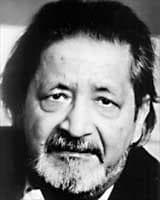
Sir Vidiadhar Surajprasad Naipaul was a Trinidadian-born British writer of works of fiction and nonfiction in English. He is known for his comic early novels set in Trinidad, his bleaker novels of alienation in the wider world, and his vigilant chronicles of life and travels. He wrote in prose that was widely admired, but his views sometimes aroused controversy. He published more than thirty books over fifty years.







