“Alan was a businessman, a salesman, a deal-closer, a rainmaker, a man of action, a man of his word, a man who got things done.”
— Introducing the protagonist, Alan Clay, and his self-perception.

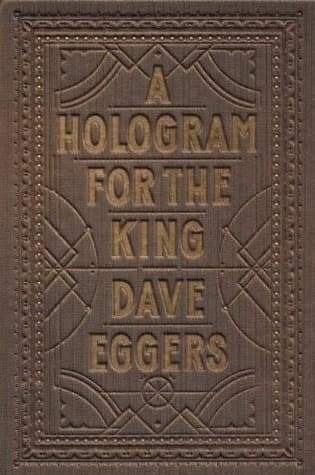
Dave Eggers (2012)
Genre
Literary Fiction
Reading Time
360 min
Key Themes
See below
Sign in to track this book
In a shimmering Saudi Arabian city, a desperate American businessman battles the twin specters of personal and global economic collapse while waiting endlessly for a king who might hold the key to his family's last hope.
Alan Clay, a divorced, middle-aged American salesman, arrives in Jeddah, Saudi Arabia, to present a holographic teleconferencing system to King Abdullah. He is accompanied by his small team: Brad, a tech expert, and two younger assistants, Rachel and Jess. They are immediately struck by the oppressive heat and cultural differences. Their presentation is scheduled to take place in a vast, purpose-built tent city in the remote desert region of Thuwal, where the King is overseeing the development of King Abdullah Economic City (KAEC). Alan discovers that the tent for their presentation is empty and unfinished, and no one seems to know when the King will arrive or when their meeting will actually take place, creating immediate anxiety and a sense of futility.
Each day, Alan and his team travel from their hotel in Jeddah to the desolate tent city in Thuwal, only to find the same situation: an empty tent, no King, and no clear schedule. Alan's frustration grows, exacerbated by a painful, golf-ball-sized growth on his neck, which he believes is a cyst but fears might be something more serious. He spends his evenings alone, drinking and reflecting on his past failures—his failed marriage, his inability to pay for his daughter Kit's college tuition, and the outsourcing of his former bicycle company's manufacturing to China. The isolation and the endless wait begin to take a toll on his mental and physical well-being, highlighting his precarious financial and emotional state.
After several days of fruitless waiting, Alan's original driver is replaced by Yousef, a younger, more jovial Saudi man who speaks excellent English. Yousef quickly becomes Alan's confidant and guide, offering insights into Saudi culture, the King's unpredictable schedule, and the local way of life. When Alan confides in Yousef about the growth on his neck, Yousef insists he see a doctor, overriding Alan's reluctance. Yousef's presence provides Alan with a much-needed human connection amidst his professional and personal struggles, and he begins to rely on Yousef for more than just transportation, seeing him as a bridge to understanding the perplexing environment he finds himself in.
Yousef takes Alan to a local hospital in Jeddah, a modern facility where Alan is surprised by the efficiency and professionalism. There, he meets Dr. Zahra, a Saudi doctor who is veiled but speaks fluent English and possesses a calm, reassuring demeanor. She examines the growth on his neck, confirming it is a cyst and not immediately life-threatening, but recommends a minor surgical procedure to remove it. Alan is immediately drawn to Zahra's intelligence, compassion, and strength, finding himself unexpectedly attracted to her. This encounter offers Alan a temporary reprieve from his anxieties and a sense of hope, as Zahra represents a potential connection in an otherwise alienating world.
While still waiting for the King, Alan joins Yousef on a desert hunting trip with Yousef's friends. The trip offers Alan a brief escape from his professional anxieties and a deeper look into Saudi culture, though he struggles to connect with Yousef's hunting companions. During the excursion, Alan receives a call from Dr. Zahra, who reveals that she is a widow and has children. This personal disclosure deepens Alan's growing affection for her, making her seem more accessible and human. The conversation adds another layer of complexity to Alan's journey, shifting his focus from solely professional concerns to the possibility of personal connection and romance in an unexpected place.
Alan returns to the hospital for the surgical removal of his cyst. The procedure is successful, and Alan recovers in the hospital under the care of Dr. Zahra. During his recovery, they spend more time together, talking and getting to know each other better. Zahra shares more about her life, her work, and the challenges of being a professional woman in Saudi Arabia. Alan, in turn, opens up about his past, his financial struggles, and his strained relationship with his daughter. Their conversations deepen their bond, and Alan finds himself increasingly drawn to her strength and independence, seeing her as a potential anchor in his turbulent life.
After weeks of waiting, the King finally arrives at the tent city in Thuwal. However, due to miscommunication and the chaotic nature of the project, Alan and his team are not prepared or in the right place at the right time. The King briefly tours the site, but Alan's holographic system is not presented, and the opportunity to pitch their product is lost. This devastating blow confirms Alan's worst fears and solidifies his sense of professional failure. The weeks of waiting, the expense, and the effort have amounted to nothing, leaving Alan feeling utterly defeated and questioning his purpose.
In the wake of the King's visit and the missed presentation, Alan is plunged into despair. He retreats to his hotel room, consumed by feelings of failure and regret. He reflects on his career, his marriage, and his relationship with his daughter, Kit, acknowledging the choices and circumstances that led him to this point. The vast, unfinished tent city in Thuwal becomes a metaphor for his own life: a grand vision that remains unfulfilled, a promise of greatness that never materializes. He realizes that this last-ditch effort has failed, and he must now confront the reality of his financial ruin and personal stagnation.
Despite the professional setback, Alan seeks out Dr. Zahra. They meet again, and in a moment of shared vulnerability, they acknowledge their mutual attraction. Alan expresses his feelings, and Zahra, though cautious due to cultural norms and her past, reciprocates. They share a tender, intimate moment, hinting at the possibility of a future together. This connection with Zahra offers Alan a glimmer of hope amidst his professional ruin, suggesting that personal fulfillment can still be found even when professional ambitions crumble. Their interaction highlights human connection transcending cultural and personal barriers.
With his business venture a complete failure, Alan is left with a profound decision: return to America to face his financial problems and a bleak future, or stay in Saudi Arabia and explore the nascent relationship with Zahra. The novel concludes with Alan on the precipice of this choice, his future undefined. He has lost his professional battle, but he has found an unexpected personal connection. The desert landscape, the unfinished city, and the cultural complexities of Saudi Arabia serve as a backdrop to his internal struggle, symbolizing the vast, unknown territory of his future. The ending is ambiguous, leaving the reader to ponder Alan's ultimate decision and the path he will choose.
The Protagonist
Alan begins as a man burdened by past failures and professional desperation, and while his professional quest ultimately fails, he finds an unexpected personal connection that offers a new path.
The Supporting
Zahra initially appears as a competent medical professional but gradually reveals her personal depth and vulnerability, becoming a significant emotional anchor for Alan.
The Supporting
Yousef starts as a simple driver but evolves into a crucial cultural interpreter and friend for Alan, providing both practical help and emotional support.
The Mentioned
Kit's character remains largely static as a symbol of Alan's familial obligations and aspirations.
The Supporting
Brad's character remains consistent as a competent but somewhat impersonal colleague.
The Supporting
Rachel and Jess remain minor, static characters, serving mainly as part of Alan's professional entourage.
The Mentioned
The King remains an elusive, symbolic figure throughout the novel, never fully materialized for Alan.
The novel explores the erosion of the traditional American Dream through Alan Clay's experiences. Alan, a man who once owned a successful bicycle company, is financially ruined and desperately seeking a last-ditch opportunity abroad. His inability to pay for his daughter's college tuition and his constant reflections on how American manufacturing was outsourced to China highlight the systemic economic shifts that have left many Americans behind. The unfinished, sprawling King Abdullah Economic City, built with foreign labor and capital, symbolizes the new global economic reality where American exceptionalism is no longer guaranteed, and individual prosperity is increasingly precarious.
“He knew he was a dinosaur, an American dinosaur, a relic of a dying species.”
The narrative portrays the complexities of globalization, particularly the cultural friction Alan experiences in Saudi Arabia. Alan's struggle to understand local customs, the unpredictable nature of the King's schedule, and the vast differences in social norms illustrate the challenges of operating in a globalized world. The juxtaposition of modern technology (the holographic system) with ancient traditions and the slow pace of bureaucracy creates a constant tension. This theme is further explored through Alan's reliance on Yousef, who acts as a cultural interpreter, bridging the gap between Alan's Western perspective and the Saudi reality. The novel suggests that while economies are interconnected, cultural understanding remains a significant barrier.
“He was in a place where time did not move in a straight line, but in circles, or perhaps not at all.”
Alan Clay's journey is rooted in his struggle with personal and professional failure. His past mistakes—the failure of his bicycle company, his divorce, and his inability to provide for his daughter—haunt him throughout the narrative. The Saudi venture is presented as his last chance at redemption, a desperate attempt to prove his worth. While his professional mission ultimately fails, the novel shifts the focus towards a different kind of redemption: the possibility of personal connection and emotional healing through his relationship with Dr. Zahra. This suggests that redemption may not always come in the form of grand professional success but in finding meaning and connection in unexpected places.
“He had come to this desert to save himself, and instead, he had found something else.”
A central theme is Alan's sense of isolation amidst a foreign culture and his yearning for genuine connection. Despite being surrounded by his team and interacting with various Saudis, Alan often feels alone, exacerbated by his personal anxieties and the language barrier. His daily routine of waiting in the empty tent highlights his professional isolation. However, the novel explores how unexpected connections can emerge, particularly through his growing friendship with Yousef and his developing romantic relationship with Dr. Zahra. These relationships offer Alan solace and a sense of belonging, highlighting the human need for empathy and understanding in alien environments, ultimately providing a counterpoint to his initial solitude.
“He was a stranger in a strange land, but not entirely alone.”
The novel critiques the modern obsession with rapid development and the illusion of progress, particularly through the setting of King Abdullah Economic City. The vast, unfinished tent city and the constantly shifting schedules for the King's arrival symbolize projects that are more about grand vision and public relations than actual, tangible progress. Alan's holographic system, a cutting-edge technology, is ultimately rendered useless by the bureaucratic inertia and cultural unpredictability. This theme suggests that despite technological advancements and ambitious urban planning, fundamental human and systemic inefficiencies can undermine even the most modern endeavors, creating an environment where the appearance of progress often overshadows its reality.
“It was a city of the future, built on the sand, waiting for a king who may or may not arrive.”
A cutting-edge technology symbolizing Alan's last hope for success.
The holographic teleconferencing system serves as the central MacGuffin and a potent symbol of Alan's professional aspirations. It represents the cutting edge of technology, a product he believes can secure his future and pay off his debts. However, its ultimate failure to be presented to the King underscores the novel's themes of the decline of American industry, the unpredictable nature of global business, and the often-futile pursuit of grand technological solutions in the face of human and cultural complexities. The system, designed to bridge distances, ironically highlights Alan's isolation.
An unfinished, ambitious city project symbolizing both progress and futility.
KAEC, particularly the tent city where Alan is meant to present, functions as a powerful setting and symbol. It represents the ambitious, often grandiose projects of the globalized world, a place where immense resources are poured into creating a 'city of the future.' Yet, for Alan, it is a place of endless waiting, disorganization, and ultimately, professional failure. It symbolizes the illusion of progress, the clash between modern aspirations and traditional realities, and the vast, impersonal forces that overwhelm the individual. The unfinished nature of the city mirrors Alan's own unfulfilled life.
A physical ailment symbolizing Alan's internal anxieties and vulnerabilities.
The golf-ball-sized growth on Alan's neck serves as a physical manifestation of his internal stress, anxiety, and the weight of his past failures. It is a constant, painful reminder of his precarious health and his deeper fears about his life unraveling. Its eventual diagnosis and removal by Dr. Zahra coincide with Alan's shift from purely professional concerns to a nascent personal connection. The cyst's resolution, while minor in itself, symbolizes a potential healing for Alan, hinting that addressing his physical and emotional vulnerabilities can lead to new opportunities and connections.
An elusive, powerful figure symbolizing the uncontrollable forces in Alan's life.
The King's constant delays and unpredictable schedule act as a powerful external force driving Alan's frustration and highlighting his lack of control. The King is the ultimate authority, yet he remains largely unseen and unknowable to Alan. This unpredictability symbolizes the larger, uncontrollable forces of the global economy, bureaucracy, and cultural differences that dictate Alan's fate. The King's elusiveness underscores the futility of Alan's efforts and the arbitrary nature of success in a world where personal agency is often diminished by larger, unseen powers.
“Alan was a businessman, a salesman, a deal-closer, a rainmaker, a man of action, a man of his word, a man who got things done.”
— Introducing the protagonist, Alan Clay, and his self-perception.
“His life had been a series of small, almost imperceptible declines, like a house settling, or a glacier receding.”
— Alan reflects on the gradual downturn of his career and life.
“The feeling of being irrelevant was a new and unwelcome companion.”
— Alan grapples with the realization that his skills and experience are no longer highly valued.
“He was a man in search of a future, but all he seemed to find were echoes of the past.”
— Alan's struggle to adapt to a changing world and find new purpose.
“The desert was a great leveler. It made everyone small, everyone equal, everyone thirsty.”
— Alan's observations of the Saudi Arabian landscape.
“He had never been good at waiting. Waiting was for people who had nothing to do.”
— Alan's impatience with the slow pace of business in Saudi Arabia.
“The world was moving too fast for him, or maybe he was just moving too slow.”
— Alan's feeling of being out of sync with contemporary global business.
“He was a ghost in a new machine, an analog man in a digital world.”
— Alan's sense of being obsolete in the modern technological landscape.
“The ache in his neck was a constant reminder of everything he couldn’t control.”
— Alan's physical ailment symbolizing his anxieties and frustrations.
“He understood that some things were simply beyond explanation, beyond reason, beyond the grasp of a man who still believed in spreadsheets and quarterly reports.”
— Alan confronting the cultural and irrational aspects of his business dealings.
“He had spent his whole life trying to get ahead, only to find himself standing still.”
— Alan's reflection on his career trajectory and current predicament.
“There was a kind of freedom in giving up, in admitting defeat, in simply existing without the burden of expectation.”
— Alan contemplating surrender and finding peace in letting go.
“He was a man who had come to the end of his rope, and found that the rope was still holding him, just barely.”
— Alan's precarious situation, on the verge of collapse but still hanging on.
“Maybe the point was not to conquer the world, but to simply survive it, one day at a time.”
— Alan's evolving perspective on life and success.
“The future was a blank space, and for the first time in a long time, that didn't entirely terrify him.”
— Alan's newfound acceptance of uncertainty at the novel's conclusion.
Ready to see how well you understood this book? Take our interactive quiz with 10 questions.
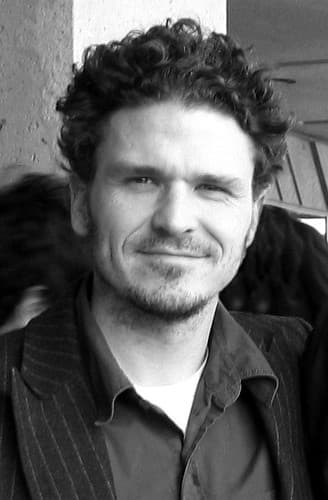
Dave Eggers is an American writer, editor, and publisher. He wrote the 2000 best-selling memoir A Heartbreaking Work of Staggering Genius. Eggers is also the founder of Timothy McSweeney's Quarterly Concern, a literary journal; a co-founder of the literacy project 826 Valencia and the human rights nonprofit Voice of Witness; and the founder of ScholarMatch, a program that matches donors with students needing funds for college tuition. His writing has appeared in several magazines.







