“They were not bad children, but they were not children as we understand the term.”
— Describing the unusual nature of the children aboard the pirate ship.


Richard Hughes (2011)
Genre
Children's / Historical Fiction
Reading Time
240 min
Key Themes
See below
Sign in to track this book
When a group of innocent, yet practical, English children fall into the hands of Caribbean pirates, their adventure becomes a chilling look into childhood's amoral side and the savage detachment of innocence.
The Thornton family lives a wild, unsupervised life on their Jamaican plantation. The children—John, Emily, Laura, Edward, Rachel, and the infant Margaret—spend their days exploring, climbing trees, and living with minimal adult rules. A hurricane strikes the island, destroying their house and forcing them into the cellar. The experience is terrifying but also exciting for the children. After the storm, their parents, Mr. and Mrs. Thornton, decide the children are too wild and need a proper English education. They arrange for them to sail to England on the schooner 'Clorinda'.
The Thornton children, along with the two Fernandez children, Harry and Isabel, board the 'Clorinda'. The captain, a nervous man, is uncomfortable with the boisterous children. Emily, the eldest Thornton girl, quickly becomes a keen observer, though her understanding of adult intentions is skewed. The children are largely left alone, exploring the ship and adapting to sea life. Their innocence and unique logic often confuse the captain and crew, who struggle to maintain order. The journey is initially uneventful, but the children's presence changes the ship's atmosphere.
While at sea, pirates from the schooner 'Rattlesnake', led by Captain Jonsen, intercept and board the 'Clorinda'. The pirates plan to loot the ship and then release it, but they discover the children, hidden below deck. In the confusion, and due to a misunderstanding, Captain Jonsen decides to take the children, believing they are part of the 'Clorinda's' crew or valuable hostages. The 'Clorinda's' captain is left tied up, and the pirate crew sails away with their unexpected young cargo. The children, especially Emily, view this turn of events with a strange mix of curiosity and disinterest, rather than fear.
Life on the 'Rattlesnake' quickly becomes the children's new normal. They are not held captive in the usual sense; instead, they roam the ship, play, and even take part in minor ways in the pirates' daily lives. The pirates, initially unsure how to handle them, grow fond of the children, especially Captain Jonsen, who develops an affection for Emily. The children, particularly Emily, observe the pirates' rough lives and occasional violence with detached curiosity. Their moral compass is still largely unformed or interpreted uniquely. They quickly learn the ship's layout and the crew's personalities, treating the pirates as new playmates.
During their time with the pirates, the youngest child, Margaret, falls ill and dies. Her death is a somber event on the ship. The pirates are genuinely saddened and perform a respectful burial at sea. However, the older children, particularly Emily, react to Margaret's death with a lack of overt grief or understanding. Emily observes the process and the pirates' sorrow, but her own thoughts show a practical, almost scientific, curiosity about the event rather than emotional distress. This incident highlights the children's unusual psychological state and their developing detachment from conventional human emotions.
Captain Jonsen, trying to keep the children from seeing a violent pirate raid on another ship, locks them in a cabin. During the raid, in the chaos, the two Fernandez children, Harry and Isabel, are accidentally killed by the pirates, possibly suffocated or crushed. The pirates, fearing the implications and legal problems if the deaths were discovered, dispose of their bodies at sea and agree to keep it a secret. The remaining Thornton children, though aware of the Fernandez children's absence, do not fully grasp the seriousness of what happened, their minds explaining the disappearance in their own ways.
One day, a pirate named Otto, who had been teasing Emily, falls from the mast and dies. Emily, in her later testimony, claims to have pushed him, believing he was 'dead' already in some abstract sense, or that she was simply playing a game. The pirates, though shocked, do not suspect the child. Emily's internal thoughts, however, reveal a complex and disturbing interpretation of the event, where her actions are both deliberate and yet without malice or understanding of the outcome. This incident shows the profound moral ambiguity that has begun to define the children's actions and perceptions.
The 'Rattlesnake' encounters a large merchant ship, the 'Vittoria'. Captain Jonsen and his crew realize that keeping the children is becoming problematic and dangerous. They decide to transfer the children to the 'Vittoria' with a made-up story that they rescued them from a shipwreck. The pirates hope this will free them of their unusual burden and potential witnesses. The children, having grown used to pirate life, are somewhat reluctant to leave, but they comply. This transfer marks a turning point, bringing the children back into contact with the 'civilized' world.
The 'Vittoria' takes the children to England. Upon arrival, they are treated as shipwreck survivors and heroes, their story of being rescued from the 'Clorinda' after a storm widely believed. Authorities interview them, and their accounts are heavily influenced by their childlike understanding, selective memory, and the pirates' made-up story. Emily, in particular, becomes the main narrator, her testimony a strange mix of truth, fantasy, and self-preservation. This period highlights the stark contrast between their internal experiences and the external perceptions of their ordeal.
Eventually, Captain Jonsen and his crew are captured and brought to trial in England for piracy and murder. The Thornton children are called as key witnesses. Their testimony, filtered through their unique and often unreliable memories, is important. Emily's account, particularly regarding the deaths of the Fernandez children and Otto, is a central point of argument. She denies involvement in Otto's death and misrepresents other events, not out of malice but from her own distorted sense of reality and self-preservation. Her testimony, though confusing and contradictory, ultimately helps convict and execute the pirates.
During the trial, Emily is cross-examined. She struggles to match her memories with the court's expectations. When asked about Otto's death, she denies pushing him, stating she only 'thought' of it, and that he fell. Her child logic and seemingly innocent denials, combined with the general confusion surrounding the events, are interpreted by the court as proof of the pirates' depravity and their corrupting influence on the children. The court, unable to fully understand the children's psychological state, takes Emily's testimony at face value, leading to the conviction and hanging of Captain Jonsen and his crew, despite the complex reality of their interactions with the children.
After the trial, the Thornton children are sent to various boarding schools in England. Their parents believe they have been traumatized and need a proper upbringing. They are seen as victims of a harrowing pirate ordeal, their unique and disturbing adaptations to pirate life largely unacknowledged or misinterpreted by adults. Emily, in particular, carries her experiences internally, her childhood innocence changed, yet outwardly she conforms to expectations. The novel ends with the children seemingly back in society, but the reader knows about their profound internal changes and the gap between their perceptions and the adult world's understanding.
The Protagonist
Emily transitions from a wild, unsupervised child to a survivor whose innocence becomes a tool for self-preservation, culminating in a detached, almost amoral, understanding of the world.
The Antagonist/Supporting
Jonsen evolves from a ruthless pirate to a reluctant caretaker, his attempts to manage the children ultimately leading to his downfall.
The Supporting
John adapts to the pirate life with the same ease as his siblings, his innocence remaining largely intact but his understanding of morality subtly warped.
The Supporting
Laura, like her siblings, undergoes the pirate experience with a child's adaptability, her internal changes mostly unexamined by the narrative.
The Supporting
Their role is largely static; they instigate the children's journey but remain unaware of the true psychological impact of their experiences.
The Mentioned
Otto's arc is brief; he serves primarily as a catalyst for Emily's ambiguous actions and testimony.
The Supporting
Harry's arc is tragically cut short; he represents the more vulnerable aspects of childhood innocence in the face of danger.
The Supporting
Isabel's arc is tragically cut short; she, along with Harry, represents the consequences of the children's unwitting involvement with pirates.
The novel explores the complex and often disturbing nature of childhood innocence. It suggests that innocence is not always goodness or moral purity, but rather a lack of a developed moral framework and an inability to fully grasp consequences. The children, especially Emily, adapt to pirate life with unsettling ease, viewing violence and death with detached curiosity rather than fear. Their 'innocence' allows them to rationalize bad acts and misinterpret adult intentions, leading to tragic outcomes for others. This theme challenges common ideas of childhood purity.
“For children are as new as that: and at first they are not even human, but have to be made so slowly.”
A main theme is the subjective and unreliable nature of memory, especially a child's memory, and how perception shapes reality. The children's accounts of their time with the pirates, particularly Emily's testimony at the trial, are filtered through their unique, often distorted, understanding of events. They mix facts with fantasy, leave out important details, and interpret adult actions through their own logic. This highlights the gap between objective truth and subjective experience, and how adults often misinterpret or project their own understanding onto children's stories, leading to miscarriages of justice.
“She had not really killed him, but only thought of it; and then he had fallen.”
The novel examines how environment shapes character, especially in childhood. The Thornton children, initially wild and unsupervised in Jamaica, are thrust into the lawless world of pirates. While they do not become overtly 'evil,' their exposure to violence, death, and a lack of moral boundaries subtly changes their psychology. They learn to adapt to and even normalize the abnormal, leading to a chilling detachment from conventional morality. The 'civilizing' goal of sending them to England is ironically undermined by their pirate experience, which fundamentally reshapes their internal world.
“They were no longer quite children. They had tasted the fruit of the tree of knowledge, and it was bitter.”
Throughout the story, adults consistently fail to understand the children's true internal lives and motivations. From the Thorntons' initial decision to send them away, to the 'Clorinda's' captain's discomfort, to the pirates' clumsy attempts at care, and finally to the court's interpretation of Emily's testimony, adults project their own assumptions and anxieties onto the children. They see what they expect to see (victims, innocent children) rather than the complex, sometimes disturbing, reality of the children's psychological adaptations. This theme highlights the deep divide between the adult and child worlds.
“And the children, being children, knew nothing of the world, and so, of course, knew everything.”
The story is primarily told through the filtered, often detached, perspective of the children, especially Emily.
The novel frequently employs a third-person narrative that closely aligns with the children's, particularly Emily's, internal thoughts and perceptions. This device creates a profound sense of dramatic irony, as the reader is privy to the children's unique and often morally ambiguous interpretations of events, while the adult characters within the story remain oblivious. This unreliability challenges the reader to question what constitutes 'truth' and highlights the vast gulf between childhood perception and adult understanding, making the children's actions and testimonies at the trial particularly unsettling.
Subtle hints and eerie premonitions of future events or the children's changing nature.
Hughes uses subtle foreshadowing to hint at the darker turns the children's journey will take and the profound changes within them. For instance, the children's initial wildness and lack of conventional supervision in Jamaica, and their detached reaction to the hurricane, subtly prepare the reader for their unsettling adaptability to pirate life. The early descriptions of Emily's peculiar observations and internal logic also foreshadow her later, morally ambiguous actions and testimony, creating a sense of unease and inevitability about the loss of a certain kind of innocence.
The reader knows more about the children's true thoughts and experiences than the characters within the story.
Dramatic irony is a pervasive device, particularly evident in the children's interactions with adults and at the trial. The reader is given access to Emily's internal monologues and the collective children's unique interpretations of events, such as the deaths of Margaret, the Fernandez children, and Otto. This privileged knowledge contrasts sharply with the adults' naive or misinformed understanding, creating tension and highlighting the tragedy of their inability to truly comprehend the children's altered states. This irony underscores the novel's central themes of adult blindness and the complex nature of innocence.
“They were not bad children, but they were not children as we understand the term.”
— Describing the unusual nature of the children aboard the pirate ship.
“The mind of a child is a terrifying thing.”
— A general observation on the unpredictable and often amoral nature of children's thoughts.
“The children had no idea of fear, because they had no idea of danger.”
— Reflecting on the children's initial lack of understanding of their perilous situation with the pirates.
“Emily had a way of looking at things as if they were perfectly ordinary, even when they were quite extraordinary.”
— Characterizing Emily's detached and often chilling perspective on events.
“Pirates are not romantic figures; they are simply men who steal.”
— A pragmatic assessment of pirates, stripping away any romanticized notions.
“It is not so much that children are cruel as that they are without pity.”
— Distinguishing between active cruelty and a simple lack of empathy in children.
“Memory is a treacherous thing, especially in children.”
— Discussing the unreliability of children's recollections, particularly concerning traumatic events.
“The sea, like life, was a thing to be endured, not enjoyed.”
— A somber reflection on the harsh realities of the ocean and existence.
“She had merely watched, with that peculiar detachment which was her most terrifying characteristic.”
— Describing Emily's passive observation of violence and chaos.
“The world was full of things which could not be explained, and of which it was better not to think too much.”
— A philosophical musing on the mysteries and darker aspects of life.
“They were not good, nor bad, but merely themselves, and that was enough to make them terrifying.”
— Summarizing the children's unsettling authenticity and lack of conventional morality.
“One had to learn to take things as they came, without question or complaint.”
— A lesson learned about resignation and acceptance in the face of uncontrollable circumstances.
“The truth was not a simple thing, especially when children were involved.”
— Highlighting the complexity and ambiguity of truth, particularly when filtered through children's perspectives.
“It was the children who remembered nothing, or remembered everything wrong, who were the truly dangerous ones.”
— Emphasizing the threat posed by children's unreliable memories and interpretations.
Ready to see how well you understood this book? Take our interactive quiz with 10 questions.
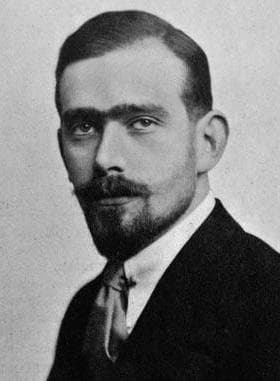
Richard Hughes may refer to:Sir Richard Hughes, 1st Baronet, British naval commander, first of the Hughes baronets of East Bergholt in the County of Suffolk Sir Richard Hughes, 2nd Baronet, British naval officer and Lieutenant-governor of Nova Scotia Richard Hughes (1881–1962) Richard Hughes (1900–1976), British writer Richard Hughes (cricketer) (1926–2020), English cricketer Richard Hughes (footballer), Scottish footballer Richard Hughes (jockey), Irish jockey Richard Hughes (journalist) (1906–1984), Australian journalist Richard Hughes (musician), drummer with Keane Richard Bannister Hughes (1810–1875), British businessman, active in Uruguay Richard Cyril Hughes, Welsh historian Richard E. Hughes (1909–1974), comics writer Richard J. Hughes (1909–1992), Governor of New Jersey in the 1960s, Chief Justice of New Jersey in the 1970s Richard N. Hughes (1927–2004), American television executive and television station editorialist Richard W. Hughes, American gemologist Dick Hughes, American football player Dick Hughes (baseball), baseball player Dick Hughes (footballer) (1902–1984), English footballer Dick Hughes (musician) (1931–2018), Australian musician Rick Hughes, American basketball player Richy Hughes, British Musical Theatre Lyricist

Dan Gemeinhart
4.5
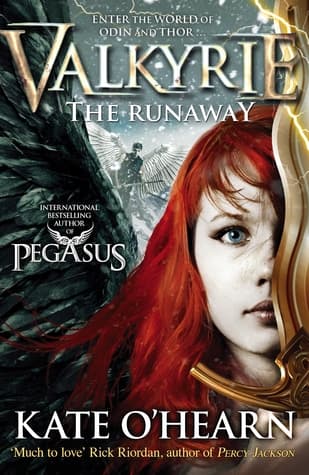
Kate O'Hearn
4.4

Jeanne Birdsall
4.4

Jen Wang
4.4

Wendelin Van Draanen
4.3

John Marsden
4.3

Chris Van Allsburg
4.3
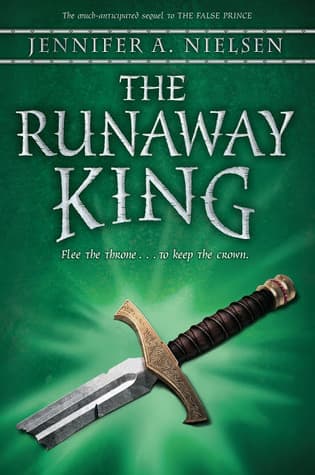
Jennifer A. Nielsen
4.2