“The only way to deal with an unfree world is to become so absolutely free that your very existence is an act of rebellion.”
— Patrice Mersault's reflections on freedom and the absurd.

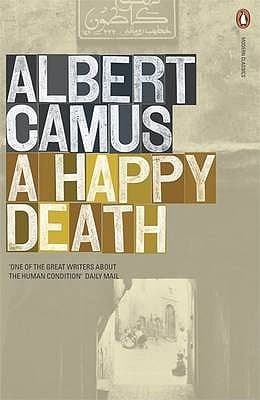
Albert Camus (1972)
Genre
Literary Fiction / Philosophy
Reading Time
180 min
Key Themes
See below
Sign in to track this book
In Algiers, a young man named Mersault murders for money, then searches for a life of deliberate happiness and a death free of anger or regret.
Patrice Mersault, a poor shipping clerk in Algiers, is unhappy with his life. He feels stuck in his routine job and constant money worries, believing these stop him from truly living. He wants a life of leisure and deep experiences but sees no way to get it. Mersault often visits Zagreus, a wealthy man in a wheelchair, who speaks clearly about living fully and finding happiness through conscious will, even if it means ignoring common morality. Zagreus's statements about needing time and money for true freedom resonate with Mersault's own desires, planting a dangerous idea in his mind.
After more visits where Zagreus talks about his philosophy of life and death, Mersault's desire to escape his dull life becomes overwhelming. He interprets Zagreus's thoughts on a "happy death" and the importance of having means to live freely as a reason to take what he needs. In a planned act, Mersault shoots Zagreus, making it look like a suicide. He takes Zagreus's money, believing this act, though morally wrong by society's rules, is necessary for his freedom and his pursuit of true happiness and a "conscious death."
After the murder, Mersault takes time off from his job. He moves in with Catherine, a woman he has a casual relationship with. He uses Zagreus's money to live without working, enjoying simple pleasures like swimming, sunbathing, and time with friends. He tries to find contentment in these daily experiences, thinking that freedom from money worries will let him appreciate life more. But a hidden unease and the weight of his secret remain, stopping him from fully reaching the "happy death" he imagines. He still feels a lack of true, deep joy.
Unhappy with his life in Algiers and seeking a deeper sense of self, Mersault travels to a sanatorium in the mountains, supposedly for his health. There, he joins a unique community of three women—Rose, Claire, and Martha—who share a house and live simply, pooling their resources. This communal life offers Mersault a different view of human connection and the search for happiness. He observes their quiet routines, their acceptance of life's limits, and their attempts to find meaning in shared existence. This contrasts sharply with his earlier, more individual pursuit of freedom.
After leaving the sanatorium, Mersault travels extensively through Europe, visiting places like Prague and Genoa. This journey is a deliberate attempt to escape his past and find a new life. But despite the new surroundings and no money worries, he feels increasingly alone. The grand cities and beautiful landscapes do not bring him the deep joy or purpose he expected. Instead, he faces the persistent emptiness within himself, realizing that external things alone cannot provide the "happy death" he seeks. True contentment, he understands, must come from within.
Mersault, now ill with a serious lung condition, returns to Algiers, his childhood home, knowing he is dying. He is tired from his travels and his constant, but unfulfilled, search for happiness. The familiar sights and sounds of Algiers, especially the strong sunlight and the sea, bring him calm and a connection to his past. He rents a small house by the sea, wanting solitude and peace for his final days. He is no longer driven by a frantic pursuit of external happiness but by quiet reflection, trying to make sense of his actions and experiences.
Confined to his small house by the sea, Mersault's illness worsens. He spends his days thinking about existence, the sun, the sea, and his own death. He reflects on his past actions, including Zagreus's murder, not with regret, but with a detached understanding of his choices. He begins to let go of his earlier worries about finding a perfect "happy death," instead embracing the simple, physical reality of his present. The world around him, especially nature, becomes a source of deep, if melancholic, beauty and a way to quiet acceptance.
In his final days, Mersault has intense, almost mystical, moments with nature. He feels the sun's warmth, hears the waves, and watches the changing light, all of which fill him with a deep sense of belonging and peace. He realizes that happiness is not something achieved through wealth or specific actions, but an inherent quality of existence, found by consciously embracing the present. The weight of his past actions, including the murder, seems to lift as he becomes one with the indifferent, beautiful world around him.
Patrice Mersault dies alone in his house by the sea, not with anger, hatred, or regret, but with deep peace and acceptance. His death is not dramatic, but a quiet end to his journey toward self-awareness. He has come to terms with his life, his choices, and his death, finding a form of happiness not in external things or a specific state, but in completely surrendering to the indifferent beauty of the world and his place in it. He achieves his "happy death" by consciously embracing the end, having reconciled his existence with the absurd.
The Protagonist
Mersault transforms from a discontented, morally ambiguous seeker of external happiness to a man who finds profound peace and acceptance in the face of death, realizing happiness is an internal state of being.
The Supporting/Catalyst
Zagreus remains philosophically consistent throughout his brief appearance, serving as a fixed point of intellectual provocation rather than undergoing personal development.
The Supporting
Catherine's character remains largely static, serving as a temporary anchor for Mersault during a specific phase of his journey.
The Supporting
These characters remain consistent, serving as an example of a specific lifestyle for Mersault to observe and consider.
The novel explores the inherent meaninglessness of a life lived without conscious purpose, a core idea in Camus's philosophy of the absurd. Mersault's initial unhappiness comes from recognizing life's arbitrary routines and his struggle to find meaning. His journey, from Zagreus's murder to his travels and return to Algiers, is a continuous, often desperate, attempt to create meaning and achieve a "happy death" in an indifferent universe. He grapples with the idea that happiness is not given but created, and that even in the face of meaninglessness, one can choose to live fully. This is seen in his final moments of peace by the sea, accepting his fate without illusion.
“There are times when the world is so beautiful that the heart is seized with an almost unbearable longing, a longing for something that one cannot define, something that one has never known. It is the longing for happiness, for that true happiness which is not of this world.”
A central theme is the belief that financial freedom and leisure are needed for true happiness and a "conscious life." Mersault's poverty is shown as a restraint, stopping him from pursuing his desires. Zagreus clearly states that "happiness is made of time and money." Mersault murders Zagreus directly because he wants this freedom. His subsequent leisure, however, shows that while money removes external limits, it does not automatically bring inner peace. His travels through Europe, funded by Zagreus's money, leave him feeling more isolated. Ultimately, he finds happiness only when he moves beyond needing external wealth, embracing the simple, sensory experiences of his final days in Algiers.
“For the first time, he understood that a man's life is not only his own, but also a part of the world, and that the world is a part of him. And that this is what makes a happy death.”
The novel directly addresses the idea of a "happy death." For Mersault, this means a death that is chosen, conscious, and the result of a life fully lived and understood. Initially, he believes this requires radical action, like Zagreus's murder, to escape a life of "unconscious" suffering. His later experiments with different lifestyles—communal living, travel, solitude—are all attempts to find this desired end. By the novel's close, Mersault achieves his "happy death" not through grand gestures or external accomplishments, but through a quiet acceptance of his death and a deep, almost spiritual, connection to nature, dying "without anger, without hatred, without regret."
“He knew now that a happy death was a conscious death, a death that one chose, not one that was inflicted upon one.”
Camus explores the theme of the world's indifference to human suffering and hopes, an idea Mersault comes to accept. Mersault often feels detached from others and struggles to form deep connections. This reflects a broader sense of isolation in an indifferent universe. His relationships with Catherine and the women in the sanatorium are brief or shallow, showing his difficulty in finding meaning through personal bonds. However, in his final days, he finds a deep connection not with people, but with nature—the sun, the sea, the earth. This connection helps him move past his individual solitude and find peace in his place within the larger, indifferent cosmos.
“The sun, the sea, the earth, the sky, all were indifferent to him, and he was indifferent to them. But it was an indifference that brought him peace.”
Conversations that explicitly explore existential and moral questions.
The dialogues between Mersault and Zagreus serve as a crucial plot device, directly introducing and dissecting the novel's central philosophical themes. Zagreus's pronouncements on money, happiness, and the 'happy death' are not merely background but directly motivate Mersault's actions, particularly the murder. These dialogues act as a blueprint for Mersault's subsequent choices, making the philosophical underpinnings of his journey explicit and driving the narrative forward by establishing his radical goals.
Natural elements representing both life's beauty and the world's indifference.
The sun and sea are recurring symbols throughout the novel, particularly in Mersault's Algerian experiences. Initially, the sun is a source of intense physical sensation and a backdrop to his pursuit of simple pleasures. As his journey progresses, these elements evolve to represent the raw, indifferent beauty of existence, mirroring Mersault's own increasing detachment and eventual acceptance. In his final moments, the sun and sea become integral to his 'happy death,' symbolizing a profound, almost mystical, communion with the natural world, where he finds peace in his insignificance within the vast cosmos.
Physical travel as a metaphor for spiritual and philosophical exploration.
Mersault's extensive travels, from the sanatorium to various European cities and his eventual return to Algiers, are more than just changes of scenery. They function as a journey of self-discovery and philosophical experimentation. Each location represents a different attempt to find happiness or a 'happy death' – communal living, solitude, cultural immersion. The inability of these external changes to bring lasting contentment ultimately forces Mersault to turn inward, making his physical travels a metaphor for his internal quest for meaning and acceptance.
Though not strictly first-person, the narrative is deeply immersed in Mersault's perspective, shaping reader understanding.
While the novel uses a third-person limited perspective, it is deeply embedded in Mersault's consciousness, often feeling like an internal monologue. This narrative choice allows readers direct access to Mersault's thoughts, motivations, and philosophical struggles, even for his more morally ambiguous actions. It fosters a sense of intimacy and allows the reader to understand the 'why' behind his pursuit of a 'happy death,' shaping empathy and understanding of his unique worldview, rather than simply judging his actions from an external moral standpoint.
“The only way to deal with an unfree world is to become so absolutely free that your very existence is an act of rebellion.”
— Patrice Mersault's reflections on freedom and the absurd.
“To be happy, one must not be too concerned with others.”
— Mersault's early thoughts on achieving personal happiness.
“The great task of man is to achieve a happy death.”
— The central theme of the novel, reflecting Mersault's ultimate goal.
“Money, to him, meant the possibility of freedom, a space where he could be himself without compromise.”
— Mersault's motivation for acquiring wealth.
“He knew that one could not build happiness on the unhappiness of another, but he also knew that one could not build happiness on anything at all.”
— Mersault's philosophical struggle with the ethics of his actions.
“Life is a sum of experiences, not a sum of hours.”
— Mersault's perspective on how to truly live and measure existence.
“Every man needs to create his own sun.”
— Mersault's belief in individual self-creation and finding one's own light.
“True wealth is not in having much, but in needing little.”
— Mersault's evolving understanding of contentment and minimalism.
“The world is beautiful, and I am part of it. I am free.”
— A moment of profound connection and liberation experienced by Mersault.
“One day, when I am old, I will have no regrets. That is the only victory.”
— Mersault's long-term vision for a life lived without compromise.
“Happiness is a long patience.”
— Mersault's realization that true happiness is not instantaneous but a sustained effort.
“To live fully is to be consumed by the present.”
— Mersault's embrace of the immediate moment and rejection of future anxieties.
“He understood that one must choose between being a man and being a human being. A man builds, a human being is built.”
— Mersault's contemplation on agency versus passivity in life.
“The sea, the sun, the earth, the sky: these were his only gods.”
— Mersault's profound connection to nature and rejection of traditional religion.
Ready to see how well you understood this book? Take our interactive quiz with 10 questions.
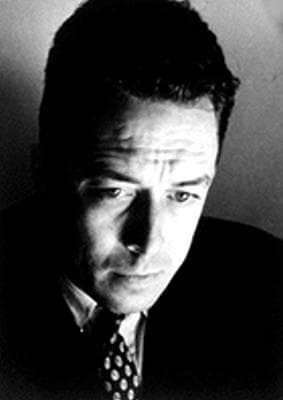
Albert Camus was a French-Algerian philosopher, author, dramatist, and journalist. He was the recipient of the 1957 Nobel Prize in Literature at the age of 44, the second-youngest recipient in history. His works include The Stranger, The Plague, The Myth of Sisyphus, The Fall, and The Rebel.







