“I have been here before, but when or how I cannot tell.”
— Tony Last reflects on his sense of déjà vu at Hetton Abbey.

Evelyn Waugh (2012)
Genre
Literary Fiction / Historical Fiction
Reading Time
360 min
Key Themes
See below
Sign in to track this book
After his marriage and society crumble, an English aristocrat's world shatters when his wife's affair leads him into a darkly comic descent, revealing the emptiness of a generation.
Tony Last loves his ancestral Gothic Revival country house, Hetton Abbey, and his young son, John Andrew. He enjoys being a squire, fixing up the house, and living a traditional English life. His wife, Brenda Last, finds Hetton and Tony's rural activities boring after seven years of marriage. She often goes to London, supposedly for shopping or social events, but secretly wants a more exciting life. Tony, naive and trusting, does not notice her growing unhappiness, believing their life at Hetton is perfect and safe.
During her trips to London, Brenda Last starts a relationship with John Beaver, a young, unemployed, and rather uninteresting socialite. Beaver lives with his demanding mother, Mrs. Beaver, who arranges his social life. Brenda is not deeply in love with Beaver but finds his company a welcome change from the dullness of Hetton. Their affair starts casually, driven more by Brenda's boredom and desire for new things than real affection. Tony remains completely unaware, even when Brenda spends more and more time in London, making up believable reasons for her absences.
Brenda's affair with John Beaver grows, leading to more frequent and costly trips to London. Beaver has no money, so Brenda pays for their outings and even her own living expenses in the city. Brenda, in turn, uses a lot of Tony's money, straining his finances. Tony is too busy with Hetton and too trusting to question her spending closely. Her friends, especially Mrs. Beaver, quietly encourage the affair, seeing it as a way to help Beaver or simply for the social drama.
One day, while Tony is away, John Andrew, their eight-year-old son, dies in a riding accident. Tony is heartbroken. He rushes to London to tell Brenda, expecting her to be just as sad. However, when he tells her, Brenda's first thought is not for her son but for Beaver, asking, 'Oh, thank God. I thought you were going to say Tony was dead.' This shocking statement shows how little she cares about her family and how much she prioritizes her lover. Tony is deeply hurt by her reaction, realizing how indifferent she is to their life together.
After John Andrew's death and Brenda's cold reaction, Tony finally confronts her about her affair and asks for a divorce. Brenda, advised by her calculating friends like Mrs. Beaver, agrees but demands an excessive financial settlement of £500 a year for life. This amount is far more than Tony can afford, as his income is mostly tied up in maintaining Hetton Abbey. The legal process becomes a long and shameful experience for Tony, who has to consider selling parts of his beloved estate to meet Brenda's demands, further showing her greedy nature.
Tony returns to Hetton Abbey, heartbroken and let down, trying to find comfort in his home and its traditions. He struggles with the idea of selling his land to pay for Brenda's affair with Beaver. Eventually, after much emotional pain and with help from his lawyer, Jock Grant-Menzies, they reach a compromise: Brenda will accept £300 a year if Tony provides the evidence for an 'amicable' divorce. Tony, tired of the fight and desperate to end the public shame, reluctantly agrees to this plan.
Unable to come to terms with losing his son, his wife's betrayal, and the collapse of his traditional life, Tony decides to escape by joining an expedition to find a lost city in the Amazon jungle. He pays for the trip himself, seeing it as a desperate search for meaning and a way to leave his problems behind. He hires Dr. Messinger, an unusual explorer, to lead the expedition. Tony is not ready for the harsh realities of jungle life; his upper-class English upbringing gives him little protection against the wilderness's dangers.
The expedition goes upriver into the thick Amazon. Tony, despite his first excitement, finds the journey harder and more confusing. Dr. Messinger, though experienced, is a poor leader, and the native guides slowly leave them because of the difficult conditions and lack of clear direction. Food supplies run low, and the men get sick. Eventually, Messinger drowns in a rapids accident, leaving Tony stranded and alone in the middle of the jungle, far from any towns. His dreams of discovery turn into a fight for survival.
Delirious and close to death from fever and hunger, Tony is eventually found by Mr. Todd, an elderly, isolated English settler who lives deep in the jungle. Todd, who seems kind, nurses Tony back to health. He lives in a simple settlement, surrounded by native people, where he maintains an unusual and solitary life. Tony, weak and thankful for the rescue, at first sees Todd as his savior, unaware of the dark side of his host's hospitality.
Once Tony recovers, he finds out the true, terrible nature of Mr. Todd's hospitality. Todd, who cannot read, has held previous visitors captive, forcing them to read aloud to him from all of Charles Dickens's books. Tony is now his latest victim, held prisoner in the remote jungle outpost. Todd refuses to let Tony leave, destroying any way to escape or communicate with the outside world. Tony is condemned to spend the rest of his days reading Dickens aloud, a permanent part of Todd's strange and cruel literary prison, his identity and freedom completely gone.
Back in England, news of Tony's presumed death in the jungle reaches Brenda. She is now free to marry John Beaver, but his interest in her quickly fades without Tony's money to pay for their lifestyle. Beaver finds another, richer patroness, and Brenda is left with her small settlement, which is not enough to keep her desired social standing. She has to move into a small, less fashionable apartment, her dreams of a glamorous life with Beaver shattered, ironically reflecting Tony's own entrapment.
A search party, organized by Tony's relatives and lawyers, eventually reaches Mr. Todd's settlement. Todd, always clever, shows them a grave and a locket belonging to Tony, convincing them that Tony died of fever and was buried there. The search party accepts this evidence and returns to England, reporting Tony's death. This seals Tony's fate, ensuring that no one will ever look for him again, and he remains permanently trapped as Mr. Todd's reader, his existence erased from the world he once lived in. The novel ends with Tony's tragic, endless captivity, a chilling symbol of his ultimate loss.
The Protagonist
From a content, if naive, squire, Tony is stripped of his family, home, and identity, ending as a captive, his spirit broken.
The Antagonist
Brenda moves from a life of comfortable boredom to a brief period of perceived freedom, only to find herself financially insecure and abandoned, a victim of her own superficial choices.
The Supporting
He remains largely static, a dependent and uninteresting figure whose brief moment in the spotlight ends with his abandonment of Brenda for a wealthier patroness.
The Supporting
She remains a constant, self-serving force, successfully navigating the social landscape to her own advantage.
The Supporting
His brief arc ends tragically, serving as a catalyst for the unraveling of his parents' marriage and Tony's subsequent despair.
The Antagonist
Todd remains a static, menacing figure, embodying an unchanging, inescapable fate for Tony.
The Supporting
His arc is brief, leading Tony into the jungle and then dying, leaving Tony stranded.
The Supporting
He remains a consistent, helpful figure, providing a grounding presence for Tony during his personal crisis.
The Mentioned
A static background character, embodying the superficiality of Brenda's London life.
The novel clearly shows the breakdown of the traditional English landed gentry, symbolized by Tony Last and his beloved Hetton Abbey. Tony's dedication to his ancestral home and its old-fashioned values contrasts sharply with the superficiality and moral decay of modern London society, shown by Brenda and her friends. The financial strain of keeping Hetton and Brenda's demands, along with Tony's naive inability to change, shows how vulnerable this class is to a changing world. His final loss of inheritance and literal exile mean his world completely fell apart.
“For Tony, Hetton was a symbol of the continuity of his family and the permanence of English life.”
Betrayal is a main theme, mostly through Brenda's unfaithfulness and emotional abandonment of Tony. Her cold reaction to their son's death and her greedy demands during the divorce deeply disappoint Tony, destroying his belief in their marriage and his perfect life. This personal betrayal mirrors a larger disappointment with society's values, as Tony finds little comfort or real connection in either the London social scene or the chaotic wilderness. His final betrayal by Mr. Todd, who offers rescue only to impose eternal captivity, is the last, crushing blow.
“'Oh, thank God,' said Brenda. 'I thought you were going to say Tony was dead.'”
Waugh uses sharp irony and dark humor to reveal the absurdity and cruelty beneath the polished surface of English society. The London socialites are shown as shallow, self-centered, and morally corrupt, manipulating each other for personal gain or fun. The divorce proceedings are presented as a ridiculous show, further shaming Tony. The ultimate example of this theme is Tony's strange and unavoidable captivity in the Amazon, a fate far more grotesque than any social exclusion, yet presented with a chilling, detached irony that highlights the indifferent cruelty of his world.
“He had not the least idea of the forces that were to work for his destruction.”
Tony's journey from Hetton to the Amazon is a desperate, though misguided, search for meaning and escape from his personal sadness and disappointment. He first seeks comfort in his ancestral home, then tries to find adventure and purpose in the 'lost city' of the jungle. This search, however, leads him not to self-discovery but to the ultimate loss of self and freedom. Brenda, too, seeks escape from boredom through her affair, but finds only brief pleasure and eventual financial insecurity. The novel suggests that real escape or meaning is hard to find, often leading to worse forms of being trapped.
“He longed for a place where loyalty was a simple matter, and love was not a bargain.”
Tony Last's identity is tied to Hetton Abbey and his role as a landed gentleman. As his marriage falls apart and his money decreases, he slowly loses his home, his son, his wife, and eventually, his freedom and his very self. The novel tracks the gradual stripping away of everything that defines him. His final captivity as Mr. Todd's reader is the ultimate act of dispossession, where his name, his past, and his ability to act are completely erased, leaving him as just a tool for another's obsession.
“Tony was a man of fixed ideas, and the fixed idea of his identity was bound up with Hetton.”
A narrative tone that creates a sense of emotional distance and critical observation.
Waugh employs a consistently ironic and detached narrative voice, particularly when describing the characters' actions and motives. This detachment allows for a scathing critique of society without explicit moralizing. For example, Brenda's callous reaction to her son's death is presented with stark simplicity, allowing the reader to grasp the horror without the narrator's emotional intervention. This device underscores the absurdity and moral bankruptcy of the characters and their world, often creating a darkly humorous effect even in tragic circumstances.
The ancestral home represents tradition, stability, and the fading English gentry.
Hetton Abbey is more than just a setting; it is a powerful symbol. For Tony, it embodies the continuity of his family, the stability of traditional English life, and a deeply cherished past. Its Gothic Revival architecture suggests a longing for an idealized, perhaps unattainable, past. As Tony's personal life unravels, the house becomes a sanctuary, but also a financial burden and a symbol of what he is losing. Its eventual fate, left in the hands of strangers or threatened by Brenda's demands, mirrors the decline of Tony's world and the traditional values it represents.
Tony's Amazon expedition symbolizes a futile search for meaning and a mythical escape.
The 'lost city' Tony seeks in the Amazon is a metaphor for his desperate, romanticized quest for meaning and escape from the wreckage of his life. It represents an idealized, untainted world, a stark contrast to the corrupted society he leaves behind. However, this quest leads not to discovery or solace but to deeper entrapment and the loss of his identity. The jungle itself becomes a symbol of the chaotic, untamed forces that destroy human illusions, ultimately consuming Tony in a bizarre and inescapable reality far worse than the one he fled.
Tony's final role as Mr. Todd's reader symbolizes the ultimate loss of self and agency.
Tony's fate as Mr. Todd's captive reader of Charles Dickens is a highly symbolic and darkly ironic plot device. It represents the ultimate stripping away of Tony's identity, freedom, and purpose. He is reduced to a mere instrument, his voice and intellect enslaved to another's will. The endless reading of Dickens, a chronicler of English society, becomes a grotesque parody of his own lost world, emphasizing his permanent exile and the finality of his dispossession. It's a literary prison, a chilling metaphor for his utter powerlessness.
The stark differences between Hetton and London highlight societal decay.
Waugh consistently contrasts the quiet, traditional, and somewhat naive rural life at Hetton Abbey with the bustling, superficial, and morally bankrupt urban environment of London. Hetton represents order, history, and Tony's genuine, if outdated, values. London, conversely, is portrayed as a place of moral laxity, social climbing, and emotional detachment, embodied by Brenda and the Beaver set. This contrast serves to highlight the destructive forces at play, showing how the 'modern' urban values infiltrate and ultimately destroy the 'old' rural order, leading to Tony's undoing.
“I have been here before, but when or how I cannot tell.”
— Tony Last reflects on his sense of déjà vu at Hetton Abbey.
“All over England people were waking up, queasy and despondent.”
— Description of the morning after a party at the beginning of the novel.
“I do not think I shall ever marry again.”
— Tony Last declares this after his wife Brenda leaves him.
“It is a good plan in life never to apologize. The right sort of people do not want apologies, and the wrong sort take a mean advantage of them.”
— Mrs. Rattery gives advice to Tony.
“He had got into the habit of loving and trusting Brenda.”
— Tony reflects on his marriage before its collapse.
“I am afraid I was not really cut out to be a husband.”
— John Beaver admits this to Brenda during their affair.
“The whole of English life is a series of impersonations.”
— A reflection on the artificiality of upper-class society.
“It is a curious thing that every creed promises a paradise which will be absolutely uninhabitable for anyone of civilized taste.”
— A cynical observation about religious and ideological promises.
“I have always been happy at Hetton.”
— Tony expresses his attachment to his ancestral home.
“One must be modern, mustn't one?”
— Brenda uses this to justify her desire for a divorce.
“There is a species of person called a 'Pythoness' who spends her time eating and drinking and saying the wrong thing.”
— A satirical description of a type of socialite.
“I think I have been in a dream since I came here.”
— Tony feels disoriented during his journey in South America.
“It is a very difficult thing to explain, but I know that it is the only thing I want.”
— Brenda tries to articulate her desire for freedom from her marriage.
“The truth is that I am a romantic.”
— Tony admits this about his attachment to Hetton and the past.
Ready to see how well you understood this book? Take our interactive quiz with 10 questions.
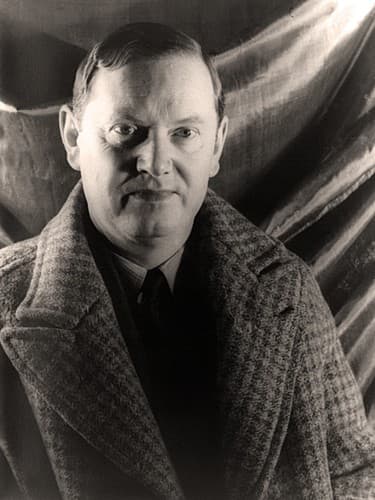
Arthur Evelyn St. John Waugh was an English writer of novels, biographies, and travel books; he was also a prolific journalist and book reviewer. His most famous works include the early satires Decline and Fall (1928) and A Handful of Dust (1934), the novel Brideshead Revisited (1945), and the Second World War trilogy Sword of Honour (1952–1961). He is recognised as one of the great prose stylists of the English language in the 20th century.







